Cambridge, MA – On September 25, the Massachusetts Institute of Technology’s (MIT) Aging Brain Initiative (ABI) hosted its seminal symposium, "Innovations for the Aging Brain," spotlighting a vibrant array of cutting-edge research aimed at understanding and combating the complexities of neurodegenerative diseases. From its inception in 2015, the ABI has operated on the foundational premise that conditions such as Alzheimer’s, Parkinson’s, and ALS are not isolated pathologies but rather intricate, "system-wide" breakdowns demanding a multifaceted, collaborative approach across scientific and engineering disciplines. The six presentations delivered at the recent symposium powerfully illustrated this philosophy in action, showcasing MIT’s unparalleled commitment to fostering interdisciplinary breakthroughs for healthier aging.
Li-Huei Tsai, Director of the ABI and Picower Professor in the Picower Institute for Learning and Memory and the Department of Brain and Cognitive Sciences (BCS), underscored the unique collaborative spirit driving the initiative. "The ABI is unique because it brings together researchers from a diverse array of fields," Professor Tsai stated, emphasizing, "Today’s symposium showcases MIT’s collective brilliance across neuroscience, engineering, chemistry, and beyond." This ethos of convergence is critical, as the challenges posed by an aging global population and the rising prevalence of neurodegenerative disorders necessitate innovative solutions that transcend traditional disciplinary boundaries.
A Decade of Pioneering Research: The ABI’s Journey
The Aging Brain Initiative was established nearly a decade ago, in 2015, with a prescient understanding that the traditional siloed approach to biomedical research was insufficient to tackle diseases as complex as Alzheimer’s. The initiative’s founders recognized that the brain, an intricate network of neurons, glial cells, vasculature, and molecular pathways, is intrinsically linked to the body’s overall physiological systems. Consequently, disruptions leading to neurodegeneration often involve systemic failures, from metabolic dysregulation and immune responses to protein misfolding and genetic predispositions.
Over the past eight years, the ABI has grown into a formidable hub of innovation, drawing together faculty from across MIT’s Schools of Science and Engineering. It actively encourages cross-departmental collaborations, seeding projects that might not otherwise emerge within conventional academic structures. This strategic integration of diverse expertise — encompassing neuroscience, artificial intelligence, mechanical engineering, chemistry, and biological engineering — is precisely what enables the ABI to pursue comprehensive strategies against diseases that affect millions worldwide. The symposium on September 25 served as a powerful testament to the progress catalyzed by this unique model, demonstrating how this integrated research paradigm is beginning to yield tangible advancements in both understanding and intervention.
Revolutionizing Alzheimer’s Care with AI-Powered Personalized Medicine
One of the symposium’s standout presentations focused on a groundbreaking team effort to leverage artificial intelligence (AI) for personalized Alzheimer’s care. Professor Giovanni Traverso, the Karl Van Tassel (1925) Professor of Mechanical Engineering and a practicing physician at Brigham and Women’s Hospital, discussed his collaboration with Professor Li-Huei Tsai and other researchers. Their work introduces an AI system designed to match patients with the most effective prevention interventions tailored to their individual profiles.
Alzheimer’s disease, affecting over 6 million Americans and projected to reach nearly 14 million by 2060, represents a monumental public health challenge. Its progression is notoriously variable, and current treatments often offer limited efficacy, partly due to the ‘one-size-fits-all’ approach. The FINGERS-7B AI model, developed by Traverso’s team alongside project leads Arvid Gollwitzer, an engineer-scientist at the Broad Institute of MIT and Harvard, and MIT-Novo Nordisk AI Fellow Adrián Noriega de la Colina, addresses this critical need for personalization. This sophisticated AI system integrates a vast array of data points, including comprehensive clinical trial results, detailed patient lifestyle histories, and multi-omics data such as genomics (genetic makeup), proteomics (protein profiles), and metabolomics (metabolite levels).
Noriega elaborated on the model’s capacity to process an astounding 8 trillion "tokens" of information during its training phase. These tokens represent individual pieces of data, demonstrating the sheer scale and depth of information the AI processes to inform its predictions. "Every individual is very unique in their biology, and that links to how we respond to those interventions," Noriega explained. By precisely predicting an individual’s Alzheimer’s progression and their likely response to specific interventions, FINGERS-7B could fundamentally transform preventative care. Beyond individual patient benefits, the AI’s predictive capabilities hold significant promise for refining clinical trial designs, enabling researchers to identify and target the most appropriate patient populations for new drugs or therapeutic strategies, thereby accelerating the development of effective treatments. This advancement heralds a new era where AI acts as a powerful ally in the fight against neurodegeneration, moving us closer to truly personalized medicine.
Optimizing Anesthesia to Safeguard the Aging Brain
Another critical area of focus addressed by Picower Professor Earl K. Miller highlighted an often-overlooked threat to the aging brain: cognitive side effects from general anesthesia. Postoperative delirium and cognitive dysfunction are distressingly common in older adults following major surgery, impacting up to 50% of patients over 65 and contributing to extended hospital stays, increased healthcare costs, and long-term cognitive decline. This issue underscores the need for safer, more precise anesthetic management, particularly for vulnerable populations.
Professor Miller, in collaboration with ABI founding member and Institute Professor Emery N. Brown, a colleague at the Picower Institute and BCS, presented their pioneering research into developing a closed-loop system for optimized anesthesia dosing. Their work builds on the understanding that regardless of their specific molecular mechanisms, diverse anesthetic drugs induce unconsciousness by a common pathway: they disrupt the coordinated communication across the brain’s cortex. This disruption manifests as specific shifts in brainwave patterns, causing them to fall "out of phase" with each other, thereby undermining the neural synchrony essential for cognition and consciousness.
By identifying these distinctive brainwave "signatures" of unconsciousness, Miller and Brown’s labs are developing a system that can continuously monitor a patient’s brain activity during surgery and adjust anesthesia levels in real-time. This closed-loop system promises to allow anesthesiologists to precisely tailor dosing, administering just enough anesthesia to maintain unconsciousness while minimizing over-sedation. The implications for patient safety are profound, potentially reducing the incidence and severity of postoperative cognitive complications, accelerating recovery, and improving long-term neurological outcomes for millions of surgical patients annually. This research exemplifies how a deep understanding of brain dynamics can translate into practical, life-enhancing medical technologies.
Building Advanced Models for Neuromuscular Disease Research
Associate Professor of Mechanical Engineering Ritu Raman, the Eugene Bell Career Development Chair of Tissue Engineering, presented her innovative approach to studying neuromuscular diseases such as amyotrophic lateral sclerosis (ALS) and muscular dystrophies. These debilitating conditions, characterized by progressive muscle weakness and degeneration, currently have limited treatment options, necessitating more accurate and predictive research models.
Traditional animal models often fail to fully recapitulate the complexities of human neuromuscular diseases, while conventional 2D cell cultures lack the intricate three-dimensional architecture and cellular interactions found in living tissues. Professor Raman’s lab is addressing these limitations by developing advanced lab models of muscle tissue that integrate not only muscle cells but also nerves and vasculature. These sophisticated "organ-on-a-chip" or 3D bioprinted systems create a more physiologically relevant environment for disease study.
For ALS, a particularly devastating neurodegenerative condition that attacks motor neurons, Raman’s team has achieved a significant breakthrough: creating these complex cultures from induced pluripotent stem cells (iPSCs) derived directly from patients. iPSCs are adult cells that have been genetically reprogrammed back into an embryonic-like pluripotent state, capable of differentiating into any cell type. By using patient-derived iPSCs, the researchers can generate "disease in a dish" models that capture the unique genetic and pathological characteristics of individual patients. This personalized modeling capability allows Raman’s lab to meticulously examine neuromuscular junctions—the critical synapses where motor neurons communicate with muscle fibers—in unprecedented detail. Furthermore, these models provide a high-throughput platform for screening potential therapeutic drugs, observing how they impact disease progression and cellular function in a human-specific context, accelerating the search for effective treatments for these currently incurable diseases.
Targeting the Origins of Protein Misfolding in Neurodegeneration
A significant pathology common to many age-related neurodegenerative diseases, including Alzheimer’s and Parkinson’s, is the misfolding and subsequent aggregation of intrinsically disordered proteins (IDPs). Proteins like amyloid-beta (Aβ) in Alzheimer’s and alpha-synuclein (α-syn) in Parkinson’s are normally soluble and functional, but under certain conditions, they can lose their native structure, aggregate into toxic oligomers and fibrils, and accumulate as plaques or Lewy bodies, disrupting cellular function and leading to neuronal death.
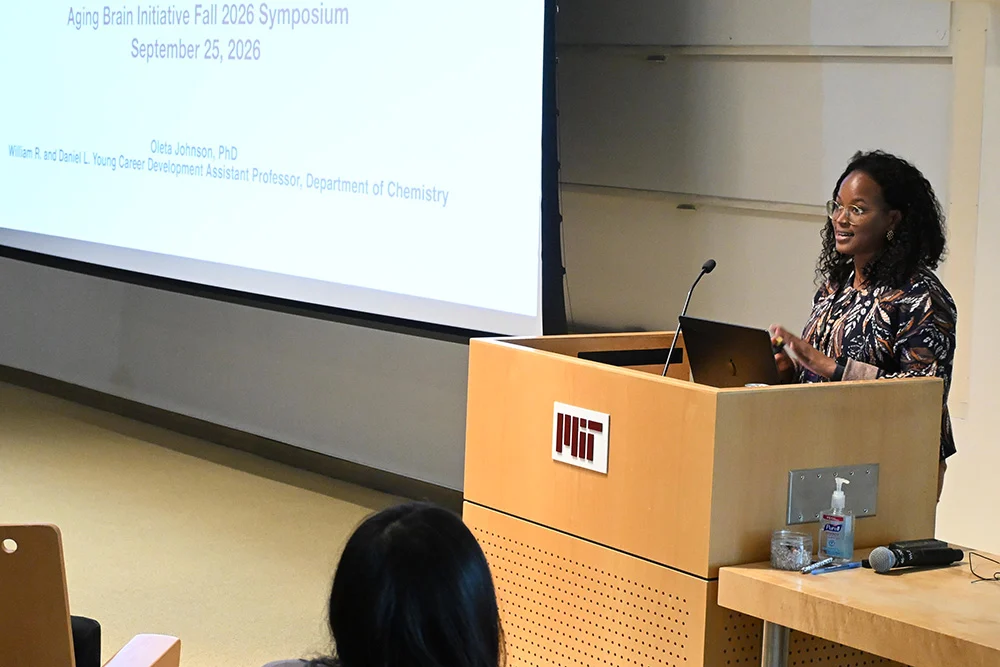
William R (1964) and Daniel L. (1995) Young Career Development Assistant Professor of Chemistry Oleta Johnson discussed her lab’s pioneering work focused on preventing this aggregation before it even begins. Most current therapeutic strategies for these diseases target already formed aggregates or attempt to clear them. Professor Johnson’s proactive approach represents a paradigm shift, aiming to intervene at the earliest stages of the disease process.
Her lab’s research is deeply rooted in chemical biology, striving to develop the fundamental chemical knowledge and advanced methodologies necessary to identify problematic IDPs, detect when they are transitioning into an aggregation-prone state, and then precisely control their conformational dynamics. This involves understanding the subtle chemical and physical cues that trigger misfolding and designing molecular interventions that stabilize the protein’s healthy conformation or prevent the initial aggregation events. By understanding and manipulating these critical early steps, Professor Johnson’s work offers the potential to develop novel preventive strategies or early-stage treatments that could halt the progression of neurodegenerative diseases long before significant neuronal damage occurs, thereby fundamentally altering the trajectory of these devastating conditions.
Unveiling Brain Chemistry with Advanced MRI Probes
Eugene McDermott Professor in the Brain Sciences and Human Behavior Alan Jasanoff, a member of the BCS and Biological Engineering departments, as well as the McGovern Institute for Brain Research, presented a distinctly chemical approach to aging brain research. His lab focuses on developing novel chemical probes that can make specific molecules in the brain visible through magnetic resonance imaging (MRI). This represents a significant leap forward from conventional MRI, which primarily provides structural information or measures blood flow, to functional imaging that can track molecular changes in real-time.
The ability to non-invasively visualize key neuromodulators and metabolic components is crucial for understanding disease mechanisms and monitoring treatment efficacy. Professor Jasanoff’s probes target vital molecules such as cholinesterase, an enzyme that breaks down the neurotransmitter acetylcholine. Cholinesterase inhibitors are among the few drugs approved to treat Alzheimer’s disease, highlighting the enzyme’s importance in cognitive function. Visualizing its activity in vivo could provide invaluable insights into disease progression and drug response.
Furthermore, his lab is developing probes for lipids, which play multifaceted roles in brain health, including forming cell membranes, myelin sheaths, and signaling molecules. Aberrant lipid metabolism has been implicated in Alzheimer’s disease, as demonstrated by research from Professor Tsai and others. The ability to image lipids could reveal early pathological changes and offer new diagnostic markers. In an even more advanced application, Jasanoff’s team has developed technology to genetically encode a novel probe within brain cells. This allows for improved MRI visualization of specific cellular activity, offering an unprecedented window into dynamic brain function and pathology, paving the way for earlier detection, more precise diagnosis, and the development of targeted therapies for a range of neurological disorders.
Exploring the Hidden World of Glycans on Cell Surfaces
While much neurodegenerative disease research rightly focuses on proteins and lipids, Novartis Professor of Chemistry Laura Kiessling introduced the symposium to a less-appreciated but equally vital component of cellular function: sugars, or glycans, that adorn the surface of cells. These complex carbohydrate structures are not mere decorative elements; they play critical roles in cell-cell recognition, signaling, immune responses, and the organization of the cell membrane.
Professor Kiessling highlighted the growing evidence linking specific glycans to neurodegenerative diseases. In particular, a glycan called heparan sulfate has been implicated in Alzheimer’s disease, where it is known to interact with amyloid-beta proteins and contribute to plaque formation. Despite their significance, glycans remain challenging to study due to their structural complexity and dynamic nature.
Kiessling’s lab, in collaboration with ABI founding member Ed Boyden, the Y. Eva Tan Professor of Neurotechnology, is working to characterize and understand the intricate roles of these glycans. Their pioneering research has revealed that glycans of different sequences do not simply exist randomly on cell membranes; instead, they organize themselves in specific patterns that enable them to bind and recruit particular proteins to distinct regions on the cell surface. "We are really excited about the fact that we’ve observed this now for the first time and have a toolkit to study other diseases," Professor Kiessling stated, emphasizing the broad implications of this discovery. Understanding these precise glycan-protein interactions could unlock entirely new avenues for therapeutic intervention, potentially allowing scientists to design molecules that specifically target certain cells or cellular processes involved in disease. This research opens a new frontier in neurobiology, highlighting the critical, often overlooked, role of carbohydrates in health and disease.
Broader Impact and Future Horizons
The "Innovations for the Aging Brain" symposium culminated with a dynamic poster session, where more than a dozen trainees presented additional aging brain-related projects from across the Institute. This vibrant display further underscored the breadth and diversity of research being conducted at MIT, a diversity actively championed and encouraged by the ABI.
The collective insights presented at the symposium highlight a significant paradigm shift in how the scientific community approaches neurodegenerative diseases. Moving beyond single-target hypotheses, the ABI champions a holistic, "system-wide" perspective, recognizing the interconnectedness of biological processes and the need for interdisciplinary collaboration. From the massive datasets analyzed by AI to the intricate molecular interactions of sugars on individual cells, MIT scientists are pushing the frontiers of science and engineering to deepen our understanding of the aging brain and develop transformative interventions.
The implications of this work are profound. The development of personalized Alzheimer’s care through AI could revolutionize treatment strategies, moving towards precision medicine that respects individual biological variability. Optimized anesthesia protocols promise safer surgeries for an aging population, mitigating critical postoperative cognitive complications. Advanced lab models for neuromuscular diseases offer faster, more accurate drug discovery. Proactive strategies to prevent protein aggregation could halt disease progression at its earliest stages. And novel MRI probes and glycan research could unlock unprecedented diagnostic capabilities and entirely new therapeutic targets.
As the global population continues to age, the burden of neurodegenerative diseases is set to escalate, placing immense strain on healthcare systems and individual families. The collaborative, innovative spirit embodied by MIT’s Aging Brain Initiative provides a beacon of hope. By fostering an environment where engineers, chemists, neuroscientists, and clinicians converge, the ABI is not merely conducting research; it is actively shaping the future of neurological health, striving for a future where aging brains can thrive, free from the ravages of debilitating diseases. The advancements showcased at this symposium are not just scientific triumphs; they are critical steps towards improving the quality of life for millions worldwide.