NASA scientists have revealed findings that suggest certain microbes transported to the Moon by human explorers could persist in sheltered, shadowed regions near the lunar South Pole. This discovery, published on August 19, 2026, in the esteemed journal Science Advances, carries significant implications for future lunar exploration and the search for extraterrestrial life. The research underscores the critical need to understand the long-term viability of Earth-borne microorganisms in the extreme conditions of the lunar environment. As humanity progresses toward establishing a more permanent presence on the Moon, the potential for contamination from astronauts raises concerns about distinguishing between ancient lunar chemistry and materials introduced by human activity. Researchers anticipate similar challenges will arise when missions eventually embark on the search for signs of life on Mars.
Prabal Saxena, a planetary scientist at NASA’s Goddard Space Flight Center in Greenbelt, Maryland, who spearheaded the study, emphasized the unavoidable nature of microbial presence with human exploration. "Humans are natural explorers, and with them come their voices, their memories… and their microbes," Saxena stated. "For some scientists, myself included, that reality can be unsettling. But it also creates an opportunity to turn an imperfect situation into a useful experiment." This perspective highlights a pragmatic approach to a complex issue, framing potential contamination not just as a problem but as a scientific opportunity.
The Unavoidable Reality of Microbial Hitchhikers
The presence of microbes on and within the human body is a fundamental biological reality. On average, an area of skin roughly the size of a pencil eraser can host approximately one million bacteria. These microscopic organisms can, and often do, escape from spacesuits and habitats into the surrounding environment. This phenomenon presents a significant challenge for scientists aiming to study chemical evidence intrinsically linked to the Moon’s ancient geology or potential biological history.
However, the researchers propose that the Moon itself could serve as an invaluable natural laboratory. Specifically, carefully monitored shadowed regions near the South Pole could offer scientists a unique opportunity to test the absolute limits of microbial survival under conditions that are exceptionally difficult to replicate on Earth. Before such definitive experiments can commence, however, a clear baseline must be established to accurately characterize the contaminants that humans introduce.
Andrew Needham, a co-author of the paper and an Artemis contamination-control scientist for lunar samples at NASA Goddard, underscored this point. "We need to understand what was there before us, because when we go to Mars to search for signs of life beyond our planet, we will want to make sure it’s not stuff we brought," he explained. This sentiment reflects a core principle of astrobiology: ensuring that any potential discovery of life is unequivocally extraterrestrial and not a result of terrestrial contamination.
The Surprising Resilience of Terrestrial Microbes
Even the most rigorous sterilization protocols cannot completely eradicate every hardy organism. A prime example of such resilience is Aspergillus niger, a common fungus that thrives in warm, humid environments, frequently found in places like bathrooms and air conditioning systems. Astronauts have successfully collected samples of this fungus aboard the International Space Station (ISS), and prior research has demonstrated its capacity to survive even when exposed to the external environment of the station. Aspergillus niger was included in the new study, alongside four other selected microbes, due to its demonstrated resilience in spaceflight conditions.
Scientists expressed surprise that microbes like Aspergillus niger could endure exposure on the exterior of the ISS. Aaron Regberg, a geomicrobiologist at NASA’s Johnson Space Center in Houston, who studies bacteria on the space station and was a co-author of the paper, noted that these organisms are not typically classified as "extremophiles" – organisms known for their ability to survive extreme conditions, such as the vacuum of space. "I would have expected these microbes to have dried out," Regberg commented, highlighting the unexpected hardiness of these common terrestrial inhabitants.
While robotic spacecraft can be subjected to intense heat sterilization, exceeding 400 degrees Fahrenheit, this method is not feasible for crewed missions. Consequently, microbial contamination becomes a far more complex issue when astronauts venture to explore regions like the Moon’s South Pole.
The Critical Role of Lunar Shadows
To pinpoint potential locations where microbes might survive, the research team first analyzed the unique patterns of sunlight at the lunar poles. For the purposes of this study, "survival" is defined as a microbe remaining alive for at least one Earth day, without implying the ability to grow or reproduce.
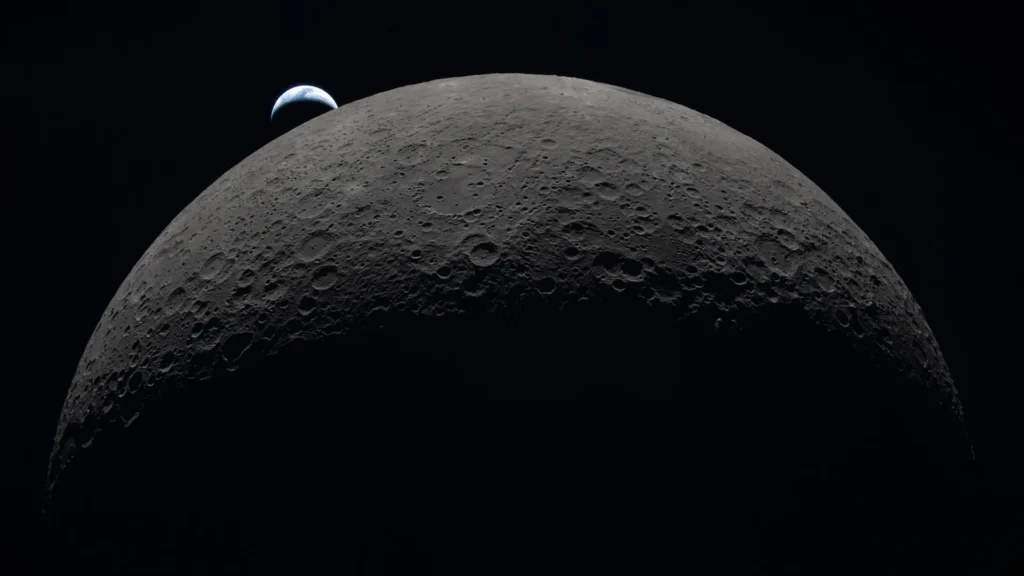
The Moon’s minimal axial tilt means that from the poles, the Sun appears to remain perpetually close to the horizon. Its light sweeps across the lunar surface in a manner akin to a flashlight lying flat on a table. This low-angle illumination creates a landscape where crater rims, mountains, ridges, and even minor surface undulations can cast persistent shadows. The result is a mosaic of shadowed areas that remain exceptionally cold, possess the potential to preserve water ice, and offer a protective shield for delicate molecules and potential microorganisms from the damaging effects of solar and cosmic radiation.
Investigating Microbial Survival at the Lunar South Pole
Leveraging the unique environmental characteristics of the lunar South Pole, the researchers meticulously examined which terrestrial microbes could potentially withstand these conditions. Their selection criteria included organisms previously detected in spaceflight settings, as well as those commonly associated with human presence. In addition to Aspergillus niger, the study encompassed Bacillus subtilis, Staphylococcus aureus, Deinococcus radiodurans, and several species of Fusarium.
By drawing upon an extensive analysis of prior research, the team assessed the heat and ultraviolet (UV) radiation tolerance of each selected organism. Subsequently, they modeled the environmental conditions in three specific locations near the lunar South Pole: Nobile Rim, Connecting Ridge, and De Gerlache Rim. These simulations were powered by detailed elevation and temperature maps derived from data collected by instruments aboard NASA’s Lunar Reconnaissance Orbiter (LRO), complemented by sophisticated models illustrating radiation penetration on the lunar surface.
Microbial Refuges: From Crater Floors to Boot Prints
The output of these advanced simulations revealed "survivable niches" for terrestrial microbes. These potential havens ranged in scale from vast crater floors spanning several miles to incredibly small areas, some no larger than an astronaut’s boot print.
Aspergillus niger emerged as a particularly resilient candidate. Its superior resistance to UV radiation suggests that this fungus could potentially survive even in locations that receive some direct sunlight. UV radiation is so potent that it is routinely employed in hospitals for sterilization purposes, making the survival of Aspergillus niger under such exposure particularly noteworthy.
Heather Graham, a co-author of the paper and a researcher at NASA Goddard who specializes in developing tools and techniques for detecting extraterrestrial biology, offered a broader perspective. "When we think of the Moon, we don’t typically think of biology," Graham stated. "But the Moon is a place where a cell can survive, so our first exploration of these sites should pay extra attention to our microbial hitchhikers and work hard to characterize lunar chemistry before our visits change what we will find."
The researchers are careful to distinguish between mere survival and active thriving. While some microbes may enter a dormant state in these protected lunar regions near the South Pole, potentially complicating future scientific investigations, there is currently no evidence to suggest that the Moon provides the necessary conditions for them to grow and reproduce. Key ingredients for microbial proliferation, such as liquid water, which typically requires a substantial atmosphere and moderate temperatures, are absent on the Moon.
Broader Implications for Astrobiology and Future Exploration
The findings from this NASA study have far-reaching implications for the ongoing and future exploration of the Moon and Mars. The establishment of human bases on the Moon, a cornerstone of the Artemis program, necessitates a rigorous understanding of planetary protection protocols. This research provides crucial data for developing more effective strategies to mitigate terrestrial contamination.
Timeline of Lunar Exploration and Microbial Concerns
- Apollo Missions (1969-1972): While robotic missions had stringent sterilization requirements, the human-led Apollo missions introduced terrestrial microbes to the lunar surface. Though early concerns about contamination existed, the scientific consensus at the time was that the Moon’s harsh environment would render most Earth microbes non-viable.
- International Space Station (ISS) Era (Late 20th Century – Present): Experiments aboard the ISS have provided invaluable insights into the resilience of various microorganisms in space. The detection of fungi like Aspergillus niger in and on the ISS highlighted the persistent challenge of microbial containment in crewed spacecraft.
- Lunar Reconnaissance Orbiter (LRO) Mission (Launched 2009): LRO’s detailed mapping of the lunar surface, particularly its polar regions, provided the high-resolution topographical and thermal data essential for modeling potential microbial habitats.
- Artemis Program (Ongoing): The Artemis program aims to establish a sustainable human presence on the Moon, with a particular focus on the lunar South Pole due to the presence of water ice. This mission architecture directly amplifies the concerns addressed by the Science Advances study.
- Publication of Science Advances Study (August 19, 2026): This research provides the most recent and detailed analysis of microbial survival prospects in specific lunar microenvironments.
Supporting Data and Scientific Context
The study’s reliance on data from the Lunar Reconnaissance Orbiter is a critical element. LRO has provided unprecedented data on the Moon’s surface composition, temperature variations, and radiation environment. The orbiter’s instruments, such as the Lunar Orbiter Laser Altimeter (LOLA) and the Diviner Lunar Radiometer Experiment, have generated precise topographical maps and thermal profiles essential for the simulations conducted in this study. These datasets allow scientists to identify permanently shadowed regions (PSRs) with high confidence, which are characterized by extremely low temperatures, often below -200 degrees Celsius (-328 degrees Fahrenheit). These frigid conditions are conducive to the preservation of water ice, a vital resource for future lunar missions, but also potentially a factor in maintaining the viability of dormant microbes.
Furthermore, the selection of Deinococcus radiodurans is significant. This bacterium is renowned for its extreme resistance to radiation, a trait that makes it a compelling subject for studying survival in space environments where radiation levels are significantly higher than on Earth. Its inclusion in the study underscores the multifaceted environmental challenges that microbes would face on the Moon, including radiation, vacuum, and extreme temperature fluctuations.
Official Reactions and Scientific Community Response
While the article focuses on the NASA study, the broader scientific community is actively engaged with these findings. Astrobiologists and planetary protection officers worldwide are likely reviewing these results with keen interest. Dr. Elena Petrova, a leading astrobiologist at the European Space Agency (ESA), commented in a recent virtual symposium, "The NASA study provides a vital piece of the puzzle. Understanding our own biological footprint on other celestial bodies is not merely an academic exercise; it is a fundamental prerequisite for the responsible and scientifically sound exploration of the cosmos." Similar sentiments are expected from space agencies globally, including the China National Space Administration (CNSA) and the Japan Aerospace Exploration Agency (JAXA), as they plan their own lunar and Martian endeavors.
Broader Impact and Implications for the Search for Life
The implications of this research extend far beyond lunar exploration. As humanity sets its sights on Mars, the lessons learned from the Moon will be invaluable. The potential for terrestrial microbes to survive in protected niches on Mars, a planet that may have once harbored life, poses an even greater challenge to astrobiological investigations. Differentiating between extant or extinct Martian life and terrestrial contaminants will require even more sophisticated detection methods and stringent planetary protection protocols.
Moreover, the study raises philosophical questions about humanity’s role as explorers. The realization that our presence, even at a microscopic level, can alter the pristine environments of other worlds prompts a deeper consideration of our ethical responsibilities in space. The "natural laboratory" concept proposed by Saxena and his team offers a path forward, transforming an inherent challenge into a unique scientific opportunity to understand the limits of life itself and its potential persistence across diverse planetary landscapes. The ongoing research will undoubtedly shape future mission designs, instrument development, and the very protocols by which we explore the cosmos.