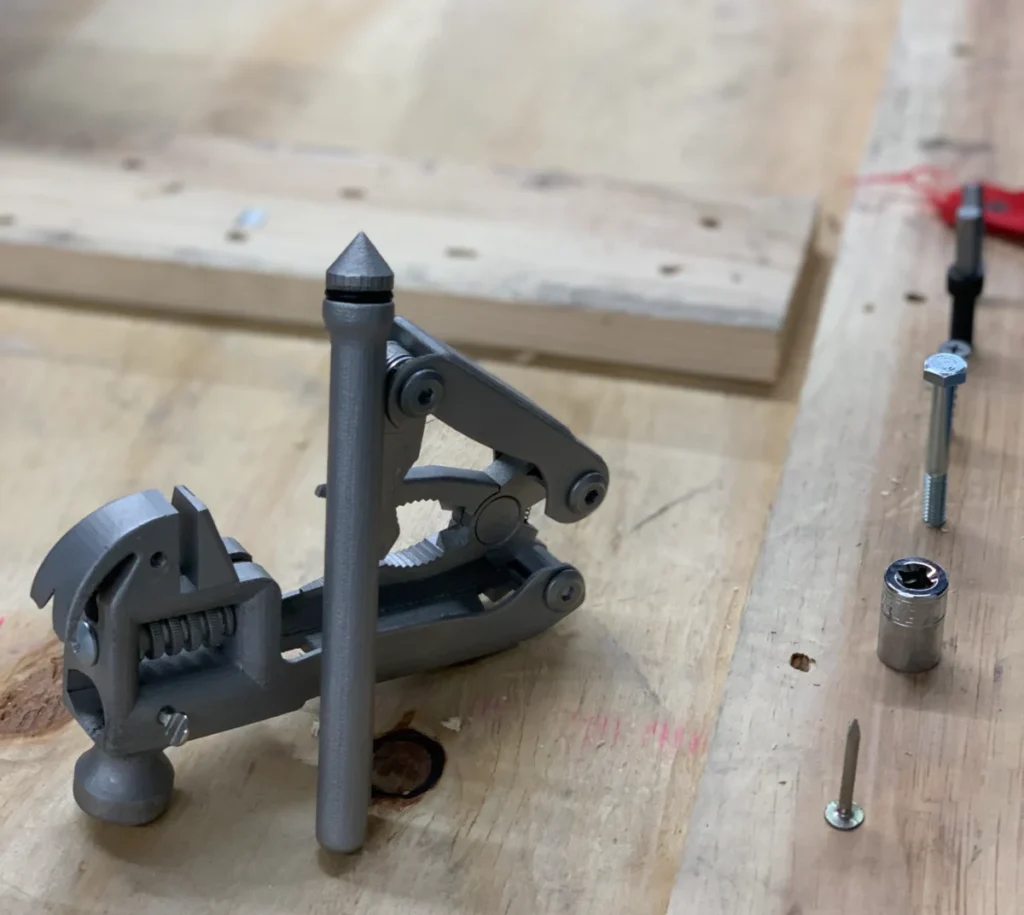
A team of ambitious students from the University of Texas at El Paso (UTEP) has claimed the top prize at America Makes’ third annual AM in Steel competition, showcasing their ingenuity with a meticulously designed and 3D printed stainless steel multi-tool. This victory highlights the growing capabilities of additive manufacturing in producing complex, functional metal components for everyday applications, drawing attention to the innovative spirit fostered at UTEP’s W.M. Keck Center for 3D Innovation. The competition, which challenges university teams to engineer visibly 3D printed metal multi-tools, serves as a crucial platform for emerging talent in the additive manufacturing sector, particularly within the critical domain of steel applications.
The winning multi-tool, developed by the UTEP team known as Borderland Steel, is a testament to sophisticated design optimization and advanced manufacturing processes. Utilizing the Laser Powder Bed Fusion (LPBF) technology, the students transformed raw stainless steel 316L into a robust and versatile tool. This achievement not only underscores the technical prowess of the UTEP team but also signifies a broader trend in the industry where additive manufacturing is increasingly recognized for its potential to create high-performance, customized metal parts. The AM in Steel competition, a cornerstone event in the additive manufacturing calendar, has consistently pushed the boundaries of what is possible with steel-based 3D printing, and this year’s edition at RAPID + TCT 2026 in Boston, Massachusetts, proved to be no exception.
From Concept to Competition: The Design and Engineering Journey
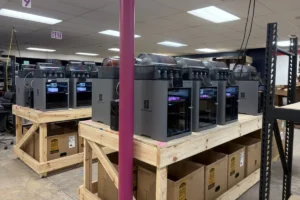
The path to victory for Borderland Steel was marked by rigorous design iterations and a deep understanding of additive manufacturing principles. Initially, the team explored numerous design concepts, leveraging in-house PLA desktop 3D printers for rapid prototyping. This iterative process allowed them to quickly test and refine various features, ensuring that the final design would not only be functional but also aesthetically compelling and demonstrably 3D printed. The transition from plastic prototypes to a functional metal tool involved a sophisticated approach to design consolidation. The team strategically reduced the initial 20 designed parts down to approximately five by integrating multiple functionalities into single components. This was achieved through careful consideration of standardizing interfaces, a crucial step in simplifying assembly and ensuring part interchangeability, and by incorporating lattice structures.
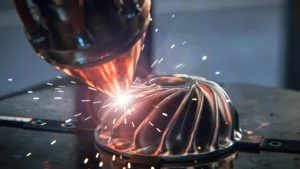
The integration of lattice structures was a key innovation, serving a dual purpose: material reduction and optimization of load-bearing capabilities. By strategically placing these internal geometric patterns, the team was able to significantly decrease the amount of material required without compromising the structural integrity of critical load paths. This not only makes the tool lighter and more cost-effective to produce but also showcases a sophisticated understanding of advanced design techniques enabled by additive manufacturing. The team then employed the LPBF process on an EOS M290 system, a leading industrial 3D printer, to fabricate the multi-tool using stainless steel 316L. The choice of stainless steel 316L is significant, as it offers excellent corrosion resistance and mechanical properties, making it suitable for durable, everyday carry (EDC) items.
Following the initial printing, the team engaged in extensive testing and refinement. Multiple iterations of the final design were printed to meticulously improve tolerances and the smooth movement of the tool’s various components. This dedication to precision and functionality is paramount in the creation of multi-tools, where each part must operate reliably and seamlessly. The post-processing stage involved techniques such as electrical discharge machining (EDM) and sandblasting, essential steps to achieve the desired surface finish, dimensional accuracy, and overall quality of the final product. The successful execution of these complex processes culminated in a multi-tool that not only met but exceeded the competition’s stringent requirements.
The Significance of the AM in Steel Competition
America Makes, the National Additive Manufacturing Innovation Institute, plays a pivotal role in advancing additive manufacturing technologies across various industries. The AM in Steel competition, now in its third year, specifically targets the development and application of 3D printed steel components. This focus is critical given steel’s widespread use in sectors ranging from aerospace and automotive to medical devices and industrial tooling. By challenging university students, America Makes aims to foster a new generation of engineers and designers who are proficient in the unique capabilities of additive manufacturing for metal applications.
The competition provides a platform for students to gain hands-on experience with industrial-grade 3D printing equipment and software, and to tackle real-world engineering challenges. It encourages innovation in design for additive manufacturing (DfAM), material science, and process optimization. The focus on multi-tools as the design challenge is particularly relevant. Multi-tools are common EDC items, and their complexity, with multiple moving parts and integrated functionalities, makes them an ideal testbed for additive manufacturing capabilities. Successfully designing and producing a functional multi-tool demonstrates an understanding of intricate mechanisms, material properties, and robust manufacturing processes.

The RAPID + TCT event, where the competition was held, is one of North America’s largest and most influential additive manufacturing trade shows. This provides an invaluable opportunity for student teams to present their work to industry leaders, potential employers, and peers, fostering networking and knowledge exchange. The visibility gained at such events can significantly impact the career trajectories of these young innovators. The fact that the competition is in its third year signifies a growing commitment and maturity of the event, indicating a sustained interest in developing expertise in steel-based additive manufacturing.
UTEP’s Keck Center: A Hub for Additive Manufacturing Innovation
The W.M. Keck Center for 3D Innovation at UTEP has established itself as a leading research and educational facility dedicated to advancing additive manufacturing. The center provides students with access to cutting-edge equipment, including industrial 3D printers, scanners, and design software, enabling them to engage in complex projects that push the boundaries of current technology. The success of Borderland Steel is a direct reflection of the resources and guidance available at the Keck Center, which fosters an environment of interdisciplinary collaboration and practical application of theoretical knowledge.
The center’s commitment to hands-on learning and research is crucial for preparing students for the demands of the modern manufacturing workforce. By participating in competitions like AM in Steel, UTEP students gain invaluable experience that goes beyond classroom learning, equipping them with the skills and confidence needed to excel in the rapidly evolving field of additive manufacturing. The center’s involvement in projects that span various industries, from aerospace and defense to healthcare and consumer products, further broadens the students’ understanding of additive manufacturing’s diverse applications. The team’s moniker, "Borderland Steel," also subtly reflects UTEP’s geographical location, fostering a sense of regional pride and innovation.
Technical Specifications and Design Software
The winning multi-tool’s technical specifications highlight the advanced nature of its creation:
- Material: Stainless steel 316L, chosen for its excellent corrosion resistance, biocompatibility, and mechanical strength, making it suitable for durable, high-wear applications.
- Design Software: Materialise Magics slicing software was employed. This sophisticated software is crucial for preparing 3D models for printing, enabling features such as support generation, meshing, and error correction, which are vital for achieving high-quality prints.
- Process: Laser Powder Bed Fusion (LPBF), a prominent additive manufacturing technique that melts and fuses powdered material layer by layer using a laser.
- System: EOS M290, a widely recognized industrial metal 3D printing system known for its precision, reliability, and ability to produce complex geometries.
- Postprocessing: Electrical Discharge Machining (EDM) and sandblasting were utilized. EDM is essential for achieving fine details and smooth surfaces on hard metals, while sandblasting provides a uniform surface finish and can prepare the part for further treatments.
These components represent the state-of-the-art in metal additive manufacturing, showcasing the team’s ability to leverage advanced tools and technologies effectively. The careful selection of each element, from the base material to the post-processing techniques, demonstrates a comprehensive approach to product development.
Broader Implications for the Additive Manufacturing Industry
The success of Borderland Steel and the AM in Steel competition carries significant implications for the broader additive manufacturing industry. It underscores the increasing maturity of metal 3D printing technologies, demonstrating their capability to produce complex, functional parts that can rival or even surpass traditionally manufactured components. The focus on multi-tools, a category of everyday items, signals the potential for additive manufacturing to penetrate consumer markets with highly customizable and performant products.
Furthermore, the competition highlights the growing talent pool of engineers and designers skilled in additive manufacturing. As more universities incorporate additive manufacturing into their curricula and research centers like UTEP’s Keck Center provide hands-on experience, the industry can expect a steady influx of innovative minds. This talent is crucial for driving further advancements in materials, processes, and applications.
The emphasis on steel in the competition is particularly noteworthy. Steel remains a foundational material across numerous industries, and advancements in its additive manufacturing open doors for on-demand production of critical parts, reduced lead times, and the creation of previously impossible geometries. This could lead to more efficient supply chains, reduced waste, and the development of lighter, stronger, and more complex components in sectors such as automotive, aerospace, and medical implants. The ability to integrate functionalities and optimize designs through lattice structures, as demonstrated by Borderland Steel, points towards a future where 3D printed metal parts are not just functional but also intelligently designed for performance and efficiency. The continued success of such competitions will undoubtedly accelerate the adoption and integration of additive manufacturing into mainstream industrial production.