Officials from the United States’ Defense Threat Reduction Agency (DTRA), in close coordination with the National Nuclear Security Administration (NNSA), have successfully completed a critical operation to remove a high-risk radioactive cobalt-60 source from a key facility in Guatemala. This significant endeavor, which also involved expert assistance from NNSA’s Los Alamos National Laboratory and robust support from Guatemalan government representatives, marks a substantial victory in ongoing efforts to enhance both U.S. homeland security and broader global radiological safety. The retrieved material, a powerful gamma-emitting isotope, was subsequently transported to secure storage within the United States, neutralizing a potential threat that could have been exploited for nefarious purposes, such as the construction of a radiological dispersal device, commonly known as a "dirty bomb."
The Operation Unfolds: A Coordinated Chronology
The meticulous planning and execution of this sensitive mission spanned several months, culminating in the physical removal of the cobalt-60 source in May. The process began with intelligence gathering and diplomatic engagements, identifying the disused U.S.-origin medical radiation device – specifically, a teletherapy machine – located at a facility in Guatemala. Such devices, while crucial for cancer treatment in their operational lifespan, pose significant security risks once they are no longer in use, as their powerful radioactive components can become vulnerable to theft or diversion.
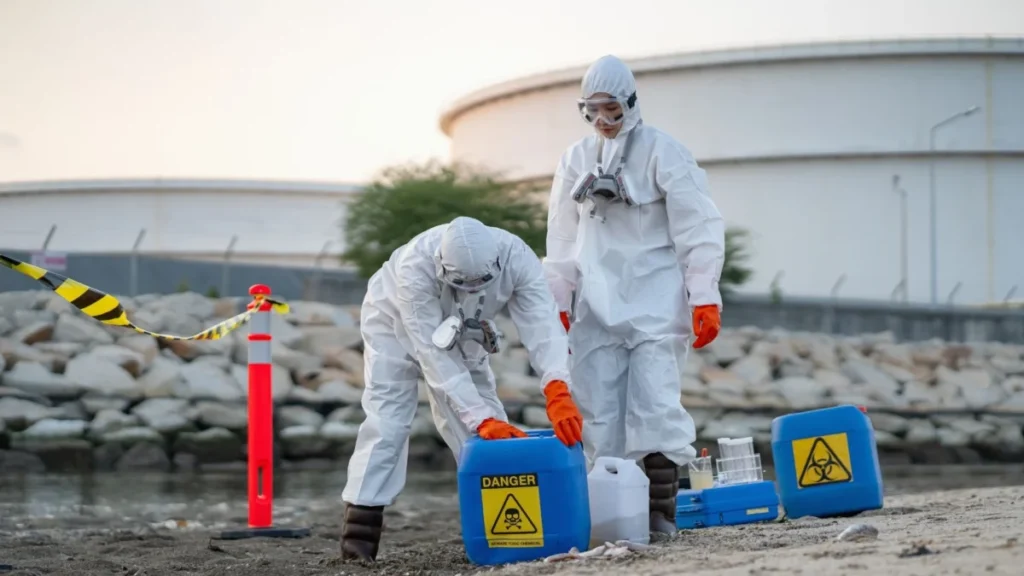
A specialized team from NNSA’s Los Alamos National Laboratory, renowned for its expertise in nuclear materials and security, spearheaded the on-the-ground efforts. This team was tasked with the delicate and technically demanding process of safely accessing, disassembling, and securely packaging the highly radioactive cobalt-60 component. The inherent dangers of handling such material necessitated stringent safety protocols, specialized equipment, and highly trained personnel to prevent any accidental exposure or environmental contamination.
Crucially, the success of the operation hinged on robust international cooperation. Guatemalan representatives played an indispensable role throughout the entire process. Personnel from the National Centre of Radioactive Wastes and the Ministry of Energy and Mines provided critical expert support, facilitating transportation logistics, ensuring physical security for the convoy, and navigating national regulatory frameworks. Their intimate knowledge of local conditions and their commitment to the shared security objective were paramount to the seamless execution of the removal.
Once securely packaged and loaded, DTRA assumed responsibility for the secure transportation of the cobalt-60 source. Leveraging its specialized capabilities in handling and moving hazardous materials, DTRA ensured the safe and uneventful transit of the radioactive component from Guatemala back to a designated secure storage facility in the United States. This final leg of the operation underscored the sophisticated logistical and security coordination required for such high-stakes missions.
Understanding the Threat: Cobalt-60 and Radiological Dispersal Devices
Cobalt-60 is a synthetic radioactive isotope of cobalt with a half-life of 5.27 years. It is a potent emitter of high-energy gamma rays, which makes it incredibly useful in various legitimate applications but also inherently dangerous if mishandled or misused. In the medical field, cobalt-60 has historically been a cornerstone of external beam radiation therapy, particularly in older teletherapy units designed to treat various forms of cancer. Beyond medicine, it finds applications in industrial radiography for inspecting materials, sterilizing medical equipment and food products, and in gauging devices.
The very properties that make cobalt-60 effective in these applications – its intense gamma radiation – also make it a material of significant security concern. Exposure to unshielded cobalt-60 can cause severe radiation sickness, burns, and even death, depending on the dose and duration of exposure. However, the primary fear associated with high-activity radioactive sources like cobalt-60 in a security context is their potential use in a radiological dispersal device (RDD), colloquially known as a "dirty bomb."
Unlike a nuclear weapon, which relies on a nuclear chain reaction to produce a massive explosion and widespread radioactive fallout, a dirty bomb does not create a nuclear explosion. Instead, it combines conventional explosives, such as dynamite, with radioactive material. When the conventional explosives detonate, they disperse the radioactive material over a localized area. The immediate casualties from a dirty bomb would primarily result from the conventional blast itself. However, the subsequent dispersal of radioactive material could lead to widespread contamination, requiring costly and time-consuming decontamination efforts, triggering panic and fear among the public, and potentially causing long-term health effects for those exposed to significant doses of radiation. The psychological and economic disruption caused by such an attack could be immense, even if the direct mortality from radiation exposure is limited. This disproportionate impact on public psyche and infrastructure, coupled with the relative ease of acquiring some radioactive sources compared to fissile material for nuclear weapons, makes dirty bombs an attractive, albeit horrific, prospect for terrorist organizations.
The Architects of Security: DTRA, NNSA, and Los Alamos
This successful removal operation is a testament to the specialized capabilities and unwavering commitment of several key U.S. government agencies.
The Defense Threat Reduction Agency (DTRA) is a combat support agency within the U.S. Department of Defense. Its overarching mission is to safeguard the United States and its allies from weapons of mass destruction (WMD) – chemical, biological, radiological, and nuclear (CBRN) threats. DTRA achieves this through a multifaceted approach that includes threat reduction, proliferation prevention, and providing capabilities to counter WMDs. In this specific operation, DTRA’s expertise in secure transportation and disposition of hazardous materials was critical, ensuring the safe transit of the cobalt-60 source from Guatemala to the United States. Robert Bridges, DTRA Program Manager of Nuclear Transportation & Disposition, emphasized this interagency synergy, stating, “The successful repatriation of the cobalt-60 source is a product of vital U.S. Government interagency cooperation. We are proud to work with NNSA to take meaningful action in their mission to eliminate radiological risk and keep America safe.”
The National Nuclear Security Administration (NNSA), an agency within the U.S. Department of Energy, is responsible for enhancing national security through the military application of nuclear science. Its core missions include maintaining the U.S. nuclear weapons stockpile, providing nuclear propulsion for the U.S. Navy, and, crucially, advancing nuclear nonproliferation and counterterrorism efforts. Within NNSA, the Office of Defense Nuclear Nonproliferation plays a pivotal role in preventing the spread of nuclear and radiological materials and expertise. Matthew Napoli, Deputy Administrator for NNSA’s Office of Defense Nuclear Nonproliferation, articulated the agency’s mission clearly: “Our mission is simple: protect American citizens, secure our borders, and ensure our adversaries never get their hands on materials that could harm our country. This successful removal is a massive win for homeland security and demonstrates our positive relationship with the Guatemalan government. NNSA will do whatever it takes to defend America and keep our communities safe.” NNSA’s Office of Radiological Security specifically works with partner nations globally to reduce nuclear and radiological risks by removing vulnerable materials and strengthening security around those materials that remain in use.
Los Alamos National Laboratory (LANL), managed by the University of California for NNSA, provided the scientific and technical backbone for the on-site removal. Los Alamos has a long history as a premier scientific institution, deeply involved in nuclear research, safety, and security. Its personnel possess unparalleled expertise in handling radioactive materials, designing secure containment, and executing complex field operations involving hazardous isotopes. The precision and safety with which the cobalt-60 component was extracted and packaged are a direct reflection of LANL’s world-class capabilities.
A Tapestry of Cooperation: U.S. and Guatemalan Partnership
The success of the operation underscores the vital importance of international cooperation in addressing transnational security threats. The positive relationship highlighted by NNSA’s Matthew Napoli was evident in the seamless collaboration between U.S. agencies and their Guatemalan counterparts. The participation of the National Centre of Radioactive Wastes and the Ministry of Energy and Mines from Guatemala was not merely procedural; it was an active partnership.
For Guatemala, engaging in such an operation demonstrates a strong commitment to international security norms and the responsible management of hazardous materials within its borders. While the specific details of discussions are often confidential, it can be inferred that the Guatemalan government recognized the inherent risks posed by the disused cobalt-60 source and embraced the opportunity to mitigate that threat with U.S. assistance. A hypothetical statement from a Guatemalan official, such as the Minister of Energy and Mines, might express: "Our collaboration with the United States on this critical project exemplifies our nation’s dedication to ensuring the safety and security of our citizens and contributing to global nonproliferation efforts. The expertise and resources provided by our U.S. partners were invaluable, and we are proud of the professionalism and diligence demonstrated by our own teams in ensuring a secure and successful outcome." Such cooperation not only removes a tangible threat but also builds trust, strengthens diplomatic ties, and enhances the capacity of partner nations to manage similar challenges independently in the future.
The Broader Canvas: Global Radiological Security Initiatives
This operation in Guatemala is not an isolated incident but rather a component of a much larger, ongoing international effort to prevent radiological terrorism and enhance global nuclear security. The vulnerability of high-activity radioactive sources has been a recognized concern for decades, prompting various initiatives and frameworks.
The International Atomic Energy Agency (IAEA), the world’s central intergovernmental forum for scientific and technical cooperation in the nuclear field, plays a crucial role. The IAEA’s Code of Conduct on the Safety and Security of Radioactive Sources provides guidance to states on developing and implementing robust national systems for the safe and secure management of radioactive sources from cradle to grave. It encourages states to establish national registries of sources, implement import/export controls, and ensure secure storage and disposal. The IAEA also maintains a global database on incidents involving radioactive materials, highlighting the persistent challenges of lost, stolen, or improperly secured sources.
The Global Threat Reduction Initiative (GTRI), launched by the U.S. government, is a prime example of proactive measures. GTRI’s mission is to reduce and protect vulnerable nuclear and radiological materials located at civilian sites worldwide. This includes converting research reactors from highly enriched uranium to low-enriched uranium, removing and disposing of excess nuclear and radiological materials, and improving physical security at sites storing such materials. The removal of the cobalt-60 source from Guatemala perfectly aligns with GTRI’s objectives, demonstrating a tangible step in securing materials that could otherwise fall into the wrong hands.
The broader strategic context is underscored by U.S. national security policy. For instance, the Trump Administration’s 2026 Counterterrorism Strategy explicitly emphasized that preventing terrorists from acquiring chemical, biological, radiological, or nuclear (CBRN) weapons is a critical national security responsibility of the U.S. Government. This commitment transcends political administrations, reflecting a bipartisan consensus on the existential threat posed by WMD proliferation and terrorism. The consistent focus on "eliminating radiological risk" and "strengthening security around radioactive materials that continue to be needed" reflects a comprehensive approach that balances threat reduction with the continued beneficial uses of these materials.
Despite these efforts, challenges remain. "Orphan sources" – radioactive materials that have been lost, stolen, or abandoned – continue to surface globally, posing unforeseen risks. The sheer number of disused medical and industrial devices containing high-activity sources, particularly in regions with less robust regulatory oversight or economic constraints for proper disposal, represents a persistent vulnerability. Continued international vigilance, intelligence sharing, capacity building for partner nations, and investment in advanced detection and security technologies are all essential components of a robust global radiological security architecture.
Implications and the Path Forward
The successful removal of the cobalt-60 source from Guatemala carries immediate and long-term implications for global security. Immediately, it eliminates a specific, high-risk threat, preventing a potentially devastating scenario involving a dirty bomb. Strategically, it reinforces the United States’ unwavering commitment to nuclear nonproliferation and counterterrorism, sending a clear message to potential adversaries about the resolve to interdict and secure dangerous materials. It also strengthens international norms surrounding the responsible management of radioactive sources and serves as a model for how complex, multi-agency, and multinational operations can effectively mitigate global threats.
Looking ahead, this operation highlights the need for continued proactive measures. The inventory of high-activity radioactive sources worldwide remains substantial, and many will eventually become disused. Ongoing diplomatic engagement, robust intelligence gathering, and sustained funding for programs like those managed by NNSA and DTRA will be crucial. Furthermore, investing in technological advancements for source tracking, enhanced physical security, and improved detection capabilities will bolster these efforts. Capacity building in partner nations, empowering them to manage and secure their own radioactive materials, is also vital for long-term sustainability.
In conclusion, the secure removal of the cobalt-60 source from Guatemala stands as a significant achievement in the global fight against radiological terrorism. It demonstrates the profound impact of interagency collaboration, specialized scientific expertise, and committed international partnerships in safeguarding communities from the devastating potential of weapons of mass destruction. As the world continues to grapple with evolving security challenges, such decisive and cooperative actions remain indispensable in forging a safer, more secure future for all.