Fractional-horsepower gearmotors are fundamental components across countless industrial and commercial applications, tasked with meeting highly specific operational requirements. Within this diverse landscape, Original Equipment Manufacturer (OEM) design engineers frequently specify gearmotors incorporating worm gearing, often motivated by the perceived "self-locking" characteristic of this gear type. However, a pervasive and potentially hazardous misunderstanding persists regarding the true nature and limitations of worm gear self-locking, frequently leading to its misapplication in systems where dedicated braking mechanisms are indispensable. The critical distinction lies between a gear assembly’s ability to hold a static load and its capacity to actively decelerate a moving load, a nuance that carries significant implications for operational safety, system performance, and regulatory compliance.
The Mechanics of Worm Gears and the Misconception of Self-Locking
Worm gears are a type of gear configuration characterized by a worm (a screw-like gear) meshing with a worm wheel (which resembles a spur gear). This design inherently offers high reduction ratios in a compact footprint, making them popular for right-angle drives and applications requiring substantial torque multiplication. A key feature often attributed to worm gears is their "self-locking" capability. This phenomenon occurs when the lead angle of the worm is sufficiently small, and the friction between the worm and the worm wheel is high enough to prevent the worm wheel from driving the worm. In simpler terms, once the system is at rest, the load applied to the worm wheel cannot cause the worm to rotate, effectively holding the position.

The misunderstanding arises when engineers extrapolate this static holding capability to dynamic braking. The common thought process might be: "If I integrate a self-locking gearbox, cutting power will immediately stop the axis and hold its position securely." This perception, while intuitively appealing, is fundamentally flawed. No gear assembly, including worm gears, is absolutely self-locking under all conditions, especially not during dynamic operation. The locking behavior of worm gears is primarily exhibited from a static (stopped) state. This means that while a worm gearmotor can indeed prevent backdriving once the load has ceased motion, it does not possess the inherent ability to actively slow down or stop an axis that is already in motion. The system’s inertia will keep it turning even after the electrical input to the motor is removed. The self-locking characteristic only becomes effective once the assembly has reached a dead stop, often after a period of coasting or deceleration influenced by friction and external forces.
For clarity in this discussion, "dynamic braking" refers to an electromechanical system’s active ability to decelerate or halt an axis. This is distinct from electrical braking methods like regenerative braking or dynamic braking using resistors, which dissipate kinetic energy by turning the motor into a generator. The crucial point is that an active force or resistance is required to bring a moving load to a stop.
The Critical Distinction: Static Hold vs. Dynamic Stop
The operational difference between static self-locking and dynamic braking is not merely semantic; it represents a fundamental divergence in functional capability with profound safety and performance implications. When a motor drives a load through a worm gearbox, and power is suddenly removed, the load’s kinetic energy and inertia will continue to drive the system. If the load is significant or the system has high inertia, this coasting period can be considerable. During this deceleration phase, the worm gear is still rotating, and its self-locking property is not engaged. It will only "lock" once the rotational speed drops to zero.

Consider a system designed to lift or move heavy loads. If the design engineer relies solely on the worm gear’s self-locking property to stop and hold the load, the consequences could range from minor operational inefficiencies to catastrophic safety failures. For instance, in an emergency stop scenario, a system lacking a dedicated brake would continue to move, potentially causing injury, damage, or process disruption. Industry standards and safety regulations, such as those from OSHA (Occupational Safety and Health Administration) or ISO (International Organization for Standardization) for machine safety, often mandate specific stopping times and distances for moving machinery, which cannot typically be met by relying on inherent gear friction alone.
Applications Where Combined Mechanisms Are Imperative
Many critical applications demonstrate the necessity of pairing a self-locking gearbox with an actual, dedicated brake to ensure both safety and optimal performance. This synergistic approach leverages the strengths of each component.
Stair Lifts: Ensuring Passenger Safety and Efficiency
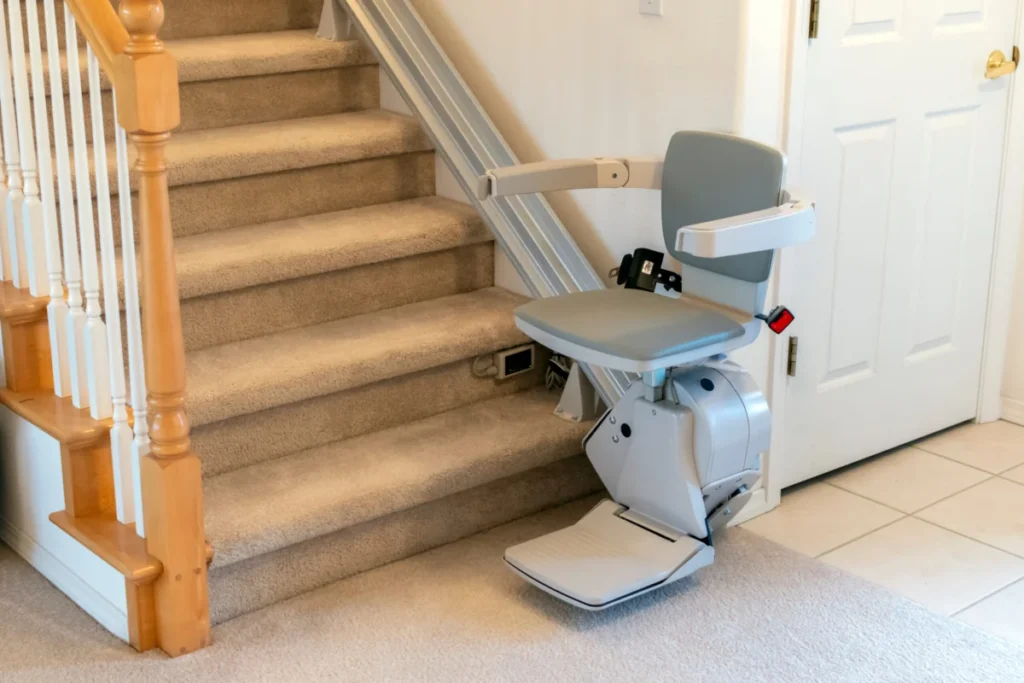
Stair lifts, vital mobility aids for individuals with disabilities, represent a prime example where the combination of braking and self-locking is not just beneficial but absolutely essential. These systems prioritize both efficiency and, above all, passenger safety. A typical stair lift operates by moving a chair along a rail, often powered by a fractional-horsepower DC gearmotor.

- Brake’s Role: When a stair lift needs to stop—either at the top or bottom of the stairs, or in an emergency—a dedicated brake is crucial to quickly and reliably bring the assembly to a complete halt. This immediate deceleration prevents overshooting the landing, ensures precise positioning, and, most critically, safeguards the passenger from sudden jolts or uncontrolled movement, particularly on inclines. This rapid stopping capability is often achieved through an electromagnetic brake, which engages when power is removed or an emergency stop is activated.
- Self-Locking Gearbox’s Role: Once the brake has brought the lift to a standstill, the self-locking worm gearbox takes over the responsibility of holding the chair securely in place, even if power is completely removed. This prevents any gravitational drift, especially important on sloped rails. Without this static holding capability, an unpowered lift could slowly creep downwards, creating an unstable and dangerous situation for the passenger during transfer or while waiting. The self-locking feature ensures that the lift remains stationary without continuous motor power, contributing to energy efficiency by reducing parasitic loads.
The design of such systems must adhere to stringent safety standards, such as those outlined by the American National Standards Institute (ANSI) A17.1/CSA B44 for elevators and escalators, which include provisions for emergency braking and securing mechanisms. The failure to properly integrate both a dynamic brake and a static-holding worm gear could lead to severe injuries, product liability issues, and regulatory non-compliance.
Rotisserie Ovens: Preventing Burns and Maintaining Position
Commercial rotisserie ovens, found in supermarkets and restaurants, offer another compelling case for this dual approach. These ovens continuously rotate spits of meat, but require the rotation to pause immediately when the oven door is opened. This is primarily a safety measure to prevent cooks from being burned by hot, spinning meat or from accidentally contacting moving parts.
- Brake’s Role: Upon opening the oven door, a sensor triggers an immediate stop command. A dedicated brake is required to bring the heavy, often unbalanced spits of meat to a rapid and controlled halt. Without an active braking mechanism, the inertia of the rotating assembly, especially with unevenly weighted chickens or roasts, would cause it to coast, creating a burn hazard and making it difficult for the operator to access the food safely.
- Self-Locking Gearbox’s Role: Once stopped by the brake, the self-locking gearbox ensures that the spits remain in their stationary position. This is particularly vital because the load (the meat) is often unbalanced. If only a brake were present, and it released its hold (e.g., due to power fluctuation or wear), the unbalanced load could cause the spits to slowly rotate due to gravity, potentially hitting the operator or making it difficult to load/unload. The worm gear’s static lock prevents this unwanted gravitational rotation, ensuring the spit remains fixed until the door is closed and rotation is resumed. This combination ensures operator safety and operational efficiency in a demanding commercial kitchen environment.
Conversely: Applications Requiring Backdrivability
While many applications benefit from the locking characteristic of worm gears, an equally important set of applications demands the exact opposite: axes that are fully backdrivable. This means the output shaft can easily drive the input shaft, often with minimal resistance. While design engineers may not explicitly ask for "backdrivable gearing," the requirement for low resistance to backdriving is frequently articulated through other functional specifications.

Railroad Crossing Gates: A Failsafe Mechanism
Railroad crossing gates are a critical safety infrastructure designed to protect motorists from oncoming trains. Their operation is governed by extremely strict requirements, particularly regarding their behavior during power failures.
- The Failsafe Imperative: In the event of a power failure, the gates must fall down and block vehicle traffic. This is a non-negotiable failsafe design principle, as a power outage also means that other signals (lights, sounds) might fail to alert drivers of an approaching train. The system relies on gravity to bring the gate arms down into their protective position.
- Backdrivability’s Role: This critical function necessitates a gearbox that is easily backdrivable. The weight of the gate arm itself, even with counterbalances designed to reduce the load on the motor during lifting, must be sufficient to overcome the internal friction and drive the motor in reverse through the gearbox, allowing the arm to descend. If the gearbox were self-locking or offered significant resistance to backdriving, the gate arm would remain in its raised position during a power outage, creating an extremely dangerous situation where vehicles could mistakenly cross the tracks.
- Engineering Complexity: The design of these gates, while seemingly simple, is highly complex. Counterweights are meticulously calibrated to allow a relatively small, low-power motor to lift the arm efficiently, while simultaneously ensuring that the net gravitational force on the arm is sufficient to reliably lower it in a power-off scenario. This delicate balance underscores the absolute necessity of a backdrivable gearbox.
Parking Barrier Arms: Manual Override and Convenience
Parking garage barrier arms also demonstrate the need for backdrivability, albeit for different reasons related to user convenience and operational resilience.
- Manual Intervention: If a system fails (e.g., electronic malfunction, sensor error, or power outage) or if a driver loses their ticket, an attendant or security personnel must be able to manually lift the gate. This manual override capability is crucial for maintaining traffic flow and preventing congestion.
- Backdrivability for Ease of Use: For manual lifting to be feasible and not overly strenuous, the electromechanical assembly, including the motor’s gearbox, must be easily backdrivable. A gearbox with high internal friction or a self-locking characteristic would make manual lifting extremely difficult, requiring excessive force and potentially causing injury to the attendant or damage to the mechanism.
- System Design: Designers often choose parallel-shaft gearmotor configurations or specific gear types (e.g., helical, spur) known for their high efficiency and low resistance to backdriving for such applications. This ensures that in a contingency, human intervention can quickly resolve the situation.
Industry Best Practices and Design Implications
The recurring confusion surrounding "self-locking" gearmotor behavior highlights a critical need for clearer communication and a deeper understanding of fundamental mechanical principles within the engineering community. Many manufacturers, recognizing this persistent misunderstanding, have begun to de-emphasize direct references to "self-locking" and instead focus on specific performance characteristics, such as "static holding torque" or "resistance to backdriving."

Key Takeaways for OEM Design Engineers:
- Define Requirements Clearly: Before selecting a gearmotor, precisely define whether the application requires dynamic braking, static holding, or backdrivability, and under what conditions (e.g., normal operation, emergency stop, power failure).
- Understand the Physics: A thorough understanding of gear geometry, friction coefficients, and the dynamics of moving loads (inertia, kinetic energy) is paramount.
- Specify Dedicated Brakes: For any application requiring active deceleration or a failsafe stop from a moving state, a dedicated electromechanical brake should be specified in conjunction with the gearmotor. Relying on inherent gear friction or the static-holding property of worm gears for dynamic braking is a hazardous misapplication.
- Consult Experts: Engage early with gearmotor manufacturers and motion control specialists. Companies like Bodine Electric Co. possess extensive expertise and can guide OEMs to the proper selection and application of their products, offering insights into optimal system design.
- Adhere to Standards: Always design to meet or exceed relevant industry safety standards (e.g., ISO, ANSI, OSHA, CE directives). These standards often dictate specific performance criteria for stopping times, holding capabilities, and emergency procedures.
- Conduct Risk Assessments: Implement robust risk assessment methodologies (e.g., FMEA – Failure Mode and Effects Analysis) to identify potential hazards arising from component misapplication and to ensure that safety functions are adequately addressed.
The implications of misapplying gearmotor characteristics extend beyond immediate operational issues. They encompass:
- Safety Hazards: The most severe consequence, leading to worker injuries, public harm, or property damage.
- Operational Downtime: Uncontrolled stops or failures necessitate maintenance, leading to costly production interruptions.
- Increased Maintenance Costs: Components operating outside their intended design parameters can experience premature wear and failure.
- Legal and Reputational Risks: Product liability lawsuits, regulatory fines, and damage to a company’s brand reputation can result from safety incidents.
- Redesign Costs: Discovering a misapplication late in the design cycle or after deployment can lead to expensive redesigns, retrofits, and product recalls.
In conclusion, while the static self-locking behavior of worm gears can provide significant benefits for certain designs—particularly where a load needs to be securely held in place without continuous power once stopped—it is crucial to recognize its fundamental limitation: it is not a substitute for dynamic braking. Engineers must adopt a holistic approach to motion control system design, clearly distinguishing between static holding and dynamic deceleration requirements, and integrating appropriate, dedicated braking solutions where safety or controlled stopping is paramount. Collaborative efforts with experienced component manufacturers and adherence to established engineering best practices are vital to ensuring safe, efficient, and compliant machinery in all applications.

These insights were gained in a recent conversation with Terry Auchstetter of Bodine Electric Co., a leading manufacturer in the motion control industry. For more information, visit bodine-electric.com.






