
California’s Ontario International Airport (ONT) has been awarded a substantial $4.15 million grant from the Federal Aviation Administration (FAA) to bolster its zero-emission infrastructure and significantly expand its fleet of electric ground support equipment (GSE). This pivotal funding, secured through the FAA’s Voluntary Airport Low Emissions (VALE) program, marks a significant stride for ONT in its commitment to environmental sustainability and operational efficiency. The grant, the largest of its kind received by the airport to date, will be instrumental in phasing out fossil fuel-dependent ground operations, particularly at Terminals 2 and 4, contributing to cleaner air quality and a reduction in greenhouse gas emissions within the airport environment.
The strategic infusion of funds underscores the growing recognition of airports as critical hubs for emissions reduction initiatives. Ground support equipment, which includes a wide array of vehicles such as baggage tugs, aircraft tractors, refueling trucks, and de-icing units, operates within a confined airport environment. Their typical operational patterns—characterized by short distances, relatively low speeds, and frequent stops and starts—present an almost ideal use case for battery-electric vehicle technology. This makes the electrification of GSE a highly impactful strategy for mitigating the aviation sector’s environmental footprint. As global demand for on-road fossil fuels experiences a noticeable decline, the aviation industry, historically contributing approximately 4% to Earth’s global warming, is increasingly scrutinized for its emissions. Investments in electrifying airport operations, therefore, offer a disproportionately high return in terms of environmental benefit.
Atif Elkadi, CEO of the Ontario International Airport Authority, expressed his enthusiasm and gratitude for the grant, stating, "This latest investment by the FAA is a tremendous vote of confidence in the work we are doing to build a more sustainable Ontario International Airport. Three VALE grants in three years represents meaningful progress, and this latest award will allow us and our airline partners to continue reducing emissions while investing in the infrastructure ONT will need for the future." This consistent support from the FAA highlights a successful track record for ONT in pursuing and implementing emission-reducing projects, solidifying its position as a leader in airport sustainability.

The VALE grant program is specifically designed to assist airports in achieving air quality goals by providing financial support for eligible projects that actively reduce greenhouse gas (GHG) emissions. ONT’s latest award will directly address the need for aircraft and ground equipment to burn fuel while parked at the terminal gates, a significant source of localized air pollution and greenhouse gas emissions. By facilitating the transition to electric GSE, the airport aims to create a cleaner, quieter, and more efficient operational environment. Coupled with Ontario International Airport’s commitment of a 25% cost match, the total investment for electric GSE at Terminals 2 and 4 will reach an impressive $5.53 million, transforming a substantial portion of the airport’s ground operations.
The Growing Imperative for Electric Ground Support Equipment
The aviation industry is under increasing pressure to decarbonize its operations. While the focus often remains on reducing emissions from aircraft in flight, the ground operations at airports represent a significant and often overlooked area for emission reductions. The International Air Transport Association (IATA) has set ambitious goals for the industry to achieve net-zero carbon emissions by 2050, and this requires a multi-pronged approach that includes sustainable aviation fuels, advancements in aircraft technology, and, crucially, the electrification of ground infrastructure.
Ground support equipment, due to its operational profile, is a prime candidate for electrification. Unlike the complex challenges of electrifying long-haul aircraft, electric GSE can be effectively deployed with existing battery and charging technologies. The benefits are multifaceted:
- Environmental Impact: Eliminating the combustion of fossil fuels by GSE directly reduces local air pollution, including particulate matter and nitrogen oxides, which are detrimental to public health in communities surrounding airports. It also significantly cuts down on greenhouse gas emissions, contributing to global climate change mitigation efforts.
- Operational Efficiency and Cost Savings: Electric vehicles often have lower operating costs due to cheaper energy prices (electricity versus diesel or jet fuel) and reduced maintenance requirements. Electric motors have fewer moving parts than internal combustion engines, leading to less wear and tear and fewer breakdowns.
- Noise Reduction: Electric GSE operates much more quietly than its traditional counterparts, contributing to a more pleasant environment for passengers, airport staff, and nearby residents.
- Enhanced Safety: Quieter operations can improve communication between ground personnel, potentially leading to fewer accidents.
The FAA’s VALE program plays a crucial role in incentivizing airports to make these necessary investments. Since its inception, the program has funded numerous projects across the United States, enabling airports to adopt cleaner technologies and improve air quality. ONT’s repeated success in securing VALE grants demonstrates a proactive approach to sustainability, positioning it as a forward-thinking aviation hub.
A Timeline of Sustainability at Ontario International Airport
ONT’s journey towards a greener future has been a progressive one, marked by consistent efforts to integrate sustainable practices. The airport’s recent success with the VALE grant is not an isolated event but rather a culmination of a sustained commitment:
- [Year of Previous VALE Grant 1]: Ontario International Airport likely received its first VALE grant, initiating its foray into electric GSE or other emission reduction technologies. This initial investment would have laid the groundwork for future expansions and technological adoption.
- [Year of Previous VALE Grant 2]: A subsequent VALE grant would have allowed the airport to scale up its efforts, perhaps expanding the types of GSE electrified or increasing the number of units in operation. This would have demonstrated the viability and benefits of the initial investments.
- [Current Year, e.g., 2024 or 2025]: The latest and largest VALE grant of approximately $4.15 million is awarded, signifying a major leap forward in the airport’s electrification strategy. This award specifically targets Terminals 2 and 4, indicating a focused approach to maximizing the impact of the investment.
This chronological progression illustrates a strategic and iterative approach to sustainability. By securing these grants over three consecutive years, ONT has not only secured vital funding but has also built a compelling case for the effectiveness of its electrification initiatives, encouraging further support from federal agencies and industry partners.
Supporting Data and the Broader Context
The impact of ground support equipment on airport emissions is significant. While precise figures vary by airport size and operations, GSE can contribute a substantial portion of an airport’s total direct emissions. A study by the Environmental Protection Agency (EPA) has indicated that while aircraft operations are the largest source of aviation-related emissions, ground support vehicles also play a role, especially in localized air quality.
The transition to electric GSE is not just an environmental imperative but also an economic one. While the initial capital investment for electric vehicles and charging infrastructure can be substantial, the long-term savings on fuel and maintenance, coupled with potential incentives and grants, make it an increasingly attractive proposition. The total cost of ownership for electric GSE is projected to be lower than for traditional diesel-powered equipment over the vehicle’s lifespan.

Furthermore, the electrification of GSE aligns with broader trends in the transportation sector. As battery technology advances and charging infrastructure becomes more widespread, electric vehicles are becoming increasingly viable across various industries. Airports, with their predictable operational patterns and dedicated infrastructure, are well-positioned to lead in the adoption of these cleaner technologies.
Official Responses and Industry Reactions
The enthusiastic response from Atif Elkadi, CEO of the Ontario International Airport Authority, reflects the positive sentiment within the airport management and among its airline partners. The ability to secure funding for sustainable infrastructure is often a collaborative effort, requiring strong partnerships between airport authorities, airlines, and government agencies.
Airline partners, in particular, stand to benefit from the transition to electric GSE. Reduced operational costs at the airport can translate into more competitive pricing for air travel. Moreover, many airlines have their own ambitious sustainability goals, and the electrification of airport operations is a crucial component of achieving them.
Industry analysts and environmental advocates have largely lauded such initiatives. Organizations focused on reducing aviation’s carbon footprint view the expansion of electric GSE as a critical step in the right direction. The adoption of these technologies by airports like ONT serves as a model for other airports seeking to enhance their environmental performance.

Analysis of Implications and Future Outlook
The significant funding secured by Ontario International Airport for electric GSE has several key implications:
- Enhanced Air Quality: The most immediate impact will be a tangible improvement in air quality around Terminals 2 and 4, leading to a healthier environment for passengers, employees, and the surrounding communities. Reduced emissions of pollutants like NOx and particulate matter are crucial for public health.
- Operational Cost Efficiencies: Over time, the airport and its airline partners can expect to see reduced operating expenses due to lower energy and maintenance costs associated with electric GSE. This can contribute to greater financial sustainability for the airport.
- Technological Advancement and Innovation: The expansion of electric GSE at ONT will likely spur further innovation in the field. As demand increases, manufacturers will be incentivized to develop more advanced, efficient, and cost-effective electric ground support equipment.
- Leadership in Sustainability: ONT’s consistent success in securing VALE grants positions it as a leader in airport sustainability. This can attract environmentally conscious airlines and passengers, further enhancing the airport’s reputation.
- Scalability and Future Expansion: The successful implementation of electric GSE at Terminals 2 and 4 will provide a strong foundation for expanding these initiatives to other areas of the airport. This phased approach allows for learning, adaptation, and optimization before full-scale deployment.
Looking ahead, the trend towards electrifying airport ground operations is expected to accelerate. As battery technology continues to improve and charging infrastructure becomes more robust, the economic and environmental case for electric GSE will only strengthen. Federal and state governments are likely to continue offering incentives and grants to support this transition, recognizing its importance in achieving broader climate goals.
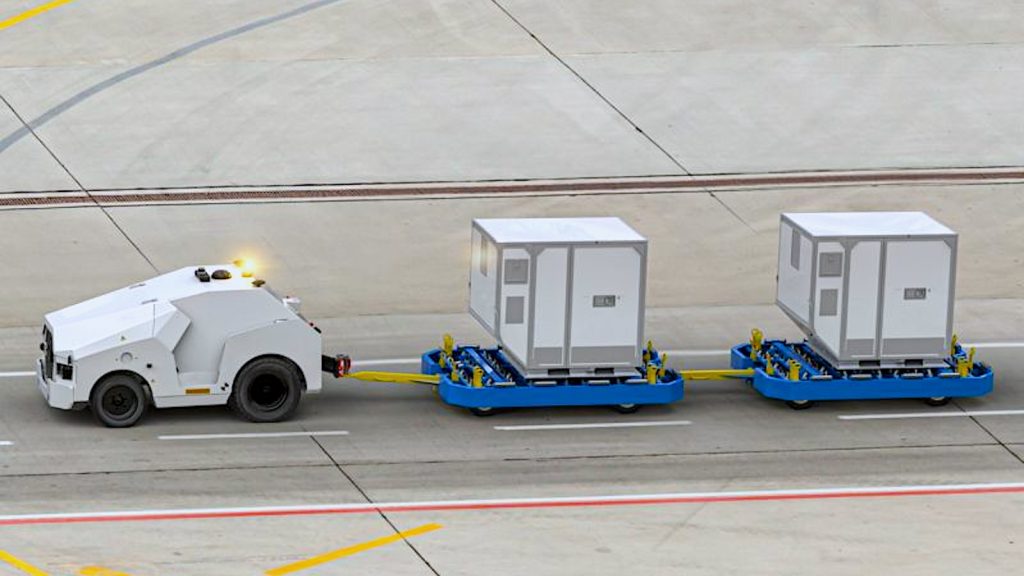
The inclusion of images showcasing various types of electric GSE, such as autonomous baggage handlers and electric aircraft tugs, in the original article context, serves as a visual testament to the evolving landscape of airport operations. These technologies are no longer futuristic concepts but are actively being deployed and refined. The mention of companies like Shire, which is launching its first range of electric GSE, and OshKosh, a prominent player in airport vehicles, further highlights the industrial momentum behind this transformation.
In conclusion, the substantial FAA grant awarded to Ontario International Airport is a significant development in the ongoing effort to decarbonize the aviation sector. By investing in electric ground support equipment, ONT is not only enhancing its environmental performance but also paving the way for a more efficient, cost-effective, and sustainable future for air travel. This commitment sets a positive precedent and underscores the vital role that airports play in achieving global climate objectives.