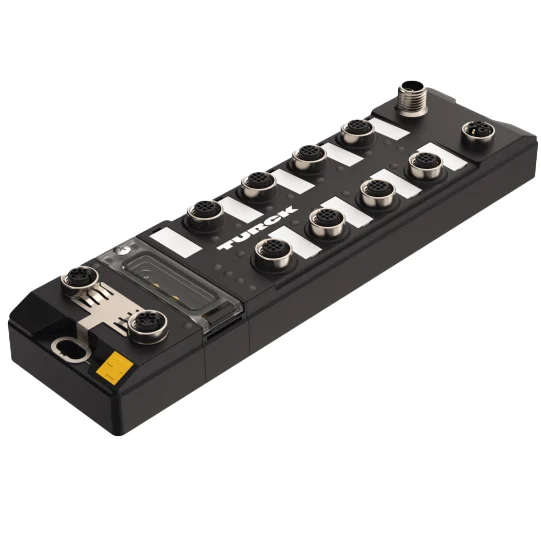
TURCK, a global leader in industrial automation, has announced the preview of its latest innovation, the TBEN-LLH-4RMC, a compact multiprotocol Ethernet I/O module meticulously engineered for the precise control and seamless integration of conveyor roller motors. This module is specifically designed to enhance efficiency and flexibility within demanding material handling and intralogistics applications. The highly anticipated launch of the TBEN-LLH-4RMC in the United States is strategically scheduled for the second quarter of 2026, marking a significant step forward in decentralized automation solutions for the industry.
Advancing Intralogistics with Decentralized Intelligence
The TBEN-LLH-4RMC is poised to address critical operational challenges faced by modern intralogistics, packaging, and manufacturing environments. These sectors increasingly demand robust motor control, unparalleled system flexibility, and long-term durability to maintain competitive edge and meet escalating consumer demands. Traditional centralized control systems often grapple with complex wiring, lengthy installation times, and reduced flexibility when modifications or expansions are required. TURCK’s new module offers a compelling alternative, championing a decentralized approach that brings intelligence closer to the field level.
At its core, the TBEN-LLH-4RMC is built for decentralized automation, a paradigm shift gaining substantial traction within Industry 4.0 frameworks. It ingeniously combines onboard logic, comprehensive I/O functions, and a rugged housing, creating a powerful, self-contained unit capable of supporting field-level control directly on conveyor systems. This integration of processing power at the edge significantly reduces reliance on bulky, centralized Programmable Logic Controllers (PLCs) for every function. By offloading control tasks and simplifying wiring architectures, the module is designed to empower manufacturers and system integrators to drastically cut down on installation complexities, minimize commissioning times, and streamline ongoing maintenance requirements, translating into substantial operational savings and improved system uptime.
The Strategic Imperative for Intelligent Conveyor Systems
The global intralogistics market, estimated to be valued at hundreds of billions of dollars and growing at a Compound Annual Growth Rate (CAGR) exceeding 8% annually, underscores the immense pressure on businesses to optimize their internal material flow. E-commerce expansion, labor shortages, and the drive for greater efficiency are propelling the adoption of advanced automation solutions. Conveyor systems, the backbone of almost every modern warehouse, distribution center, and manufacturing facility, are at the forefront of this transformation. However, the effectiveness of these systems hinges on intelligent control of individual components, particularly the roller motors that drive material movement.
Conventional methods often involve extensive cable runs from a central PLC to each motor, leading to intricate wiring harnesses, increased material costs, and potential points of failure. The TBEN-LLH-4RMC aims to circumvent these issues by providing a localized control solution. Its ability to manage multiple roller motors via a single compact module, communicating over a standard Ethernet network, represents a leap in simplifying system architecture. This not only reduces the physical footprint of control infrastructure but also enhances the diagnostic capabilities, allowing for quicker identification and resolution of issues, thereby minimizing costly downtime.

Technological Foundations: Multiprotocol and Onboard Logic
A key differentiator of the TBEN-LLH-4RMC is its multiprotocol Ethernet capability. In heterogeneous industrial environments, where equipment from various vendors might utilize different communication protocols, compatibility can be a significant hurdle. TURCK’s module is engineered to seamlessly integrate with leading industrial Ethernet protocols such as PROFINET, EtherNet/IP, and Modbus TCP. This multiprotocol flexibility ensures that the TBEN-LLH-4RMC can be deployed across a wide array of existing and new automation infrastructures without necessitating extensive gateway solutions or complex protocol conversions, thereby reducing integration effort and cost for system integrators.
The inclusion of onboard logic is another pivotal feature. This allows the module to execute localized control algorithms and decision-making processes directly at the field level, rather than relying solely on the central PLC. For conveyor systems, this could mean managing zones, optimizing motor speeds based on load, controlling accumulation, or handling error conditions for a specific section of the conveyor autonomously. Such edge intelligence enhances system responsiveness, reduces the communication burden on the main control system, and contributes to a more resilient and distributed control architecture. This aligns perfectly with the principles of the Industrial Internet of Things (IIoT), where smart devices communicate and act independently, contributing data to a larger network.
Robust Design for Demanding Environments
Industrial environments are notoriously harsh, characterized by dust, moisture, vibrations, and extreme temperatures. Any automation component deployed in these settings must be built to withstand such conditions. While specific ingress protection (IP) ratings and material specifications are typically detailed closer to launch, TURCK’s commitment to "rugged housing" for the TBEN-LLH-4RMC signifies its design for durability. This typically implies high IP ratings (e.g., IP67 for protection against dust and temporary immersion in water), resistance to shock and vibration, and a broad operating temperature range, ensuring reliable performance and a long operational lifespan even in the most challenging industrial settings. This robust construction is essential for minimizing component failures and ensuring continuous operation of critical material handling systems.
Chronology and Market Impact
The announcement of the TBEN-LLH-4RMC in its preview phase signals TURCK’s proactive approach to addressing evolving market needs well in advance of a full commercial release. The Q2 2026 launch date for the U.S. market provides a clear timeline for system integrators and end-users to plan their automation upgrades and new installations. This strategic timing allows for thorough testing and validation, ensuring that the module meets the high standards of performance and reliability expected from industrial-grade components.
Upon its availability, the TBEN-LLH-4RMC is expected to have several key impacts:

- Enhanced Operational Efficiency: By simplifying wiring and enabling faster diagnostics, the module contributes directly to reduced system downtime and increased throughput.
- Greater System Flexibility: The decentralized nature allows for easier reconfiguration and expansion of conveyor lines, adapting to changing production demands or warehouse layouts without extensive rewiring.
- Reduced Total Cost of Ownership (TCO): Lower installation costs, decreased maintenance efforts, and improved reliability collectively contribute to a more favorable TCO over the lifetime of the system.
- Acceleration of IIoT Adoption: As a smart, connected device at the edge, the module facilitates the collection of valuable operational data from conveyor motors, enabling predictive maintenance, performance analytics, and further optimization through advanced analytics.
Inferred Industry Perspectives
While direct statements from TURCK executives are typically reserved for official launches, the preview itself reflects the company’s confidence in addressing a significant market need. One could infer a statement from a TURCK spokesperson emphasizing their dedication to innovation and their commitment to providing solutions that streamline complex industrial processes. "The TBEN-LLH-4RMC represents our unwavering commitment to empowering our customers with cutting-edge technology that simplifies their operations while maximizing efficiency and flexibility," a hypothetical TURCK representative might state. "We understand the pressures faced by intralogistics and manufacturing sectors, and this module is designed to directly alleviate those challenges by bringing intelligence and control right to the heart of their material handling systems."
From the perspective of system integrators, the module promises simplified project execution. "Integrating diverse components into a cohesive automation system is often the most time-consuming part of a project," an inferred system integrator might comment. "A multiprotocol, compact module like TURCK’s TBEN-LLH-4RMC, with onboard logic, significantly reduces the complexity of wiring and programming, allowing us to deliver more agile and cost-effective solutions to our clients."
Broader Implications for Industrial Automation
The introduction of the TBEN-LLH-4RMC underscores a broader trend in industrial automation: the increasing distribution of intelligence and control from centralized PLCs to smart, field-level devices. This paradigm shift is fundamental to achieving the promise of Industry 4.0, which envisions highly flexible, interconnected, and intelligent manufacturing and logistics systems. Edge computing, enabled by modules like the TBEN-LLH-4RMC, plays a crucial role by processing data closer to its source, reducing latency, and enabling faster, more localized decision-making.
Furthermore, the module’s focus on conveyor roller motors highlights the granular level of control now achievable. By providing users with a dedicated field-level option for controlling these critical components, TURCK is enabling greater precision in material flow, which is vital for operations requiring high throughput, accurate sorting, and minimal damage to goods. This level of control can directly impact factors like energy consumption through optimized motor operation and prolong the lifespan of mechanical components by preventing excessive wear and tear.
Conclusion
TURCK’s preview of the TBEN-LLH-4RMC Ethernet I/O module for roller motors represents a significant development for the industrial automation landscape, particularly within the rapidly expanding intralogistics and material handling sectors. By offering a compact, multiprotocol, and intelligent decentralized solution, TURCK is directly addressing the industry’s need for simpler, more flexible, and more robust control systems. The module’s anticipated launch in Q2 2026 will provide manufacturers and system integrators with a powerful tool to enhance operational efficiency, reduce installation and maintenance costs, and further advance their journey towards fully integrated and intelligent factory and warehouse environments. As industrial operations continue to evolve under the influence of Industry 4.0 and IIoT, solutions like the TBEN-LLH-4RMC will be instrumental in building the resilient, responsive, and highly optimized systems of the future.