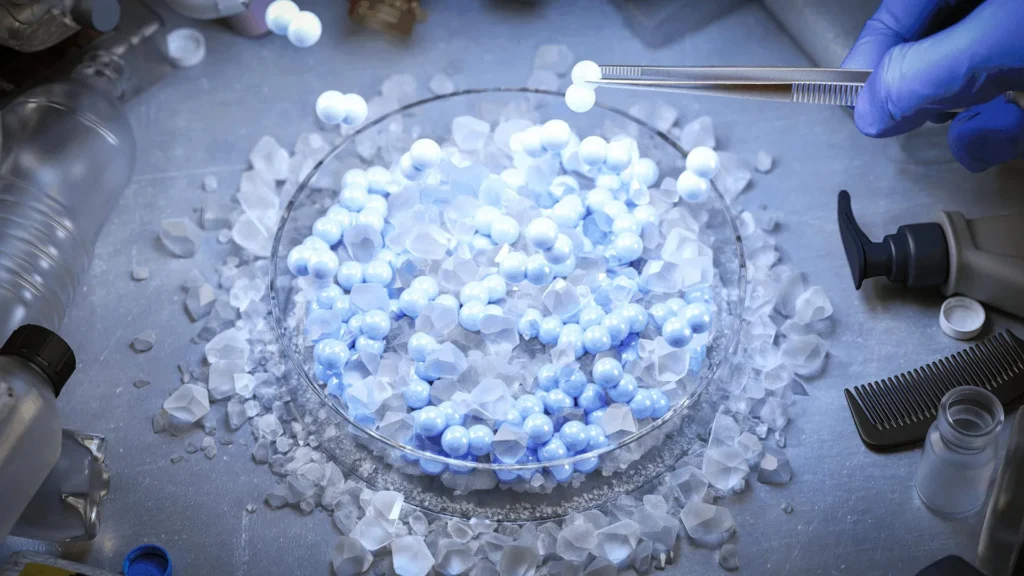
The global plastic crisis has reached a critical juncture, with millions of tons of synthetic polymers accumulating in landfills and oceans every year. While plastic remains an indispensable material in modern infrastructure, medical technology, and consumer goods, its end-of-life management remains one of the most significant environmental challenges of the 21st century. In a major scientific breakthrough, researchers from the UCLA Samueli School of Engineering and Ewha Womans University in South Korea have unveiled a novel chemical process capable of transforming mixed plastic waste into high-purity hydrogen fuel. This method, detailed in a study published in the Proceedings of the National Academy of Sciences (PNAS), offers a dual-purpose solution: it provides a scalable way to manage non-recyclable plastic while generating a clean energy source essential for the global transition away from fossil fuels.
The current state of plastic recycling is characterized by inefficiency and high operational costs. According to global environmental data, approximately 400 million tonnes of plastic waste are produced annually. Of this staggering amount, only about 9% is successfully recycled through conventional mechanical means. The vast majority—roughly 79%—ends up in landfills or the natural environment, where it can take centuries to decompose. Another 12% is incinerated, a process that, while reducing physical volume, releases significant amounts of carbon dioxide and toxic byproducts into the atmosphere. The primary barrier to higher recycling rates is the complexity of sorting; different types of plastics, such as polyethylene terephthalate (PET), polyethylene (PE), and polypropylene (PP), must be meticulously separated before they can be processed. The UCLA and Ewha Womans University team has effectively bypassed this hurdle by developing a system that processes these materials together in a single reactor.
The Science of Alkaline Thermal Treatment
The cornerstone of this innovation is a process known as alkaline thermal treatment (ATT). Unlike traditional recycling, which often focuses on melting and reforming plastic into lower-quality products, ATT utilizes a chemical reaction to break down the molecular structure of polymers. In this setup, plastic waste is mixed with sodium hydroxide (NaOH) and subjected to heat. This triggers a series of chemical reactions that strip hydrogen atoms from the plastic chains.
The researchers demonstrated that this method can handle a mixture of the three most common types of plastic—PET (used in beverage bottles), PE (found in grocery bags and containers), and PP (used in automotive parts and packaging)—simultaneously. The resulting hydrogen gas achieved a purity level exceeding 90%, making it a viable candidate for use in hydrogen fuel cells and industrial applications. Crucially, the process operates at temperatures significantly lower than those used in conventional gasification. While traditional steam gasification requires temperatures often exceeding 800 to 1,000 degrees Celsius, the ATT method functions effectively at 300 to 400 degrees lower. This reduction in temperature translates to lower energy consumption and reduced operational costs, moving the technology closer to economic viability.
Overcoming the Resistance of PE and PP
One of the most significant technical achievements of the study was the successful conversion of polyethylene and polypropylene. These plastics are notoriously difficult to break down because they consist almost entirely of carbon-hydrogen bonds, which are chemically stable and resistant to many forms of chemical attack. In early tests of the ATT process, PET reacted efficiently due to the presence of oxygen in its molecular structure, but PE and PP remained largely inert, yielding very little hydrogen.
To solve this, the research team introduced a "thermal oxidation pretreatment" step. Before the plastics enter the main reaction chamber, they are briefly heated in the presence of air at relatively mild temperatures. This step introduces oxygen-containing functional groups into the long polymer chains of the PE and PP. These groups act as "reactive handles," allowing the subsequent alkaline treatment to latch onto the molecules and break them down. This two-stage approach—activation followed by conversion—ensured that all three plastic types could be processed with high efficiency, regardless of their initial chemical resistance.
A Breakthrough in Carbon Sequestration
Beyond the production of hydrogen, the ATT process addresses the "carbon problem" inherent in plastic disposal. When plastics are burned or gasified, the carbon they contain is typically released as carbon dioxide (CO2). In the ATT reactor, however, the sodium hydroxide serves a dual purpose. While it facilitates the release of hydrogen, it also reacts with the carbon released from the plastic to form sodium carbonate (Na2CO3), a solid mineral.
The researchers’ analysis revealed that more than 75% of the carbon originally present in the plastic waste was captured and stored in these stable carbonate compounds or liquid organic residues. Less than 13% of the carbon entered the gas phase, and the amount of CO2 released directly into the atmosphere during the reaction was described as negligible. This "closed-loop" approach to carbon management is a significant departure from existing energy-from-waste technologies. Furthermore, the sodium carbonate produced can be further processed into calcium carbonate through a simple recovery step. Calcium carbonate is a widely used material in the construction, paper, and pharmaceutical industries, providing a potential secondary revenue stream and ensuring that the captured carbon remains sequestered in solid form for the long term.
From Biomass to Plastic: The Evolution of the Method
The development of this technology followed a unique chronological path. Ah-Hyung "Alissa" Park, the Ronald and Valerie Sugar Dean of UCLA Samueli, and Woo-Jae Kim, a professor of chemical engineering and materials science at Ewha Womans University, did not initially set out to solve the plastic crisis. Their original work focused on finding carbon-neutral ways to produce hydrogen from biomass, specifically seaweed.
In 2020, the team published research showing that alkaline thermal treatment could effectively extract hydrogen from organic matter. However, as the global conversation shifted toward the "circular economy"—an economic system aimed at eliminating waste and the continual use of resources—the researchers realized that the chemical principles they had applied to biomass could be adapted for synthetic polymers. The transition from biomass to plastic required significant modification, particularly the aforementioned oxidation pretreatment, but the core philosophy remained the same: using alkaline chemistry to unlock energy while mineralizing carbon.
Global Context and Market Implications
The timing of this research is critical as nations scramble to meet the targets set by the Paris Agreement. Clean hydrogen is increasingly viewed as the "Swiss Army knife" of decarbonization, capable of powering heavy industry, shipping, and long-haul trucking where battery electric technology falls short. However, most hydrogen today is "grey hydrogen," produced from natural gas through a process that releases vast amounts of CO2. "Green hydrogen," produced via electrolysis using renewable electricity, is the gold standard but remains expensive and resource-intensive.
The UCLA-Ewha method introduces what could be considered a "circular hydrogen" model. By using waste as a feedstock, it reduces the need for virgin fossil fuels and provides a financial incentive to remove plastic from the waste stream. "We are solving two urgent global problems at the same time," Dean Park stated regarding the study. "Plastic waste is accumulating at alarming rates, and clean hydrogen is essential for decarbonizing energy. This technology tackles both of these challenges in a creative and scalable way."
Addressing the Limits of Existing Technologies
The research paper highlights why this method stands out among other emerging technologies. Other low-temperature approaches, such as solar-driven photoreforming or electrochemical conversion, have shown promise but are often limited to oxygen-containing plastics like PET. This is a major drawback, as PE and PP make up the largest portion of the global plastic waste stream. High-temperature gasification, while capable of handling mixed waste, is energy-intensive and produces a "syngas" that requires extensive cleaning and CO2 separation.
By contrast, the ATT method is the first to demonstrate a "triple-threat" solution: the ability to process mixed unsorted plastics, the use of lower temperatures for energy efficiency, and integrated carbon capture. Professor Woo-Jae Kim emphasized the economic potential of the discovery: "By reducing the sorting costs and process complexity that have been major barriers to commercialization, this technology has the potential to become a next-generation core technology that supports both the hydrogen economy and the circular economy."
Challenges and the Path to Commercialization
Despite the success in the laboratory, the transition from a bench-top reactor to an industrial-scale plant involves significant hurdles. The researchers have been transparent about the fact that the technology is not yet ready for immediate widespread deployment. Future studies will need to focus on the long-term durability of the reactors, the economics of sodium hydroxide recovery, and the integration of the thermal oxidation step into a continuous flow system.
There is also the question of "upstreaming"—how to collect and prepare the mixed plastic waste for the ATT reactors at a scale that can compete with existing landfill tipping fees. However, the potential for carbon credits and the sale of high-purity hydrogen could offset these costs, making the ATT process a centerpiece of future "eco-industrial" parks.
The study was a collaborative international effort supported by the National Research Foundation of Korea. The multidisciplinary team included Jieun Park, Hyerin Seo, and Jiwon Lee from Ewha Womans University; Hyunah Kim from Korea Aerospace University; Hyung-Kyu Lim from Kangwon National University; and Wonho Jung from Sogang University. This diversity of expertise across chemical engineering, materials science, and aerospace applications underscores the broad interest in finding a definitive solution to the plastic-to-energy puzzle.
As the world seeks to decouple economic growth from environmental degradation, innovations like the alkaline thermal treatment of plastics offer a glimpse into a future where "waste" is no longer a liability, but a strategic resource. By turning the environmental burden of plastic into the clean energy of the future, this research marks a significant milestone in the quest for a truly sustainable global economy.