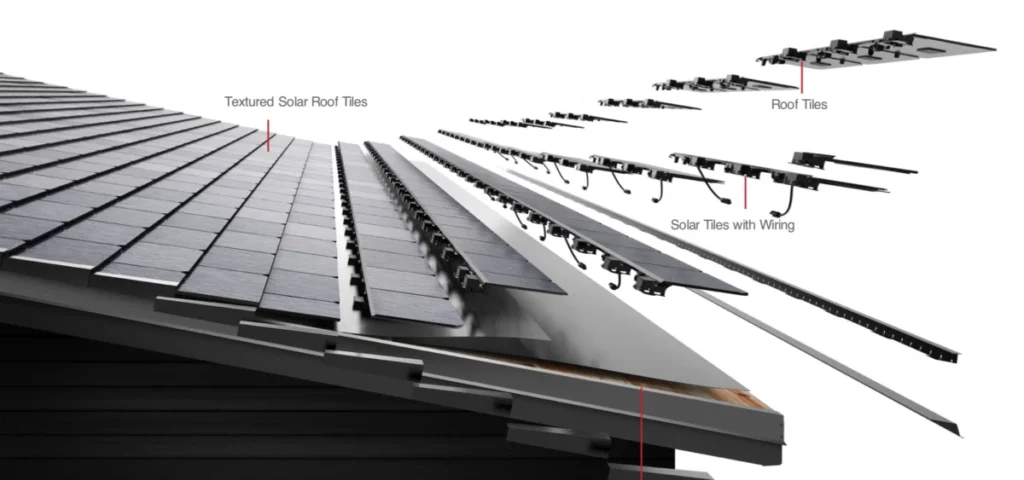
Tesla’s abrupt discontinuation of its ambitious Solar Roof product has plunged a network of third-party contractors into a financial crisis, with many reporting significant investments lost and an uncertain future. The company’s decision to cease production of the solar tiles, effective August, has left certified installers scrambling to salvage projects, manage customer expectations, and grapple with the fallout of a program that promised innovation but delivered widespread disappointment. For these businesses, the move represents not just a lost product line, but a substantial blow to their operational capacity and financial stability, built painstakingly around Tesla’s once-touted vision.
The decision to halt Solar Roof production marks a stark reversal for a product that was intended to be a flagship offering in Tesla’s expanding energy division. Introduced with considerable fanfare, the Solar Roof aimed to revolutionize home energy by integrating photovoltaic technology directly into roofing materials, offering an aesthetically pleasing alternative to traditional solar panels. However, the reality of its deployment has been far from the ambitious projections made by Elon Musk, the company’s CEO. Over approximately seven years, Tesla managed to install a mere 3,000 Solar Roof systems across the United States. This figure falls drastically short of Musk’s repeated assurances of achieving 1,000 weekly installations by 2019-2020, with actual installation rates never exceeding 32 units per week, representing a shortfall of over 95%.
The internal rationale for the discontinuation, as previously reported, points to the product’s lack of financial viability. This has led to the quiet removal of the Solar Roof from Tesla’s website and navigation menus, redirecting interested customers to the company’s conventional solar panel offerings. This move signifies the end of a product that had, for over a year, been operating in a precarious state, with its future increasingly in doubt.
The Heavy Toll on Certified Installers
The burden of Tesla’s strategic pivot now falls squarely on the shoulders of the certified roofers and solar contractors who were instrumental in bringing the Solar Roof to market. These businesses, vetted and trained by Tesla, invested heavily in specialized equipment, extensive training for their crews, and dedicated sales efforts, all predicated on the long-term viability of the Solar Roof. Their commitment was not a casual undertaking.

Becoming a certified Solar Roof installer required a significant commitment of time and resources. Contractors were mandated to send their installation teams to multi-week training programs, often located on the West Coast. In many cases, three supervised installations were a prerequisite for certification, ensuring a baseline of competence. This rigorous onboarding process underscores the complexity of the Solar Roof system and the depth of the investment required from these partners.
"It wasn’t simply taking a training; there was investment in learning the system," Ryan Westfall, president of Westfall Roofing, stated in a report by Roofing Contractor. This investment was not just in theoretical knowledge but in the practical application of a product that presented unique installation challenges. The Solar Roof’s installation time was considerably longer than that of conventional solar systems, often taking more than two weeks to complete, compared to the approximately two days required for standard rack-mounted solar arrays. This disparity in installation duration directly impacted the operational efficiency and project throughput for these contractors.
Stranded Investments and Damaged Relationships
Beyond the training and operational adjustments, many installers have reported sinking hundreds of thousands of dollars into developing their Solar Roof capabilities. This financial commitment encompassed building specialized crews, acquiring necessary tooling, and integrating the Solar Roof into their sales pipelines. The abrupt cessation of the product line has left these investments with little to no return, effectively rendering them stranded assets.
The reluctance of some installers to speak publicly about their predicament is a testament to the delicate position they occupy. These businesses often maintain ongoing relationships with Tesla, offering other energy products such as conventional solar panels and Powerwall battery systems. Open criticism of Tesla’s decision could jeopardize these existing business ties, creating a significant dilemma. They are caught in a bind: dependent on Tesla for other revenue streams while simultaneously bearing the financial and operational consequences of the Solar Roof’s demise.
This situation highlights a broader concern regarding the symbiotic relationship between manufacturers and their third-party installation networks. When a manufacturer withdraws a product so decisively, the responsibility for managing the residual impact often falls disproportionately on the smaller, independent businesses that have built their operations around it. Tesla, by offloading the most challenging aspects of the Solar Roof – the installation and customer interface – onto these local companies, then proceeded to pull the product from under them. This has left installers with the unenviable task of servicing a discontinued product for its entire 25-year lifespan, while Tesla retains a comparatively manageable warranty liability for the limited number of installations completed.

Uncertainty Over Warranties and Long-Term Support
Tesla has publicly stated its commitment to honoring existing warranties for Solar Roof systems and providing necessary replacement parts. However, many contractors express skepticism about the long-term feasibility of this promise, given the product’s discontinuation. The 25-year lifespan of a roofing system necessitates a robust and sustained supply chain for repairs and replacements.
Greg Field, owner of PGT Home Energy Solutions, voiced concerns about the future availability of parts, a sentiment echoed by others in the industry. Aaron Nichols of Exact Solar highlighted the potential for significantly increased labor costs associated with servicing the Solar Roof. The intricate design and complex electrical connections of the solar tiles make any repair or replacement a labor-intensive and costly undertaking, especially when specialized knowledge and parts are scarce.
Todd Miller of Isaiah Industries offered a critical perspective, suggesting that Tesla’s approach to the Solar Roof fundamentally misunderstood the roofing industry. He posited that the company treated the product primarily as a piece of solar technology, underestimating the complexities inherent in the roofing sector, which involves long-term durability, weather resistance, and intricate installation methodologies that extend far beyond the electrical components. This misapprehension, he argues, contributed to the product’s eventual downfall and the subsequent difficulties faced by installers.
A Pattern of Disappointment?
The current situation also casts a new light on Tesla’s previous strategic shifts within its energy division. Reports from earlier periods indicated that Tesla was transitioning away from performing its own solar installations, favoring a network of third-party certified installers. At the time, this appeared to be a logical business move, allowing Tesla to focus on manufacturing and product development while delegating the "low-margin, labor-heavy, local business" of installation to specialized partners.
However, in retrospect, this strategy appears to have been a precursor to the current crisis. By exiting the direct installation business, Tesla effectively insulated itself from the most immediate and costly aspects of the Solar Roof’s deployment. When the product was ultimately discontinued, the primary financial and operational burden fell upon the very installers who had been encouraged to build their businesses around it. This sequence of events has led to widespread concern among installers about the long-term reliability of Tesla’s commitments and the potential for similar disruptions in the future.

The broader implication for the building-integrated photovoltaic (BIPV) market is significant. While the concept of seamlessly integrating solar technology into building materials remains compelling, the Tesla Solar Roof saga raises critical questions about manufacturer commitment and partner support. Several installers involved in the Solar Roof program indicated that they would be willing to engage in similar integrated solar projects again, but only with manufacturers who demonstrate a clear commitment to long-term support, parts availability, and transparent communication. The trust required to build a business around a novel product is a fragile commodity, and Tesla’s actions have undoubtedly eroded that trust within its installer network, potentially making it more challenging for future innovators in the BIPV space to find willing and capable partners.
The future of rooftop solar, however, remains bright, particularly with the continued affordability of traditional solar panels. For homeowners considering such installations, platforms like EnergySage offer a transparent and efficient way to obtain free, no-obligation quotes from pre-screened installers. This approach allows consumers to compare options, understand financing, and navigate the process with expert guidance, ensuring a more predictable and satisfactory experience than that which befell many of Tesla’s Solar Roof partners. The lesson from the Solar Roof’s collapse is clear: innovation in the clean energy sector requires not only technological advancement but also a robust and equitable ecosystem of support for the businesses that bring these solutions to consumers.