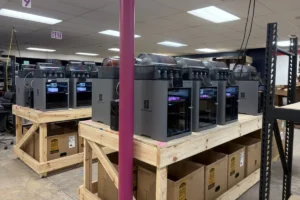
In a previous exploration of additive economics, the cautionary tale of Cathy’s 3D-printed braces business served as a stark reminder of the industry’s inherent complexities. Despite a significant investment of $350,000 in machinery and equipment, a seemingly minor fluctuation in packing density proved to be the Achilles’ heel of her venture, leading to its collapse. This initial setback highlights a critical, often overlooked, aspect of 3D printing: the disproportionate impact of object size and material usage on profitability, particularly when coupled with low per-unit pricing.
Cathy’s predicament was not solely attributed to the $50 price point for her braces, but rather to the sheer scale of the product within the context of 3D printing. While a hand brace might seem modest in everyday terms, it represents a substantial undertaking in the realm of additive manufacturing. Industry veterans, such as those at Materialise, have long advocated for a "think inside the teacup" philosophy, encouraging the identification of 3D printing applications that are roughly the size of a golf ball. This approach emphasizes high-value, intricate, and relatively small-scale items that can maximize the economic benefits of additive processes.

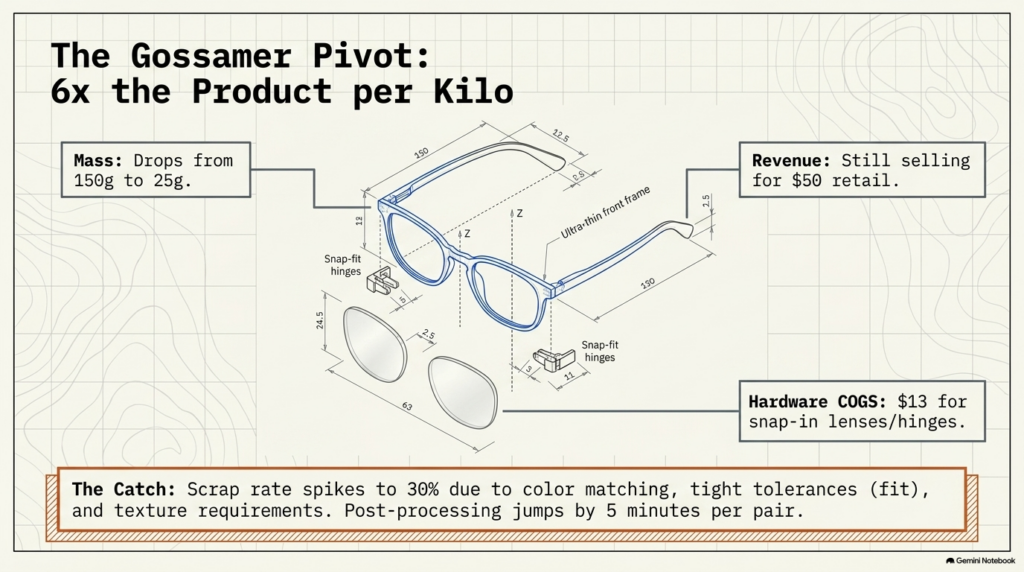
The author, inspired by this principle, has spent fifteen years seeking out such "golf ball-sized" opportunities. While the economic landscape of 3D printing has evolved, the core challenge of scaling remains. The fear of the "massive" – large, material-intensive prints – persists. Instead, the focus shifts towards designing and producing "thin things," objects characterized by minimal layers and reduced material consumption. The argument is compelling: a shift from producing a 150-gram brace to a wispy, 25-gram pair of glasses can yield six times the product per kilogram of material. This dramatically alters the financial calculus, mitigating the impact of failures. A single failed 150-gram brace can represent a significant percentage of a build, whereas a smaller, lighter item minimizes such losses. If the $50 price point can be maintained for these lighter, more desirable items, the business model becomes far more robust.
The perceived value of a product is subjective and context-dependent. While a brace might be readily accepted at $50, the same price for sunglasses could be considered expensive, especially if they lack a recognized designer label. Conversely, designer sunglasses at $50 would be perceived as a bargain. This illustrates how market perception, branding, and consumer expectations fundamentally influence pricing and profitability, regardless of the underlying production costs. The analogy of an ear of corn further clarifies this point. While one might initially value it at $1, its potential transformation into popcorn, a higher-value commodity sold at a movie theater for $6, demonstrates the power of value addition and product metamorphosis. Additive manufacturing, when applied strategically, can unlock such transformations, moving beyond the obvious or readily available applications to uncover novel and more profitable avenues. The key lies in understanding what can be made with additive manufacturing, not just what can be printed directly from existing designs.
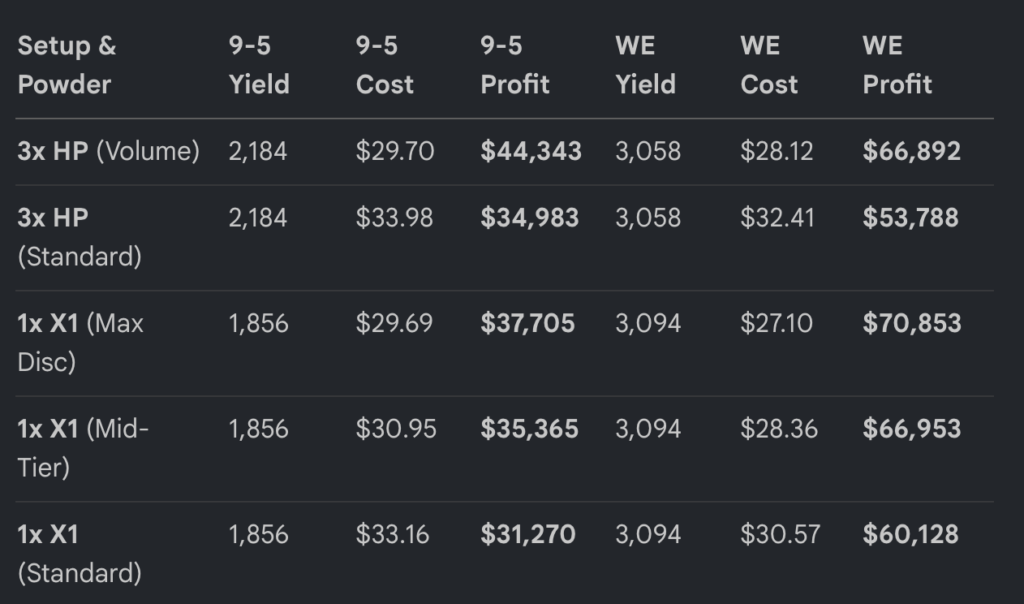
This principle is exemplified by companies like Invisalign, which sells not just aligners, but the promise of a more confident smile. The 3D-printed aligner is an intermediate component within a larger system, a "part of a dream." The author presents a comparative analysis of Cathy’s brace production versus a hypothetical switch to glasses frames. Initial models, accounting for a 5% scrap rate, a $35-an-hour labor rate, and five minutes of labor per part for post-processing and packaging, suggest a substantial difference in potential revenue. Even more impactful is the potential for increased machine utilization, achieved by running operations over weekends without extensive post-processing, reducing machine turnaround time to approximately 15 minutes.
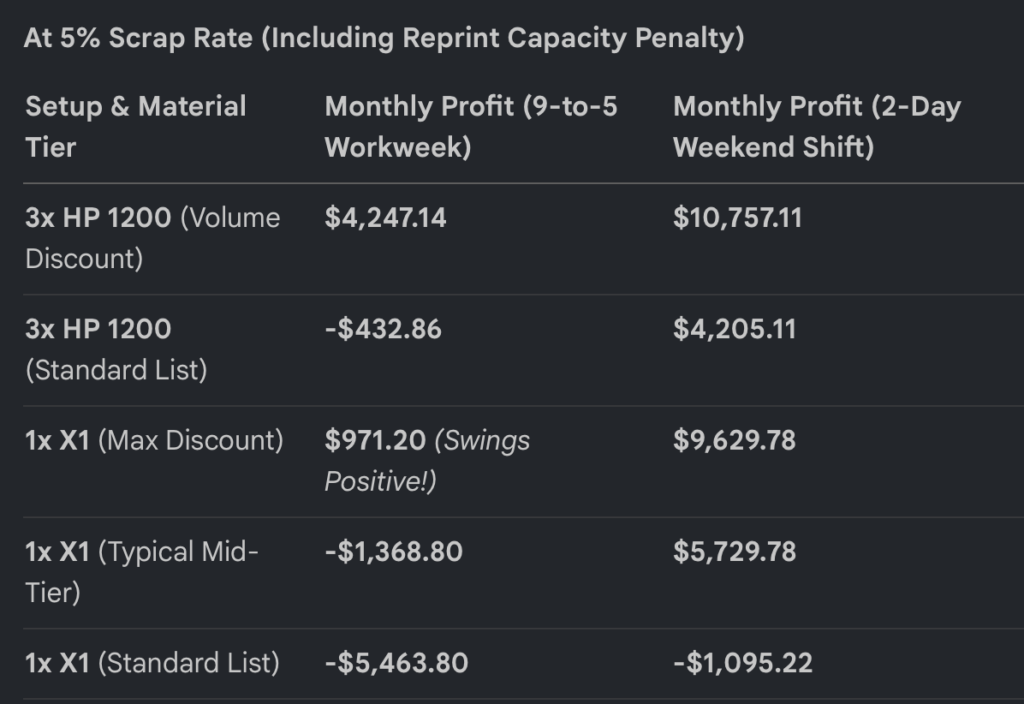
When the model shifts to glasses frames, the economic picture changes dramatically. While the initial projection shows a move towards profitability, the author cautions that this figure excludes crucial business expenses like taxes, financing, and operational overhead. The objective is to illustrate the "wild swings in yield and revenue" achievable by manipulating key process, business, and design variables.
However, the transition to producing glasses frames introduces new challenges. The author paints a vivid picture of Cathy surprising her husband with a Lexus, implying a desire for significant financial success. Yet, the reality of glasses manufacturing presents a higher scrap rate, estimated at 30%, due to the stringent requirements for precision, symmetry, and aesthetic perfection. Consumers have elevated expectations for detail, surface finish, and color consistency in eyewear. This necessitates additional post-processing steps, such as surface texturing and dyeing, further impacting production costs and timelines.
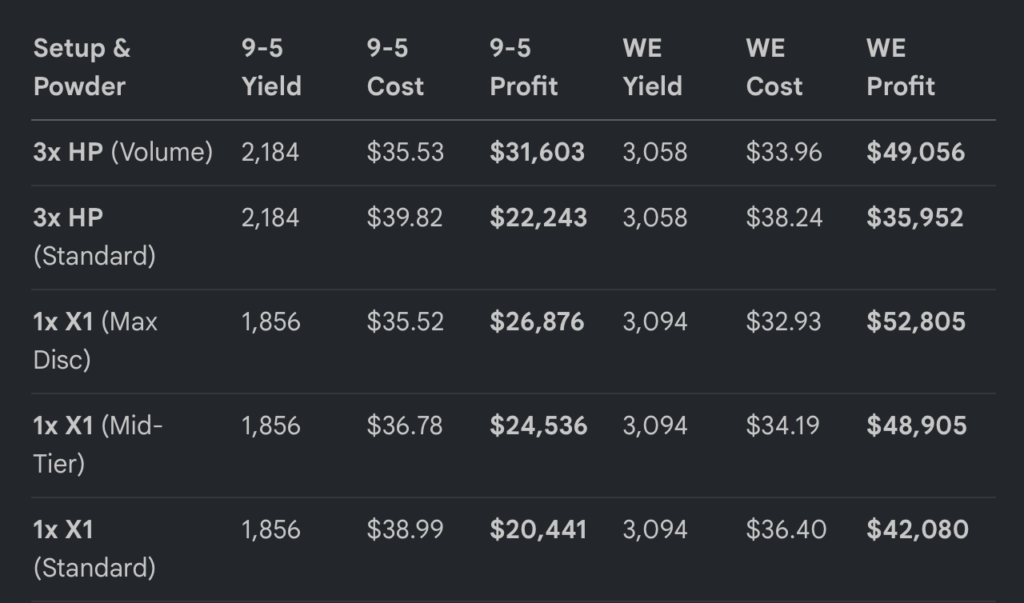
Despite these increased demands, the analysis reveals that even with a 10% packing density and a 30% scrap rate, the production of numerous thin glasses frames per month can still result in substantial profits. A lower packing density, for instance, could mean leaving tens of thousands of dollars on the table monthly. The process now includes approximately two minutes for cleaning and handling per part, three minutes for quality assurance, and an additional five minutes for assembly and post-processing, including the integration of hinges and lenses (costing $13 per pair). The "solopreneur" model is no longer sustainable, necessitating a larger team.
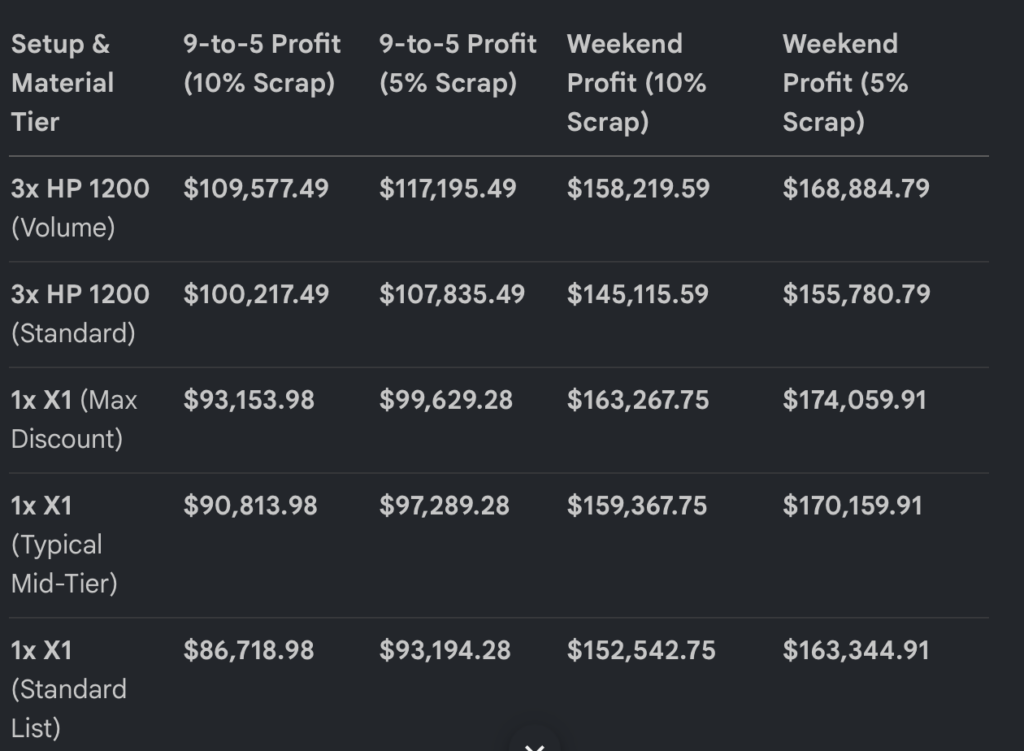
The labor requirements escalate significantly. The analysis suggests that a scenario using HP’s technology might require five full-time employees, while Formlabs technology could necessitate seven full-time employees and one part-timer. This projection assumes consistent sales, where production output aligns with market demand. The machine’s potential to generate $1 per minute is contingent on selling that output effectively.
The author poses a critical question: is this business model truly viable? With projected revenue per employee falling below $100,000, it resembles a high-tech franchise like Chipotle, demanding significant investment in people and time without a clear path to strategic advantage or market dominance. The author draws a parallel to a pizzeria building an oven, suggesting a focus on infrastructure rather than innovation, or miners digging for raw materials when they should be designing jewels, akin to Swarovski.
The Swarovski Model: Elevating Value Through Expertise
The success of Swarovski offers a powerful paradigm for additive manufacturing businesses. Primarily an industrial crystal-cutting enterprise, Swarovski leveraged its expertise to develop specialized crystal-cutting tools. In 1935, this proficiency extended to binoculars, demonstrating a strategic diversification based on core competencies. The critical insight is Swarovski’s ascent in value. Raw quartz, costing approximately $10 per kilogram, can be cut and shaped into rhinestones, retailing for $1,500 per kilogram to jewelry makers. The ultimate value is realized in finished jewelry, commanding prices of $5,000 per kilogram. This "enoblement of quartz crystals" is the essence of their strategy.
Swarovski’s genius lies in its ability to offer desirable products at accessible price points, typically between $100 and $200, making them attainable for a broad consumer base. The author criticizes the narrow focus on "core business" that can blind companies to such opportunities. Swarovski’s success stems from its multifaceted approach: cutting crystals, manufacturing tools, and selling finished jewelry. These integrated operations provide resilience against market downturns and create synergistic advantages.
Strategic Differentiation in Additive Manufacturing
Applying this logic to Cathy’s businesses, the question arises: what provides a competitive defense and a path to sustainable growth in the brace and sunglasses markets? These sectors are often driven by marketing and ephemeral trends. While additive manufacturing allows for rapid prototyping and agile response to market shifts, true success requires more than simply keeping pace. It necessitates creating compelling designs that generate buzz and attract customers, independent of immediate sales performance. Without this strategic differentiation, businesses risk being outcompeted by those with lower per-unit production costs.
The author further analyzes Cathy’s sunglasses offering, noting that while the final product appears complete, a less integrated approach to 3D printing could have yielded higher profitability. The addition of non-3D-printed components, while creating an end product, significantly diminishes profit margins. Furthermore, costs associated with packaging and marketing, including online campaigns, influencer collaborations, and branding efforts, can add substantial per-unit expenses, potentially exceeding the production costs of even high-end retail eyewear.
In a crowded market, building a strong brand and capturing attention are paramount. While niche specialization or exceptional design could offer a path to survival, the author questions whether Cathy is investing for growth and differentiation. The core issue is not just manufacturing, but the development of unique skills and a distinct value proposition.
The Future of Customization: Bespoke Safety Glasses
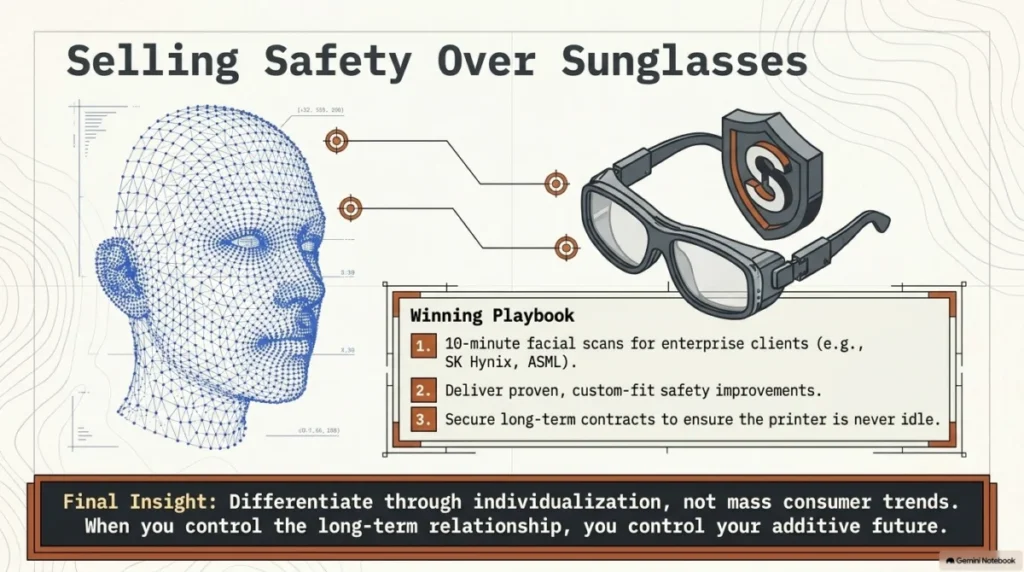
A more promising avenue for Cathy’s business lies in embracing advanced customization. The introduction of a 3D scanner, allowing for the capture of individual facial geometries in approximately 10 minutes per customer, opens the door to truly bespoke safety glasses. This approach targets specific corporate clients, such as employees at high-tech firms like SK Hynix or ASML, offering premium, comfortable, and custom-fit safety eyewear.
This strategy significantly refines the Total Addressable Market (TAM) and Serviceable Available Market (SAM), creating a more focused and defensible business. While this niche market might appear smaller on a spreadsheet for venture capitalists, it offers superior defensibility. Cathy could leverage additive manufacturing to prove the superior safety and comfort of her custom-fit glasses. Research could demonstrate a reduction in accidents due to increased wear-time, directly translating into cost savings for corporations.
Securing long-term contracts with large companies for employee eyewear provides a stable revenue stream and fosters enduring relationships. This model allows for the optimal utilization of additive manufacturing, enabling differentiation and a strong value proposition, a stark contrast to the volatile sunglasses market. While producing custom products presents greater manufacturing complexity, Cathy’s established expertise in scanning, design, additive manufacturing, quality control, and shipping positions her team for success. Investment in scanning technology, design software, and additive processes can translate into a lasting competitive advantage, something elusive in mass-market eyewear.
This exploration underscores the critical importance of strategic design and market positioning in the additive manufacturing sector. By understanding cost drivers, value chains, and customer perception, businesses can navigate the complexities of this technology and forge a path towards sustained success. The author concludes by urging entrepreneurs to view the world through the lens of potential, much like viewing it "through a teacup," always seeking opportunities to add value and innovate.