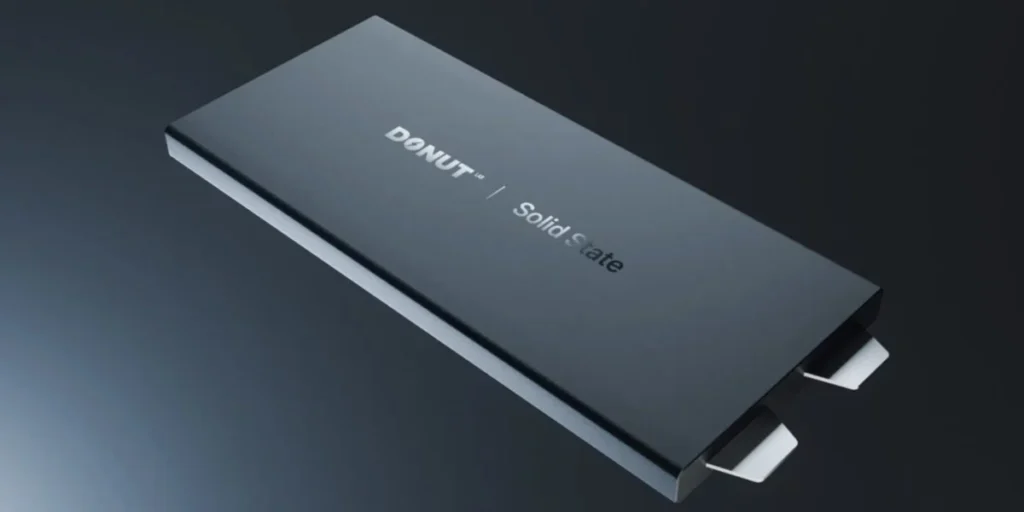
Donut Lab has recently published an independent test report from VTT Technical Research Centre, a respected Finnish national laboratory, which claims their battery achieved an energy density of 409 Wh/kg and 805 Wh/L. This marks the first time the company has publicly disclosed specific energy density figures for its purported solid-state battery technology, following months of intense scrutiny and skepticism from industry observers and media outlets. However, these newly released numbers arrive against a backdrop of unfulfilled promises, specifically the company’s prior assertion that this "solid-state" cell was in production and poised to power a commercial electric vehicle by the end of the first quarter of 2026. As of September 2026, neither the production vehicle nor the widespread availability of this technology has materialized, raising significant questions about the company’s claims and its path to market.
The narrative surrounding Donut Lab has always hinged on more than just impressive technical specifications; it was predicated on the concept of "production readiness." When the company first unveiled its battery at CES in January 2026, the primary headline was not a specific energy density figure, but rather its alleged readiness for integration into OEM vehicle manufacturing. Donut Lab declared it was "the world’s first solid state battery that is ready for use in OEM vehicle manufacturing" and announced a partnership with Verge Motorcycles, positioning the electric motorcycle as "the world’s first production vehicle to feature this breakthrough technology," with initial deliveries slated for Q1 2026. This promise of immediate commercial application, rather than a distant laboratory breakthrough, was the catalyst for its initial coverage by outlets like Electrek, which has historically approached battery innovation announcements with a healthy dose of skepticism due to numerous past instances of promising technologies failing to transition from the lab to the market.
The critical divergence between Donut Lab’s initial claims and the current reality lies in this assertion of production readiness. The timeline stipulated for deliveries has now passed, and no production electric vehicles equipped with Donut Lab’s battery are on the road. Further compounding the issue, internal videos of the "production" motorcycles, which surfaced during a June 2026 investigation by Electrek, revealed pre-production units being utilized primarily for refining the manufacturing process. In subsequent statements to Finnish media, CEO Marko Lehtimäki reportedly admitted that the cell undergoing testing at that time "is not even the cell that’s going to be shipped to customers." This admission casts doubt on the relevance of any performance data derived from these early-stage prototypes to the final product intended for consumers.
The VTT Test: A Closer Examination of the Data
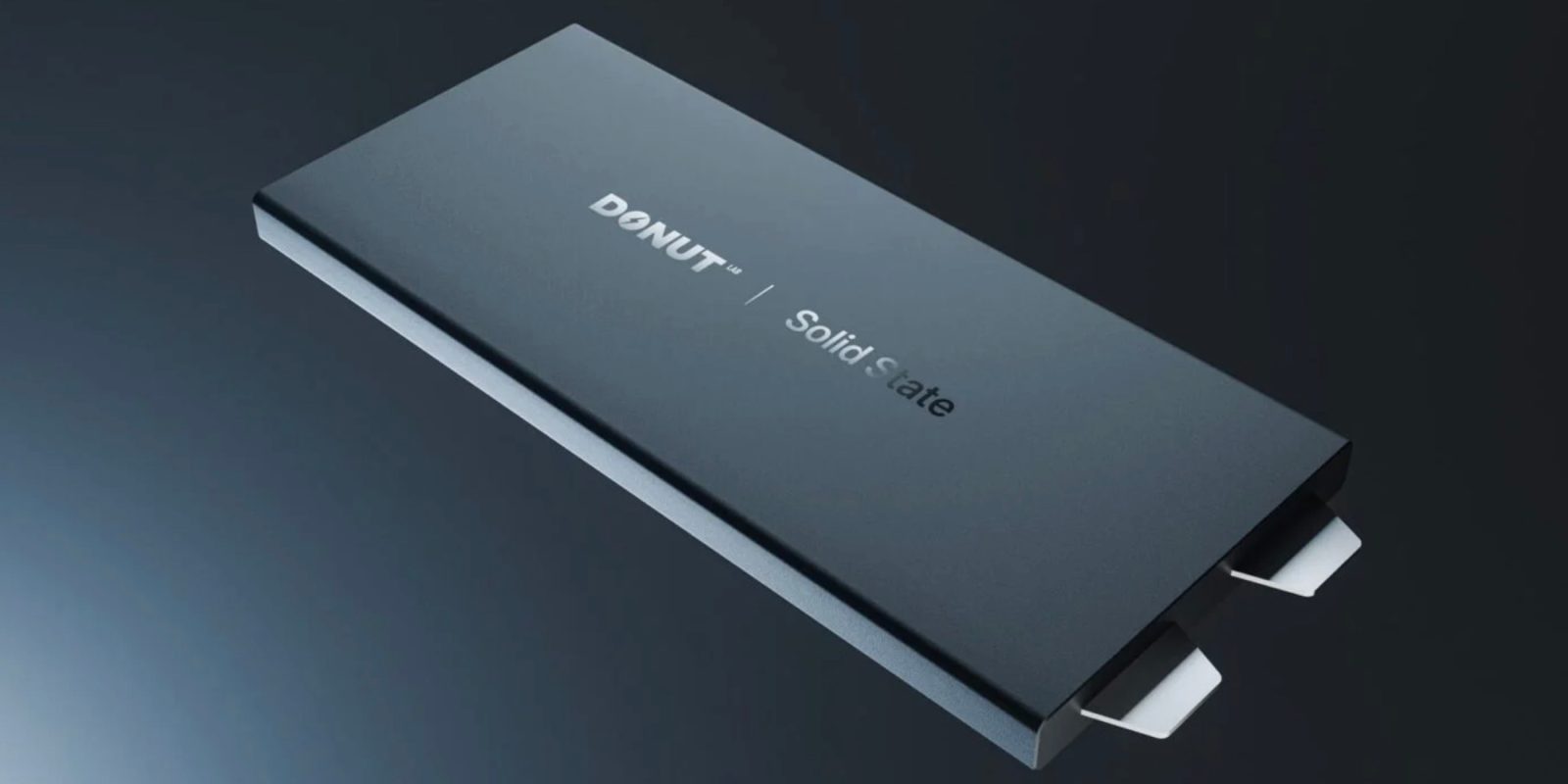
The recent report from VTT Technical Research Centre details a specific test conducted on a single "Donut Battery V1.5," designated as DL6. The test involved discharging the cell across its full voltage range of 2.3V to 4.25V at a slow rate of 0.1C (one-tenth of a full charge/discharge cycle per hour) at a standard ambient temperature of 25°C. Under these conditions, the energy density was calculated to be 409.3 Wh/kg (watt-hours per kilogram) and 804.7 Wh/L (watt-hours per liter). Donut Lab CTO Ville Piippo characterized the test as "fairly straightforward," a statement that, while technically accurate for energy density measurement, highlights the peculiarity of its absence from the company’s previous five VTT tests. This prolonged lack of basic energy density data, especially when the company was touting production readiness, was a significant point of contention.
Energy Density: A Metric That Doesn’t Necessarily Prove Solid-State Innovation
While a reported energy density of 409 Wh/kg is certainly impressive, it is crucial to contextualize this figure within the broader battery landscape. This level of energy density does not inherently require solid-state chemistry and is achievable with advanced conventional lithium-ion technologies. For instance, Amprius already offers liquid-electrolyte, silicon-anode lithium-ion cells with a rated energy density of 450 Wh/kg. Leading commercial high-nickel lithium-ion cells typically operate in the range of 250-300 Wh/kg. Even prominent solid-state battery development programs, such as those from QuantumScape, Toyota, and Samsung SDI, are targeting figures between 350-450 Wh/kg. Therefore, Donut Lab’s reported 409 Wh/kg, while high, falls comfortably within the capabilities of current high-performance lithium-ion batteries.
Furthermore, the conditions under which the 409 Wh/kg figure was achieved warrant closer examination. The VTT report describes this as a "best-case scenario." Previous VTT capacity tests were conducted at a 1C rate and discharged down to 2.7V. The recent test, however, utilized a significantly slower 0.1C discharge rate and a deeper discharge to 2.3V. Both of these parameters—a slower discharge rate and a deeper discharge—are known to maximize the amount of extractable energy from a battery cell, thereby inflating the calculated energy density figure. This methodology, while technically valid for a specific test, may not accurately reflect the performance achievable under more typical operating conditions for an electric vehicle, which often involves higher discharge rates.
Adding another layer of complexity, the "Donut Battery V1.5" (DL6) tested by VTT is described in the report as "an energy-optimised variant of the V1 cell." This indicates that the company has been iterating on its cell design, with at least three distinct cell types appearing in independent testing: the V1, which was independently identified as lithium-ion; the V1.5 that achieved the 409 Wh/kg figure; and a separate "next-generation" cell examined by Intertek. This evolving nature of the tested cells raises concerns about the consistency and comparability of performance data. A former commercial chief of manufacturing partner Nordic Nano, Lauri Peltola, alleged in an April 2026 criminal complaint that the battery independently tested was "an old generation that Donut and its partners gave up on." Donut Lab has consistently denied any wrongdoing or misrepresentation.

The Missing Piece: Cycle Life and the Ambiguity of "Solid-State" Claims
One of Donut Lab’s most ambitious claims, a design life of up to 100,000 cycles, remains entirely unsubstantiated by any independent data. The recent VTT test, like its predecessors, only conducted two capacity cycles before concluding. This absence of long-term cycle life data is a critical omission, especially for a technology marketed for automotive applications where batteries are expected to endure thousands of charge and discharge cycles over their lifespan.
Donut Lab has also pointed to an Intertek confirmation of a bipolar internal structure as evidence of its solid-state nature, arguing that "a bipolar cell structure is possible only with a solid electrolyte." However, what Intertek reportedly confirmed was the structural arrangement of series-connected layers with split metal-foil electrodes, not the composition of the electrolyte itself. The assertion that a bipolar structure unequivocally implies a solid electrolyte is an inference made by Donut Lab and applies to a different cell than the one that achieved the 409 Wh/kg figure. The company also highlighted a nail-penetration test demonstrating cell stability, which is a positive safety outcome. However, safety under stress is not exclusive to solid-state batteries; many advanced lithium-ion and Lithium Iron Phosphate (LFP) cells also pass such tests.
Crucially, the VTT report itself makes no determination regarding the chemistry of the electrolyte. The term "solid-state" appears within the report solely as part of the customer’s project designation, not as a verified characteristic of the battery’s composition. This lack of independent confirmation of the electrolyte’s state is a significant gap in Donut Lab’s claims.
Electrek’s Perspective: The Shifting Goalposts of Promise
The core issue at play is the fundamental promise made by Donut Lab. The narrative has consistently been framed not around achieving a specific laboratory metric like 400 Wh/kg, but around the delivery of a solid-state battery integrated into a production vehicle by the end of Q1 2026. This was the foundational premise that warranted initial attention from a generally skeptical automotive technology press. That promise, by the simple passage of time, has demonstrably failed to materialize. It is now September 2026, and no production EVs are equipped with Donut Lab’s battery.

Instead of a tangible product in the market, the public has been presented with a continuous stream of individual laboratory tests. Each test focuses on a single cell, often a subtly different iteration of the company’s technology from the last. Critically, these tests consistently sidestep the two most pivotal questions: Is the battery genuinely solid-state, and can it withstand rigorous, real-world cycling over an extended period? A reported energy density of 409 Wh/kg, a figure achievable by advanced lithium-ion technology, does not provide answers to either of these fundamental inquiries.
The company’s earlier exaggerations regarding the readiness of its cells for production, as detailed in previous investigations, are not contradicted but rather reinforced by these latest developments. The burden of proof has now decisively shifted. A company that publicly committed to delivering production vehicles and subsequently offered press releases accompanied by selective test data, without fulfilling its initial timeline, can no longer expect the benefit of the doubt. Until Donut Lab can present the actual cell destined for consumer vehicles, installed in those vehicles, and demonstrating the claimed longevity through sustained, independent testing, its assertions of production readiness remain unsubstantiated. The path forward requires tangible evidence of the product in the market and proven performance under realistic operating conditions, not just isolated laboratory metrics on evolving prototypes.