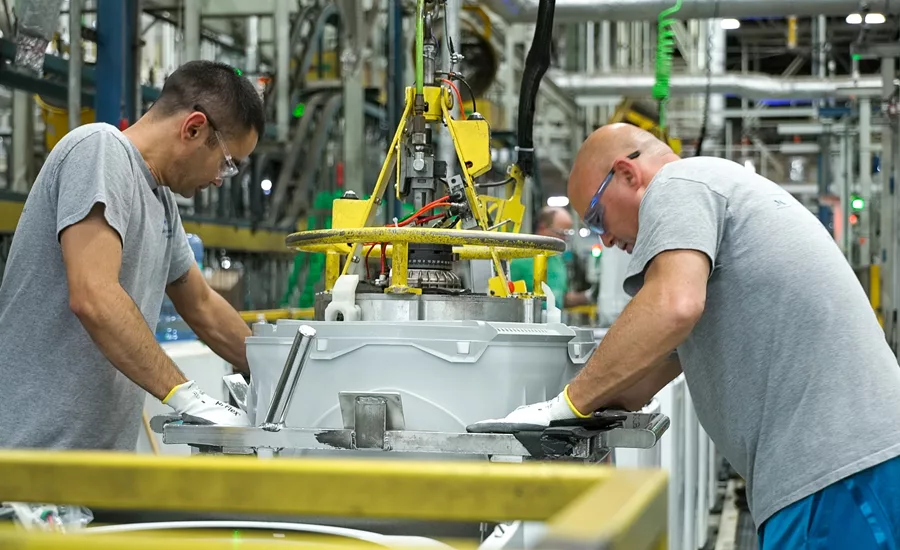
GE Appliances, a Haier company, has announced a monumental $1 billion investment aimed at expanding and reorganizing its historic Appliance Park facility in Louisville, Kentucky. This strategic capital injection will solidify Appliance Park’s standing as the largest home appliance manufacturing site in the United States, measured by production output, employment figures, and campus footprint. A cornerstone of this initiative is the relocation of high-output dryer production from Mexico to Kentucky, underscoring a broader commitment to domestic manufacturing and supply chain resilience. The comprehensive plan will see significant upgrades and expansions across three key buildings within the sprawling complex, reinforcing GE Appliances’ long-term vision for U.S.-based production.
A Strategic Reaffirmation of Domestic Manufacturing
The substantial investment by GE Appliances is not merely an operational upgrade; it represents a strategic reaffirmation of its commitment to American manufacturing and the Louisville community. Since its acquisition by Haier in 2016, GE Appliances has consistently emphasized strengthening its U.S. production capabilities, pouring billions into its domestic operations. This latest announcement brings the total committed investment in U.S. manufacturing to $6.5 billion since 2016, with over $3.5 billion already realized, demonstrating a sustained effort to localize production and bolster the American industrial base. The move to consolidate and expand operations at Appliance Park, a site that has been synonymous with appliance manufacturing for over seven decades, is a testament to the company’s belief in the efficiency, quality, and strategic advantages of U.S.-based production.
The decision to repatriate high-output dryer manufacturing from Mexico is particularly noteworthy. It aligns with a growing trend among major manufacturers to re-evaluate and re-shore critical production capabilities in response to global supply chain disruptions, geopolitical shifts, and a renewed focus on domestic job creation. By bringing dryer production back to Kentucky, GE Appliances aims to shorten supply chains, enhance quality control, reduce lead times, and foster closer collaboration between its design, engineering, and manufacturing teams, ultimately leading to a more robust and responsive operational model.
Detailed Investment Breakdown and Phased Implementation
The $1 billion investment is meticulously planned, with specific allocations targeting different facets of Appliance Park’s operations and a clear timeline for implementation:
-
Building 5 Transformation: High-Output Dryer Manufacturing ($400+ Million)
More than $400 million is earmarked for the comprehensive transformation of Building 5. This facility, which currently produces refrigerators, will undergo a significant retooling process to convert it into a state-of-the-art high-output dryer manufacturing operation. Refrigerator production in Building 5 is slated to conclude in early 2027, making way for the installation of advanced machinery and assembly lines. The goal is to commence dryer production in this newly refurbished facility by late 2027. While Building 5 transitions, GE Appliances will continue its refrigerator production at its established factories in Decatur, Alabama, and Selmer, Tennessee, ensuring uninterrupted supply to the market. The transition period for Building 5 is anticipated to span approximately nine to twelve months, during which GE Appliances has committed to keeping employees on the payroll, preventing any layoffs associated with the conversion. This commitment highlights the company’s dedication to its workforce and ensuring a smooth transition for its skilled employees. -
Building 1 Upgrades: Washer and Dryer Platforms ($112 Million)
An additional $112 million will be invested in Building 1 to install new equipment and redesign existing washer and dryer platforms. This investment aims to modernize the production lines, improve efficiency, and enhance the technological capabilities for manufacturing GE Appliances’ diverse range of laundry products. These upgrades will complement the new dryer production in Building 5, creating a highly integrated and technologically advanced laundry manufacturing ecosystem within Appliance Park. -
Building 2 Expansion: Front-Load Washers and Combination Units ($490 Million – Previously Announced)
The latest plans integrate a previously announced $490 million investment in Building 2. This facility is being prepared for the manufacturing of cutting-edge front-load washers and innovative combination washer-dryer units, with production also scheduled to begin in 2027. This component of the investment underscores GE Appliances’ strategy to offer a comprehensive and modern laundry product portfolio, meeting evolving consumer demands for efficiency, convenience, and advanced features.
Collectively, these investments across Building 1, 2, and 5 will establish Appliance Park as a powerhouse for laundry appliance manufacturing, consolidating significant portions of GE Appliances’ production under one roof and leveraging economies of scale and operational synergies.
Leadership Vision and Operational Synergies

Kevin Nolan, president and CEO of GE Appliances, articulated the strategic imperative behind this massive undertaking. "We’re making major investments to continue modernizing Appliance Park and bring more production to our global headquarters in Louisville," Nolan stated. He emphasized the competitive advantage gained by "bringing our laundry and dishwasher manufacturing together," highlighting "new synergies across our cleaning products and closer connections between the people who design, engineer, and build them."
This co-location strategy is designed to foster unparalleled collaboration. By concentrating laundry and dishwasher production at the Louisville campus, GE Appliances anticipates a more seamless flow of information and expertise between its product design, engineering, and manufacturing teams. This integrated approach is expected to accelerate innovation cycles, enhance product quality, streamline problem-solving, and improve overall operational efficiency. The proximity of these critical functions allows for real-time feedback and iterative improvements, ensuring that products are not only designed for performance but also optimized for efficient, high-volume domestic production. This strategic alignment is crucial in a rapidly evolving consumer market where speed to market and responsiveness to demand are key competitive differentiators.
Significant Economic and Employment Impact
The $1 billion investment is projected to have a profound and lasting impact on both employment and the broader regional economy. Once fully implemented, the transformation is expected to help secure approximately 4,700 production jobs at Appliance Park. This commitment goes beyond mere retention; employees will have significant opportunities to transition into new and expanded manufacturing roles as production ramps up across the campus throughout 2027. This signifies a commitment to upskilling and reskilling the existing workforce, ensuring that GE Appliances’ employees are equipped with the latest manufacturing techniques and technologies.
Beyond the direct employment impact, the investment is poised to create a substantial ripple effect across Louisville and the wider Kentucky economy. Large-scale industrial investments typically generate significant indirect and induced job creation in supporting industries such as logistics, raw material supply, construction, and local services. The increased economic activity will boost local tax revenues, support small businesses, and attract further investment, cementing Louisville’s reputation as a vital manufacturing hub. The average manufacturing job in Kentucky supports an additional 2.5 jobs elsewhere in the economy, amplifying the positive impact of GE Appliances’ commitment.
Carl Kennebrew, President of IUE-CWA, the union representing many of GE Appliances’ workers, underscored the importance of such investments. "Investment in American manufacturing is critical to our economy and our communities," Kennebrew remarked. He expressed pride in the union members who "manufacture American-made GE appliances in Louisville," asserting that "this new investment will ensure that our members keep delivering these high-quality products to American consumers for years to come." This statement reflects the vital role organized labor plays in securing and expanding domestic manufacturing jobs, fostering a collaborative environment between management and the workforce.
Broader Context: A National Manufacturing Resurgence
GE Appliances’ investment is part of a larger trend reflecting a national resurgence in U.S. manufacturing. The COVID-19 pandemic exposed the vulnerabilities of global supply chains, prompting many companies to reconsider their offshore manufacturing strategies. Policies aimed at incentivizing domestic production, coupled with geopolitical considerations, have further accelerated the reshoring movement. The U.S. manufacturing sector has seen significant growth in recent years, driven by investments in advanced technologies, automation, and a renewed focus on skilled labor development.
For GE Appliances, this strategy is not new. The company has been a leading proponent of U.S. manufacturing for decades, and its post-2016 investments under Haier’s ownership have consistently focused on modernizing and expanding its American footprint. This $1 billion commitment builds upon that foundation, leveraging advanced manufacturing techniques, automation, and a skilled workforce to produce high-quality appliances more efficiently and sustainably. It positions GE Appliances to better serve the American consumer market, reduce its environmental footprint through localized production, and enhance its overall competitiveness in the global appliance industry.
The U.S. home appliance market, valued at tens of billions of dollars annually, remains robust, driven by factors such as new housing starts, home renovation trends, and consumer demand for energy-efficient and technologically advanced products. By strengthening its domestic production capabilities, GE Appliances is better positioned to capture market share, respond swiftly to consumer preferences, and mitigate risks associated with international logistics and trade complexities.
Conclusion: A Landmark Investment for the Future
The $1 billion investment by GE Appliances in its Appliance Park facility represents a landmark commitment to American manufacturing, the Louisville community, and the future of the home appliance industry. By consolidating and expanding production, repatriating manufacturing jobs, and investing in cutting-edge technologies, GE Appliances is not only securing its own competitive advantage but also contributing significantly to the economic vitality of Kentucky and the broader national effort to rebuild and strengthen the U.S. industrial base. This strategic move underscores a powerful vision for a resilient, innovative, and domestically focused manufacturing future, promising high-quality American-made appliances for consumers for generations to come.