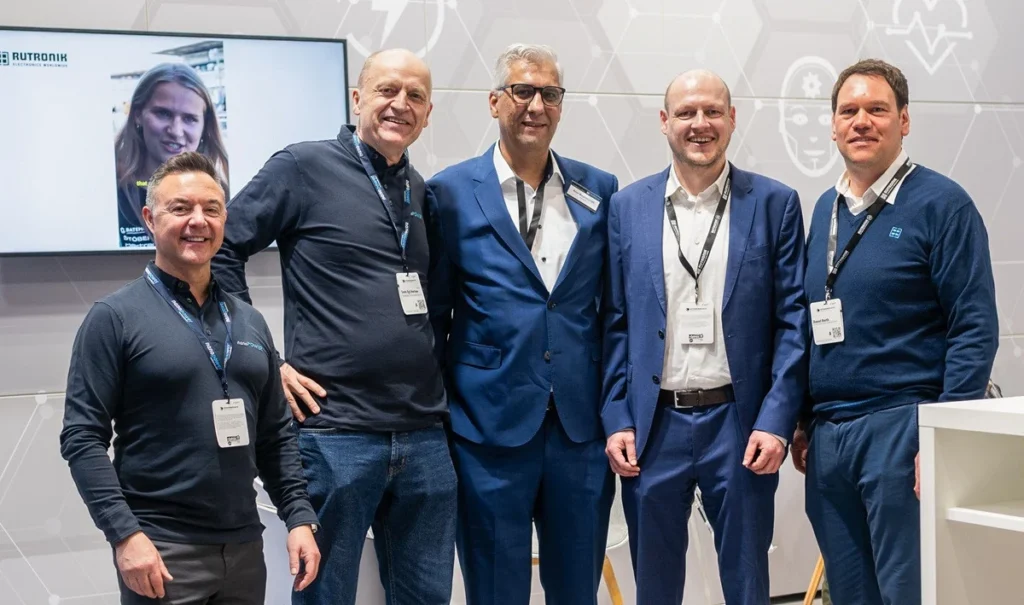
Rutronik Elektronische Bauelemente GmbH, a leading broadline distributor of electronic components, has significantly expanded its semiconductor portfolio through a new worldwide franchise agreement with Nanopower Semiconductor, a pioneering Norwegian company specializing in ultra-low-power integrated circuits. This strategic partnership introduces Nanopower Semiconductor’s innovative Power Saving ICs (PSICs) to Rutronik’s global offering, marking a pivotal step towards enabling a new generation of battery-free and energy-autonomous Internet of Things (IoT) applications. The agreement, effective immediately and applicable globally, covers Nanopower Semiconductor’s complete standard product portfolio and integrates Rutronik’s extensive design-in and technical support capabilities to assist customers in developing cutting-edge low-power IoT, advanced sensing, and energy-autonomous systems.
The Genesis of a Strategic Partnership: Addressing IoT’s Power Conundrum
The collaboration between Rutronik and Nanopower Semiconductor is a direct response to the escalating demand for highly efficient, long-lasting, and often self-sustaining electronic devices in the burgeoning IoT landscape. As billions of devices connect across various sectors—from industrial automation and smart cities to healthcare and environmental monitoring—the challenge of power management has become paramount. Traditional battery technologies often limit device longevity, increase maintenance costs, and contribute to environmental waste, especially in remote or difficult-to-access deployments. The new alliance aims to mitigate these challenges by leveraging Nanopower’s patented nPZero subthreshold technology, which enables integrated circuits to operate at unprecedented nanoampere-level current consumption.
Rutronik, with its established global distribution network and deep technical expertise, serves as a crucial bridge between innovative technology developers and a diverse customer base. By incorporating Nanopower’s PSICs, Rutronik fortifies its position as a key enabler for advanced electronic solutions, offering components that are not just state-of-the-art but also align with the industry’s growing focus on sustainability and efficiency. This agreement underscores Rutronik’s commitment to providing comprehensive solutions that address the evolving needs of the electronics market, particularly in high-growth areas like IoT where power efficiency is a critical differentiator.
Nanopower’s nPZero Technology: The Core of Ultra-Low-Power Innovation
At the heart of Nanopower Semiconductor’s offering is its proprietary nPZero subthreshold technology. This innovative approach fundamentally redefines how integrated circuits consume power. Unlike conventional ICs that operate above the transistor threshold voltage, where current flows robustly but consumes significant power, nPZero technology allows transistors to operate in the subthreshold region. In this region, transistors conduct very small currents, drastically reducing power consumption to the nanoampere range. This level of efficiency is transformative for battery-powered and energy-autonomous applications.
The PSICs developed by Nanopower Semiconductor are not designed to be conventional power management ICs (PMICs) or microcontrollers. Instead, they provide dedicated ultra-low-power functionality specifically engineered to reduce the overall energy requirements of connected sensor systems. This specialization allows them to perform critical tasks—such as wake-up management, data acquisition, or basic processing—with minimal energy draw, thereby enabling the main processing unit or communication module to remain in a deep sleep state for extended periods. The ability to manage power at such granular levels extends battery operating life significantly, often by several years, or critically, supports designs that eliminate batteries altogether through energy harvesting techniques.
Energy harvesting, which involves converting ambient energy sources like light (solar), heat (thermoelectric), vibration (piezoelectric), or radio frequency (RF) into electrical power, becomes a viable primary power source when devices consume only nanoamperes. This paradigm shift opens doors for truly "install-and-forget" devices, reducing the total cost of ownership (TCO) and environmental footprint associated with battery production, replacement, and disposal.
Market Context: The Growing Imperative for Energy-Autonomous IoT
The global Internet of Things market is projected to reach well over a trillion dollars in value within the next decade, with billions of devices deployed worldwide. However, the pervasive adoption of IoT faces significant hurdles, with power consumption being one of the most prominent. A 2023 report by IoT Analytics highlighted that battery life and maintenance costs are among the top concerns for enterprise IoT deployments. The sheer volume of devices necessitates solutions that minimize human intervention for battery replacement, which can be logistically challenging and economically prohibitive, especially in remote or hazardous environments.
Consider the vast networks of sensors required for smart city infrastructure, such as environmental monitors, traffic flow sensors, or structural integrity sensors on bridges. Replacing batteries in thousands of such devices regularly is a monumental task. Similarly, in industrial IoT (IIoT) applications, sensors monitoring machinery in factories or remote oil rigs demand exceptional longevity and reliability. In healthcare, wearables and implantable devices require power solutions that are both compact and incredibly efficient, ensuring patient comfort and safety without frequent charging or surgical replacement.

Nanopower’s PSICs directly address these critical pain points. By enabling autonomous sensor operation with nanoampere consumption, they empower designers to create devices that can operate for decades on a single small battery or indefinitely with minimal energy harvesting. This capability is particularly crucial for applications where replacing batteries is difficult, expensive, or impractical, as well as designs constrained by device size or power availability, making the technology highly suited to a broad spectrum of emerging IoT opportunities.
Applications Across Diverse Verticals: From Smart Buildings to Industrial IoT
Nanopower Semiconductor’s technology is specifically aimed at battery-powered and energy-autonomous IoT applications across a multitude of industrial systems, smart buildings, healthcare, and smart city infrastructure. These sectors are at the forefront of requiring sensors and connected devices capable of operating for extended periods with little or no maintenance.
- Industrial IoT (IIoT): Predictive maintenance sensors on machinery, asset tracking, environmental monitoring in factories, and remote infrastructure surveillance can benefit immensely from ultra-low-power operation. Devices can be deployed in harsh environments and left untouched for years, reducing operational downtime and costs.
- Smart Buildings: Wireless sensors for temperature, humidity, occupancy, and light control can be easily installed without wiring, powered by small batteries lasting the lifetime of the building or through ambient light harvesting. This simplifies installation, reduces infrastructure costs, and enhances energy efficiency.
- Healthcare: Wearable health monitors, remote patient monitoring devices, and even some implantable medical devices demand extremely low power consumption for extended operation and minimal patient interaction. Nanopower’s technology can enable smaller, lighter, and longer-lasting medical devices.
- Smart City Infrastructure: Environmental sensors, smart street lighting controls, waste management sensors, and public safety devices can operate autonomously, powered by ambient sources, reducing the need for extensive wiring infrastructure and maintenance crews.
- Agriculture: Remote sensors for soil moisture, crop health, and livestock tracking can provide critical data for precision agriculture without requiring constant battery checks in vast fields.
Lowering standby and operating power is a game-changer across these applications. It not only allows for smaller batteries, reducing device footprint and material cost, but also significantly extends the period between replacements, or, most impressively, enables devices to operate entirely using harvested energy, pushing towards a truly maintenance-free IoT ecosystem.
Official Statements and Strategic Outlook
The leadership of both Rutronik and Nanopower Semiconductor emphasized the profound implications of this new partnership. Reza Armin Maghdounieh, Vice President of Semiconductor Product Marketing at Rutronik, articulated the transformative potential of Nanopower’s nPZero technology. "Nanopower’s nPZero technology represents a significant leap forward in power efficiency, enabling IoT devices to operate in the nanoampere range while maintaining critical functionality," Maghdounieh stated. "This capability is not just an incremental improvement; it opens up entirely new possibilities for battery-free and ultra-long-life applications across industrial IoT, healthcare, and smart buildings, aligning perfectly with our strategy to offer innovative, future-proof solutions to our global customer base."
Anthony Carter, Global Sales Director at Nanopower Semiconductor, highlighted the strategic importance of Rutronik’s extensive reach. "Partnering with Rutronik is a pivotal moment for Nanopower Semiconductor. Rutronik’s international reach, coupled with their deep technical expertise and design-in support, will be instrumental in bringing our groundbreaking nPZero technology into a wider range of design projects and accelerate its adoption across diverse global markets," Carter remarked. "This collaboration will allow us to empower more engineers and developers to overcome the pervasive power challenges in IoT and realize truly energy-autonomous systems."
The immediate global effectiveness of the agreement signifies both companies’ readiness to capitalize on the rapidly expanding market for ultra-low-power solutions. For Rutronik, it means strengthening its semiconductor portfolio with a truly differentiated technology, providing its customers with a competitive edge. For Nanopower Semiconductor, it grants unparalleled access to Rutronik’s vast distribution network, technical support infrastructure, and established customer relationships, accelerating market penetration and validation of its innovative technology.
Broader Impact and Future Implications: A Sustainable IoT Future
The implications of this agreement extend beyond commercial success for the involved parties; they point towards a more sustainable and efficient future for the electronics industry. The ability to significantly reduce power consumption in IoT devices has several profound broader impacts:
- Environmental Sustainability: By extending battery life or enabling battery-free operation, the technology dramatically reduces the number of batteries manufactured, consumed, and ultimately disposed of. This contributes directly to mitigating electronic waste (e-waste), a growing global environmental concern. A typical IoT sensor powered by coin cells might require battery replacement every 1-2 years. Scaling this across billions of devices highlights the immense potential for waste reduction.
- Reduced Total Cost of Ownership (TCO): For businesses deploying large-scale IoT networks, the cost associated with battery procurement, replacement, and maintenance can be substantial. Ultra-low-power PSICs slash these operational expenses, making IoT deployments more economically viable and scalable.
- Enabling New Applications: Many potential IoT applications have been constrained by power limitations. Imagine sensors in remote wilderness areas monitoring wildlife, or structural health monitors embedded deep within concrete, operating for decades without human intervention. Nanopower’s technology makes such previously impractical scenarios feasible.
- Accelerating Energy Harvesting Adoption: The lower the power demand of a device, the smaller and more efficient the energy harvesting module needs to be. This synergy will accelerate the development and adoption of various energy harvesting technologies, driving innovation in sustainable power solutions.
- Competitive Landscape Shift: This partnership positions Rutronik and Nanopower at the forefront of the ultra-low-power IC market. It will likely spur further innovation and competition among semiconductor manufacturers and distributors to offer similarly efficient solutions, ultimately benefiting the end-users and the ecosystem as a whole.
In conclusion, the global franchise agreement between Rutronik Elektronische Bauelemente and Nanopower Semiconductor represents a significant milestone in the evolution of the Internet of Things. By democratizing access to Nanopower’s groundbreaking nPZero subthreshold technology, the partnership promises to unlock a new era of ultra-low-power and battery-free IoT applications. This strategic alliance is not merely about distributing components; it’s about enabling a more sustainable, efficient, and truly autonomous connected world, addressing critical industry challenges and paving the way for innovations that will shape our future technological landscape.