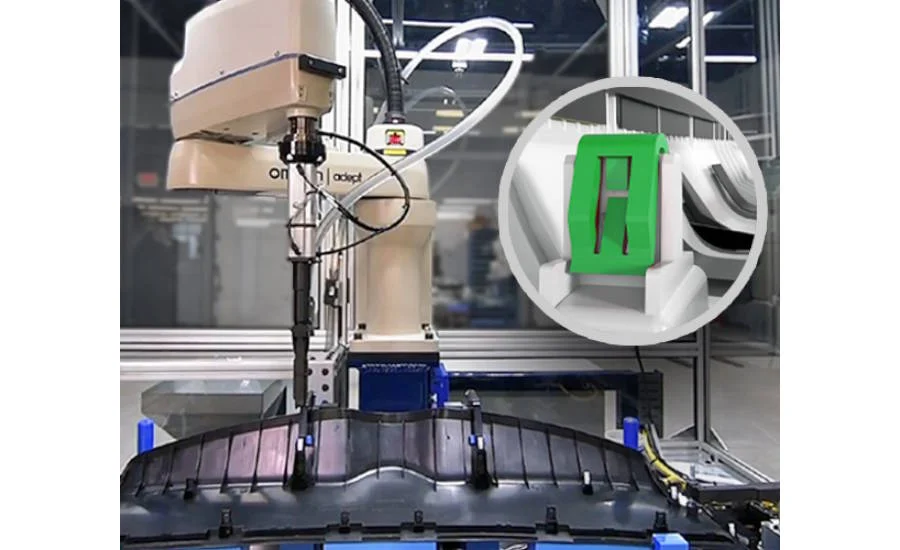
Visumatic Industrial Products, a leading innovator in automated fastening and material handling solutions, is spotlighting its cutting-edge Automatic Clip Insertion system, designed to revolutionize assembly processes across various industries, particularly within the demanding automotive sector. This sophisticated technology promises verifiable precision in the automatic feeding and installation of both metal and plastic clips, utilizing direct-to-insert-point auto-feed technology for unparalleled speed and accuracy. The system is engineered to integrate seamlessly into modern manufacturing environments, offering dedicated machine builder packages compatible with both collaborative and industrial robots. With meticulously crafted part interface tooling that mirrors the specific geometry of components, Visumatic’s solution ensures robust, repeatable, and reliable clip insertion, addressing critical challenges in high-volume production lines.
The introduction, or rather, the continued prominence, of such specialized automation solutions underscores a broader trend in global manufacturing: the relentless pursuit of efficiency, quality, and adaptability. As industries, especially automotive, face mounting pressures to accelerate production cycles, enhance product reliability, and manage diverse product variants, the role of intelligent automation becomes increasingly vital. Manual clip insertion, while seemingly simple, presents numerous challenges in a high-stakes manufacturing environment. It is prone to human error, can lead to repetitive strain injuries for workers, suffers from inconsistent application force, and often struggles to keep pace with rapid assembly line demands. Visumatic’s Automatic Clip Insertion system directly confronts these issues, offering a robust alternative that mitigates risks and optimizes throughput.
The Evolving Landscape of Manufacturing Automation
The journey of manufacturing has been one of continuous evolution, from the artisan workshops of the past to the mass production lines of the 20th century, and now into the era of Industry 4.0. Central to this evolution is automation, which has systematically replaced manual labor in tasks that are repetitive, dangerous, or require extreme precision. Early automation focused on fixed, high-volume production, but modern demands for flexibility, customization, and smaller batch sizes have necessitated more intelligent and adaptable robotic systems. The automotive industry, historically a pioneer in assembly line innovation, continues to drive advancements in automation, seeking solutions that can handle increasingly complex vehicle designs and stringent quality standards.
Clip insertion is a ubiquitous process in automotive manufacturing, from securing wiring harnesses and fluid lines to fastening interior trim panels and exterior moldings. These clips, whether plastic or metal, are critical for the structural integrity, aesthetic finish, and functional performance of a vehicle. Any deviation in their insertion—incorrect angle, insufficient force, or misalignment—can lead to rattling noises, component failures, or costly recalls. The traditional reliance on manual labor for these tasks, while providing a degree of flexibility, inherently introduces variability. A human operator, even with training, cannot maintain the same level of consistent force, speed, and precision over an entire shift as a well-calibrated automated system. This is precisely where Visumatic’s Automatic Clip Insertion system offers a transformative advantage. By automating this critical step, manufacturers can achieve unprecedented levels of consistency and significantly reduce the potential for defects, contributing directly to enhanced product quality and reduced warranty claims.
Visumatic’s Legacy in Precision Fastening
Visumatic Industrial Products has cultivated a reputation over decades for its expertise in automated fastening solutions. Founded on principles of innovation and engineering excellence, the company has consistently delivered systems that enhance productivity and quality in manufacturing operations worldwide. Their product portfolio typically spans a wide range of feeding and driving equipment for screws, nuts, and other small components, making their venture into advanced clip insertion a natural extension of their core competencies. Their deep understanding of material handling, vibratory feeding, and precise component placement underpins the effectiveness of their latest offering.
The company’s approach is not merely to provide off-the-shelf solutions but to engineer highly customized systems that integrate seamlessly into existing production lines and meet specific client requirements. This philosophy is evident in the design of their clip insertion system, which emphasizes bespoke tooling and robot compatibility. By focusing on the unique challenges presented by different clip types and part geometries, Visumatic ensures that their automation solutions are not just functional but optimized for peak performance and longevity. This client-centric approach has allowed Visumatic to build strong relationships with manufacturers seeking reliable, high-performance automation.
Unpacking the Technology: Precision and Speed
At the heart of Visumatic’s Automatic Clip Insertion system are several key technological innovations designed to deliver "verifiable precision" and "rapid clip insertion." The concept of "verifiable precision" is crucial in modern manufacturing, where quality assurance is paramount. It implies that each clip insertion is not just performed correctly, but that its correct execution can be confirmed through integrated sensors and feedback loops. This often involves:
- Force Sensing: Monitoring the force applied during insertion to ensure it falls within a specified tolerance, preventing under-insertion or over-insertion that could damage the clip or the component.
- Positional Sensing: Utilizing encoders or vision systems to confirm the exact location and orientation of the clip relative to the insertion point before and after the operation.
- Presence Detection: Sensors that confirm the successful feeding and insertion of a clip, alerting operators to any misfeeds or omissions.
- Data Logging: All operational parameters and verification data are recorded, providing a comprehensive audit trail for quality control, traceability, and process optimization. This data can be invaluable for continuous improvement initiatives and for meeting regulatory compliance standards.
The "auto-feed direct to insert point technology" is another cornerstone of the system’s efficiency. This mechanism ensures that clips are precisely delivered from a bulk hopper or magazine directly to the robot’s end-effector or insertion head, minimizing transfer time and eliminating opportunities for misalignment. Common feeding methods include vibratory bowls, which orient and sort clips, or linear feeders that present them individually. Once oriented, the clips are often pneumatically or mechanically transferred through a tube or track directly to the point of application. This "direct-to-point" approach significantly reduces cycle times compared to systems that require multiple handling steps or manual loading of clips into magazines. The result is a substantial increase in throughput, allowing manufacturers to meet demanding production targets without compromising on quality.
"Rapid clip insertion" is a direct outcome of these integrated technologies. By automating the feeding, orienting, and insertion processes, the system eliminates the pauses and inconsistencies inherent in manual operations. Robotics can perform these tasks at speeds far exceeding human capabilities, often with sub-second cycle times per clip. When integrated with a robot, the system can perform multiple insertions in quick succession, or even simultaneously with other robotic tasks, thereby optimizing the overall assembly sequence. This speed, combined with the verifiable precision, translates into significant operational advantages for manufacturers, reducing labor costs per unit and increasing overall line productivity.
Robotic Integration: The Future of Assembly
Visumatic’s commitment to providing "machine builder packages for collaborative and industrial robots" highlights its forward-thinking approach to automation. The distinction between collaborative robots (cobots) and industrial robots is significant, each offering distinct advantages depending on the application:
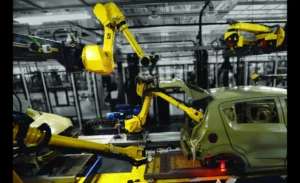
- Industrial Robots: These are traditional, high-speed, high-payload robots typically caged off from human interaction for safety reasons. They are ideal for applications requiring extreme speed, force, and repeatability in a dedicated, high-volume production environment. Visumatic’s system can be seamlessly integrated with these robust platforms, leveraging their power and precision for rapid clip insertion in complex assembly lines. The rugged build of the insertion tooling is perfectly matched to the demands of such high-performance robotic operations.
- Collaborative Robots (Cobots): Cobots are designed to work alongside human operators without safety caging, employing advanced sensors and force limitations to ensure safe interaction. They are characterized by their flexibility, ease of programming, and ability to handle variable tasks, making them suitable for smaller batch runs, tasks requiring human supervision, or applications where space is limited. The Visumatic system’s adaptability allows it to be integrated with cobots, bringing automation to tasks that might previously have been deemed too complex or costly for traditional industrial robots. This opens up new possibilities for manufacturers looking to introduce automation incrementally or in more flexible production cells.
For machine builders, Visumatic offers a comprehensive package that simplifies integration. This typically includes the clip feeding unit, the insertion tooling, and the control interfaces necessary for communication with various robot controllers (e.g., Fanuc, Kuka, ABB, Universal Robots). This modular approach allows machine builders to incorporate Visumatic’s specialized clip insertion technology into larger, more complex automated assembly cells, reducing development time and ensuring compatibility across different robotic platforms. The flexibility to choose between industrial and collaborative robot integration allows manufacturers to tailor their automation strategy to their specific production needs, budget, and safety requirements.

Engineered Tooling: The Critical Interface
A crucial aspect of Visumatic’s system is its "engineered part interface tooling [that] mirrors part tower and is ruggedly built for repeatable clip insertion." This highlights the importance of custom-designed end-effectors and guides. Clips come in myriad shapes, sizes, and materials, and the components they attach to also vary greatly in geometry and material. Generic tooling simply cannot provide the necessary precision and reliability.
Visumatic’s approach involves:
- Custom Design: Each piece of tooling is designed specifically for the particular clip and the component it’s being inserted into. This ensures a perfect fit and guides the clip accurately to its intended position.
- Mirroring Part Tower: The tooling is often designed to "mirror" or precisely mate with the receiving feature on the component. This provides a stable and accurate reference point, preventing misalignment and ensuring the clip is inserted at the correct angle and depth. This is particularly critical in automotive applications where clips often snap into complex plastic or metal structures.
- Material Selection and Durability: The tooling is constructed from high-grade, wear-resistant materials (e.g., hardened steel, specialized alloys, or durable polymers) to withstand the continuous stress of high-volume production. This rugged construction ensures longevity, minimizes maintenance, and guarantees consistent performance over millions of cycles.
- Protection of Components: Beyond just inserting the clip, the tooling is also designed to protect the surrounding component from damage during the insertion process. This might involve soft-touch materials, carefully chamfered edges, or integrated sensing to prevent excessive force.
This meticulous attention to tooling design is what truly differentiates a high-quality automated insertion system. It directly impacts the success rate of insertions, the quality of the finished product, and the overall operational uptime of the assembly line.
Transforming Automotive Assembly and Beyond
While the original context leans heavily into automotive assembly, the principles of precision clip insertion extend to numerous other industries. In the automotive sector, applications are vast:
- Wire Harness Management: Securing complex electrical wire harnesses to the vehicle body or chassis.
- Interior Trim: Fastening door panels, dashboard components, headliners, and seating elements.
- Exterior Components: Attaching bumper fascias, side moldings, grilles, and other decorative or functional exterior parts.
- Fluid Lines: Securing brake lines, fuel lines, and HVAC hoses.
- Under-the-Hood Components: Fastening various engine bay components where high vibration and temperature are factors.
Beyond automotive, the need for automated clip insertion is growing in:
- Appliance Manufacturing: Attaching internal components, wiring, and external panels in refrigerators, washing machines, and ovens.
- Electronics Assembly: Securing circuit boards, cables, and housings in consumer electronics and industrial control systems.
- Aerospace: Fastening non-critical components, wiring, and interior elements where precision and traceability are paramount.
- Medical Devices: Assembling intricate medical equipment where cleanliness, precision, and repeatability are critical.
The common thread across these industries is the need for consistent, reliable, and efficient assembly of components using clips, fasteners, or similar attachment mechanisms. Visumatic’s adaptable technology positions it as a valuable partner for manufacturers looking to upgrade their assembly capabilities across a wide spectrum of products.
Economic and Operational Advantages
The investment in an advanced automated clip insertion system like Visumatic’s yields substantial economic and operational benefits:
- Increased Throughput: Faster cycle times and reduced manual intervention directly translate to higher production volumes.
- Improved Quality: Verifiable precision virtually eliminates insertion errors, leading to fewer defects, less rework, and enhanced product reliability. This reduces warranty costs and improves brand reputation.
- Reduced Labor Costs: Automation reduces the need for manual labor in repetitive tasks, allowing human workers to be redeployed to more complex, value-added roles.
- Enhanced Worker Safety: Removing human operators from repetitive tasks, especially those involving small parts and forceful actions, mitigates the risk of repetitive strain injuries and other workplace accidents.
- Optimized Material Usage: Precise insertion reduces instances of damaged clips or components, leading to less material waste.
- Faster Time-to-Market: Efficient assembly processes contribute to quicker product launches and the ability to respond more rapidly to market demands.
- Scalability and Flexibility: The ability to integrate with different robotic platforms allows manufacturers to scale production up or down and adapt to varying product mixes with greater ease.
- Data-Driven Decisions: The verifiable nature of the system provides rich data for process analysis, enabling continuous improvement and predictive maintenance strategies.
Industry Outlook and Visumatic’s Role
The future of manufacturing is undeniably automated, smart, and interconnected. Technologies like Visumatic’s Automatic Clip Insertion system are integral to this vision. As manufacturers increasingly adopt Industry 4.0 principles, integrating artificial intelligence, machine learning, and advanced sensor technology into their production lines, the demand for highly specialized and intelligent automation solutions will only grow. Visumatic, by focusing on precision, robot compatibility, and verifiable performance, is well-positioned to meet these evolving needs.
Future advancements might include self-optimizing systems that can adjust insertion parameters based on real-time feedback, predictive maintenance features that anticipate wear on tooling, and even more sophisticated vision systems for intricate clip placement. The emphasis will remain on creating highly flexible manufacturing cells that can quickly reconfigure for new product variants, ensuring both efficiency and agility.
Visumatic’s Automatic Clip Insertion system represents a significant step forward in automated assembly, offering manufacturers a powerful tool to enhance quality, boost productivity, and improve operational efficiency in an increasingly competitive global market. By focusing on verifiable precision, rapid insertion, and seamless robotic integration, Visumatic continues to solidify its position as a critical partner in the ongoing evolution of smart manufacturing.
For more information on the Automatic Clip Insertion system and other innovative fastening solutions, Visumatic Industrial Products invites interested parties to explore their website, view detailed videos, or contact their sales team directly.
Visumatic Industrial Products
859-255-7907
[email protected]
www.visumatic.com