The Massachusetts Institute of Technology (MIT) recently recognized Professor Anna-Christina Eilers for her exceptional contributions to graduate student mentorship, an honor bestowed through the university’s "Committed to Caring" (C2C) initiative. As an assistant professor in the MIT Department of Physics and a member of the Kavli Institute for Astrophysics and Space Research, Eilers has distinguished herself not only through her groundbreaking observations of the early universe but also through a leadership style characterized by consistent emotional support, professional advocacy, and the cultivation of a sustainable work-life balance. Her recognition comes at a pivotal time for higher education, as institutions increasingly prioritize mental health and holistic development alongside traditional academic metrics.
The Committed to Caring Initiative: Recognizing Excellence in Mentorship
The Committed to Caring program, managed by the MIT Office of Graduate Education (OGE), serves as a platform to highlight faculty members who go above and beyond the standard requirements of research advisement. Unlike many academic awards that focus solely on publication counts or grant funding, the C2C honor is uniquely student-driven. Nominations are submitted by graduate students who feel their advisors have demonstrated profound empathy, inclusivity, and a commitment to their personal and professional growth.
Since its inception, the C2C initiative has sought to foster a culture of care within the rigorous environment of MIT. By honoring professors like Eilers, the program provides a roadmap for how faculty can balance the high-stakes demands of a premier research institution with the human needs of their mentees. In the 2023-2024 cycle, Eilers emerged as a standout nominee, with students citing her ability to provide "thoughtful feedback on a draft, a check-in after a rough week, and a readiness to help when things get tough."
A Scientific Frontier: Probing the Earliest Black Holes
To understand the impact of Professor Eilers’ mentorship, one must first look at the complexity and scale of the research her group conducts. Eilers is an observational astrophysicist who focuses on the "cosmic dawn"—the period when the first stars and galaxies began to illuminate the dark, hydrogen-filled universe. Her work specifically investigates the formation and growth of supermassive black holes and quasars across cosmic time.
The research performed in the Eilers group is at the cutting edge of modern physics. Utilizing data from the James Webb Space Telescope (JWST) and other world-class observatories like the Magellan Telescopes in Chile, Eilers and her team analyze the light from distant quasars to map the distribution of gas in the intergalactic medium. This research addresses one of the most significant "missing link" problems in cosmology: how black holes with masses equivalent to billions of suns could have formed so quickly after the Big Bang.
The pressure of working on such high-profile, time-sensitive data can be immense. Graduate students in this field are often tasked with developing complex algorithms, processing massive datasets, and publishing results that are scrutinized by the global scientific community. Within this high-pressure context, Eilers’ mentorship acts as a stabilizing force, ensuring that her students remain focused and healthy while pursuing ambitious scientific goals.
The Eilers Methodology: Consistency and Community
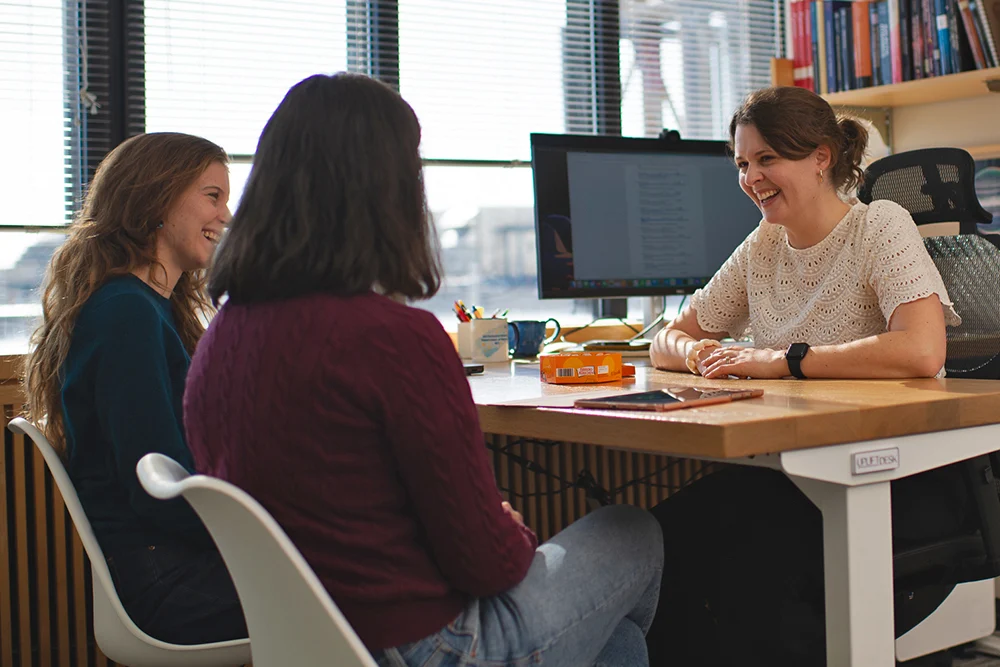
The nominations for Eilers highlight a specific set of practices that define her mentorship style. Students emphasize that her support is not sporadic but a "defining feature" of her daily interactions. This consistency is often cited as the most valuable asset an advisor can provide. In the competitive landscape of academia, where faculty schedules are often dominated by travel and administrative duties, Eilers’ commitment to regular, productive meetings provides a sense of security for her advisees.
One of the group’s most praised traditions involves the celebration of milestones. "She brings our favorite desserts to group meetings when we publish a paper," shared one student nominator. While seemingly small, these gestures serve to humanize the research process, acknowledging the labor and dedication required to bring a project to fruition.
Furthermore, Eilers has institutionalized a culture of knowledge-sharing through a "travel treat" tradition. Whenever a group member returns from a conference or a research visit, they bring back local specialties—cookies, chocolates, or regional snacks—to share during the next group meeting. This ritual serves two purposes: it fosters social cohesion and provides a structured opportunity for the traveler to brief the rest of the group on the latest research developments, new methodologies, and professional connections made during the trip. This practice transforms an individual professional development opportunity into a collective learning experience for the entire lab.
Navigating Academic Obstacles and Professional Development
Mentorship in the Eilers group extends beyond celebratory moments to the navigation of professional friction. Graduate research often involves collaborations with external institutions and international consortiums, which can occasionally lead to interpersonal or logistical difficulties. Students noted that Eilers is quick to intervene when research collaborations become strained or when obstacles threaten to stall a student’s progress.
By identifying potential issues before they escalate, Eilers allows her students to focus on their scientific inquiry rather than administrative or political hurdles. This advocacy is a critical component of the C2C ethos. It demonstrates that an advisor is not just a teacher but a champion for their students’ careers.
Her feedback process is also a point of praise. Mentees describe an advisor who meticulously reviews every draft, providing detailed and timely critiques that help students refine their scientific voice. This level of attentiveness is particularly vital for graduate students who are learning to communicate complex findings to the broader scientific community.
Prioritizing the Human Element: The Work-Life Balance Philosophy
A cornerstone of Eilers’ advice to her students is the necessity of maintaining an identity outside of the laboratory. "I always recommend to incoming graduate students to find a hobby outside of work that they enjoy, and ideally where they interact with people they don’t work with," Eilers stated. This philosophy is born from her own experiences in the academic pipeline, where the "all-consuming" nature of research can lead to burnout and a loss of perspective.
By encouraging her students to pursue outside interests, Eilers promotes a model of "sustainable ambition." This approach recognizes that the most creative and rigorous scientific work is often done by individuals who are well-rested and socially connected. In her view, academic excellence is not a product of 24/7 labor, but rather a result of sustained curiosity and mental clarity.
This perspective is supported by broader data in the field of higher education. Studies have consistently shown that graduate students who maintain strong social support networks and hobbies are more likely to complete their degrees and report higher levels of career satisfaction. By modeling this behavior, Eilers is helping to train a new generation of scientists who view professional success and personal well-being as complementary rather than mutually exclusive.
Tracing the Lineage of Mentorship
Eilers attributes her own approach to the mentors who guided her during her formative years in Germany and the United States. She acknowledges that she was fortunate to have advisors who "modeled how to pursue excellent research without losing sight of the importance of personal connection and integrity."
This "pay-it-forward" model of mentorship is a vital part of the scientific ecosystem. When a professor prioritizes care and integrity, they set a standard that their students are likely to carry into their own future roles as principal investigators, industry leaders, or educators. The impact of Eilers’ recognition by the Committed to Caring program thus extends far beyond the walls of her current lab; it influences the future culture of the astrophysics community.
Broader Implications for the STEM Workforce
The recognition of Professor Eilers reflects a larger shift in the STEM (Science, Technology, Engineering, and Mathematics) fields. Historically, the "lone genius" or "sink or swim" models of doctoral education dominated prestigious institutions. However, these models have been criticized for contributing to high attrition rates, particularly among underrepresented groups.
By fostering a sense of community and providing proactive support, Eilers’ methods align with modern best practices for increasing diversity and retention in physics. When students feel "seen" and supported, they are more likely to tackle the "ambitious questions" that lead to scientific breakthroughs. The success of her research group—marked by both high-impact publications and a healthy internal culture—serves as a case study for the efficacy of empathetic leadership.
Conclusion: Excellence Through Care
Professor Anna-Christina Eilers’ recognition by the MIT Committed to Caring initiative underscores a fundamental truth about modern research: the conditions under which science is conducted are just as important as the science itself. Through a combination of rigorous academic standards and genuine human attentiveness, Eilers has created an environment where graduate students can thrive as both researchers and individuals.
As she continues to peer into the furthest reaches of the universe to uncover the secrets of the cosmic dawn, Eilers remains grounded in the "everyday moments" of her lab. Whether through a shared plate of cookies from a distant conference or a critical check-in during a difficult week, she demonstrates that the future of astrophysics depends not just on telescopes and algorithms, but on the strength of the community behind them. In doing so, she proves that academic excellence and a culture of care are not just compatible—they are inseparable.