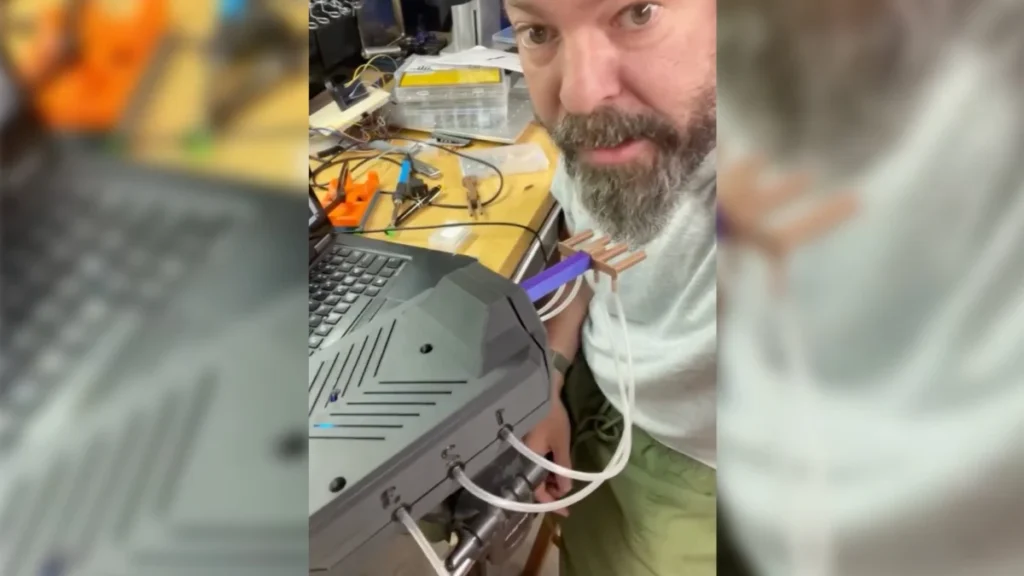
The landscape of interactive entertainment is undergoing a significant transformation as grassroots innovation bridges the gap between standard hardware and the needs of players with severe physical disabilities. Caleb Kraft, a prominent figure in the "maker" community and founder of The Controller Project, has recently unveiled a functional prototype of a sip-and-puff gaming controller that aims to disrupt the high-cost market of assistive technology. By utilizing open-source software, 3D-printable components, and affordable off-the-shelf electronics, Kraft has developed a system that costs approximately $40 to assemble, a fraction of the price of commercial alternatives that often retail for hundreds or even thousands of dollars.
For individuals with quadriplegia or limited upper-body mobility, gaming serves as more than just a pastime; it is a vital portal for social interaction, cognitive stimulation, and psychological escapade. However, the hardware requirements of modern gaming—which prioritize complex multi-button layouts, precision analog sticks, and motion-sensing gyroscopes—have historically acted as a barrier to entry. Kraft’s latest project addresses this exclusion by providing a customizable, DIY solution that converts oral pressure into digital and analog game inputs.
The Mechanics of Accessible Innovation
The sip-and-puff controller operates on a relatively simple yet highly effective mechanical principle. Players use a set of tubes to either "sip" (inhale) or "puff" (exhale) air, which is then detected by sensitive pressure sensors. These sensors translate the intensity and duration of the air movement into specific commands that a gaming console or PC can recognize as button presses or joystick movements.
Kraft’s prototype integrates these tubes onto a joystick base, allowing the user to map mouth movements to a gamepad’s thumbstick. This dual-axis control, combined with the air-pressure inputs, provides a comprehensive control scheme for complex titles. The device features an integrated screen that allows users to navigate a menu system to adjust sensitivity, toggle between analog and digital modes, and configure "macros"—short sequences of commands triggered by a single puff.
Furthermore, the controller supports advanced behaviors such as "latch" and "repeat." Latching allows a player to maintain a specific input (like a "run" command) without constant effort, while repeat functions automate rapid button presses. These features are critical for reducing physical fatigue during extended gaming sessions.
The Evolution of The Controller Project
The Controller Project, founded by Kraft around 2012, has long been a vanguard of the "Maker" movement’s intersection with disability advocacy. Kraft, a former editor for Make: Magazine, has spent over a decade designing and distributing 3D-printed modifications for standard gamepads. His previous work includes extensions for Xbox and PlayStation controllers that allow players with limited finger dexterity to reach triggers or thumbsticks more easily.
The transition from simple plastic extensions to complex electronic interfaces marks a significant milestone for the organization. The development of the sip-and-puff controller was born out of a recognized need for affordability. While companies like Microsoft have made strides with the Xbox Adaptive Controller—a hub that allows various switches and buttons to be plugged in—the peripheral devices themselves, such as high-quality sip-and-puff switches, remain prohibitively expensive for many.
Kraft’s philosophy centers on the democratization of technology. By making the designs open-source, he allows anyone with access to a 3D printer and basic soldering skills to build or repair their own device. This approach not only lowers the financial barrier but also empowers the community to iterate on the design, leading to faster improvements and specialized modifications tailored to individual needs.
Technical Specifications and Economic Impact
The current iteration of the controller utilizes approximately $40 worth of components, primarily sourced from consumer electronics retailers. These include a microcontroller (such as an Arduino or ESP32 variant), pressure sensors, a small OLED display for the interface, and various wires and resistors. The external housing is designed to be printed on standard hobbyist 3D printers using PLA or PETG filament.
In contrast, specialized medical-grade or professional-tier assistive controllers can cost between $500 and $1,500. For many individuals with disabilities, who may already be facing significant medical expenses and limited employment opportunities, these costs are insurmountable. The "disability tax"—the phenomenon where products for people with disabilities are marked up significantly due to low production volumes and specialized certifications—often prevents access to the very tools that could improve quality of life.

By providing a $40 alternative, Kraft is not just offering a gadget; he is challenging the economic structures of the assistive technology industry. While Kraft acknowledges that his current prototype is in a "usable but untested" state and lacks the rigorous durability testing of medical-grade equipment, the initial response from the gaming community has been overwhelmingly positive.
Chronology of Development and Community Response
The development of the sip-and-puff controller followed a transparent, community-driven timeline:
- Conceptualization (2023-Early 2024): Kraft identified the lack of low-cost sip-and-puff options and began researching pneumatic sensors compatible with low-cost microcontrollers.
- Prototyping Phase: Several iterations of the 3D-printed shell were created. Early designs faced challenges regarding internal wiring space and ease of assembly.
- Software Development: Kraft developed the firmware to allow for deep customization, ensuring that the controller could be adapted to different genres of games, from slow-paced RPGs to more demanding action titles.
- Viral Demonstration (August 2024): Kraft shared a video demonstration of the prototype on social media platforms, which quickly went viral. The video highlighted the device’s ability to map complex inputs to simple oral commands.
- Open Source Release: Following the viral interest, Kraft published the component list and source code on The Controller Project’s website, inviting developers and makers to contribute to the project’s refinement.
The reaction from the gaming public and accessibility advocates has been one of high demand and constructive feedback. Gamers with spinal cord injuries and muscular dystrophy have expressed interest in participating in beta testing, while fellow makers have offered suggestions for improving the ergonomic design of the mouthpiece and the durability of the pressure sensors.
Challenges and Future Considerations
Despite the project’s success, Kraft remains transparent about the hurdles that lie ahead. One primary concern is the longevity of the sensors. Standard consumer-grade pressure sensors may not be designed for the high-humidity environment created by human breath over long periods. Saliva and moisture buildup could potentially lead to sensor failure or hygiene issues if the device is not cleaned regularly.
The physical design of the shell also remains an area for improvement. Kraft noted that the current version is difficult to assemble and wire, which could deter less-experienced makers from attempting the build. Additionally, using a standard thumbstick as the base for the mouth-controlled joystick may present ergonomic challenges for users with specific ranges of motion.
"I strongly feel that we have to test these cheap options because sometimes they work totally fine and we can make a massive difference in cost and availability," Kraft stated. This "fail-fast" approach is common in the maker community, where the goal is to find a functional solution quickly and refine it through real-world usage rather than waiting for a "perfect" commercial product that may never arrive or be affordable.
Broader Implications for the Gaming Industry
The success of Kraft’s controller highlights a growing trend of "Inclusive Design" within the $200 billion global gaming industry. According to data from the Entertainment Software Association (ESA), approximately 46 million gamers in the United States alone identify as having a disability. This demographic represents a significant portion of the market that has been historically underserved.
Major industry players are beginning to take note. Following the success of the Xbox Adaptive Controller, Sony released the Access Controller for PlayStation 5 in late 2023. These official products provide a stable foundation, but the "last mile" of accessibility—the specific interfaces like sip-and-puff tubes or specialized pedals—is where DIY projects like Kraft’s are most impactful.
The implications of this work extend beyond gaming. The software and hardware logic used in the sip-and-puff controller can be adapted for other assistive purposes, such as controlling power wheelchairs, navigating computer interfaces for work, or managing smart-home devices. By lowering the cost of the interface, Kraft is contributing to a broader movement of "Assistive Technology for All."
Conclusion
Caleb Kraft’s $40 sip-and-puff controller represents a pivot point in the democratization of gaming. It serves as a testament to the power of open-source collaboration and the impact that a single dedicated individual can have on the lives of thousands. While the project is still evolving, the blueprint it provides offers a roadmap for a more inclusive future in digital entertainment.
For those interested in supporting the initiative, The Controller Project accepts donations to fund the production of controllers for those who cannot afford the parts or do not have access to 3D printing services. As the project moves into its next phase of testing and refinement, it remains a beacon of hope for gamers who have long been sidelined by the physical requirements of traditional hardware. Through innovation, empathy, and a bit of plastic and wire, the world of gaming is becoming a more accessible place for everyone.