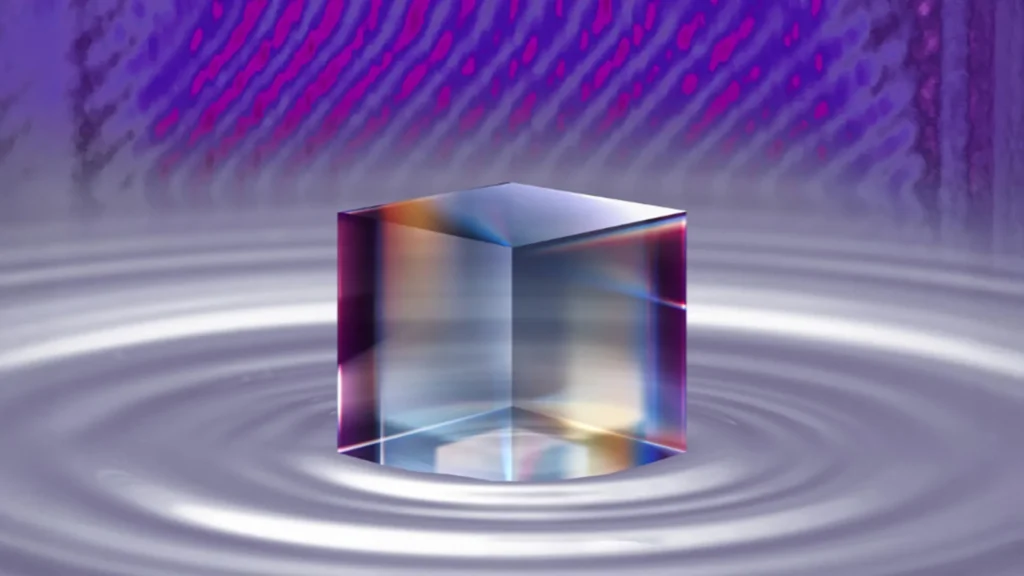
The extraordinary properties of diamond have long fascinated humanity, yet beyond its brilliance as a gemstone, diamond represents one of the most critical materials in the frontier of high-energy-density physics. In a landmark study published in the journal Nature Physics, researchers at the Lawrence Livermore National Laboratory (LLNL) have successfully resolved a twenty-year scientific discrepancy regarding how diamond behaves under the most extreme pressures imaginable. By subjecting tiny diamond samples to conditions exceeding the pressure found at the center of the Earth and temperatures hotter than the surface of the sun, the team has provided the first definitive measurements of diamond’s melting point and atomic structure during high-pressure transitions. The findings not only reconcile long-standing conflicts between laboratory data and computer simulations but also offer a roadmap for tripling the energy yield in inertial confinement fusion experiments and refining our understanding of the "diamond rain" believed to occur within the interiors of ice giant planets like Neptune and Uranus.
The Evolution of a Twenty-Year Scientific Paradox
The journey toward this discovery began roughly two decades ago when LLNL scientist Jon Eggert and his colleagues conducted the first pioneering experiments on diamond melting. At the time, the research produced a startling observation: when diamond melts under immense pressure, it becomes denser in its liquid state than in its solid state. This phenomenon, while rare, is not entirely unique in nature; liquid water is famously denser than solid ice, which is why ice cubes float. Eggert’s findings suggested that under the right conditions deep within a planet or a laboratory experiment, solid diamond would actually float in a sea of liquid carbon.
However, while the discovery of the density change was a breakthrough, it introduced a significant problem that would plague the physics community for the next twenty years. The melting temperatures recorded in these early laboratory experiments differed by approximately 20% from the temperatures predicted by theoretical models. In the world of precision physics, a 20% gap is a chasm. Even as computer simulation techniques became more sophisticated, utilizing advanced quantum mechanics and Density Functional Theory (DFT), theorists were unable to replicate the experimental results. The "diamond melting mystery" became a persistent hurdle for scientists trying to model high-pressure environments.
The confusion deepened following experiments conducted at Sandia National Laboratories using the Z machine—the world’s most powerful terrestrial magnetic field generator. During these experiments, researchers used magnetic fields to launch shockwaves through diamond samples. The resulting data suggested that diamond might not melt directly into a liquid. Instead, the signals indicated that carbon might transition into an intermediate, yet-to-be-confirmed crystalline structure before finally liquefying. Without direct observation of the atomic arrangement during the billionths of a second that the experiment lasted, the existence of this intermediate phase remained a subject of intense debate.
Innovative Methodology at the Omega Laser Facility
To resolve these conflicting narratives, the LLNL team, led by scientist Marius Millot, turned to the University of Rochester’s Laboratory for Laser Energetics (LLE). Utilizing the Omega Laser Facility, the researchers designed an experiment that could capture the fleeting moments of material transformation with unprecedented precision.
The experimental process involved laser-driven dynamic compression. A tiny, high-purity diamond sample was targeted with intense laser energy, which vaporized the outer layer of the material. This rapid vaporization created a "rocket effect," launching a powerful, high-velocity shockwave into the remaining diamond. This shockwave compressed the material to pressures three times greater than those found at the Earth’s core—equivalent to several million atmospheres—and heated it to temperatures exceeding 5,000 degrees Celsius.
The primary challenge of this experiment was the timescale. The extreme pressure and temperature conditions lasted for only about one billionth of a second. To capture data within this window, the team utilized improved diagnostic equipment and X-ray diffraction (XRD) techniques. X-ray diffraction allows scientists to "see" the arrangement of atoms; as X-rays bounce off the atoms in a crystal, they create a specific pattern. If the material changes its crystalline structure or melts into a disordered liquid, the pattern changes accordingly.
"This was the first time that shock-compressed diamond was probed with X-ray diffraction all the way up to melting," Marius Millot explained. The task was made even more difficult by the nature of carbon itself. As a lightweight atom with few electrons, carbon scatters X-rays very weakly, resulting in a faint signal that required highly sensitive detectors to record.
Key Findings: Reconciling Theory and Experiment
The results of the Omega Laser Facility experiments have provided a definitive answer to the two major questions haunting the field. First, the updated measurements of the melting temperature showed a remarkable alignment with modern computer simulations based on quantum mechanics. The 1,000-degree discrepancy that had existed for two decades was finally closed, proving that the theoretical models were accurate and that previous experimental measurements had likely been affected by diagnostic limitations.
"While it was frustrating to discover that our original temperature measurements were off, it is exciting to see such a dramatic improvement in data quality," said Jon Eggert. "Our original inference of melting has now been confirmed directly with X-ray diffraction."
Second, the experiments addressed the "intermediate phase" hypothesis suggested by the Sandia Z-machine data. The LLNL team found that under a single, powerful shockwave, diamond remains "trapped" in its original crystalline structure until the very moment it melts into a liquid. No intermediate crystalline phase was observed. This suggests that the pathway to melting depends heavily on how the pressure is applied. In a single-shock scenario, the atoms do not have sufficient time to reorganize into a different crystal lattice before the entire structure collapses into a liquid state. This finding is crucial for researchers who must account for the "time-dependence" of material phases in high-energy-density physics.
Revolutionizing Inertial Confinement Fusion
The practical implications of this research are most immediately felt in the field of fusion energy research. At the National Ignition Facility (NIF), scientists use inertial confinement fusion (ICF) to attempt to create a clean, nearly limitless source of energy. The process involves placing a tiny capsule of hydrogen fuel (deuterium and tritium) inside a diamond shell, known as an ablator. Powerful lasers then hit the shell, causing it to explode outward and drive the fuel inward at incredible speeds, compressing it until fusion occurs.
For the fusion reaction to be successful, the diamond shell must melt into a perfectly smooth, uniform liquid during the initial stage of the implosion. Any irregularities or solid "chunks" left in the diamond can cause instabilities that disrupt the compression, leading to a failed or weak reaction. Historically, to ensure the diamond melted completely, NIF researchers used a very strong initial laser shock.
However, the new data from Millot and his team suggests that diamond melts at a slightly lower pressure/temperature threshold than previously feared in some models. This means researchers can use a "slower" or less intense initial shock while still ensuring the diamond shell liquefies entirely. A slower shock is highly advantageous because it keeps the fusion fuel "colder" and more compressible. The more compressible the fuel, the higher the density it can reach, which models predict could triple the energy gain of the fusion reaction.
Insights into the Hearts of Ice Giants
Beyond the laboratory, the study provides a new lens through which to view the solar system. For decades, planetary scientists have hypothesized that the interiors of "ice giants" like Neptune and Uranus are home to exotic weather patterns, specifically "diamond rain." These planets are composed largely of water, methane, and ammonia. Under the crushing pressures of the deep interior, methane molecules break apart, and the carbon atoms crystallize into diamonds. These diamonds then sink through the liquid mantle toward the core.
Because the LLNL experiments explored pressures even higher than those found inside Neptune and Uranus, the data provides a solid foundation for planetary models. Knowing exactly when diamond melts and how it behaves when liquid allows scientists to better understand the internal heat flow of these planets and the generation of their complex magnetic fields. If diamond remains solid for longer than expected or behaves differently when liquid, it changes the entire calculation of how these planets evolved over billions of years.
Future Horizons in High-Pressure Physics
The success of the study has opened the door for even more ambitious research. The LLNL team plans to utilize the NIF—the world’s most energetic laser—to push diamond to even further extremes. Future experiments will investigate the stability of diamond when subjected to a sequence of multiple, smaller shockwaves rather than a single large one. This will help determine if the "intermediate phase" suggested by earlier experiments can be "coaxed" into existence given more time or a different pressure pathway.
Furthermore, the team intends to study the behavior of diamond during the later, more intense stages of a fusion implosion, where pressures reach hundreds of millions of atmospheres. As the scientific community continues to strive for a deeper understanding of the building blocks of the universe, this study stands as a testament to the power of reconciling theory with high-precision experimentation. By solving a 20-year-old mystery, the researchers have not only clarified the nature of one of Earth’s most prized materials but have also cleared a path toward the future of energy and the exploration of the stars.