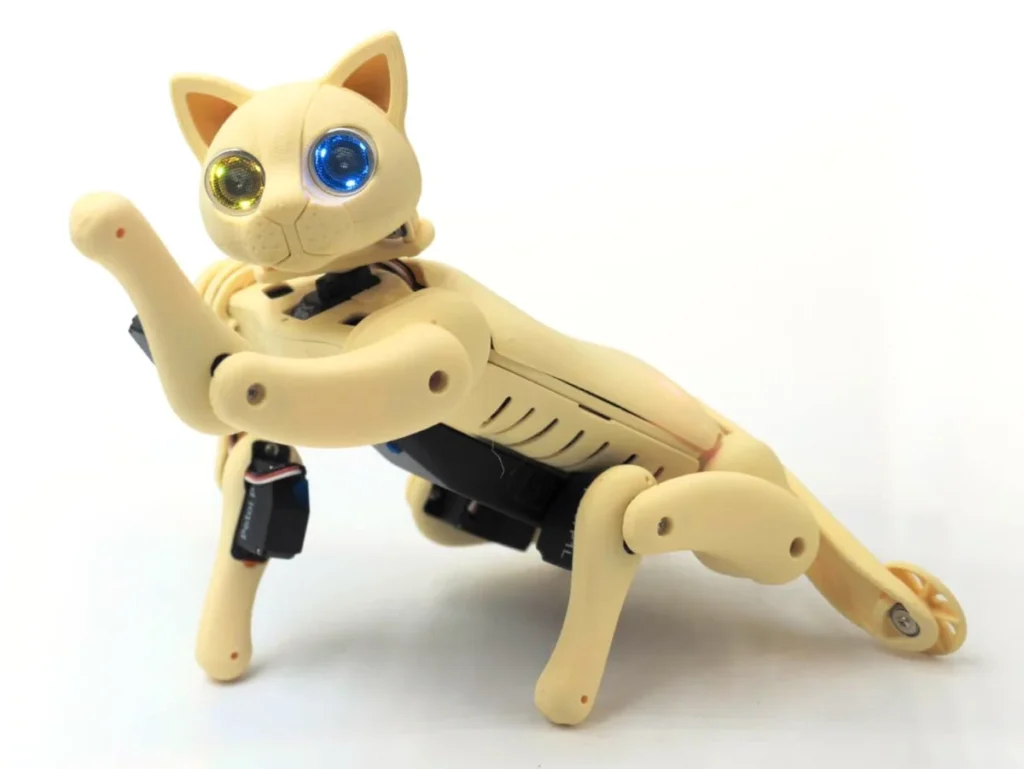
Petoi, a prominent innovator in the field of personal robotics, has garnered significant attention with its latest iterations of programmable quadruped robots: the Nybble Q (cat-inspired) and the Bittle X V2 (dog-inspired). These sophisticated yet accessible platforms, priced at $435 for the Nybble Q and $469 for the Bittle X V2 with an arm, are designed to bridge the gap between advanced robotic engineering and hands-on learning for students, hobbyists, and researchers alike. Reviewed extensively in Make: Vol 94, these robots represent a significant leap in modular, open-source robotics, offering a blend of immediate entertainment and deep educational potential.
The Genesis of Accessible Robotics: Petoi’s Vision and the Maker Movement
The emergence of Petoi and its programmable robot pets is deeply rooted in the philosophy of the global "maker movement," a cultural phenomenon emphasizing hands-on creation, learning through doing, and the open sharing of knowledge and designs. Since the early 2000s, this movement has steadily grown, democratizing access to technologies that were once exclusive to industrial labs or academic institutions. Petoi’s mission aligns perfectly with this ethos: to make complex robotics tangible and approachable for individuals. The company likely originated from a vision to provide accessible, yet powerful, tools for understanding the intricate interplay of mechanics, electronics, and software that govern autonomous systems. This approach leverages community interest and open-source principles to bring sophisticated hardware platforms to life, fostering an environment where users are not just consumers but active participants in the development and modification of their robots. The increasing global demand for Science, Technology, Engineering, and Mathematics (STEM) educational tools further underscores the relevance and timely introduction of products like the Nybble Q and Bittle X V2, which serve as practical gateways into the world of advanced technology.
Nybble Q: The Agile Feline Companion with Advanced Capabilities
The Petoi Nybble Q, often affectionately described as a "palm-sized robot cat," stands out as both an impressive demonstration piece and a robust educational platform. Its inherent "cool factor" makes it an instant conversation starter, captivating new guests and illustrating the playful side of advanced technology. The reviewer’s anecdote of convincing a teacher friend to acquire one for a classroom underscores its immediate appeal and perceived value in an educational context, hinting at its potential to inspire young minds in STEM fields.

Beneath its sleek, 3D-printed exterior – a notable aesthetic and functional upgrade from its earlier wooden counterpart – the Nybble Q houses a powerful technological core. It is packed with multiple servos, enabling a wide range of fluid and dynamic movements, including an expressive tail wag, a feature that significantly enhances its lifelike persona and interactive capabilities.
-
Technological Prowess:
- Voice Recognition and Control: A cornerstone of the Nybble Q’s interactive design is its highly accurate built-in voice recognition system. While acknowledging occasional "amusing misunderstandings" (e.g., "coffee table" becoming "be table"), the system’s overall reliability ensures that users can largely forgo external controls, such as the micro:bit-powered remote. This intuitive, natural language interface makes interaction engaging and lowers the barrier to entry, particularly beneficial in educational settings where ease of use can directly impact learning outcomes.
- Inertial Measurement Unit (IMU): Essential for its agility and resilience, the onboard IMU continuously monitors the robot’s orientation, angular velocity, and gravitational forces. This sensor allows the Nybble Q to detect when it has fallen or is off-balance, autonomously initiating a sequence to right itself. Although it may take a few seconds to regain balance on smooth surfaces, this self-righting capability adds a layer of realism to its "pet-like" behavior and significantly reduces frustration for users experimenting with complex movements or gaits.
- BiBoard V1.0 and Servo Feedback: The upgraded BiBoard V1.0 acts as the robot’s central processing unit, orchestrating its myriad functions. Paired with enhanced servos that offer feedback control, users gain an unprecedented level of creative command over the robot’s physical actions. This feedback mechanism allows for manual manipulation of the robot’s limbs to design bespoke actions and gaits, enabling deep exploration into kinematic and dynamic control.
- Advanced Sensory Perception: Unique to the Nybble Q are its integrated ultrasonic distance sensors. These sensors provide the robot with a rudimentary form of "sight," enabling autonomous navigation, obstacle avoidance, and spatial awareness. Its color-changing eyes further augment its interactive persona, serving as visual indicators for various states or simulated "moods," enriching the user experience.
- Expandability and Computational Enhancement: For advanced users seeking to push the boundaries of the robot’s capabilities, the Nybble Q offers the option to integrate a Raspberry Pi. This integration significantly boosts the robot’s computational power, allowing for the implementation of more sophisticated artificial intelligence algorithms, advanced computer vision processing, or complex navigation routines, effectively offloading intensive cognitive tasks from the primary BiBoard.
-
Educational Framework and Community Support: Petoi’s unwavering commitment to education is palpable through the comprehensive curriculum accompanying the Nybble Q. It supports multiple programming environments, including Arduino (utilizing C++), Python, and Mind+ (a block-based visual programming language similar to Scratch). This multi-tiered approach ensures accessibility for a broad spectrum of users, from beginners engaging with intuitive block coding to experienced programmers delving into the intricacies of Python or C++. The vibrant and active online community further enriches the learning experience, serving as an invaluable resource for troubleshooting, sharing innovative projects, and fostering collaborative problem-solving among enthusiasts worldwide.
Bittle X V2: The Versatile Canine with Industrial Potential
The Bittle X V2, the canine counterpart in Petoi’s lineup, presents a distinct set of features tailored to a slightly different user demographic, emphasizing robustness, adaptability, and modular expansion. Similar to the Nybble Q, the Bittle X V2 comes equipped with built-in voice control, ensuring an equally interactive experience. Its core is an upgraded ESP32-based board, which offers substantial processing power and versatile connectivity options, including Wi-Fi and Bluetooth. This capability makes the Bittle X V2 particularly well-suited for Internet of Things (IoT) integration and sophisticated remote control applications.
-
Modular Sensor System and AI Integration: While the Bittle X V2 foregoes the Nybble Q’s integrated ultrasonic eyes, it excels in its modular design for external sensors. Its mouth area is ingeniously engineered to accommodate a diverse array of additional sensors, such as light, motion, and gesture detectors. This flexibility allows users to precisely customize the robot’s sensory perception capabilities to meet the specific demands of their projects. A significant enhancement is the availability of an AI camera module, which transforms the Bittle X V2 into a powerful platform for computer vision projects. This enables functionalities like object recognition, target tracking, and even rudimentary facial recognition – capabilities that are increasingly pivotal in modern robotics research and development across various industries.

-
The Robot Arm Module: Beyond Locomotion: A standout and defining feature of the Bittle X V2 is the optional robot arm, which ingeniously replaces the traditional head unit. This innovative addition elevates the robot beyond simple locomotion, transforming it into a mobile manipulator capable of direct physical interaction with its environment. The reviewer expressed genuine surprise at the arm’s strength, noting its capacity to pick up and toss small objects. This functionality, facilitated by unlockable macros, introduces a plethora of practical applications, from performing simple manipulation tasks and interacting with objects to serving as an advanced testbed for robotic manipulation algorithms. While the reviewer personally favored the "nimbleness and expandability" of the Bittle with its conventional head for general exploratory robotics, the robot arm option unequivocally caters to users keen on tackling more applied, real-world robotics challenges.
-
Durability and Robust Design: The Bittle X V2’s design places a strong emphasis on durability and ruggedness. This robust construction is particularly advantageous in experimental environments where the robot might experience frequent tumbles or impacts, making it a more resilient choice for active exploration and more demanding applications.
The Petoi Ecosystem: Bridging Theory and Practice in Robotics Education
Petoi robots are far more than mere advanced gadgets; they serve as fundamental, hands-on tools for comprehensive STEM education. They offer a tangible and deeply engaging platform for students and enthusiasts to grasp complex subjects that span mechanical engineering (e.g., servo mechanics, gait design, kinematics), electrical engineering (e.g., circuit integration, sensor interfacing), and computer science (e.g., programming logic, control systems, foundational artificial intelligence concepts). In an era where digital literacy, computational thinking, and practical problem-solving skills are paramount, these robots provide invaluable real-world experience.
-
Curriculum Integration and Pedagogical Approach: The strategic inclusion of accompanying lessons and support for diverse programming paradigms is a testament to Petoi’s commitment to education. The block-based programming platform, Mind+, makes robotics accessible to younger learners and beginners by simplifying complex coding concepts into intuitive drag-and-drop actions. For more advanced students, the support for Python and Arduino (C++) provides pathways to delve into more sophisticated programming challenges, allowing them to write complex algorithms and gain a deeper understanding of software development. This tiered approach makes Petoi robots ideal for integration into diverse educational curricula, empowering teachers to demonstrate principles of robotics, control systems, and AI in an interactive and memorable manner.
-
Community and Open-Source Philosophy: A critical pillar of the Petoi ecosystem is its vibrant and active online community. This community fosters a highly collaborative learning environment where users can freely share code, exchange innovative project ideas, troubleshoot technical issues, and collectively expand the capabilities of their robots. This embodies the true spirit of the open-source philosophy, where shared knowledge and collective intelligence accelerate innovation, problem-solving, and continuous learning – a model that is increasingly vital in today’s rapidly evolving technological landscape.

-
Market Position and Competitive Landscape: Within the expansive market of educational robotics, Petoi occupies a distinctive and valuable niche. While established competitors like LEGO Mindstorms offer construction and programming experiences, and high-end research platforms such as Boston Dynamics’ Spot Mini cater to professional research and industrial applications, Petoi provides an accessible, programmable quadruped that masterfully balances cost-effectiveness with advanced features. It is strategically positioned as an "intermediate project" platform – a significant step up from entry-level electronics kits but less daunting than building a robot entirely from scratch. This makes Petoi robots perfectly suited for individuals who have mastered basic electronics and programming concepts but are seeking a more sophisticated, dynamic, and open-ended platform for their next level of robotic exploration.
Navigating the Learning Curve: User Experience and Considerations
It is crucial to understand that Petoi robots are not designed as "foolproof consumer products," but rather as sophisticated "intermediate projects." This distinction is fundamental to the user experience. Prospective users should approach these robots not as simple plug-and-play devices, but as dynamic platforms that necessitate a degree of engagement, experimentation, and a willingness to troubleshoot. While the robots arrive preassembled, the reviewer’s initial experience with a non-wagging tail on the Nybble Q, swiftly resolved by a minor adjustment to a servo plug, exemplifies the hands-on nature of these devices. Such instances highlight that users are encouraged to interact with the robot’s internal components, fostering a deeper understanding of its mechanics and electronics.
- Modularity Versus Vulnerability: The design philosophy prioritizes modularity and user accessibility, allowing for easy modification and the integration of additional components, such as Grove sensors. This openness is a significant advantage for learning and customization. However, this accessibility inherently means that certain internal components, such as delicate ribbon cables, may be exposed during minor adjustments or upgrades. This necessitates careful handling and a methodical approach to maintenance. This trade-off between the flexibility of user modification and the robust, fully enclosed nature of typical consumer products is a deliberate design choice by Petoi, specifically catering to the informed and curious "maker" audience. Users who embrace this philosophy will find immense value in the ability to delve into the robot’s inner workings and expand its capabilities.
Strategic Choices: Nybble Q vs. Bittle X V2
The decision between the Nybble Q and the Bittle X V2 ultimately hinges on the user’s primary interests, project objectives, and desired level of interaction. Both robots offer compelling features, but their unique strengths cater to slightly different applications:
- Nybble Q: This model excels in scenarios demanding autonomous navigation and a more interactive, expressive personality. Its integrated ultrasonic distance sensors provide advanced environmental awareness, making it an excellent platform for exploring complex gaits, reactive behaviors, and developing sophisticated navigation algorithms. The elegant 3D-printed body and refined movements further enhance its appeal for users focused on biomimicry and dynamic locomotion.
- Bittle X V2: Conversely, the Bittle X V2, with its pronounced emphasis on modularity for external sensors and the powerful robot arm option, is ideal for users interested in practical manipulation, advanced computer vision applications, and more robust physical interaction with its environment. Its durable construction makes it particularly well-suited for experimental and more demanding applications where resilience is a key factor.
Despite their individual strengths, both models share the fundamental advantage of being highly programmable, extensively expandable, and supported by a rich, active educational ecosystem. They serve as exceptional entry points into the intricate and fascinating world of advanced robotics, providing a solid foundation for future innovations and explorations in artificial intelligence and automation.

The Future of Personal Robotics and STEM Engagement
The Petoi Nybble Q and Bittle X V2 represent a significant and forward-thinking stride in making advanced robotics accessible to a far broader audience than ever before. By strategically combining sophisticated hardware design with an open-source software philosophy and extensive, well-structured educational resources, Petoi is achieving more than simply selling robotic products; it is actively cultivating a vibrant community of future engineers, scientists, and innovators. As robotics continues its inexorable integration into nearly every facet of daily life, from industrial automation to personal assistance, platforms like these become increasingly vital. They are instrumental in equipping the next generation with the critical skills, foundational knowledge, and creative understanding necessary to not only navigate but also actively shape a world increasingly defined by intelligent machines. The ongoing development and evolution of such accessible, modular, and programmable robotics platforms promise to keep the spirit of innovation alive and thriving, transforming complex technological concepts into engaging, hands-on learning experiences that will inspire and empower for years to come.