The landscape of industrial manufacturing is on the verge of a significant transformation as researchers from Hiroshima University and Mitsubishi Materials Hardmetal Corporation have successfully demonstrated a novel method for 3D printing one of the world’s most resilient materials: tungsten carbide-cobalt (WC-Co). This breakthrough, detailed in a study published in the International Journal of Refractory Metals and Hard Materials, addresses a long-standing paradox in metallurgy—how to efficiently shape a material that is designed to resist shaping. By utilizing a specialized additive manufacturing (AM) technique known as hot-wire laser irradiation, the team has paved the way for producing high-performance industrial tools with significantly reduced waste and lower production costs, all while maintaining the extreme hardness required for heavy-duty applications.
The Industrial Significance of Tungsten Carbide-Cobalt
Tungsten carbide-cobalt, often referred to as "cemented carbide" or simply "carbide" in machining circles, is the backbone of modern heavy industry. It is a composite material where hard particles of tungsten carbide are "cemented" together by a metallic cobalt binder. This combination results in a material that possesses the near-diamond hardness of the carbide and the toughness of the metal binder, making it indispensable for cutting tools, drill bits, mining equipment, and wear-resistant parts in the automotive and aerospace sectors.
The value of WC-Co lies in its ability to maintain its mechanical integrity under extreme thermal and physical stress. In high-speed machining, where friction generates immense heat, standard steel tools would soften and fail. Tungsten carbide, however, remains rigid, allowing for faster production cycles and higher precision. Despite these advantages, the material’s greatest strength is also its primary manufacturing hurdle. Because it is so hard, machining it into complex shapes using traditional subtractive methods—where material is cut away from a larger block—is incredibly difficult, time-consuming, and results in significant wear on the machines used to make the tools themselves.
The Limitations of Traditional Powder Metallurgy
For decades, the standard method for producing WC-Co components has been powder metallurgy. This process involves mixing fine powders of tungsten carbide and cobalt, pressing them into a "green" compact shape, and then sintering them in a furnace at temperatures typically ranging from 1,300°C to 1,500°C. During sintering, the cobalt melts and wicks between the carbide grains, bonding them into a solid mass.
While effective, powder metallurgy has several inherent drawbacks:
- Material Waste: The process often requires the creation of molds or the use of oversized "blanks" that must be ground down to final specifications. Given that tungsten and cobalt are expensive and strategically critical raw materials, any waste carries a high financial and environmental cost.
- Geometric Constraints: Sintering and pressing are best suited for relatively simple geometries. Creating intricate internal cooling channels or complex organic shapes is either impossible or prohibitively expensive.
- Energy Intensity: Maintaining high-temperature furnaces for extended periods contributes to a heavy carbon footprint in tool manufacturing.
A New Frontier: Hot-Wire Laser Irradiation
To overcome these challenges, the research team, led by Assistant Professor Keita Marumoto of Hiroshima University’s Graduate School of Advanced Science and Engineering, turned to additive manufacturing. Specifically, they employed hot-wire laser irradiation, a process more commonly associated with high-speed welding of structural steels.
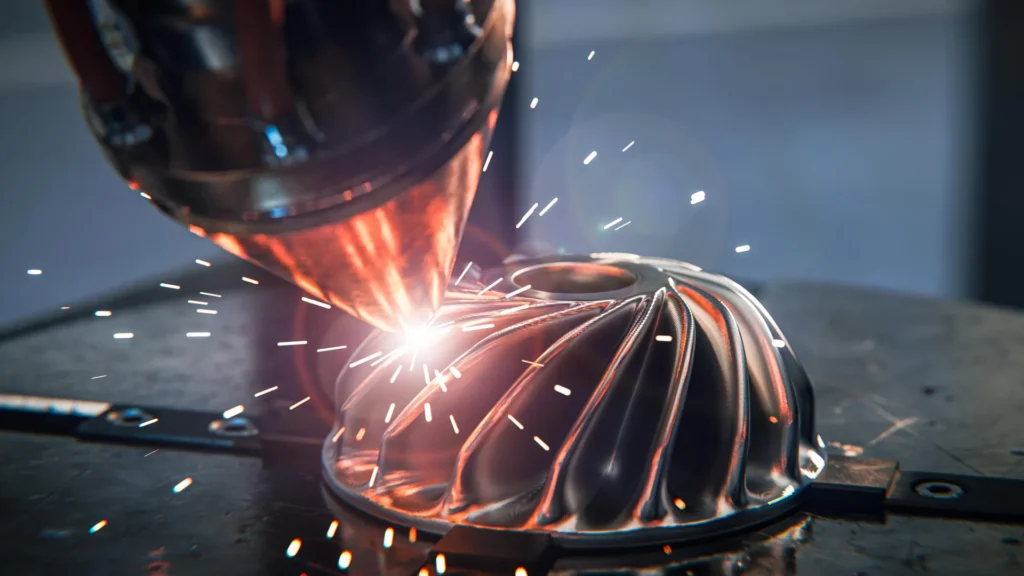
In this process, a laser beam serves as the primary heat source to create a melt pool on a substrate. Simultaneously, a filler wire—in this case, a cemented carbide rod—is fed into the path of the laser. A critical innovation in this setup is that the filler wire is preheated using an electric current before it even reaches the laser’s focal point. This preheating reduces the amount of laser energy required to soften the material, allowing for a faster deposition rate and better control over the thermal gradient.
The most vital aspect of the researchers’ approach was the decision to "soften" rather than "fully melt" the tungsten carbide. When WC-Co is completely liquefied, the tungsten carbide can decompose into different, less desirable phases (such as W2C or metallic tungsten) or undergo rapid grain growth. Both phenomena severely degrade the hardness and wear resistance of the final product. By carefully balancing the laser intensity and the wire preheating, the team achieved a state where the cobalt binder became fluid enough to facilitate bonding while the carbide particles remained largely intact.
Experimental Methodology and the Path to Success
The research team conducted a series of rigorous experiments to identify the optimal configuration for building carbide structures. They tested two primary fabrication arrangements:
- The Rod-Leading Method: In this setup, the cemented carbide rod was positioned in front of the laser as it moved across the work surface. While this allowed for steady deposition, the researchers found that it led to the decomposition of tungsten carbide in the upper layers of the structure. This decomposition created structural "voids" and reduced the overall hardness of the material.
- The Laser-Leading Method: Here, the laser moved ahead of the rod, pre-irradiating the base material (an iron substrate) and the interface where the rod would be deposited. This method showed more promise in terms of structural integrity but initially struggled to achieve the consistent hardness levels required for industrial use.
The breakthrough came when the team introduced a buffer layer of a nickel-based alloy between the iron base and the cemented carbide. This middle layer acted as a thermal and chemical transition zone, preventing the iron from contaminating the carbide and helping to manage the stresses caused by the different cooling rates of the materials.
Furthermore, the researchers implemented a sophisticated temperature monitoring system. They discovered that the "sweet spot" for manufacturing existed in a narrow window: high enough to melt the cobalt binder (approximately 1,495°C) but low enough to prevent the "grain growth" of the tungsten carbide particles. By maintaining this delicate thermal balance, they were able to produce a defect-free structure.
Analyzing the Results: Data and Hardness Metrics
The success of the experiment was quantified using the Vickers hardness test (HV), a standard industrial measure of a material’s resistance to indentation. Conventionally manufactured WC-Co typically falls within the range of 1,200 to 1,600 HV, depending on the cobalt content and grain size.
The researchers achieved a hardness value exceeding 1,400 HV in their 3D-printed samples. To put this into perspective:
- Standard Construction Steel: ~200 HV
- Hardened Tool Steel: ~600–800 HV
- Sapphire: ~2,000 HV
- Diamond: ~10,000 HV
Achieving 1,400 HV through an additive process without the use of high-pressure sintering is a landmark achievement. It proves that the 3D-printed material can match the mechanical properties of traditionally manufactured tools. Microscopic analysis confirmed that the carbide grains remained small and evenly distributed, which is essential for preventing cracks and ensuring long-term durability in cutting and drilling operations.
Industry Implications and Expert Reactions
The implications of this research extend far beyond the laboratory. Assistant Professor Keita Marumoto emphasized the economic and environmental benefits of the discovery. "Cemented carbides are made from very expensive raw materials such as tungsten and cobalt," Marumoto noted. "By using additive manufacturing, cemented carbide can be deposited only where it is needed, thereby reducing material consumption."
Industry analysts suggest that this technology could revolutionize the "Tool-as-a-Service" model. Currently, when a large industrial drill bit wears down, the entire component often needs to be replaced or undergoes an expensive refurbishing process. With this AM technique, manufacturers could potentially "print" a new carbide edge directly onto a worn tool body, extending its life and drastically reducing the need for new raw materials.
Furthermore, the ability to print carbide only where it is needed allows for the creation of "multi-material" components. For example, a complex engine part could be made of lightweight steel, with ultra-hard tungsten carbide printed only on the specific surfaces that experience high friction. This would result in components that are both lighter and more durable than those currently available.
Addressing Global Supply Chain Vulnerabilities
The timing of this breakthrough is particularly relevant given the global supply chain landscape. Tungsten is classified as a "critical raw material" by many nations, including the United States and members of the European Union, due to its economic importance and the high risk of supply disruption. China currently accounts for over 80% of global tungsten production.
Similarly, cobalt has come under intense scrutiny due to its concentration in the Democratic Republic of Congo and the ethical and logistical challenges associated with its mining. By developing a manufacturing method that minimizes waste—often referred to as "near-net-shape" manufacturing—the industrial sector can reduce its reliance on these volatile supply chains.
Future Outlook: Challenges and Scaling
Despite the promising results, the transition from laboratory success to mass industrial adoption faces several hurdles. The researchers noted that while they achieved high hardness, they still need to address the issue of "residual stress," which can lead to microscopic cracking over time.
Future research phases will focus on:
- Complex Geometries: Testing the process on three-dimensional shapes beyond simple rods and layers.
- Durability Testing: Subjecting the 3D-printed carbides to real-world machining conditions to see how they hold up against repeated impacts and thermal cycling.
- Material Expansion: Exploring whether this "softening" technique can be applied to other refractory metals, such as tantalum or molybdenum.
The collaboration between Hiroshima University and Mitsubishi Materials signifies a strong commitment to bringing this technology to market. As the manufacturing world moves toward "Industry 4.0," the integration of high-performance materials with additive manufacturing will be a cornerstone of innovation.
The ability to 3D print tungsten carbide-cobalt represents a significant leap forward in materials science. It offers a glimpse into a future where the world’s toughest materials are no longer the most difficult to work with, but rather the most versatile tools in the engineer’s toolkit. By reducing waste, lowering costs, and enabling new designs, this research provides a foundation for a more sustainable and efficient industrial era.