The desert landscape of northwestern Nevada, specifically the prehistoric lakebed known as the Black Rock Playa, undergoes a radical transformation every August. For one week, it becomes Black Rock City, a temporary metropolis dedicated to community, art, self-expression, and self-reliance. While often characterized by the mainstream media through the lens of its eccentric fashion and electronic music, the foundational bedrock of Burning Man is rooted in a sophisticated culture of engineering, fabrication, and communal labor. This "Maker" ethos is so deeply embedded in the event’s DNA that the Burning Man Project and the global Maker movement have become inextricably intertwined, fostering a unique ecosystem where technical expertise and artistic vision merge to create some of the world’s most ambitious interactive installations.
This symbiotic relationship is most visible when the dust of the desert settles and the massive sculptures, kinetic vehicles, and light installations find a second life in urban environments. A primary venue for this transition is Maker Faire Bay Area, held at the historic Mare Island Naval Shipyard. Here, the "Burner" aesthetic meets the "Maker" technical community, showcasing the rigorous craftsmanship required to survive the harsh alkali flats of the desert.
The Philosophical Convergence of Two Movements
The intersection of Burning Man and the Maker movement is not merely a matter of shared participants but a shared philosophy. Both cultures prioritize a hands-on approach to problem-solving and a democratization of technology. As the Burning Man Project noted earlier this year, both communities "welcome beginners and experts alike, while fostering a communal, hands-on approach to building tangible objects that become works of art, helpful structures, and engineered wonders."

At the heart of this convergence are the Ten Principles of Burning Man, particularly "Communal Effort," "Radical Self-reliance," and "Participation." These principles mirror the Maker movement’s emphasis on open-source collaboration and the "Do-It-Yourself" (DIY) spirit. In Black Rock City, "making" is a survival necessity. The environment—characterized by triple-digit temperatures, 70-mph dust storms, and a complete lack of infrastructure—demands that every structure be engineered to professional-grade safety standards while remaining portable enough to be removed without leaving a trace.
From the Playa to Mare Island: A Chronology of Big Art
The journey of a "Big Art" piece typically begins months, or even years, before it reaches the desert. Many projects are supported by the Burning Man Honorarium program, which provides partial funding for selected installations. However, the true cost of these pieces often exceeds these grants, requiring artists to engage in extensive fundraising and volunteer recruitment.

Once the event concludes, these massive works face a logistical challenge: where does a 40-foot fire-breathing octopus or a 21-foot metal mask go? Increasingly, the answer is public exhibitions like Maker Faire. This year’s Maker Faire Bay Area serves as a vital repository for these desert-born wonders, allowing the general public to witness the engineering complexity that defines modern sculpture.
El Pulpo Magnifico: The Evolution of Fire and Metal
One of the most iconic examples of this cross-pollination is the work of Duane Flatmo. A legend in the kinetic sculpture community of Eureka, California, Flatmo’s "El Pulpo Magnifico" represents decades of iterative design. The piece is a successor to "El Pulpo Mecanico," a fire-breathing octopus constructed primarily from recycled aluminum bread tins, cookie molds, and assorted metal ephemera.

The engineering behind El Pulpo is a masterclass in mechanical synchronization. Using cam-driven systems to animate the tentacles and sophisticated propane plumbing to facilitate choreographed fire blasts, Flatmo’s work embodies the "scrap-heap" engineering aesthetic that defines early Maker culture. Its appearance at Maker Faire Bay Area highlights the transition from a temporary festival attraction to a celebrated piece of American folk-engineering.
The Tree of Photon: Quantum Poetry in Light
Representing the high-tech end of the Maker spectrum is Artur Grycuk’s "Tree of Photon." Grycuk, the first Polish artist to receive a Burning Man honorarium, utilizes the installation to explore the intersection of technology and natural forms. The piece uses light-based art to symbolize the "quantum poetry" of photons, representing both scientific precision and metaphorical enlightenment.
The technical requirements for such a piece are immense. To survive the desert, electronic components must be sealed against microscopic dust and stabilized against extreme heat. When moved to the "Dark Room" at Maker Faire’s Mare Island venue, the piece shifts from a desert landmark to an immersive indoor experience, demonstrating how interactive lighting can foster communal bonds through physical touch and technological response.
Art Cars and Mutant Vehicles: Engineering Mobility
In Black Rock City, transportation is transformed into art through "Mutant Vehicles"—highly modified motorized installations that bear little resemblance to their original chassis. Two standout examples appearing at Maker Faire are "Sepia Lux" and "Flash the Tortoise."

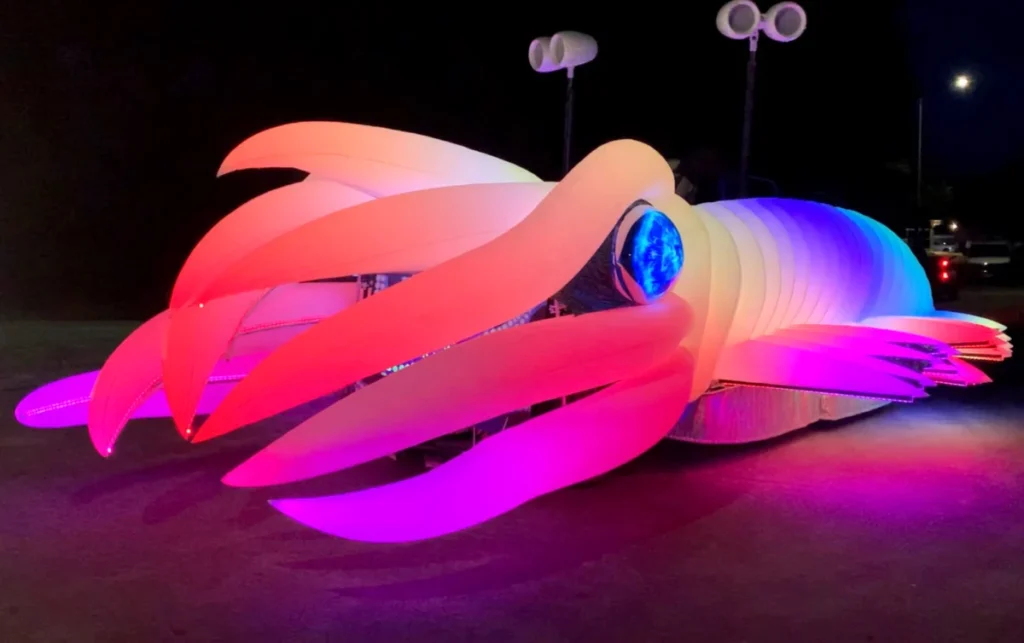
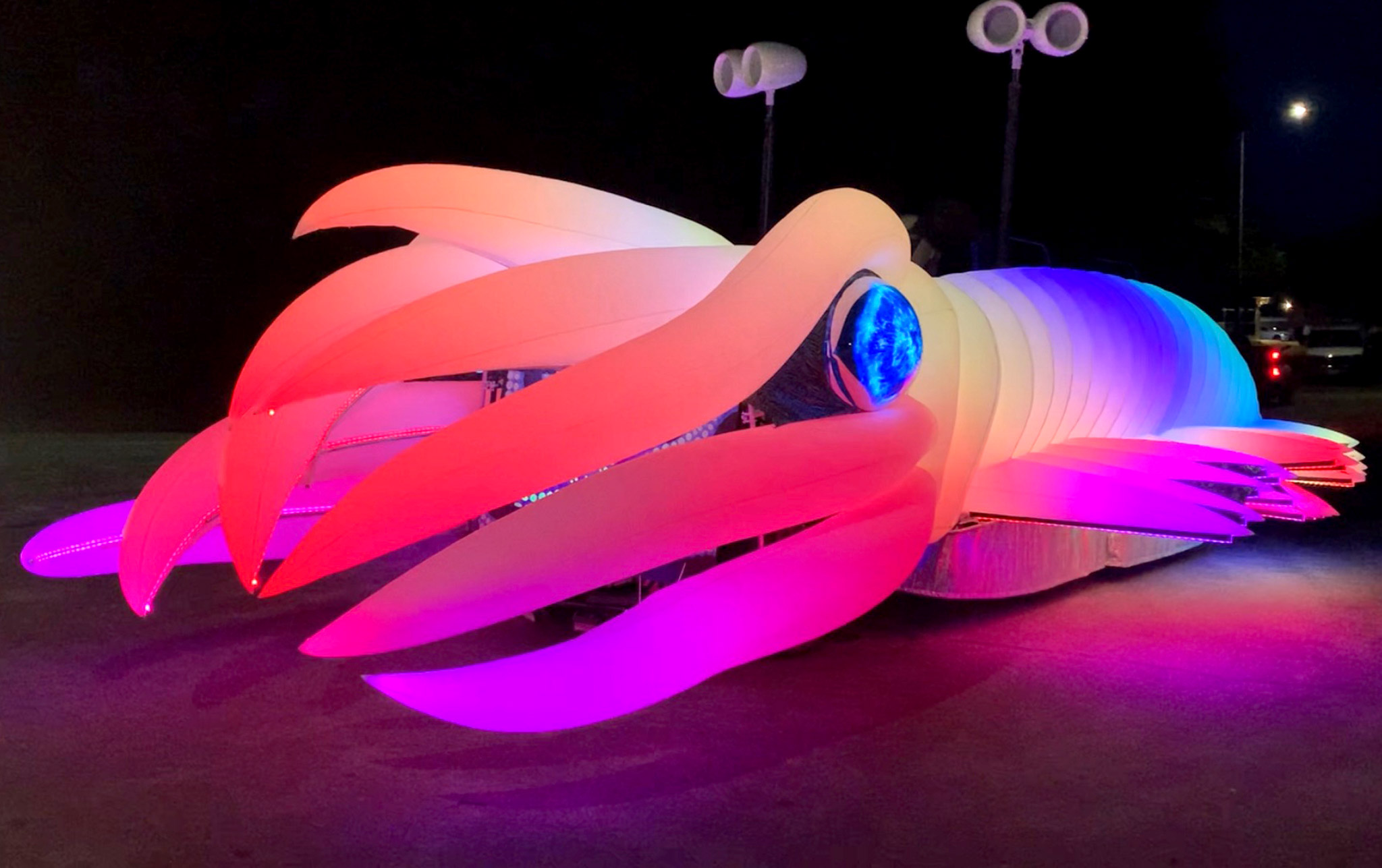
"Sepia Lux," a 23-foot illuminated cuttlefish, began its life as a modified Polaris General ATV. The project, led by Loren Crotty and a team of makers including Bill "Inflatabill" Kennedy, required 20 months of fabrication. The build involved advanced plastic welding for the inflatable fins and a complex LED control system to mimic the color-changing skin of a biological cuttlefish.
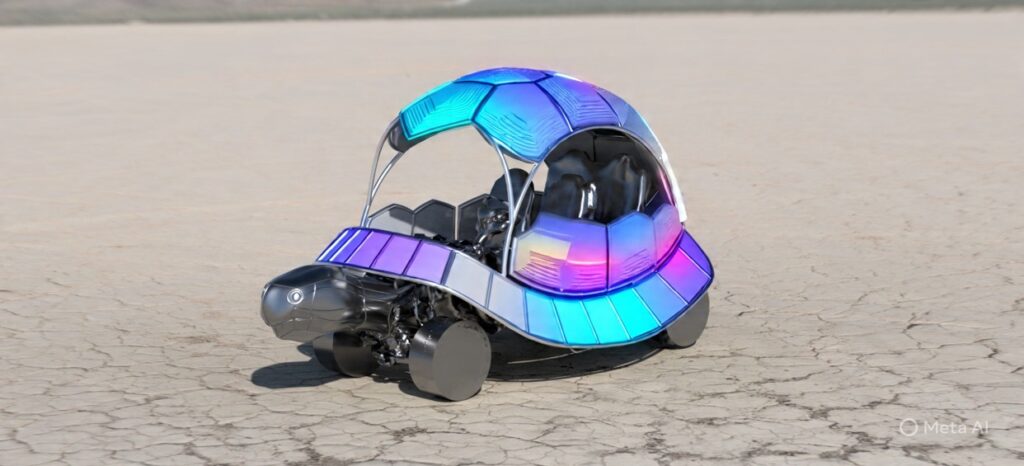
Following a similar trajectory, "Flash the Tortoise" utilized a 2002 Gem Car as its base. The CooLab design team employed vacuum-formed HDPE (High-Density Polyethylene) for the shell scutes and a custom-built lithium battery pack to power both the drivetrain and the extensive internal lighting system. These vehicles represent a significant investment in electrical engineering and material science, proving that the "art car" is as much a feat of automotive innovation as it is a visual spectacle.

The Industrial Spirit: Farmer the Rigger
The choice of Mare Island as a venue for Maker Faire adds a layer of historical resonance to these installations. Zulu Heru’s "Farmer the Rigger" is a 9,000-pound, 21-foot-tall metal mask that serves as a tribute to the labor movement and industrial craftsmanship. Heru, a professional crane operator, designed the piece to reflect his own vocational journey from agriculture to industrial rigging.
The installation of such a massive piece requires the very skills Heru uses in his daily work—heavy lifting, structural rigging, and precision placement. By placing this "guardian spirit" on the grounds of a former naval shipyard, the connection between the makers of the past (shipbuilders) and the makers of the present (artists) is made tangible.

Broader Implications: The Economic and Cultural Impact of Maker Art
The proliferation of Burning Man art at Maker Faires and in permanent public installations has significant implications for the creative economy. These projects often serve as incubators for new technologies and fabrication techniques. For instance, the demand for large-scale LED synchronization in the desert has driven innovations in wireless DMX controllers and power management systems that are now used in professional architectural lighting.
Furthermore, these projects provide a training ground for specialized labor. Builders who volunteer on Burning Man crews often develop skills in TIG welding, CNC routing, and structural engineering that translate directly into the professional fabrication and construction industries.

The Role of Makerspaces
The development of these pieces is largely made possible by the rise of community makerspaces. As the Burning Man Journal noted, "Burner makerspaces" are popping up globally, providing the tools and space necessary for large-scale fabrication that would be impossible in a private garage. These spaces—such as the Reno Generator—act as year-round hubs for the Maker movement, ensuring that the spirit of innovation is not limited to a single week in the desert.
Analysis: The Future of Large-Scale Interactive Art
The trend toward more complex, technologically integrated art shows no signs of slowing. As seen in projects like "Project Empire"—a sci-fi inspired collaboration between The Golden Mean and The Serpent Twins—the future of the movement lies in "performance engineering." These are installations that are not meant to be viewed from a distance but are designed for total human immersion.

However, this evolution brings challenges. The environmental impact of transporting massive steel structures and the carbon footprint of propane-based fire art are under increasing scrutiny. The next frontier for the Maker-Burner community will likely be the integration of sustainable materials, solar-powered lighting arrays, and "Leave No Trace" manufacturing processes.
Conclusion: A Legacy of Innovation
The synergy between Burning Man and the Maker movement represents one of the most vibrant sectors of contemporary art and engineering. By providing a platform for these works at Maker Faire Bay Area, the community ensures that the ingenuity born in the Black Rock Desert is shared with a wider audience. Whether it is a mechanical horse like Adrian Landon’s "Nebula Rider" or a bioluminescent kelp forest like Anna Gribovsky’s "Aquatica," these works remind us that the urge to create is universal, and the tools to do so are increasingly in the hands of the people. For those who cannot make the trek to the Nevada desert, the "City of Makers" continues to thrive through the exhibitions and makerspaces that keep the fire of innovation burning year-round.