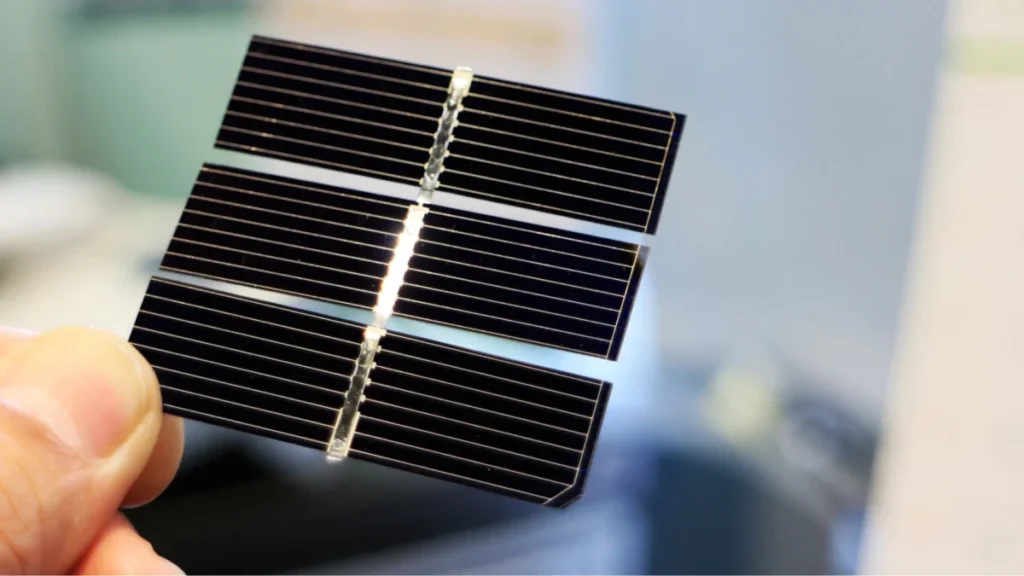
Researchers affiliated with Yunnan University and the Southwest United Graduate School have successfully demonstrated fully functional underwater solar cells operating at a groundbreaking depth of 10 meters (approximately 33 feet) within the challenging environment of the South China Sea. This pioneering achievement marks a significant leap forward in marine power solutions, shattering previous limitations that confined submerged solar energy harvesting to shallow waters less than two meters deep. The development promises to unlock a new era of reliable, long-term power for an array of remote oceanic systems, from environmental sensors and monitoring cameras to critical communication hardware, thereby addressing one of the most persistent challenges in marine science and technology.
The Enduring Quest for Autonomous Underwater Power
The vast and often hostile underwater realm has long presented formidable obstacles to continuous operation for human-made technologies. Powering devices in this environment typically relies on a limited set of options, each with inherent drawbacks. Traditional battery systems offer portability but suffer from finite lifespans, requiring frequent, costly, and often logistically complex replacements or recharging missions. For fixed installations, cumbersome and expensive umbilical cables can provide continuous power from surface vessels or shore-based stations, but these are susceptible to damage, limit mobility, and are impractical for truly remote or mobile applications. More exotic solutions, such as radioisotope thermoelectric generators (RTGs), offer unparalleled longevity and power density but come with prohibitive costs, regulatory hurdles, and safety concerns, making them suitable only for highly specialized, deep-sea, or space missions.
Previous attempts to harness solar energy underwater faced a fundamental challenge: the rapid attenuation of sunlight with increasing depth. While solar power has revolutionized terrestrial and even space-based applications, its utility beneath the waves has been severely restricted. Early experimental underwater solar cells could only function effectively in extremely shallow conditions, typically less than two meters, where sunlight remains abundant. However, practical applications at such depths are scarce, limiting the technology’s real-world impact. This historical context underscores the magnitude of the recent breakthrough by the Chinese research team, who have effectively pushed the operational envelope tenfold, moving from a niche laboratory curiosity to a viable contender for widespread marine deployment.
The South China Sea, where the validation tests were conducted, is not merely a geographic location but a dynamic marine ecosystem of immense biodiversity and strategic importance. Its complex currents, varying water clarity, and rich marine life make it an ideal, albeit challenging, natural laboratory for testing innovative marine technologies. The success in this environment lends significant credibility to the robustness and potential scalability of the new solar cell design.
A Deeper Dive: The Science Behind the Breakthrough
The primary innovation enabling this unprecedented depth capability lies in the researchers’ meticulous "bandgap optimization" of the solar cells. Standard commercial silicon solar cells are engineered to capture a broad spectrum of terrestrial sunlight, which includes a substantial proportion of red and infrared wavelengths. These longer wavelengths, however, are quickly absorbed and scattered by water molecules, rendering conventional silicon cells highly inefficient underwater. As sunlight penetrates the ocean, it undergoes selective absorption; red light vanishes within the first few meters, followed by yellow and green light, leaving primarily blue and, to a lesser extent, green light to reach greater depths.
Recognizing this critical environmental factor, Dr. Wen-Hua Zhang’s team meticulously designed wide-bandgap solar cells specifically optimized to capture the blue-to-orange light wavelengths that penetrate ocean waters most effectively. While the original article does not explicitly name the specific material, the accompanying schematic diagram suggests the use of submerged perovskite solar cells for underwater applications. Perovskite materials are a class of compounds that have garnered significant attention in solar cell research due to their tunable bandgaps, high power conversion efficiencies, and potential for low-cost manufacturing. By precisely tailoring the material’s electronic structure (its bandgap), the researchers could maximize the absorption of the specific light spectrum available underwater, rather than attempting to capture wavelengths that are largely absent.
This targeted approach fundamentally re-engineers the solar cell for its intended environment. Instead of a general-purpose light harvester, it becomes a specialized blue-light energy converter. The result is a dramatically improved efficiency profile in submerged conditions, allowing the cells to generate meaningful power at depths previously considered impractical. During testing, these optimized cells generated an impressive 324 milliwatt-hours (mWh) of electricity in just two hours at a depth of 10 meters. To put this into perspective, a standard lithium-ion battery, commonly used in marine sensors and small autonomous underwater vehicles (AUVs), often has a capacity ranging from a few hundred mWh to several watt-hours (Wh). The energy generated by these cells is thus sufficient to recharge such batteries, providing a self-sustaining power source that could dramatically extend operational durations. This capability eliminates the need for costly wired connections or frequent, labor-intensive battery replacements, significantly reducing the operational expenditures and logistical complexities associated with marine monitoring and exploration.
Rigorous Testing and Promising Durability
Beyond their impressive depth performance, the new underwater solar cells have also demonstrated remarkable durability, a crucial characteristic for any technology deployed in the harsh marine environment. Under simulated conditions designed to mimic the stresses of long-term submersion, these specialized cells retained approximately 96 percent of their initial efficiency after 300 days of continuous storage. This high level of stability indicates that the materials and encapsulation methods chosen by the research team are robust against the slow degradation processes that can plague electronic components over time.

Furthermore, the prototype cells underwent extensive real-world and simulated testing off the Weizhou Islands in the South China Sea. Over 1,160 hours (nearly 48 days) at a simulated depth of 10 meters, the cells exhibited almost zero degradation in performance. This sustained stability under conditions mimicking actual deployment is a testament to the engineering prowess of the team and addresses a key concern for long-term oceanic applications.
Dr. Wen-Hua Zhang expressed both surprise and satisfaction with the results, stating, "What surprised us most was so much electrical energy our large-area modules generated under real-world conditions at 10-meter water depth for only two hours." He further emphasized the practical implications of their work: "Moreover, we have achieved scaling from small-area laboratory cells to large-size modules. The combination of the laboratory investigations and the in-field experiments provides strong evidence for the operation of underwater photovoltaics." This scaling capability is particularly important, as it demonstrates that the technology is not merely a lab curiosity but can be manufactured in sizes suitable for practical applications, moving closer to commercial viability. The successful transition from small-scale lab prototypes to larger, functional modules is often a major hurdle in technology development, and overcoming it signifies a mature stage in the research.
Broadening Horizons: Applications and Implications
The implications of self-sustaining underwater power are profound and extend across numerous sectors:
- Oceanography and Climate Monitoring: Currently, vast swathes of the ocean remain under-monitored due to power constraints. This technology could enable the deployment of permanent arrays of environmental sensors – measuring temperature, salinity, pH, current speeds, and marine life indicators – providing unprecedented, real-time data for climate change research, ocean current modeling, and ecosystem health assessments. Scientists could gain a clearer picture of phenomena like ocean acidification, marine heatwaves, and biodiversity shifts.
- Aquaculture and Marine Biology: For the rapidly growing aquaculture industry, remote monitoring of fish farms for water quality, fish health, and security is essential. Underwater solar cells could power autonomous systems for these tasks, reducing operational costs and environmental impact. Marine biologists could deploy long-term observation platforms in remote reefs or deep-sea vents, monitoring elusive species and dynamic ecosystems without disturbing them through frequent human intervention.
- Defense and Security: The ability to power autonomous underwater vehicles (AUVs), unattended ground sensors (UGS), and communication relays for extended periods has significant military and security implications. These could be used for maritime surveillance, anti-submarine warfare, port security, and border patrol, providing continuous intelligence gathering without relying on vulnerable surface assets or frequent resupply missions.
- Offshore Energy and Resource Exploration: The oil, gas, and renewable energy industries operating offshore require continuous monitoring of subsea infrastructure. Underwater solar cells could power sensors for pipeline integrity, wellhead performance, and offshore wind turbine foundations, enhancing safety and operational efficiency. For mineral resource exploration, AUVs equipped with these cells could conduct extensive surveys of the seabed, mapping potential deposits without the need for constant recharging.
- Environmental Benefits: By providing a clean, renewable energy source for underwater devices, this technology helps reduce reliance on fossil fuels for remote power generation and minimizes the environmental footprint associated with manufacturing, transporting, and disposing of conventional batteries. It contributes to a more sustainable approach to ocean exploration and management.
- Disaster Preparedness: Long-term deployed sensors powered by these cells could monitor seismic activity or tsunami precursors in remote ocean trenches, providing critical early warnings for coastal communities.
Overcoming the Ocean’s Gauntlet: Future Challenges
Despite the significant strides made, the deployment of underwater solar cells on a large scale still faces several formidable challenges. The marine environment is relentlessly corrosive, and long-term exposure to saltwater can degrade even the most robust materials. High hydrostatic pressures at greater depths can stress encapsulation and structural integrity, potentially leading to leaks or material failure. Water ingress remains a constant threat, and even microscopic breaches can lead to catastrophic system failure.
Perhaps one of the most persistent biological challenges is biofouling – the accumulation of marine organisms (algae, barnacles, mussels) on submerged surfaces. Biofouling can drastically reduce the light transmission to solar cells, significantly impairing their efficiency over time. Developing effective, environmentally benign anti-fouling coatings or self-cleaning mechanisms will be critical for maintaining performance over the projected 5.5-year operational lifespan.
Furthermore, while 10 meters is a significant achievement, the vast majority of the ocean’s volume lies at much greater depths, where light attenuation becomes even more extreme. Pushing the operational depth further into the "dark ocean" will require even more sensitive and efficient light-harvesting materials, potentially leveraging different energy conversion principles or hybrid systems.
The Path Forward: Deeper Exploration and Protocol Development
Looking ahead, the research team is already planning to push the boundaries even further, aiming to test their solar technology at progressively greater depths. This next phase of research will focus on understanding the performance limitations and potential adaptations required for operating in increasingly dim and high-pressure environments. Such endeavors will undoubtedly necessitate advancements in materials science, encapsulation technologies, and power management systems.
Equally important is the team’s commitment to laying the groundwork for standardized testing protocols for underwater photovoltaics. The nascent nature of this field means there are currently no universally accepted methods for evaluating the performance, durability, and reliability of submerged solar cells. The establishment of such protocols, potentially in collaboration with international scientific bodies and industry stakeholders, will be vital for fostering innovation, ensuring comparability between different technologies, and ultimately accelerating the commercialization and widespread adoption of underwater solar power.
The study, published in the prestigious journal Joule, stands as a landmark contribution to marine technology. By demonstrating the practical viability of functional underwater solar cells at unprecedented depths, the researchers from Yunnan University and Southwest United Graduate School have not only overcome a long-standing engineering challenge but have also opened up exciting new possibilities for sustainable ocean exploration, monitoring, and resource management. This breakthrough represents a critical step towards a future where humanity’s presence in the ocean is powered by the very energy of the sun, enhancing our understanding and stewardship of the planet’s largest and most vital ecosystem.