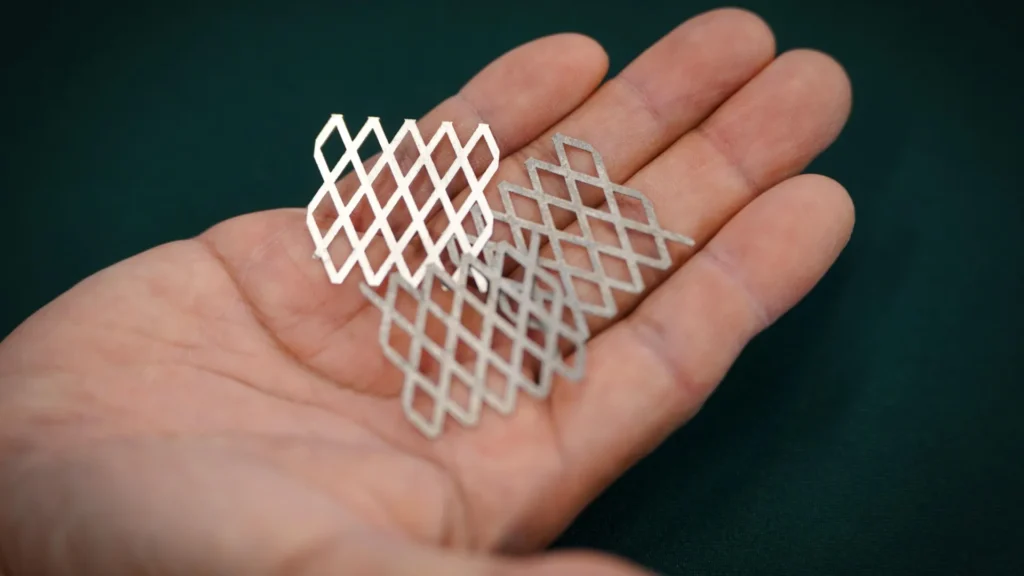
A groundbreaking innovation from the University of Hong Kong (HKU) promises to reshape the landscape of green hydrogen production by overcoming a critical materials limitation and drastically reducing manufacturing costs. A team led by Professor Mingxin Huang of HKU’s Department of Mechanical Engineering has engineered a novel type of stainless steel, aptly named Stainless Steel for Hydrogen (SS-H2), specifically designed to withstand the extreme corrosive environments inherent in electrolytic hydrogen generation, particularly when using seawater. This development not only addresses a long-standing challenge in materials science but also offers a compelling pathway to accelerate the global transition towards a sustainable, hydrogen-powered economy.
The Global Imperative for Green Hydrogen
Green hydrogen, produced by splitting water into hydrogen and oxygen using renewable electricity, is widely recognized as a cornerstone of future decarbonization strategies. It offers a clean energy carrier that can power heavy industry, fuel transportation, and provide long-duration energy storage, addressing the intermittency of renewable sources like solar and wind. The urgency to transition away from fossil fuels has propelled significant global investment and research into scalable and cost-effective green hydrogen production. Nations worldwide are setting ambitious targets for hydrogen deployment, with projections indicating a multi-trillion-dollar market in the coming decades. For instance, the Hydrogen Council forecasts that hydrogen could meet 18% of the world’s energy needs by 2050, creating a market worth $2.5 trillion and generating 30 million jobs. However, current production methods, particularly electrolysis, face substantial economic and technological hurdles, primarily related to the capital expenditure (CAPEX) of electrolyzer systems and the durability of their components.
One of the most significant challenges in green hydrogen production is the cost of the electrolyzers themselves. These devices are complex electrochemical reactors that require materials capable of operating efficiently and durably under harsh conditions. When seawater, an abundant and readily available resource, is considered as a feedstock for electrolysis, the challenge intensifies due to the highly corrosive nature of chloride ions. Current industrial practices often necessitate energy-intensive and costly desalination processes to purify water before electrolysis, or rely on expensive, rare-earth-metal-based components that significantly drive up CAPEX. This is precisely where SS-H2 enters the picture, offering a potential paradigm shift by enabling direct seawater electrolysis with vastly more economical materials.
The Achilles’ Heel of Conventional Stainless Steel in Electrolysis
For over a century, stainless steel has been a workhorse material, indispensable across countless industries due to its inherent resistance to corrosion. This remarkable durability stems primarily from its chromium content. When exposed to an oxidizing environment, chromium within the steel reacts to form a thin, passive layer of chromium oxide (Cr2O3) on the surface. This protective film acts as a barrier, preventing further degradation of the underlying metal. However, this protection has a critical limitation, particularly in the demanding electrochemical conditions required for water electrolysis.
The process of water oxidation, an essential reaction in electrolysis where water molecules are split, requires a substantially high electrical potential, typically around 1600 millivolts (mV) against a saturated calomel electrode (SCE). Conventional stainless steels, including even advanced alloys like 254SMO (a benchmark chromium-based corrosion-resistant alloy known for its excellent resistance to pitting in seawater), cannot withstand such high potentials for prolonged periods. Beyond approximately 1000 mV (SCE), the protective chromium oxide layer begins to degrade through a process known as transpassive corrosion. At these elevated potentials, the Cr2O3 can undergo further oxidation, forming soluble hexavalent chromium species (Cr(VI)). Once Cr(VI) forms, the passive layer is compromised, leading to rapid and severe corrosion of the steel. This fundamental mismatch between the stability limit of conventional stainless steel and the operational requirements of water electrolysis has historically precluded its effective use in many high-voltage electrochemical applications, forcing reliance on more exotic and expensive materials.
Introducing SS-H2: A Material Revolution Through Sequential Dual-Passivation
Professor Huang’s team at HKU has circumvented this long-standing limitation through an ingenious materials design strategy they term "sequential dual-passivation." Rather than relying solely on the traditional chromium oxide layer, SS-H2 is engineered to develop a second, distinct protective layer on top of the first. This secondary layer, surprisingly, is based on manganese (Mn) and begins forming at approximately 720 mV (SCE).
The integration of manganese in this role is particularly striking because, historically, manganese has been considered detrimental to the corrosion resistance of stainless steel. Its presence has typically been associated with reducing stability and promoting localized corrosion. This counter-intuitive discovery challenged prevailing wisdom in corrosion science. Dr. Kaiping Yu, the first author of the study and a PhD student supervised by Professor Huang, articulated this surprise: "Initially, we did not believe it because the prevailing view is that Mn impairs the corrosion resistance of stainless steel. Mn-based passivation is a counter-intuitive discovery, which cannot be explained by current knowledge in corrosion science. However, when numerous atomic-level results were presented, we were convinced. Beyond being surprised, we cannot wait to exploit the mechanism." This statement underscores the rigorous scientific validation, involving atomic-level analysis, that was necessary to confirm the phenomenon.
Together, these two sequential protective layers enable SS-H2 to resist corrosion in chloride-containing environments at potentials reaching an unprecedented 1700 mV. This performance significantly surpasses the 1600 mV required for water oxidation, marking a fundamental advance over conventional stainless steels. The ability to withstand such high potentials in the presence of chlorides – ions notoriously aggressive toward many metals and a primary cause of localized corrosion in seawater – is a testament to the robustness of this new material. The findings, which represent nearly six years of dedicated research, were published in the prestigious journal Materials Today in a study titled "A sequential dual-passivation strategy for designing stainless steel used above water oxidation." The researchers have already applied for patents covering this innovative technology in several countries, with two patents already authorized, indicating a clear pathway towards commercialization and intellectual property protection.
A Track Record of Innovation: Professor Huang’s "Super Steel" Project
The development of SS-H2 is the latest triumph stemming from Professor Mingxin Huang’s broader "Super Steel" Project at HKU. This project has consistently pushed the boundaries of materials science, delivering a series of high-impact innovations over the past decade. In 2017 and 2020, his team developed exceptionally strong and tough forms of Super Steel, addressing the perennial engineering trade-off between strength and ductility. These earlier breakthroughs demonstrated the team’s capacity for creating materials with enhanced mechanical properties for structural applications. More recently, in 2021, the project garnered international attention for developing stainless steel with anti-COVID properties, a timely innovation during the global pandemic, showcasing the versatility and societal relevance of advanced materials research.
Professor Huang emphasizes a distinct research philosophy that differentiates his group: "Different from the current corrosion community, which mainly focuses on the resistance at natural potentials, we specialize in developing high-potential-resistant alloys. Our strategy overcame the fundamental limitation of conventional stainless steel and established a paradigm for alloy development applicable at high potentials. This breakthrough is exciting and brings new applications." This focus on high-potential resistance, rather than merely ordinary corrosion resistance, has proven to be the key to unlocking new applications for stainless steel in extreme electrochemical environments.
Economic Implications: A Game-Changer for Green Hydrogen Costs
The economic implications of SS-H2 could be transformative for the burgeoning green hydrogen industry. Current electrolyzers, especially those operating with desalinated seawater or acidic solutions, often require expensive titanium components, which are frequently coated with even more costly precious metals like gold or platinum to enhance their corrosion resistance and catalytic activity. These specialized materials account for a substantial portion of the total system cost, acting as a major bottleneck to widespread green hydrogen adoption.
According to the HKU researchers, structural components alone can represent as much as 53% of the total system cost for a 10-megawatt (MW) Proton Exchange Membrane (PEM) electrolysis tank system, which currently costs approximately HK$17.8 million (approximately US$2.27 million). PEM electrolysis is a favored technology due to its compact design, high efficiency, and dynamic operational capabilities, but its material requirements have historically made it more expensive than traditional alkaline electrolyzers.
The researchers’ conservative estimates suggest that by replacing these exorbitant titanium and precious-metal-coated components with the far more economical SS-H2, the cost of structural materials could be reduced by a staggering 40 times. Such a dramatic reduction in CAPEX would fundamentally alter the economic viability of green hydrogen, making it significantly more competitive with hydrogen produced from fossil fuels (grey or blue hydrogen). This cost advantage could unlock substantial investment, accelerate the deployment of green hydrogen projects globally, and help achieve the critical price parity needed for widespread adoption. By lowering the entry barrier, SS-H2 could enable a more diverse range of players to invest in green hydrogen infrastructure, from energy companies to industrial end-users, fostering a more robust and decentralized green hydrogen ecosystem.
From Lab to Industrial Scale: The Road Ahead
While the laboratory results for SS-H2 are exceptionally promising, the transition from experimental material to widespread industrial deployment still presents significant engineering challenges. Electrolyzers require components in various practical forms, such as metal meshes and foams, which demand sophisticated manufacturing processes beyond basic material synthesis. Ensuring the scalability, reproducibility, and consistent performance of SS-H2 in these complex geometries at an industrial scale is a critical next step.
Despite these challenges, the HKU team has already made substantial progress towards industrialization. Professor Huang reported, "Currently, we have made a big step toward industrialization. Tons of SS-H2-based wire has been produced in collaboration with a factory from the Mainland. We are moving forward in applying the more economical SS-H2 in hydrogen production from renewable sources." This collaboration marks a crucial milestone, demonstrating the material’s manufacturability beyond laboratory batches and its potential for large-scale production. The ability to produce SS-H2 in industrial quantities and practical forms like wire opens doors for its integration into commercial electrolyzer designs and pilot projects. Further rigorous testing will be essential to validate its long-term durability and performance under real-world operating conditions, including varying temperatures, pressures, and electrolyte compositions, as well as its compatibility with other electrolyzer components.
Expert Perspectives and Broader Resonance
The scientific community and industry stakeholders are likely to view this breakthrough with significant optimism. Materials scientists will recognize the ingenuity of the dual-passivation strategy, particularly the unexpected role of manganese, which challenges established dogma and opens new avenues for alloy design. Electrochemical engineers will appreciate the practical implications for electrolyzer design, potentially allowing for simpler, more robust, and less expensive systems.
From an industry perspective, the prospect of a 40-fold cost reduction in structural materials for electrolyzers is nothing short of revolutionary. Industry experts, who have long grappled with the high CAPEX of green hydrogen projects, will see SS-H2 as a potential catalyst for accelerated investment and market growth. This innovation could enable companies to deploy green hydrogen infrastructure in regions where it was previously economically unfeasible, particularly in coastal areas with abundant seawater. Environmental advocates will also welcome this development, as cheaper green hydrogen produced directly from seawater would significantly advance decarbonization efforts, reduce reliance on fresh water resources for electrolysis (which can be scarce in many regions), and lower the overall environmental footprint of hydrogen production. Governments and policymakers, who are increasingly focused on energy independence and achieving net-zero emissions, will likely identify SS-H2 as a strategic technological advancement that could underpin national hydrogen strategies and foster economic competitiveness in the green energy sector.
Forging a Sustainable Future: The Long-Term Vision
The combination of SS-H2’s exceptional corrosion resistance at high electrical potentials and its dramatically lower material cost positions it as a potentially transformative technology for green hydrogen production. If the material successfully navigates the remaining engineering challenges and proves its reliability in commercial electrolyzers, it could provide a much cheaper, more scalable, and environmentally friendly route to producing green hydrogen from renewable energy and seawater.
Beyond hydrogen production, Professor Huang’s pioneering approach to developing high-potential-resistant alloys could have far-reaching implications for other electrochemical applications. Industries involved in electroplating, wastewater treatment, or advanced battery technologies, which also operate under demanding electrochemical conditions, might benefit from similar materials design principles. The HKU team’s work underscores the critical role of fundamental materials science research in driving technological innovation and addressing some of humanity’s most pressing challenges, from climate change to public health. The journey of SS-H2 from a counter-intuitive scientific discovery to a potential industrial game-changer epitomizes the power of persistent inquiry and interdisciplinary collaboration in forging a more sustainable and prosperous future.