Modern warehousing, a critical lynchpin in the global supply chain, is undergoing a profound transformation, moving rapidly from labor-intensive manual operations to sophisticated, highly automated systems. At the heart of this revolution lies a seemingly humble yet utterly indispensable component: the gearmotor. These compact, integrated units, combining an electric motor with a gearbox, provide the controlled power and torque essential for the vast array of machinery that keeps products flowing efficiently from manufacturers to consumers. While software engineers orchestrate the complex ballet of autonomous robot fleets and intricate logistics algorithms, it is the electromechanical precision of gearmotors that physically executes these commands, enabling everything from the movement of colossal product racks to the precise positioning of individual items.
The Evolution of Warehousing and the Rise of Automation
The shift towards automation in warehouses has been accelerated by several converging factors. The explosive growth of e-commerce has placed unprecedented demands on fulfillment centers, requiring faster processing, higher throughput, and impeccable accuracy. Simultaneously, persistent labor shortages, rising operational costs, and an increased focus on workplace safety have compelled businesses to invest heavily in automated solutions. From the early, rudimentary conveyor belts of the 20th century to today’s fully integrated, AI-driven facilities, the trajectory of warehousing has been one of continuous innovation, with each advancement relying more heavily on robust, reliable electromechanical systems.
Exhibitions like MODEX and ProMat serve as vivid showcases for this evolution, consistently highlighting the foundational role of electromechanical components. Visitors to these events quickly grasp that despite the allure of advanced software, the physical movement, lifting, and sorting of goods are fundamentally powered by devices like the fractional-horsepower gearmotor. These workhorses are designed to deliver precise speed reduction and torque multiplication in a compact footprint, making them ideally suited for the diverse and demanding environments of a modern warehouse.
Gearmotors: Powering the Autonomous Revolution
Perhaps nowhere is the importance of gearmotors more evident than in the burgeoning field of autonomous mobile robots (AMRs) and automated guided vehicles (AGVs). These intelligent machines are the lifeblood of many contemporary warehouses, tirelessly navigating factory floors, retrieving inventory, and transporting goods. Gearmotors are integral to their multifaceted operations:
- Propulsion: For traversing vast warehouse spaces, gearmotors provide the controlled power to drive wheels, allowing AMRs and AGVs to move efficiently and accurately along predetermined paths or dynamically generated routes. The precise speed control offered by gearmotors ensures smooth acceleration, deceleration, and consistent travel speeds.
- Maneuverability: Beyond linear movement, gearmotors enable the intricate maneuvers required for precise positioning. They power the steering mechanisms, allowing robots to turn in place with zero radius, navigate tight aisles, and dock accurately at charging stations or loading points.
- Lifting and Positioning: Many AMRs and AGVs are equipped with lifting mechanisms, such as jack screws, scissor lifts, or robotic arms, to handle pallets, racks, or individual packages. Gearmotors are crucial here, providing the necessary torque to lift heavy loads vertically, ensuring stability and safety during elevation and lowering operations. The integration of a gearbox allows a relatively small motor to generate significant lifting force, crucial for ergonomic and efficient material handling.
The ability of these robots to perform complex tasks with high reliability and repeatability is directly attributable to the robust performance and precise control offered by their integrated gearmotor systems.
Streamlining Material Flow: The Role in Conveyor Systems
Conveyor systems remain the circulatory system of most warehouses, moving goods from one point to another with speed and consistency. Gearmotors are the rhythmic pulse of these systems, driving various conveyor types:

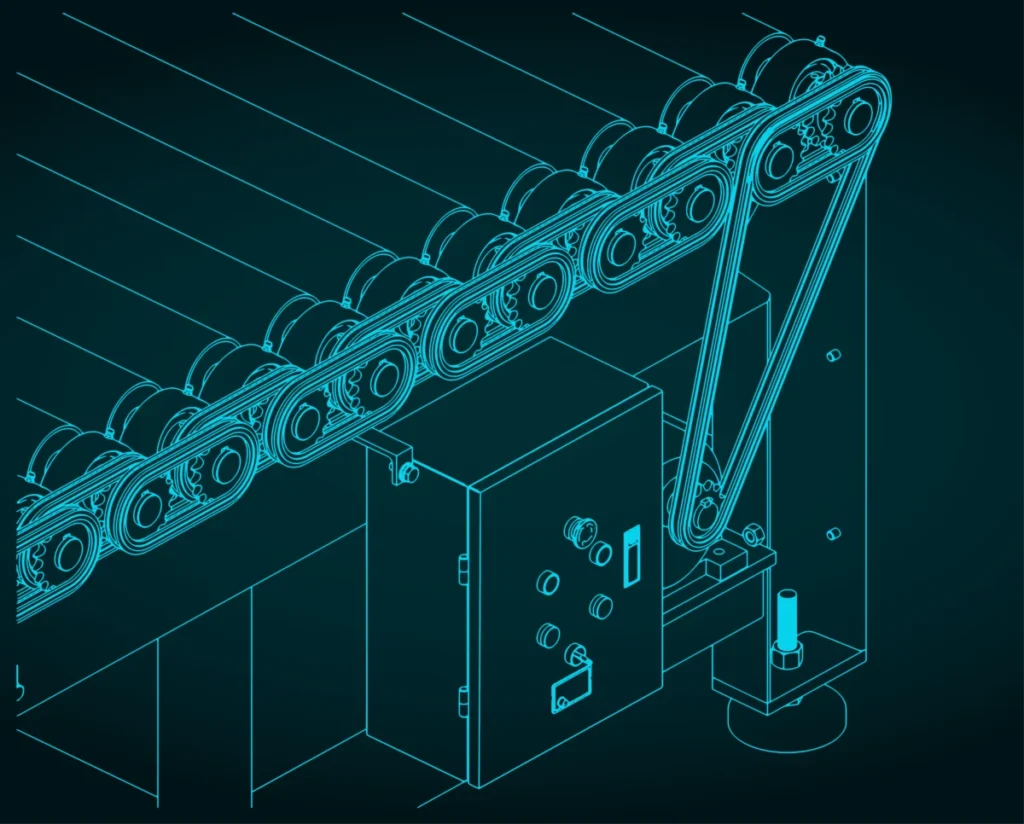
- Accordion-Style and Flexible Powered Conveyors: These versatile systems, often featuring scissor-leg designs and powered rollers linked by round belts, are frequently used for temporary setups, order fulfillment, and interfacing with loading docks. Gearmotors ensure the smooth, continuous motion of the rollers, adapting to varied loads and speeds.
- Zonal Conveyors: In more sophisticated setups, conveyors are often segmented into zones. Each zone is independently controlled, typically with its own gearmotor and sensor array. When an item enters a zone, its gearmotor activates, moving the item forward. Once the zone is cleared, the motor deactivates, conserving energy and preventing collisions. This "domino effect" system optimizes flow, prevents bottlenecks, and allows for dynamic routing of goods.
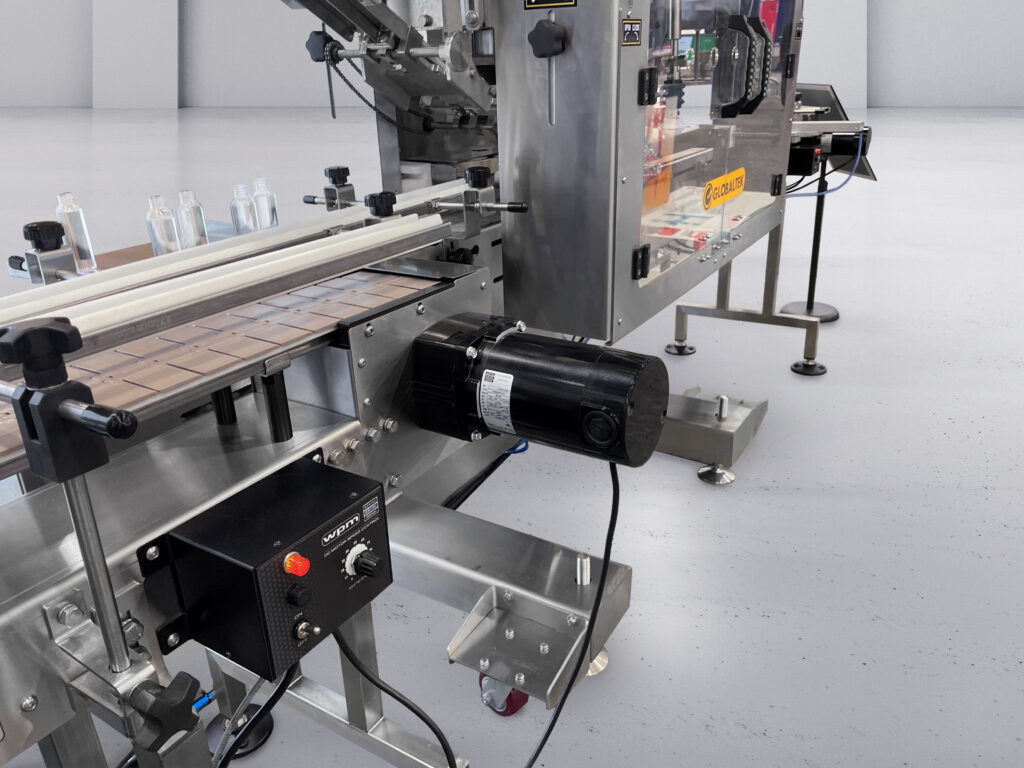
- Fixed Roller and Belt Conveyors: For permanent installations, gearmotors drive the main rollers or belts, providing the continuous power needed to transport goods over long distances or through complex sortation systems. Their enclosed design protects against dust and debris, ensuring long-term reliability in demanding industrial environments.
The consistent, controlled motion provided by gearmotors in these applications is vital for maintaining throughput, minimizing damage to goods, and integrating seamlessly with other automated processes.
Enhancing Safety at the Loading Dock
Safety is paramount in any industrial setting, and loading docks are particularly high-risk areas. Gearmotors play a critical, often unseen, role in preventing accidents through motorized dock restraints. These claw-type mechanisms engage securely with hardware on trucks, preventing them from prematurely pulling away from the dock while personnel, forklifts, or other equipment are still operating in the interface zone.
The gearmotor provides the reliable force to lock and unlock these restraints, ensuring that vehicles remain firmly in place during loading and unloading operations. This automated safety measure significantly reduces the risk of "trailer creep" or accidental drive-aways, protecting workers and preventing costly damage to goods and equipment. The simple yet effective operation of these motorized restraints underscores the gearmotor’s contribution to a safer working environment.
Beyond the Mainstream: Specialized Material Handling
The utility of gearmotors extends to numerous specialized material handling solutions designed to improve ergonomics and handle exceptionally heavy or awkward items:
- Motorized Caster Wheels: Integrated into carts, trolleys, and dollies, these motorized wheels transform manual transport into effortless movement. Gearmotors provide the power to propel these units, enabling operators to move extremely heavy workpieces – common in the assembly of large equipment or specialized manufacturing – without manual strain, significantly reducing the risk of musculoskeletal injuries.
- Man Lifts and Ergonomic Workpiece Lifts: Personnel lifts, often featuring "crow’s nest" buckets, allow operators to safely reach elevated areas for maintenance, inventory, or assembly tasks. Gearmotors power the vertical movement (Z-axis) of these lifts, ensuring smooth and controlled ascent and descent. Similarly, ergonomic workpiece lifts, sometimes equipped with motorized trolley wheels and pneumatic suction-cup arrays, use gearmotors to precisely raise and lower items, facilitating safe and efficient handling of delicate or bulky components. These systems are critical for maintaining worker well-being and productivity.
The Intelligence Behind the Motion: Control Systems and Integration
The effectiveness of gearmotors is intrinsically linked to the control systems that govern their operation. The sophistication of these controls varies widely, from standalone simplicity to complex, integrated networks:
- Simple Standalone Controls: For devices like dock restraints or certain lift trucks, controls are often self-contained. A basic on-off switch, perhaps complemented by an emergency-stop button, suffices. In lift trucks, a simple current-limit control might be used, where motor torque is directly proportional to current, enabling acceleration, speed holding, and directional changes (forward/reverse). Some fractional-horsepower gearmotor suppliers offer basic speed controls, but this is less common for OEMs.
- OEM-Designed and Integrated Controls: The prevailing trend, especially for more complex equipment, is for Original Equipment Manufacturers (OEMs) to design their own control systems or outsource the production of custom printed circuit boards. This approach offers several advantages:
- Customization: OEMs can tailor controls precisely to the specific performance characteristics of their equipment and the operating environment.
- System Integration: A primary goal for OEMs is to integrate individual gearmotor controls into a larger, global control-system architecture. Instead of managing disparate control boards, a single, unified system can execute all necessary functions, streamlining communication, diagnostics, and overall operational management.
- Cost-Effectiveness and IP: Designing in-house can be more cost-effective in the long run and allows OEMs to maintain proprietary control over their intellectual property and system performance.
The centralized controls found in flexible powered conveyors exemplify this integration. A long conveyor might feature a gearmotor (and interconnected controls) every few feet. Sensors detect the presence of items in each zone, activating its specific motor. This intelligent, zonal control system minimizes energy consumption, prevents product accumulation, and ensures a seamless flow of goods. These systems are often managed by Programmable Logic Controllers (PLCs) or industrial PCs, which coordinate the actions of multiple gearmotors across the entire conveyor line.
Procurement and Supply Chain Dynamics
The process of procuring gearmotors is a critical aspect of warehouse equipment development and deployment. Typically, OEM design engineers, often working closely with purchasing managers, define the specifications and requirements for gearmotors used in standard lifts, conveyors, and other automated equipment. This involves a detailed analysis of torque, speed, duty cycle, environmental conditions, and integration capabilities.
Distributors and system integrators then play a crucial role in bridging the gap between component manufacturers and end-users (plant engineers). They often tailor standard solutions to meet the unique demands of specific warehouse layouts and operational workflows, providing expertise in system design, installation, and ongoing support.
The globalized nature of manufacturing and recent supply chain disruptions have highlighted the importance of robust procurement strategies. In instances where specific gearmotors from established manufacturers become unavailable, purchasing managers face the challenge of identifying and qualifying alternative suppliers. This requires rigorous testing and validation to ensure that new components meet the performance, reliability, and compatibility standards of existing OEM designs, underscoring the criticality of resilient supply chains in maintaining operational continuity.
Broader Impact and Future Implications
The pervasive integration of gearmotors in warehousing automation has profound implications for the industry and beyond:
- Unprecedented Efficiency and Throughput: Automation powered by reliable gearmotors enables warehouses to process significantly higher volumes of goods with greater speed and accuracy than manual operations ever could. This is crucial for meeting the demands of modern commerce and ensuring timely delivery.
- Enhanced Workplace Safety: By automating repetitive, strenuous, or dangerous tasks, gearmotors contribute directly to a safer work environment. The reduction in manual lifting, pulling, and pushing, combined with automated safety features like dock restraints, minimizes workplace accidents and ergonomic injuries.
- Labor Optimization and Skill Transformation: Automation addresses chronic labor shortages in the logistics sector by taking over physically demanding tasks. This allows human workers to be redeployed to higher-value roles, such as system monitoring, maintenance, and strategic planning, fostering a more skilled and engaged workforce.
- Sustainability and Energy Efficiency: Modern gearmotors are increasingly designed with energy efficiency in mind, often incorporating technologies like brushless DC motors and optimized gear ratios. This contributes to reduced energy consumption in warehouses, aligning with broader sustainability goals.
- Enabling Industry 4.0 and Smart Warehouses: Gearmotors are foundational to the vision of Industry 4.0, where interconnected devices, data analytics, and artificial intelligence create "smart" warehouses. Their precise control and ability to integrate with advanced sensor networks facilitate predictive maintenance, real-time optimization, and adaptive operational strategies. The data generated by gearmotor performance can be fed into larger systems for continuous improvement.
- Market Growth: Reports from industry analysts consistently project significant growth in both the warehouse automation market and the global gearmotor market. This indicates a sustained and increasing reliance on these electromechanical solutions as businesses strive for greater efficiency and resilience.
In conclusion, while the sophisticated software and intricate algorithms of modern automated warehouses often capture the headlines, the unsung heroes of this revolution are the gearmotors. From propelling autonomous robots and driving complex conveyor systems to securing loading docks and empowering ergonomic lifts, these robust and precise electromechanical components are the fundamental building blocks. Their continued evolution, coupled with advancements in control systems, will undoubtedly shape the future of logistics, driving further efficiencies, enhancing safety, and enabling the seamless flow of goods in an increasingly demanding global economy.
These insights were gained in a recent conversation with Terry Auchstetter of Bodine Electric Co. For more information, visit bodine-electric.com.
Read more about another warehouse application for gearmotors – in automated guided vehicles (AGVs) – at bodine-electric.com/blog/custom-bldc-gearmotors-for-agvs.