The ongoing public discourse surrounding the Department of Transportation’s (DOT) heightened scrutiny of Ford Motor Company’s potential collaborations with Chinese battery manufacturers has ignited a complex debate, extending far beyond the immediate concerns of automotive supply chains. While some analysts suggest the intensified focus could serve as a political maneuver to divert public attention from prevailing economic pressures such as elevated car and fuel prices, the situation also brings to the forefront legitimate national security considerations regarding China’s growing influence and technological advancements. This intricate interplay between economic policy, technological competition, and geopolitical strategy is shaping the future of the automotive industry and its global economic dependencies.
Background: A Shifting Automotive Landscape
The automotive industry is undergoing a seismic transformation, driven by the global imperative to transition towards electric vehicles (EVs). This shift has propelled battery technology to the forefront of innovation and strategic importance. China has emerged as a dominant force in this sector, leveraging significant investment, government support, and a vast manufacturing base to become the world’s leading producer of EV batteries. Companies like Contemporary Amperex Technology Co. Limited (CATL) and BYD have become indispensable players in the global battery supply chain, supplying components and finished battery packs to major automakers worldwide, including those based in the United States.
Ford Motor Company, like other legacy automakers, is navigating this transition by seeking to secure a stable and cost-effective supply of batteries for its expanding EV lineup. The potential for partnerships or sourcing agreements with Chinese battery manufacturers represents a logical, albeit politically charged, avenue for achieving these objectives. However, such considerations are met with increasing resistance from U.S. policymakers and security agencies, who express apprehension about the potential implications of deepening economic ties with China, particularly in a sector deemed critical for future economic and technological dominance.
Timeline of Escalating Scrutiny
The friction between the DOT and Ford, while appearing to have intensified recently, is rooted in a broader trend of increasing governmental oversight on foreign investment and supply chain vulnerabilities, particularly concerning China.
- Early to Mid-2023: Reports begin to surface regarding Ford’s exploration of partnerships with Chinese battery manufacturers, including discussions with CATL for potential battery production facilities in the United States. These reports trigger initial concerns within U.S. government circles.
- Late 2023 – Early 2024: The Department of Transportation, alongside other relevant agencies such as the Department of Commerce and the Department of Energy, escalates its review of these potential collaborations. Public statements from lawmakers and officials express growing unease about the national security implications of relying on Chinese technology and manufacturing for critical EV components.
- Recent Developments (Indicative of ongoing discussions): The DOT’s engagement with Ford is characterized by a more direct and public questioning of the automaker’s strategic decisions. This includes requests for detailed information regarding the nature of their proposed partnerships, the potential flow of intellectual property, and the broader geopolitical risks associated with sourcing batteries from China. The framing of these concerns often emphasizes national security and economic competitiveness.
Legitimate Concerns and Economic Realities
The concerns raised by the DOT and other stakeholders are multifaceted. On one hand, there are genuine apprehensions about China’s strategic intentions and its ability to leverage economic dependencies for geopolitical advantage. The concentration of critical mineral processing and battery manufacturing in China raises questions about the long-term security of the U.S. automotive supply chain and the potential for disruptions or undue influence. Access to advanced battery technology and manufacturing know-how by Chinese firms is also a point of contention, with fears of intellectual property theft and the erosion of American technological leadership.
However, the economic realities of the EV transition cannot be ignored. The cost of batteries remains a significant factor in the overall price of electric vehicles, directly impacting their affordability and market adoption. Chinese battery manufacturers, through economies of scale and advanced manufacturing processes, have demonstrated an ability to produce batteries at competitive price points. As the article suggests, if the U.S. truly operates as a free-market economy, then restricting access to potentially more affordable components, while demanding adherence to U.S. safety standards, could hinder the very goal of making EVs accessible to a wider consumer base.
The "Display-Only" Showcase: A Glimpse of Advancements
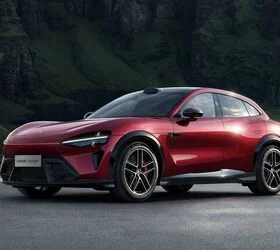
The observation that Chinese vehicles, when presented on a "display-only" basis, appear "pretty cool, pretty advanced, and… pretty cheap" is a significant point of reference. This informal assessment, though not a comprehensive market analysis, reflects the growing perception of Chinese automakers’ capabilities. Brands like Xiaomi, known for its consumer electronics, are entering the automotive space with technologically sophisticated and aesthetically appealing EVs. Similarly, BYD, already a global EV powerhouse, consistently rolls out innovative models that challenge established players on both technology and price.
These examples underscore the fact that Chinese manufacturers are not merely competing on cost but are also making significant strides in design, performance, and integrated technology. The potential for these vehicles, or components derived from them, to enter the U.S. market could have a profound impact on pricing and product offerings.
The Core Dilemma: Open Gates or Phased Entry?
The central question posed by the article – "is it time to lower the gates and let China in?" – encapsulates the fundamental policy debate. The U.S. economy, traditionally built on principles of free trade and open markets, faces a complex decision.
Arguments for Lowering Gates (with conditions):
- Enhanced Affordability: Allowing Chinese battery manufacturers to operate within the U.S. market, or to supply U.S. automakers under strict regulatory oversight, could lead to a significant reduction in the cost of EVs. This would accelerate adoption rates and make sustainable transportation more accessible to a broader segment of the population.
- Technological Advancement: Increased competition and access to diverse technological approaches can spur innovation within the domestic automotive industry.
- Supply Chain Resilience: While seemingly counterintuitive, diversifying the battery supply chain beyond current limited sources could, in the long run, enhance resilience, provided appropriate safeguards are in place.
Arguments for Phased or Restricted Entry:
- National Security: Preventing Chinese dominance in a critical sector is paramount to safeguarding national security interests. This includes protecting sensitive technologies, ensuring supply chain security, and avoiding reliance on a geopolitical rival.
- Economic Protectionism: Some argue for protecting domestic industries and jobs by limiting foreign competition, particularly from countries perceived to have unfair trade practices or state subsidies.
- Intellectual Property Protection: Ensuring that U.S. companies do not lose proprietary technology to foreign competitors is a key concern.
The article’s suggestion of a "phased, a la Canada" approach implies a model of regulated integration rather than complete openness. This could involve:
- Staged Market Entry: Gradually allowing Chinese companies or their products into the U.S. market over time, with clear benchmarks and performance indicators.
- Joint Ventures with Stringent Oversight: Requiring U.S. companies to form joint ventures with Chinese partners, where U.S. entities maintain significant control and oversight over technology transfer and manufacturing processes.
- Localized Production Requirements: Mandating that any batteries manufactured or utilized within the U.S. must meet specific domestic content thresholds or be produced in facilities with robust U.S. oversight.
- Strict Safety and Regulatory Compliance: Ensuring that all imported or domestically produced components meet or exceed stringent U.S. safety, environmental, and labor standards.
Supporting Data and Economic Implications
The global EV market is projected for substantial growth. According to the International Energy Agency (IEA), electric car sales continued to surge in 2023, reaching 14 million units globally, a 35% increase from 2022. Battery costs, while volatile due to raw material prices, have seen a general downward trend over the past decade, largely driven by advancements in manufacturing and economies of scale. However, the price per kilowatt-hour (kWh) of lithium-ion batteries is still a substantial portion of an EV’s cost.
A reduction in battery costs by even 10-20% could translate to a significant decrease in the retail price of EVs, making them more competitive with internal combustion engine vehicles. For example, if a $40,000 EV has a battery pack costing $12,000 (30% of the price), a 15% reduction in battery cost would bring it down to $10,200, potentially lowering the overall vehicle price by $1,800. Such a reduction, scaled across millions of vehicles, could dramatically accelerate EV adoption.
Official Responses and Broader Impact
While specific statements from the DOT regarding their direct engagement with Ford on this matter are not publicly detailed in the provided text, the general tenor of government discussions on this topic has been one of caution and scrutiny. Lawmakers from both sides of the aisle have expressed concerns about China’s role in critical supply chains.
The broader impact of this debate extends beyond Ford and the automotive sector. It reflects a global trend of re-evaluating economic interdependence with China, particularly in areas deemed strategically vital. The outcomes of these discussions will influence:
- Future of EV Manufacturing in the U.S.: Decisions made now will shape where batteries are produced, what technologies are prioritized, and the overall competitiveness of the U.S. EV industry.
- Consumer Choice and Affordability: The availability and price of EVs for American consumers will be directly impacted by the policies enacted.
- Geopolitical Alliances: The U.S. approach to such collaborations will also influence its relationships with allies who are also grappling with similar supply chain dependencies on China.
Ultimately, the situation highlights the complex balancing act governments face in navigating the intertwined demands of economic growth, technological innovation, and national security in an increasingly interconnected yet competitive global landscape. The debate over Ford’s potential involvement with Chinese battery makers is not just about cars; it’s a microcosm of a larger strategic challenge for the United States.