The fundamental behavior of matter often reveals its most profound secrets at the intersection of conflicting states. In a study published in the journal Nature Physics, a team of researchers from the Massachusetts Institute of Technology (MIT) and Stanford University has provided a groundbreaking look at how electrons organize themselves into complex, overlapping patterns within quantum materials. By observing the transition of erbium tritelluride—a rare-earth material—into a state of dual electronic phases, the team has mapped the "hidden physics" that could eventually pave the way for a new generation of quantum electronics and high-temperature superconductors.
The research focuses on the emergence of "charge density waves" (CDW), a phenomenon where electrons spontaneously abandon their uniform distribution to form a repeating wave-like pattern. While the concept of phase transitions is familiar through the everyday example of water freezing into ice, the quantum equivalent involves subatomic particles coordinating their behavior across vast atomic distances. The MIT-led study reveals that when multiple electronic phases coexist, they do not necessarily follow the same rules of formation, creating a "checkerboard" of electronic density that challenges long-standing theoretical models.
The Quantum Architecture of Erbium Tritelluride
The material at the center of this discovery, erbium tritelluride ($ErTe_3$), belongs to a class of rare-earth tritellurides known for their highly organized electronic structures. At room temperature, electrons within $ErTe_3$ move with relative freedom and uniformity. However, as the temperature drops, the material undergoes a series of dramatic transformations.
The first transition occurs at approximately -8 degrees Celsius (265 Kelvin). At this threshold, a "dominant" charge density wave emerges, with electrons clustering into a vertical wave pattern that stretches across the material. If the temperature is lowered further to -113 degrees Celsius (160 Kelvin), a "subdominant" wave appears, running perpendicular to the first. The intersection of these two waves creates a microscopic checkerboard pattern, a state of coexistence that has long intrigued physicists.
"One of the biggest questions in physics is why some materials host multiple phases while others do not," says Nuh Gedik, the Donner Professor of Physics at MIT and the study’s senior author. "And when multiple phases do exist, how do they interact? Do they reinforce one another, compete, or coexist independently? This is like a case study for us to understand much more complicated materials."
The "Shake and Listen" Methodology
To observe these transitions with precision, the researchers utilized a sophisticated experimental setup involving ultra-fast laser pulses. Because these phase transitions happen at the quantum scale and occur almost instantaneously, traditional observation methods are often insufficient. The team employed a "pump-probe" technique, which Gedik describes as a process of "shaking" and then "listening" to the material.
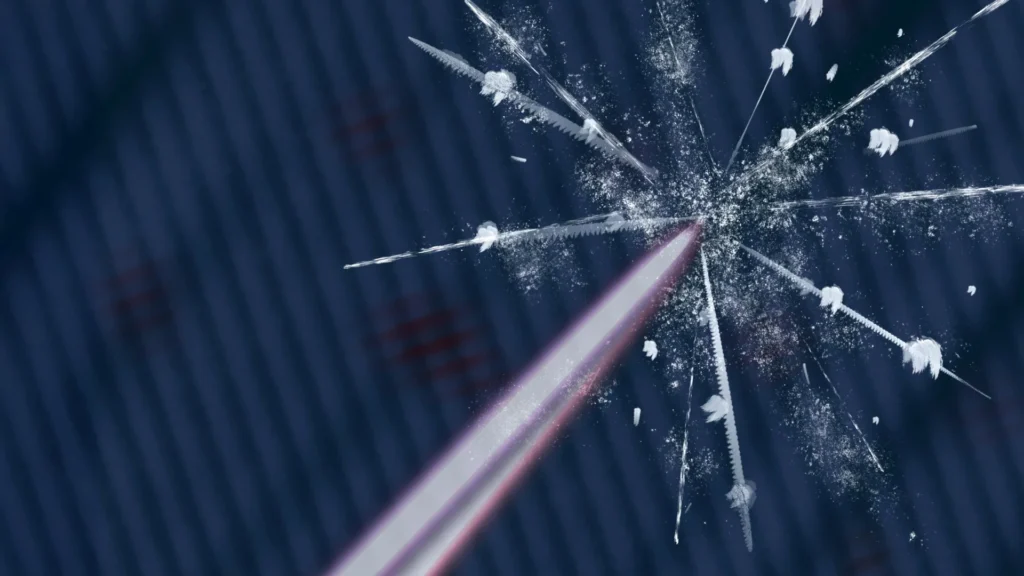
The process began by cooling atomically thin samples of erbium tritelluride to roughly -230 degrees Celsius (43 Kelvin), ensuring both charge density waves were fully established in their checkerboard configuration. The researchers then applied a high-intensity laser pulse—the "pump"—to "shake" the system, effectively melting the electronic order and destroying the checkerboard pattern.
Immediately following the disruption, a second laser pulse—the "probe"—was used to "listen" to the material’s recovery. This second pulse consisted of high-energy photons that knocked electrons out of the sample. By measuring the energy and momentum of these expelled electrons (a technique known as time-resolved angle-resolved photoemission spectroscopy, or tr-ARPES), the physicists were able to capture a series of high-speed snapshots showing the electronic phases as they rebuilt themselves over picoseconds.
A Tale of Two Transitions: Gradual vs. Nucleated Recovery
The most significant finding of the study lies in the distinct ways the two charge density waves recovered from the laser-induced disruption. Despite existing within the same material, the dominant and subdominant phases followed entirely different thermodynamic paths.
The dominant phase, which forms at higher temperatures, exhibited a "second-order" phase transition. Its recovery was gradual and uniform across the entire sample. This behavior is analogous to a magnet slowly losing or gaining its magnetic field as it passes through a critical temperature. It is a smooth, continuous process that fits the conventional "textbook" understanding of electronic phase transitions.
In contrast, the subdominant phase—the one that completes the checkerboard—surprised the researchers by exhibiting a "first-order" transition. Rather than emerging smoothly, this phase began in isolated "pockets" or "islands" that expanded outward until they merged. This process, known as nucleation, is remarkably similar to how ice crystals form in a glass of water.
"The mechanism responsible for the emergence of this second phase has long been debated," says Gedik. "Our approach provides a powerful new way to uncover the hidden physics behind phase transitions in quantum materials."
The observation of a first-order transition for the subdominant CDW is particularly noteworthy because it suggests that the two phases are in a state of competition. The dominant wave, already established throughout the material, creates a landscape that the subdominant wave must navigate, forcing it to "bubble up" in specific regions rather than flowing in all at once.
Implications for Superconductivity and the Post-Silicon Era
The ability to manipulate and understand these coexisting phases is more than a matter of academic curiosity; it is a prerequisite for the next leap in computing technology. For decades, silicon has been the backbone of the electronics industry, but as transistors approach the size of individual atoms, silicon is reaching its physical limits.
"People believe the cornerstone of replacing silicon lies in quantum materials that have multiple coexisting phases," says co-author Alfred Zong, an assistant professor at Stanford University who co-led the study as an MIT graduate student. "Our experiment provides a very neat way to study these multiple phases."
The researchers believe that the lessons learned from erbium tritelluride can be applied to even more complex systems, such as high-temperature superconductors. In these materials, superconductivity—the ability to conduct electricity with zero resistance—often coexists with magnetism and charge density waves. Physicists suspect that the interplay between these phases is exactly what allows superconductivity to persist at higher temperatures. If scientists can learn to control these transitions, they might finally unlock the secret to room-temperature superconductivity, which would revolutionize energy grids and transportation.
Lead author Yifan Su, who recently completed his PhD at MIT, notes that charge density waves serve as an ideal "playground" for this research. "Just like superconductivity, charge density waves are a collective phenomena where electrons move together in certain ways," Su explains. "The power of CDWs is that they are a much simpler form of matter compared to superconductivity. They offer a playground for fundamental understanding."
Chronology and Collaborative Effort
The study was the result of a multi-year collaboration between some of the world’s leading materials science institutions. The samples of erbium tritelluride were synthesized by researchers at Stanford University, who have mastered the creation of atomically thin sheets of rare-earth materials. These sheets are essential because their two-dimensional nature makes their quantum properties easier to probe with lasers.
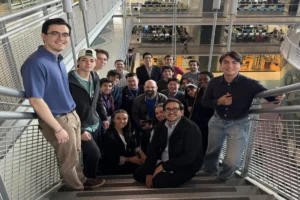
Following the synthesis, the experimental work was conducted at MIT’s specialized laser facilities. The team, which included first authors Yifan Su and Bai-Qing Lv, along with contributors Dongsung Choi, Doron Azoury, and Masataka Mogi, spent months refining the "pump-probe" intervals to ensure they could catch the exact moment of phase nucleation.
The timeline of the research reflects a growing trend in condensed matter physics: moving away from static observations and toward "dynamic" physics. By disturbing a system and watching it return to equilibrium, researchers can see the underlying forces—the "glue" that holds electronic phases together—in a way that was previously impossible.
Conclusion and Future Outlook
The findings published in Nature Physics mark a significant step forward in the field of quantum materials. By demonstrating that coexisting electronic phases can emerge through fundamentally different mechanisms—one uniform and one nucleated—the MIT team has provided a new framework for analyzing complex matter.
As the scientific community continues to explore the "quantum checkerboard," the focus will likely shift toward active control. If researchers can use light to not only observe but also switch these phases on and off at will, the dream of quantum transistors—devices that are faster, smaller, and more energy-efficient than anything silicon can offer—could move closer to reality.
The research was supported by a coalition of major scientific backers, including the U.S. Department of Energy (DOE), the U.S. National Science Foundation (NSF), and the Gordon and Betty Moore Foundation’s EPiQS Initiative. This support underscores the strategic importance of quantum material research in the global race for technological supremacy in the 21st century.
For now, the humble erbium tritelluride has served its purpose as a window into the subatomic world, proving that even in the coldest reaches of a laboratory, the behavior of electrons can be as dynamic and varied as the changing of the seasons.