In the expansive and ever-evolving landscape of electric motor technology, engineers and researchers continually seek innovations to enhance performance, efficiency, and power density. While most electric motors are broadly categorized by their magnetic flux path relative to the axis of rotation—primarily as radial flux or axial flux machines—a distinct and increasingly significant category known as transverse flux motors (TFMs) offers a unique approach with profound implications for various industries. These motors, characterized by a magnetic flux path that flows across the axis of rotation, represent a departure from conventional designs, promising unparalleled torque density and efficiency, albeit with their own set of engineering challenges.
Understanding the Core Principles: Magnetic Flux and Motor Architectures
To fully appreciate the innovation of transverse flux motors, it is essential to first understand the fundamental principles governing magnetic flux in electric machines. Electric motors convert electrical energy into mechanical energy through the interaction of magnetic fields. The path these magnetic fields take within the motor’s structure is a critical determinant of its operational characteristics, size, and performance.
Radial Flux Motors: The Industry Standard
The vast majority of electric motors encountered today are radial flux designs. In these machines, the magnetic flux lines are oriented perpendicular to the motor’s axis of rotation. This configuration is intuitive and robust, forming the basis of ubiquitous AC synchronous motors, induction motors, and various DC motor types. Picture a classic rotary motor: the rotor, with its central shaft, sits concentrically within a stationary stator. The magnetic fields generated by the stator windings interact with the rotor’s magnetic fields (whether from permanent magnets or electromagnets) to produce torque, causing the rotor to spin. The flux paths typically extend from the stator teeth, across the air gap, into the rotor, and back through the rotor’s core and then stator yoke, forming a radial loop relative to the central shaft. This design has proven highly effective for a century, offering a balance of performance, manufacturability, and cost-effectiveness for a broad spectrum of applications, from small household appliances to large industrial drives.
Axial Flux Motors: Compact Powerhouses
In contrast, axial flux motors are engineered such that their primary magnetic flux path runs parallel to the axis of rotation. This design typically features a "pancake" or disc-like shape, where the stator and rotor are arranged in parallel planes. The magnetic flux travels across the air gap between these parallel discs, creating torque. As a direct consequence of this geometry, axial flux motors tend to be significantly thinner and more compact than their radial flux counterparts for a given power output. Their flat profile makes them particularly attractive for applications where space is at a premium, such as in-wheel motors for electric vehicles, compact robotic joints, or integrated generator systems in renewable energy installations. While offering advantages in compactness and sometimes efficiency due to shorter end windings, they can present challenges in thermal management and mechanical rigidity compared to radial designs.
Transverse Flux Motors: A Paradigm Shift
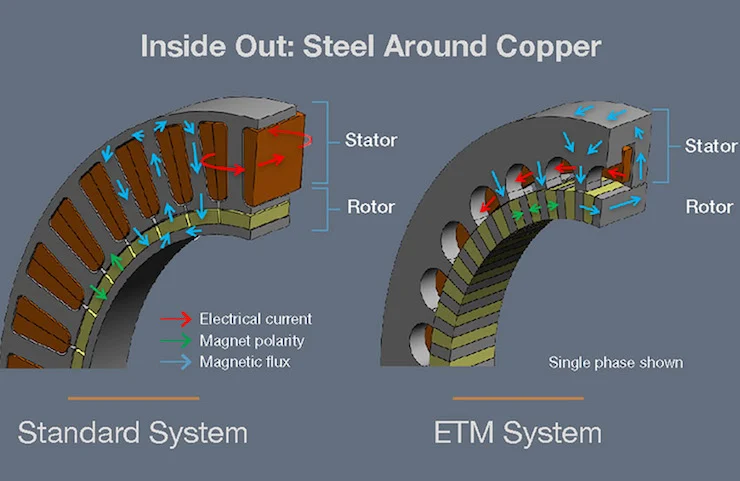
Transverse flux motors forge a path distinct from both radial and axial configurations. Here, the magnetic flux path is described as "transverse" to the axis of rotation, meaning it flows across the axis rather than strictly perpendicular or parallel to it. This unique characteristic is achieved through a specific architectural choice: a single winding for each phase is typically wound circumferentially around the stator, or more precisely, around the axis of rotation itself. This winding configuration is pivotal, as it allows the magnetic flux to traverse multiple dimensions simultaneously, including axially across the stator, along the circumference of the rotor, and radially through the air gap separating them.
This multi-dimensional flux path is not merely an academic curiosity; it unlocks a fundamental design advantage. By structuring the motor in this manner, the number of machine poles can be effectively decoupled from the physical size of the electrical windings. In conventional motors, increasing the number of poles typically necessitates more complex winding patterns and can lead to increased copper losses or larger motor dimensions. For TFMs, this decoupling means that designers can achieve a significantly higher number of poles without disproportionately increasing the motor’s size or compromising its efficiency. The immediate and most profound consequence of this design freedom is the ability to achieve exceptionally high torque density and superior efficiency.
The Distinct Advantages of Transverse Flux Motors
The unique magnetic circuit properties of transverse flux motors translate into several compelling advantages that position them as a disruptive technology in various high-performance applications.
Unprecedented Torque Density
Perhaps the most celebrated attribute of TFMs is their remarkably high torque density. Torque density refers to the amount of torque a motor can produce relative to its size or weight. In TFMs, the ability to pack a high number of poles into a compact volume, coupled with efficient magnetic utilization, allows them to generate significantly more torque than similarly sized radial or axial flux motors. For instance, companies like ETM have publicly claimed their patented transverse flux motor architecture can deliver up to 10 times greater torque density compared to conventional motors. This level of performance is transformative for applications where space and weight are critical constraints, enabling lighter, smaller, and more powerful systems.
Superior Efficiency
Beyond raw power, TFMs also boast high efficiency. This efficiency stems from several factors. The optimized magnetic circuit minimizes leakage flux and maximizes the interaction between the magnetic fields and the current-carrying conductors. Furthermore, the unique winding arrangement, often comprising robust, low-resistance copper coils, contributes to reduced copper losses (I²R losses). Lower losses mean less energy is wasted as heat, resulting in more power converted to mechanical work and a cooler operating motor. High efficiency is paramount in an era of increasing energy costs and environmental consciousness, reducing operational expenses and contributing to sustainability goals.
Ideal for Direct-Drive Applications
The combination of high torque density and high efficiency makes transverse flux motors exceptionally well-suited for direct-drive applications. Direct drive means the motor directly drives the load without the need for a gearbox or other mechanical transmission components. Gearboxes, while useful for matching motor speed to load requirements, introduce inefficiencies, add weight and complexity, require maintenance, and are a common point of failure. By eliminating the gearbox, TFMs offer:
- Reduced Maintenance: Fewer mechanical parts mean less wear and tear and fewer components to lubricate or replace.
- Higher Precision: Backlash and compliance, inherent in geared systems, are eliminated, leading to more accurate and repeatable motion control.
- Lower Noise and Vibration: Gear meshing is a significant source of noise and vibration; direct drive systems are inherently quieter and smoother.
- Improved Reliability: Removing a critical mechanical component enhances the overall system’s robustness and lifespan.
- Increased System Efficiency: Energy losses within the gearbox are avoided, leading to higher overall system efficiency.
This makes TFMs particularly attractive for robotics, wind turbines, electric vehicles, and industrial machinery where precise, powerful, and reliable motion is required without the drawbacks of mechanical gearing.
Challenges and Drawbacks of Transverse Flux Motors
Despite their compelling advantages, transverse flux motors are not without their complexities and drawbacks, which have historically limited their widespread adoption. Addressing these challenges is crucial for their commercial viability.
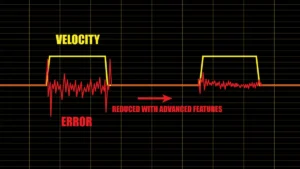
Cogging and Ripple Torque
A commonly cited issue with TFMs is their susceptibility to cogging torque and ripple torque.
- Cogging torque is a detent torque that occurs even when the motor windings are unenergized. It results from the preferential alignment of the rotor’s permanent magnets (if present) with the stator’s salient poles. This phenomenon can cause vibrations, noise, and make precise low-speed control difficult.
- Ripple torque refers to the periodic variations in torque output during normal operation, even with a smooth input current. It arises from the interaction of the stator’s magnetic field with the rotor’s geometry and can also lead to vibrations, acoustic noise, and reduced motion smoothness.
Mitigating cogging and ripple torque often requires sophisticated design techniques, such as skewing stator slots or rotor magnets, optimizing pole shapes, or employing advanced control algorithms, which can add to the motor’s complexity and cost.
Complex Mechanical Design and Manufacturing
The unique architecture of transverse flux motors, with its multi-dimensional flux paths and often intricate magnetic components, typically results in a more complex mechanical design compared to conventional radial flux motors. This complexity can translate into higher manufacturing costs due to:
- Specialized Components: Intricate stator and rotor laminations, often requiring advanced stamping or additive manufacturing techniques.
- Assembly Challenges: Precise alignment of magnetic components and windings is critical for optimal performance, demanding tighter tolerances and specialized assembly processes.
- Material Selection: The need for specific magnetic materials to manage the complex flux paths can also increase material costs.
This higher manufacturing complexity and cost represent a significant hurdle for mass production and broad market penetration.
Non-Linear Dynamics
The intricate magnetic circuits and multi-dimensional flux paths of TFMs often lead to highly non-linear dynamics. This non-linearity complicates the mathematical modeling of motor behavior, making it more challenging to predict performance accurately under various operating conditions. Accurate modeling is essential for developing effective control strategies, optimizing efficiency, and ensuring reliable operation. The need for more sophisticated analytical tools and computational simulations adds to the engineering effort required for TFM development.
Low Power Factor
Another disadvantage frequently associated with transverse flux motors is a relatively low power factor. The power factor is a measure of how effectively electrical power is being converted into useful work. A low power factor indicates that a significant portion of the current drawn by the motor is reactive power, which does not contribute to mechanical work but still flows through the system, leading to:
- Increased Current: For a given amount of real power, a lower power factor requires higher RMS current from the power supply.
- Larger Conductors: This higher current necessitates larger cables and electrical infrastructure.
- Increased Losses: Higher currents lead to increased I²R losses in the supply lines and components upstream.
- Potential Penalties: In industrial settings, utilities may impose penalties for consistently low power factors.
Improving the power factor often requires additional components, such as power factor correction capacitors, which add to the system’s cost and complexity.
ETM’s Breakthrough in Robotics: A Case Study
The potential of transverse flux motors is increasingly being realized in critical applications, with the robotics industry emerging as a significant adopter. Recently, ETM (Electromagnetic Technologies, Inc.) has made notable strides in integrating transverse flux motor technology into the robotics market, garnering considerable attention from industry observers.
In a significant announcement, ETM unveiled its patented transverse flux motor architecture, specifically tailored for robotic applications. The company’s core claim revolves around its ability to eliminate the traditional trade-offs between efficiency and size—a perennial challenge in motor design. By effectively decoupling the magnetic flux path from the electrical windings, ETM asserts that its technology enables the high torque density typically associated with high-ratio geared systems, but with the superior efficiency and thermal reliability characteristic of low-ratio direct drives.
Industry experts have lauded ETM’s claims, particularly the stated "up to 10x greater torque density than conventional motors." This figure suggests a paradigm shift for robotic system design. Dr. Anya Sharma, a leading robotics engineer and professor at the MIT Robotics Lab, commented in a recent industry forum, "ETM’s advancement could catalyze a new generation of robotic systems. Imagine a collaborative robot arm with the same payload capacity but half the size and weight, or one that can operate for significantly longer on a single charge. This opens doors to applications previously deemed impossible due to size or power constraints."
The impact of such a breakthrough extends across various facets of robotics:
- Compact Robotic Joints: Enabling slimmer, more agile robot arms and manipulators that can work in confined spaces.
- Increased Payload-to-Weight Ratio: Robots can carry heavier loads relative to their own mass, enhancing productivity in manufacturing and logistics.
- Improved Energy Efficiency: Longer battery life for mobile robots and reduced energy consumption for industrial robots, lowering operational costs.
- Enhanced Precision and Control: Direct drive capabilities, free from gearbox backlash, allow for more accurate and delicate manipulation, crucial for surgical robots or precision assembly.
- New Design Freedom: Robot designers are no longer as constrained by the bulk and weight of traditional motors, fostering more innovative and ergonomic designs.
ETM’s strategic move into robotics, first highlighted in early 2023 with pilot projects and subsequently in their public announcement later that year, marks a significant milestone in the commercialization of transverse flux technology. While specific financial details and market penetration figures are still emerging, the initial reactions from the robotics community indicate a strong potential for disruption and accelerated innovation within the sector.
Broader Implications and Future Outlook
The advancements in transverse flux motor technology, exemplified by ETM’s foray into robotics, point towards a broader transformative potential across numerous high-stakes industries.
Electric Vehicles (EVs)
The automotive industry is in a relentless pursuit of greater range, faster charging, and more compact powertrains for electric vehicles. TFMs, with their high torque density and efficiency, could be game-changers for EV propulsion. Direct-drive in-wheel motors or compact central drive units could lead to lighter vehicles, freeing up space for larger battery packs or passenger comfort. The elimination of gearboxes would also simplify drivetrains, reduce noise, and improve reliability, directly addressing key consumer concerns in the EV market. While some axial flux motors are already making inroads, TFMs offer another compelling alternative for next-generation EV platforms.
Renewable Energy Generation
In the realm of renewable energy, particularly wind power, direct-drive generators are highly desirable. Large geared wind turbines are prone to gearbox failures, which are costly to repair, especially offshore. Transverse flux generators, owing to their high pole count and direct-drive capability, could offer a more robust, efficient, and reliable solution for converting wind energy into electricity, reducing maintenance costs and increasing uptime. Similarly, they could find applications in tidal or hydrokinetic energy systems.
Industrial Automation and Heavy Machinery
For industrial automation, the demand for precise, powerful, and compact actuators is constant. TFMs could revolutionize factory floors by enabling smaller, more powerful robots, more efficient conveyor systems, and more responsive machine tools. In heavy machinery, such as excavators or mining equipment, where hydraulic systems are currently prevalent, high-torque electric motors could offer a cleaner, more efficient, and quieter alternative, contributing to decarbonization efforts in these sectors.
Aerospace and Defense
Weight and power density are paramount in aerospace and defense applications. For aircraft actuators, unmanned aerial vehicles (UAVs), or specialized defense equipment, TFMs could provide significant advantages in reducing system weight and improving operational performance and endurance. The high efficiency also contributes to reduced thermal management challenges, which are critical in enclosed environments.
Overcoming Remaining Hurdles
Despite the immense promise, widespread adoption of transverse flux motors still faces significant hurdles. The initial higher manufacturing cost remains a primary barrier. As with any nascent technology, achieving economies of scale will be crucial. Research and development efforts are ongoing to refine designs, simplify manufacturing processes, and mitigate issues like cogging and ripple torque through innovative control algorithms and material science advancements. Standardization of design principles and manufacturing practices will also be essential to foster broader industry acceptance.
Furthermore, the complex non-linear dynamics require advanced simulation tools and sophisticated control strategies. As computational power increases and AI-driven design optimization becomes more prevalent, these challenges are gradually being addressed, paving the way for more robust and predictable TFM performance.
Conclusion
Transverse flux motors represent a fascinating and potentially revolutionary chapter in the history of electric machine design. By cleverly manipulating the path of magnetic flux, engineers have unlocked a pathway to unprecedented torque density and efficiency, addressing critical needs in modern industries. While inherent complexities in design, manufacturing, and control have historically limited their reach, ongoing innovation, particularly evident in the robotics sector with pioneers like ETM, is rapidly overcoming these challenges. As the global demand for energy-efficient, powerful, and compact electromechanical systems continues to surge across electric vehicles, renewable energy, and advanced manufacturing, transverse flux motors are poised to move from a niche, specialized solution to a mainstream, high-performance option, fundamentally reshaping how we power the future. Their unique attributes promise to drive the next wave of innovation in motion control, enabling capabilities that were once confined to engineering blueprints and theoretical models.