In the rapidly accelerating landscape of electric vehicle (EV) production, the humble pressure-sensitive adhesive (PSA) tape is emerging as a critical enabler, underpinning the high-speed, automated assembly lines necessary to meet global demand. These specialized tapes are not merely joining components; they are integral to the very design and manufacturing efficiency of EV battery packs, where the dual requirements of robust, reliable bonding and seamless integration into automated production workflows are paramount. The intricate balance between material performance and manufacturing practicality defines success or failure in this demanding sector.
According to Max van Rapphorst, marketing manager focused on e-mobility and energy storage at Avery Dennison, a global leader in materials science and manufacturing, the symbiotic relationship between material properties and design for manufacturing (DFM) is non-negotiable. "Always think about the design for manufacturing concurrently with whatever material properties you’re looking for, because it makes or breaks projects," van Rapphorst emphasizes, highlighting a fundamental principle that guides adhesive development for the EV industry. This perspective signals a shift from merely selecting an adhesive based on its final bond strength to a holistic consideration of its entire lifecycle within an automated production environment. Engineers must now account for how tapes will be converted from rolls, handled by robotic systems, detected by vision systems, precisely positioned, and ultimately applied at high speeds on an assembly line without interruption.
The Evolution of Automotive Manufacturing and the Rise of PSAs
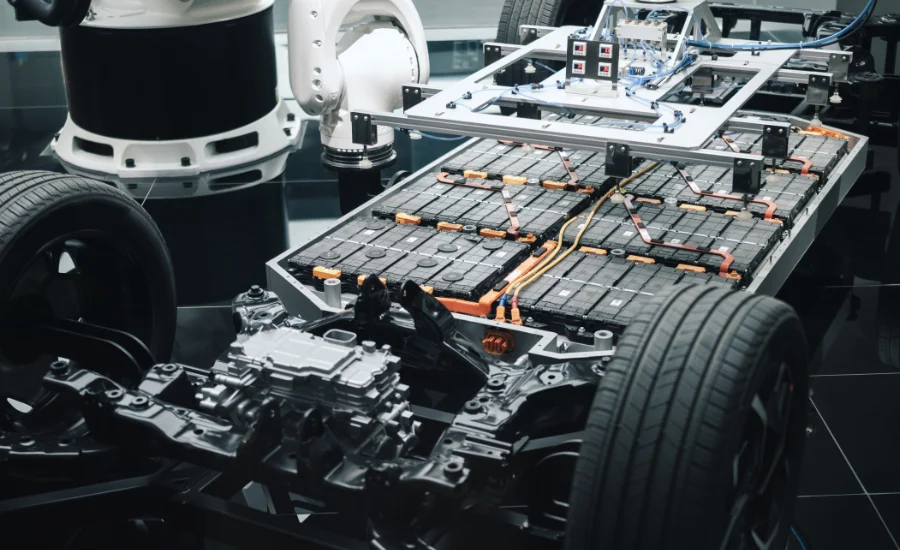
The automotive industry has historically relied on a combination of mechanical fasteners, welding, and structural adhesives for assembly. However, the advent of electric vehicles, with their unique architecture centered around complex battery packs, has introduced unprecedented manufacturing challenges and opportunities for innovation. EV battery packs are sophisticated systems comprising thousands of individual cells, thermal management components, structural elements, and intricate wiring, all requiring precise assembly. Traditional methods often add significant weight, complexity, and production time, making them less suitable for the lightweighting and high-volume demands of EV production.
This context provides fertile ground for PSAs. Unlike liquid adhesives that require curing time, or mechanical fasteners that add weight and create stress points, PSAs offer immediate adhesion, flexibility, and often, significant weight savings. The global EV market is experiencing exponential growth, with sales surging year-over-year. According to the International Energy Agency (IEA), global EV sales surpassed 10 million in 2022, and projections suggest continued rapid expansion, with some forecasts predicting EVs could constitute over 50% of new car sales in major markets by 2030. This explosive growth necessitates manufacturing processes that are not only efficient but also scalable and adaptable. PSAs, by facilitating automation and streamlining assembly, directly address these critical industry needs.
Avery Dennison’s extensive background in high-speed roll-to-roll manufacturing and labeling applications provides a unique competitive advantage in this arena. The company’s experience in producing billions of labels annually, where lines must operate consistently with minimal interruptions to achieve production targets of hundreds of millions of parts, translates directly to the demands of automated EV battery assembly. The lessons learned from ensuring consistent material feed, precise application, and reliable operation at blistering speeds in the labeling sector are proving invaluable in optimizing adhesive tape solutions for the EV market. This cross-industry knowledge transfer is a testament to the versatility of material science principles.
Engineering for Manufacturability: Beyond Simple Adhesion
The sophisticated engineering of PSAs for EV batteries extends far beyond basic bonding capabilities. Adhesive chemistry, for instance, can be meticulously designed to reduce residue buildup on tooling components, a seemingly minor detail that can have significant ramifications for production efficiency. Minimizing residue translates directly into extended preventive maintenance intervals, reducing costly downtime and increasing overall equipment effectiveness (OEE). In a manufacturing environment where every second of downtime can equate to thousands of dollars in lost production, such advancements are critically important.
Similarly, release liners – often overlooked components of adhesive tapes – are engineered with specific properties to ensure reliable automated removal and application. The force required to separate the liner from the adhesive, for example, can be precisely controlled through adjustments in release-liner chemistry. This level of control prevents premature detachment or, conversely, excessive adhesion that could impede robotic grippers. Furthermore, innovations like zone coating allow manufacturers to create areas with adhesive and areas without, making it even easier for automated equipment to precisely grab and remove liners without damaging the underlying component or the adhesive layer.
Another crucial innovation involves integrating adhesives and liners with machine vision systems. Van Rapphorst explains, "We’ll often look at pigmenting adhesives or some of the films or printing on them so that things can be caught by vision systems, and vision systems can help with the placement and accuracy of these materials." By incorporating specific colors or patterns, these materials become "visible" to high-speed cameras and sensors, enabling robots to achieve micron-level precision in placement, minimizing scrap and maximizing throughput. This synergy between material science and advanced robotics is a cornerstone of modern EV battery manufacturing. The overarching objective is to empower manufacturers to apply adhesive materials precisely and rapidly, thereby minimizing waste and production interruptions, directly contributing to the economic viability of EV production.
The Peril of Overengineering and the Importance of Real-World Performance
A common pitfall in material selection is the temptation to overengineer an adhesive, specifying properties that exceed actual application requirements. While a tape might offer superior peel strength and tack, an excessively thick or aggressive adhesive can lead to residue accumulation during converting processes like die-cutting, ultimately hindering automated assembly. Van Rapphorst advises that engineers must meticulously determine the truly necessary performance characteristics for a given application and then optimize the rest of the tape construction around manufacturability. This pragmatic approach ensures that material specifications are aligned with production realities. "There are probably about 30 things they have not considered where we can make adjustments and tweaks on our end to make their life easier," he notes, underscoring the deep expertise adhesive suppliers bring to the table.
The complexity of EV battery packs further compounds manufacturing challenges, as they often incorporate a diverse array of substrates with dramatically different surface energies and material properties. Low-surface-energy plastics, such as polypropylene and polyethylene, present inherent bonding difficulties due to their inert chemical nature. Silicone foams, often used for sealing and cushioning, pose another significant challenge due to silicone’s notoriously low surface energy and inert characteristics, making robust adhesion difficult without specialized primers or adhesive formulations. Conversely, materials like inorganic thermal barriers, while potentially easy to bond, can be delicate or fragile, creating challenges for automated systems that must remove release liners and position components without causing damage. Avery Dennison proactively tests whether these delicate materials can withstand the rigors of robotic application and release-liner removal before they are integrated into high-volume battery production, mitigating risks before costly production halts occur.
Surface condition, too, is a critical factor. "The tape is going to be only as good as the surface it sees," van Rapphorst aptly states. However, real-world manufacturing environments rarely provide perfectly pristine surfaces. Components may arrive with residual stamping lubricants, dust, or other contaminants. Rather than testing solely on perfectly cleaned substrates, Avery Dennison evaluates materials "as received," under conditions that mimic actual production. This realistic testing approach helps determine whether an adhesive provides acceptable performance under imperfect conditions or if manufacturers need to implement additional cleaning or surface-preparation steps, providing invaluable insights for process optimization.
Beyond Data Sheets: The Nuances of Material Behavior
Reliance solely on technical data sheets can also lead to suboptimal material selection. Van Rapphorst points to polyethylene terephthalate (PET) films as an illustrative example. While their high strength might appear attractive for dielectric applications, PET can be prone to splitting around sharp metallic components once a tear initiates. In such applications, a material with lower initial tensile strength but greater elongation and conformability can perform significantly better, distributing stress more effectively and preventing catastrophic failure. "You don’t need something to be stiffer and stronger," van Rapphorst clarifies. "You want it to be more ductile and more conformable." This highlights the importance of understanding material behavior under dynamic, real-world stresses rather than just static property values.
Comprehensive environmental testing is another cornerstone of robust adhesive development for EV applications. Battery packs operate under extreme conditions, including wide temperature fluctuations, high humidity, and repeated thermal cycling. Avery Dennison utilizes environmental chambers to subject materials to these stresses, beginning with small specimens and progressing to larger sections that more closely represent the actual battery assembly. This rigorous testing ensures that the adhesives maintain their integrity and performance throughout the operational life of the battery pack, contributing directly to vehicle safety and longevity.
The Unsung Heroes: Release Liners and Proactive Design
Among the most consequential, yet often overlooked, design decisions are those pertaining to release liners. Van Rapphorst refers to them as "unsung heroes" of design for manufacturing. By precisely adjusting release-liner chemistry, manufacturers can control the force required to separate the liner from the adhesive, a critical factor for automated handling. Furthermore, the ability to incorporate color into adhesives or liners to enhance detection by machine vision systems demonstrates the depth of engineering applied to these seemingly simple components. These seemingly minor details become increasingly vital as production volumes escalate, distinguishing efficient, high-throughput lines from those plagued by frequent interruptions.
A recurring challenge in the industry, van Rapphorst notes, is the tendency for adhesive suppliers to be brought into projects too late. "Oftentimes, we will get projects super late — scrambling, and they just need Band-Aids," he laments. He argues that proactive engagement earlier in the design cycle could save a considerable amount of headache, optimizing material selection and assembly processes from the outset rather than resorting to reactive, last-minute fixes. This emphasizes the value of early collaboration between EV manufacturers and material science experts.
Future Implications: Structural Battery Packs and Assembly Innovations
The manufacturing advantages offered by PSA tapes are poised to become even more significant as automakers continue to rethink traditional vehicle assembly architectures. Van Rapphorst points to emerging EV production paradigms, such as structural battery packs, where the battery itself becomes an integral, load-bearing part of the vehicle chassis. This shift, along with different approaches to bringing major vehicle assemblies together, places even greater demands on bonding solutions.
One of the key advantages of PSA tapes in this evolving landscape is their ability to be pre-applied to components before those parts reach final assembly. When a component arrives at the assembly operation, automated equipment can efficiently remove the release liner, precisely position the part, and create an immediate, strong bond. "You can pre-apply them," van Rapphorst explains. "And then when you’re ready to stick the two things together, you take off the release liner and then you stick them together and they have that instant grab of a PSA. So then you can move parts down your assembly line very quickly." This capability significantly streamlines the assembly process, reducing cycle times and enabling higher production throughput – a critical factor for meeting the burgeoning demand for EVs.
As EV manufacturers continue to innovate in both battery design and vehicle assembly processes, the role of automation and robotics will only grow in importance for scaling production. For adhesive suppliers like Avery Dennison and the manufacturing engineers they support, the fundamental question has evolved. It is no longer simply whether an adhesive can create the required bond; rather, it is whether that bond can be created reliably, repeatedly, and quickly enough to sustain the demands of a high-volume, automated assembly line. The strategic integration of pressure-sensitive adhesives is not just a material choice; it is a manufacturing philosophy that underpins the future of electric mobility.