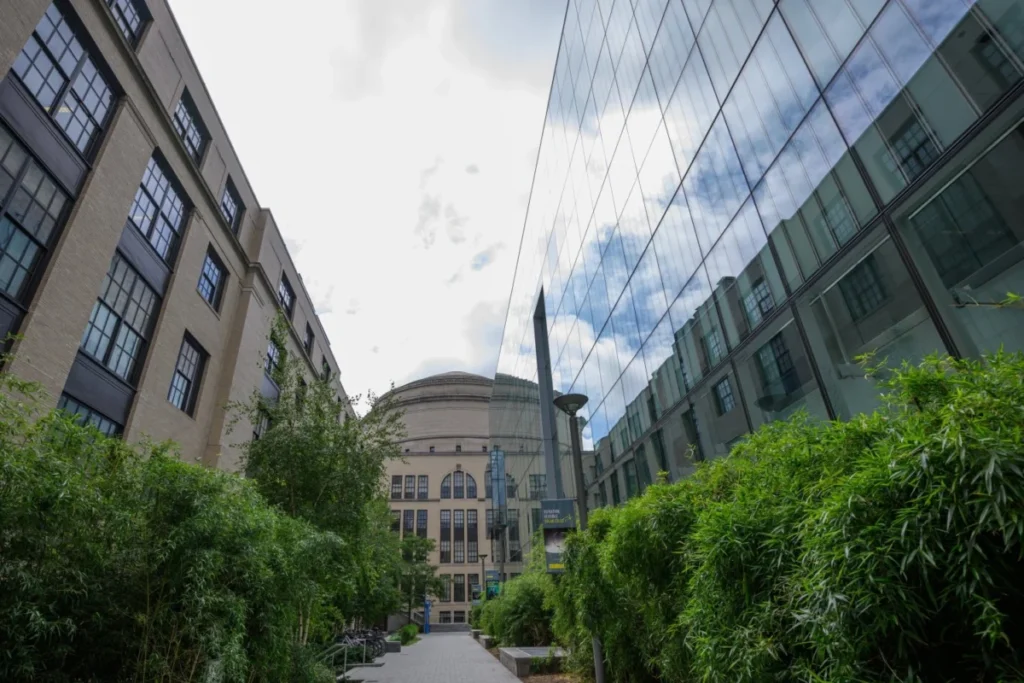
The Massachusetts Institute of Technology (MIT) has officially unveiled a prestigious new postdoctoral fellowship program under the banner of the MIT Quantum Initiative (QMIT), marking a significant step forward in the institution’s mission to dominate the frontiers of quantum science and technology. This initiative, made possible through a generous grant from the Gordon and Betty Moore Foundation, is designed to recruit and empower a new cohort of scientific leaders who can bridge the gap between fundamental quantum mechanics and diverse, real-world applications across multiple scientific disciplines.
As quantum technology transitions from theoretical physics into the realms of engineering, biology, and chemistry, the demand for high-level expertise has reached an all-time high. The QMIT fellowship program addresses this need by providing early-career researchers with the institutional support, financial resources, and collaborative infrastructure necessary to pursue high-risk, high-reward research. By fostering an environment where interdisciplinary boundaries are intentionally blurred, MIT aims to catalyze breakthroughs that could redefine computation, secure communication, and precision sensing for decades to come.
A Strategic Foundation for the Quantum Era
The launch of the fellowship program is the latest milestone in a broader strategic roadmap for MIT. In December 2025, the Institute formally launched the MIT Quantum Initiative (QMIT) as a cross-departmental effort to consolidate its world-leading expertise in quantum science. Before the formalization of QMIT, quantum research at MIT was distributed across various labs and departments, ranging from the Department of Physics to the Research Laboratory of Electronics (RLE). The initiative serves as a unifying force, aligning the goals of hundreds of researchers toward solving society’s most pressing challenges.
Anantha Chandrakasan, MIT provost and the Vannevar Bush Professor of Electrical Engineering and Computer Science, emphasized the timing of this launch. According to Chandrakasan, the field of quantum science is currently experiencing a period of "extraordinary opportunity." He noted that the pathways being opened today will lead to solutions for problems that were previously considered intractable in fields like materials science and global communication. The fellowship, he argues, is the primary vehicle through which MIT will attract the visionary minds necessary to navigate these pathways.
The Interdisciplinary Mandate: Expanding the Quantum Horizon
One of the most distinctive features of the QMIT fellowship is its focus on interdisciplinarity. While traditional quantum fellowships often remain siloed within physics or computer science departments, the QMIT program specifically invites applications from researchers in chemistry, materials science, and even the biological and Earth sciences. This approach recognizes that the next "quantum leap" may not come from a faster processor alone, but from the application of quantum principles to other complex systems.
Danna Freedman, the Frederick George Keyes Professor of Chemistry and faculty director of QMIT, highlighted this shift in focus. Freedman pointed out that the most transformative breakthroughs are likely to emerge from the intersection of deep quantum expertise and fresh perspectives from outside the field. For instance, the fellowship encourages research into how quantum systems can be used to model biological processes at the molecular level—a task that classical computers struggle to perform with accuracy. By combining atomic physics with quantum algorithms and biology, fellows could unlock new understandings of photosynthesis, enzyme catalysis, or neural signaling.
Furthermore, the program is poised to explore the burgeoning intersection of artificial intelligence and quantum science. As AI continues to revolutionize data analysis, the integration of quantum computing could provide the exponential processing power required to train more complex models, while AI itself could be used to optimize the design of quantum circuits and materials.
The MIT Quantum Ecosystem: A Collaborative Powerhouse
Fellows selected for the program will not work in isolation. They will be embedded in what is arguably the most robust quantum ecosystem in the world. This network includes the Research Laboratory of Electronics (RLE), a hub for hardware development and signal processing; the MIT Lincoln Laboratory, which focuses on national security applications and advanced microelectronics; and the MIT-Harvard Center for Ultracold Atoms (CUA), a world-renowned site for exploring the behavior of matter at temperatures near absolute zero.
This collaborative framework ensures that fellows have access to state-of-the-art facilities, including cleanrooms for nanofabrication, cryogenic testing facilities, and high-performance computing clusters. Moreover, the proximity to the Department of Electrical Engineering and Computer Science (EECS) and the Department of Physics allows for a constant exchange of ideas between theorists and experimentalists.
The involvement of the Gordon and Betty Moore Foundation adds a layer of philanthropic prestige and stability to the program. Known for supporting "path-breaking scientific discovery," the foundation’s investment in QMIT reflects a belief that quantum science is at a critical juncture where sustained funding for human capital is more important than hardware alone.
Addressing the Global Quantum Talent Shortage
The establishment of the QMIT fellowship comes at a time when the global "quantum gap"—the disparity between the demand for quantum-literate workers and the available talent pool—is widening. According to industry reports from McKinsey and the World Economic Forum, the quantum technology sector is expected to create billions of dollars in value by 2030, yet more than half of the roles in the industry remain difficult to fill due to a lack of qualified candidates at the PhD and postdoctoral levels.
By investing in postdoctoral scholars, MIT is not just advancing its own research agenda; it is contributing to the global workforce. These fellows are expected to eventually take up leadership roles in academia, government research labs, and the private sector, where they will lead the commercialization of quantum technologies.
Ian Waitz, MIT’s vice president for research and the head of QMIT, described the fellowship as an investment in the "unforeseen." He remarked that while the immediate goals involve improving quantum sensing and communication, the long-term impact will be the development of creative and transformative applications that we cannot yet fully imagine. Waitz believes that the work done by these scholars will eventually make "the impossible possible," particularly in domains that require high-precision measurement and massive data processing.
Chronology and Future Outlook
The timeline for the QMIT fellowship program is structured to ensure a steady influx of talent over the coming years. Following the strategic launch of QMIT in late 2025, the program has spent the early months of 2026 finalizing the selection process for its first cohort.
- December 2025: Formal launch of the MIT Quantum Initiative as a strategic institute-wide priority.
- Early 2026: Finalization of funding and administrative structures for the QMIT Fellowship Program.
- Academic Year 2026: The inaugural class of QMIT Fellows will begin their appointments, integrating into various labs across the MIT campus.
- Fall 2026: Applications for the second cohort of fellows will officially open to the international scientific community.
The program’s design allows for a rolling cycle of mentorship and innovation. As the inaugural fellows establish their research projects, they will also play a role in mentoring graduate students, thereby strengthening the entire educational pipeline at MIT.
Analysis of Implications: A New Era of Discovery
The QMIT fellowship represents a pivot in how elite institutions approach "big science." In the 20th century, breakthroughs were often the result of large-scale, centralized projects like the Manhattan Project or the Apollo program. In the 21st century, however, innovation is increasingly decentralized and multidisciplinary. By focusing on the individual postdoctoral researcher as the unit of innovation, MIT is betting that the most significant advancements will come from bottom-up creativity rather than top-down mandates.
Furthermore, the emphasis on "national security challenges" mentioned in the QMIT mission statement underscores the geopolitical importance of this research. As nations race to develop unhackable quantum communication networks and sensors capable of detecting submarines or underground facilities, the talent nurtured at MIT will be central to maintaining technological sovereignty.
The inclusion of Earth sciences as an eligible field for the fellowship also signals a growing awareness of the role quantum technology can play in climate change mitigation. Quantum sensors could provide unprecedented data on oceanic temperatures and crustal movements, while quantum simulations could lead to the discovery of more efficient catalysts for carbon capture.
Conclusion
The MIT Quantum Initiative’s new postdoctoral fellowship program, backed by the Gordon and Betty Moore Foundation, stands as a testament to the Institute’s commitment to scientific leadership. By prioritizing interdisciplinary collaboration and providing a platform for the world’s brightest early-career researchers, MIT is ensuring that the quantum revolution remains grounded in rigorous science while reaching toward transformative, real-world impact. As the inaugural fellows prepare to begin their work in 2026, the scientific community watches with anticipation, knowing that the foundations for the next century of technological progress are being laid in the laboratories of Cambridge, Massachusetts.