A tall glass of ice water serves as more than a simple thirst quencher; it provides a ubiquitous, everyday demonstration of coexisting phases where water’s molecular structure exists simultaneously in both liquid and solid states. While this phenomenon is well-understood in classical thermodynamics, phase duality in exotic quantum materials is significantly more complex and difficult to decipher. A groundbreaking study led by physicists at the Massachusetts Institute of Technology (MIT) has now provided unprecedented clarity on how two distinct phases of electron behavior emerge and coexist within the same quantum material. The findings, published today in the journal Nature Physics, offer a roadmap for understanding how materials can host seemingly contradictory properties such as superconductivity and magnetism, potentially paving the way for the next generation of high-performance quantum devices.
The research team, spearheaded by Nuh Gedik, the Donner Professor of Physics at MIT, focused their investigation on a rare-earth material known as erbium tritelluride ($ErTe_3$). In standard materials, electrons are typically distributed in a uniform, scattered fashion. However, when certain quantum materials are subjected to extreme cooling, their electrons undergo a dramatic reorganization. In $ErTe_3$, this takes the form of a "charge density wave" (CDW), a phase where electrons arrange themselves into a wave-like pattern rather than a homogenous mist. As the material is cooled further, a second, perpendicular wave emerges, creating a complex atomic "checkerboard" of coexisting electronic phases.
The Challenge of Phase Coexistence in Quantum Systems
The ability of a single material to support multiple electronic phases is a primary focus of modern condensed matter physics. "People believe the cornerstone of replacing silicon lies in quantum materials that have multiple coexisting phases," explains co-author Alfred Zong, an assistant professor at Stanford University who co-led the study during his doctoral candidacy at MIT. The fundamental question facing researchers is whether these phases compete with one another, reinforce each other, or exist in total independence.
Understanding these interactions is critical for the development of quantum computers and ultra-fast electronics. If engineers can learn to manipulate these phases, they can essentially "tune" the properties of a material on demand. For instance, a material could be toggled between a superconducting state—where electricity flows with zero resistance—and a magnetic state, or a state characterized by charge density waves.
The MIT study utilized erbium tritelluride specifically because it serves as a "playground" for these interactions. $ErTe_3$ is a layered material that can be synthesized into atomically thin sheets. Its relatively simple structure compared to high-temperature superconductors allows physicists to isolate variables and observe phase transitions with high precision.
The "Shake and Listen" Methodology
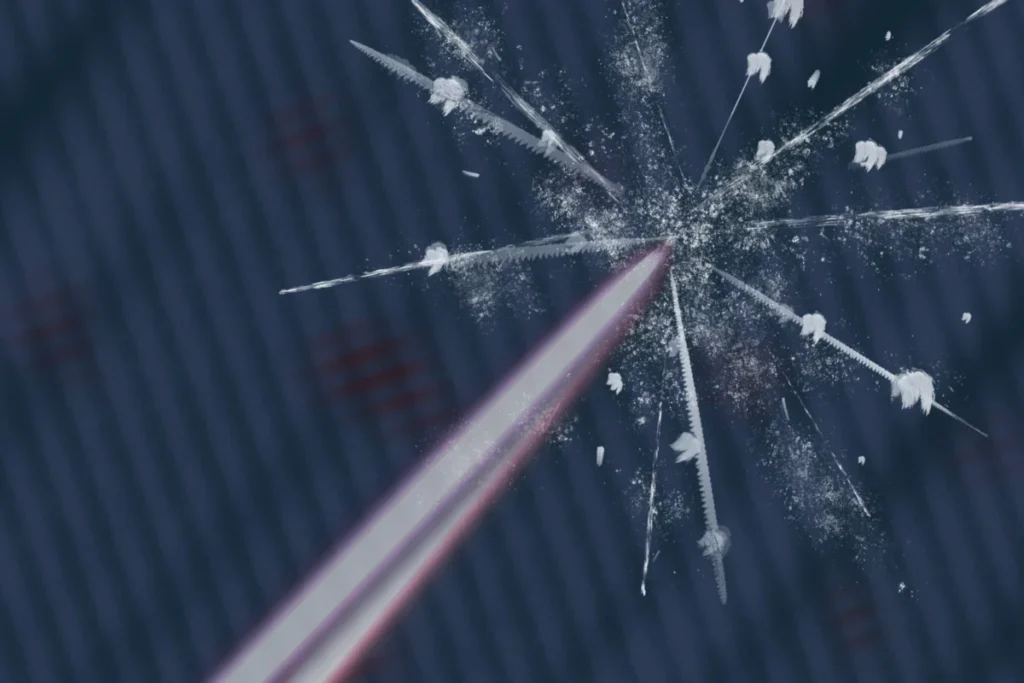
To observe the birth and evolution of these phases, the researchers employed a sophisticated technique described by Professor Gedik as a "shake and listen" approach. The team first cooled the $ErTe_3$ samples to approximately -230 degrees Celsius (around 43 Kelvin). At this temperature, the material naturally hosts both the dominant and subdominant charge density waves in a stable checkerboard pattern.
The researchers then used a "one-two punch" of ultrafast laser pulses to disturb this equilibrium:
- The Shake: A primary laser pulse was directed at the sample to dissolve or weaken the existing electronic phases. By varying the intensity of this pulse, the team could control the degree of disruption.
- The Listen: A second pulse of high-energy photons followed at precisely timed intervals. This pulse "kicked" electrons out of the material, a process known as photoemission.
By measuring the energy and momentum of these ejected electrons—a technique related to Angle-Resolved Photoemission Spectroscopy (ARPES)—the team could capture "snapshots" of the electronic structure as it attempted to recover. This allowed them to watch, in real-time (on a femtosecond scale), how the waves reassembled themselves from the chaos induced by the first laser pulse.
Unexpected Results: Two Different Paths to Order
The most striking discovery of the study was the divergent ways in which the two electronic phases re-emerged. The physics community had long debated the mechanisms behind these transitions, and the MIT results provided a definitive, albeit surprising, answer.
The first, "dominant" phase of the charge density wave—which initially forms at -8 degrees Celsius—recovered in a uniform and gradual manner. Regardless of how severely the material was "shaken" by the laser, this phase re-established itself smoothly across the entire sample. In physics, this is classified as a "second-order" phase transition. It is analogous to the way a magnet gradually loses its magnetism as it is heated, or how liquid water turns into vapor in a consistent, predictable progression.
However, the second, "subdominant" phase—which emerges at -113 degrees Celsius—behaved entirely differently. Instead of forming uniformly, it re-emerged in isolated "pockets" or nuclei that eventually expanded to fill the material. This is a "first-order" phase transition, much like the way liquid water crystallizes into ice, starting at specific points and spreading outward.
"The mechanism responsible for the emergence of this second phase has long been debated," says Gedik. "Our approach provides a powerful new way to uncover the hidden physics behind phase transitions in quantum materials."
Supporting Data and Technical Context
The distinction between first-order and second-order transitions is more than a technicality; it defines how energy is managed within the material. Second-order transitions are characterized by a continuous change in the "order parameter" and do not involve latent heat. First-order transitions, conversely, involve a discontinuous jump and often require "nucleation sites"—imperfections or specific conditions where the new phase can begin to grow.
In the case of $ErTe_3$, the fact that two different types of transitions occur within the same crystal lattice to produce similar wave patterns is a revelation. It suggests that the underlying energy landscapes for the two waves are fundamentally different. The dominant wave is robust and globally favored, while the subdominant wave must overcome an energy barrier to manifest, growing in patches rather than as a single, unified front.
This data is crucial for engineers looking to design "phase-change" memory or quantum sensors. Knowing that one phase requires nucleation while the other does not allows for more precise control over the material’s state using external stimuli like light, pressure, or magnetic fields.
Historical Timeline of Charge Density Wave Research
The study of charge density waves has evolved over several decades, moving from theoretical curiosities to central pillars of condensed matter physics:
- 1930s-1950s: Theoretical foundations are laid by physicists like Rudolf Peierls, who predicted that one-dimensional metals could become unstable at low temperatures, leading to periodic distortions in the ion lattice and electron density.
- 1970s: Experimentalists observe the first definitive evidence of CDWs in quasi-one-dimensional materials like niobium triselenide ($NbSe_3$).
- 2000s: Researchers begin focusing on rare-earth tritellurides (like $ErTe_3$) as ideal 2D systems to study the competition between different CDW vectors.
- 2010s: The rise of ultrafast spectroscopy allows scientists to disturb materials and watch them recover, but teasing apart coexisting phases remains a significant hurdle.
- 2024: The MIT team successfully decouples the emergence mechanisms of two coexisting CDW phases, proving that they follow different thermodynamic paths (first-order vs. second-order).
Broader Impact and Future Implications
The implications of this research extend far beyond the specific study of erbium tritelluride. Many of the most sought-after properties in modern physics—most notably high-temperature superconductivity—emerge from a "soup" of competing electronic phases.
In materials like cuprates (copper-oxide based superconductors), charge density waves are often seen as a "competitor" to superconductivity. By understanding exactly how a CDW nucleates and grows, scientists may be able to suppress the wave to favor the superconducting state, or vice versa.
"In systems that are much more complex, like high-temperature superconductors, you see there are multiple phases—magnetism, superconductivity, charge density waves—and they all exist together," Gedik explains. "One of the theories is that the way they interact with each other is key for their exotic properties. The lessons we learn here can be applied to much more complex materials."
Furthermore, the "shake and listen" technique establishes a new standard for experimental physics. It allows for the "temporal decoupling" of phases that are otherwise inseparable in a static environment. As quantum computing moves from theoretical designs to physical hardware, the ability to switch between electronic phases at femtosecond speeds could lead to the development of logic gates that are orders of magnitude faster than current silicon-based transistors.
Collaborations and Acknowledgments
The study was a collaborative effort involving several institutions. Along with lead author Yifan Su and Professor Nuh Gedik, the MIT team included former postdocs Bai-Qing Lv, Doron Azoury, and Masataka Mogi, as well as graduate students Dongsung Choi. The Stanford University contingent, led by Alfred Zong and including researchers from the Stanford Institute for Materials and Energy Sciences (SIMES), provided the high-quality $ErTe_3$ samples necessary for such high-resolution measurements.
The research was supported by several major funding bodies, reflecting its importance to the national scientific infrastructure, including the U.S. Department of Energy (DOE), the U.S. National Science Foundation (NSF), and the Gordon and Betty Moore Foundation’s EPiQS Initiative.
As the scientific community continues to look for the "next silicon," the ability to untangle the messy, coexisting phases of quantum matter will be the deciding factor. The MIT team’s work on $ErTe_3$ provides the clarity needed to move from observing these strange quantum effects to engineering them for the future of technology.