The MIT Kavli Institute for Astrophysics and Space Research (MKI) has officially announced the launch of a pioneering pilot artist-in-residence program, marking a significant step in the integration of scientific inquiry and artistic expression. This initiative is designed to foster a robust, cross-disciplinary dialogue between the realms of astrophysics, contemporary art, and public engagement. By bringing together world-class researchers and visionary creators, the program aims to translate the complexities of the cosmos into tangible experiences that resonate with a global audience.
As a cornerstone of the Massachusetts Institute of Technology’s scientific community, MKI has long been a global leader in the study of the universe. The institute combines over six decades of expertise in the development of space-based and ground-based instrumentation with the intellectual rigor of MIT’s faculty and students. The new residency program represents an expansion of this mission, seeking to bridge the gap between technical discovery and humanistic understanding.
Amy Karle Named Inaugural Artist-in-Residence
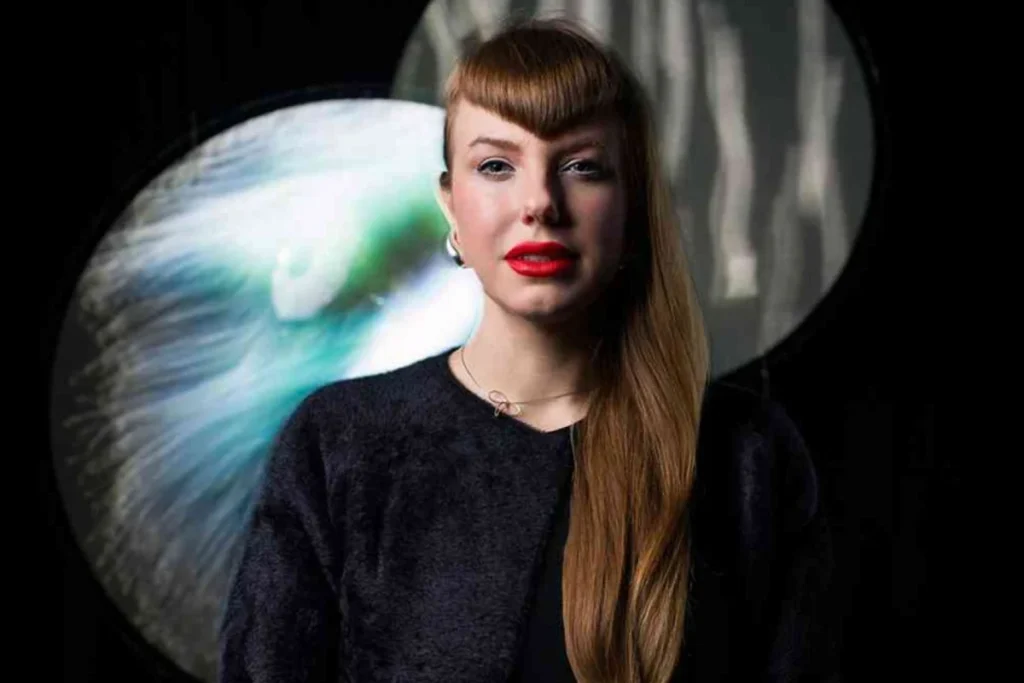
The internationally acclaimed ultra-contemporary artist Amy Karle has been selected as the program’s inaugural artist-in-residence for the 2026-27 academic year. Karle, whose work occupies the intersection of biology, technology, and futuristic philosophy, will work alongside MKI researchers to explore the underlying processes of cutting-edge astrophysical discovery. Her residency will culminate in an immersive, multimedia installation slated for public debut in early 2028.
Karle is widely recognized for her multidisciplinary approach, often utilizing emerging technologies like artificial intelligence, 3D printing, and biotechnology to explore how science shapes humanity and the future of evolution. Her selection was the result of a rigorous review process by an interdisciplinary committee comprising astronomers, museum curators, and art-science practitioners. The committee lauded Karle’s proposal for its "ambitious-yet-grounded" methodology and its potential to transform abstract scientific data into an embodied experience.
In her proposal, Karle envisions astrophysical research and data as a "co-creative experience." Her work at MKI will touch on themes of scientific observation, the interpretation of signals from deep space, and the nature of inference. By engaging with the tools and data used by MIT scientists, Karle aims to create a bridge between the clinical observation of the universe and the emotional experience of existing within it.
The Institutional Legacy of the MIT Kavli Institute
To understand the scope of this residency, it is essential to consider the institutional weight of the MIT Kavli Institute. MKI operates at the vanguard of space exploration, drawing talent from several of MIT’s most prestigious departments, including Aeronautical and Astronautical Engineering, Earth, Atmospheric and Planetary Sciences (EAPS), and Physics.
For more than 60 years, MKI has been instrumental in the design and operation of instruments that have redefined our understanding of the universe. From the early days of X-ray astronomy to modern missions like the Transiting Exoplanet Survey Satellite (TESS) and the Laser Interferometer Gravitational-Wave Observatory (LIGO), MKI’s contributions are foundational to modern astrophysics. The institute’s faculty includes Nobel laureates and pioneers in experimental physics, providing a rich environment for an artist to observe the "frontier of knowledge" in real-time.
MKI Director Robert Simcoe, the Bruno B. Rossi Professor of Experimental Physics at MIT, expressed high expectations for the collaboration. He noted that Karle’s approach offers a unique opportunity for scientists and engineers to re-examine their own methodologies. "Her approach is unlike anything we have previously experienced at MKI and presents many opportunities to challenge the way we, as scientists and engineers, think about our study of the universe," Simcoe stated. He emphasized that the resulting artwork would be deeply informed by the rigorous research conducted within the MKI community.
Chronology and Structure of the Residency
The pilot program is structured to ensure a deep and meaningful exchange between the artist and the scientific community. The residency is divided into several distinct phases, beginning in the fall of 2026 and extending through the public exhibition in 2028.
Phase 1: Exploration and Integration (Fall 2026)
The residency will commence with a one-month intensive exploratory period during the fall semester of 2026. During this time, Karle will be embedded within the MKI environment, attending seminars, participating in classes, and holding one-on-one meetings with researchers. This phase is designed to familiarize the artist with the specific instruments and computational methods used to detect "faint signals" from the cosmos. The period will conclude with a public presentation by Karle to the MKI community, outlining her preliminary findings and conceptual direction.
Phase 2: Conceptualization and Development (2027)
Throughout 2027, the project will transition from conceptual inquiry to active development. Karle will continue her exchange with MKI researchers while working independently in her California-based studio. This period of the residency emphasizes the iterative process of creation, where scientific data is translated into artistic forms. The ongoing dialogue ensures that the final installation remains grounded in the scientific realities explored at MIT.
Phase 3: The MASS MoCA Residency (March 2027)
A critical component of the development phase occurs in March 2027, when Karle and a cohort of scientific collaborators will enter a residency at the Studios at MASS MoCA (the Massachusetts Museum of Contemporary Art). Located in North Adams, Massachusetts, MASS MoCA is one of the world’s largest centers for contemporary visual and performing arts. This residency will allow the team to test large-scale ideas and engage with a multidisciplinary group of 16 other artists from around the world.
Phase 4: Public Exhibition and Outreach (2028 and Beyond)
The residency will culminate in the launch of an immersive multimedia installation in early 2028. MKI is currently seeking museum and festival partners to host the installation, which is intended to tour internationally. The goal is to provide a platform where the public can engage with the "wonder of the universe" through a lens that is both scientifically accurate and artistically profound.
Collaborative Innovation and the Kavli Foundation
The residency is made possible through the support of the Kavli Foundation’s Kavli Innovation Fund. The Kavli Foundation, established by Fred Kavli, is dedicated to advancing science for the benefit of humanity and promoting public understanding of scientific research. The Innovation Fund specifically targets projects that push the boundaries of traditional engagement.
By funding this artist-in-residence program, the Kavli Foundation is supporting a new model of public outreach. Rather than traditional science communication—which often focuses on the dissemination of facts—this initiative focuses on "emotional connection" and "embodied understanding." The foundation’s involvement underscores a growing recognition within the scientific community that art can serve as a powerful tool for making complex data accessible and meaningful to the general public.
Susan Cross, the Director of Curatorial Affairs at MASS MoCA, highlighted the importance of this partnership. She noted that the museum is pleased to contribute to the "meaningful exchange between art and science," suggesting that such collaborations are essential for the evolution of both fields.
Amy Karle’s Background and Artistic Philosophy
Amy Karle’s career has been defined by a quest to understand the human condition through the lens of science. Her work has been exhibited at some of the world’s most prestigious institutions, including the Centre Pompidou, the Mori Art Museum, the Smithsonian Institution, and the Victoria and Albert Museum. Notably, she has also had work sent to the moon and into space, making her a fitting choice for a residency focused on astrophysics.
Karle’s previous collaborations include work with CERN (the European Organization for Nuclear Research), the Copernicus Science Centre, and NASA. She has been recognized as one of the BBC’s 100 Most Inspiring and Influential Women and has served as an American Arts Incubator artist diplomat for the U.S. Department of State.
For Karle, the MKI residency is a return to her roots. "My first job was at a public observatory," Karle shared. "I still remember showing strangers Saturn’s rings through a telescope and watching awe and understanding arrive as felt experience." She views the work of MKI—translating faint cosmic signals into knowledge through computation and human judgment—as a profound expression of that same process of discovery.
Analysis: The Impact of Art-Science Integration
The launch of the MKI artist-in-residence program reflects a broader trend in higher education and research known as "STEAM" (Science, Technology, Engineering, Arts, and Mathematics). This movement advocates for the integration of the arts into STEM fields to foster creativity, improve communication, and drive innovation.
From a journalistic perspective, the implications of this residency are twofold. First, it provides a template for how elite research institutions can engage with the public in an era of increasing scientific complexity. As fields like astrophysics become more reliant on high-level computation and abstract mathematics, the "human" element can sometimes be lost. Art provides a way to reclaim that narrative.
Second, the collaboration challenges the traditional "siloing" of academic disciplines. By bringing an artist into the laboratory and the observatory, MIT is acknowledging that the "process of science" is not just about data collection, but also about the human imagination and the quest for meaning. As MKI Director Robert Simcoe noted, the residency allows the institute to "push boundaries" and engage new audiences in the wonder of the universe.
As the project moves toward its 2028 debut, it will likely serve as a case study for future collaborations between the arts and the sciences. The success of the pilot will be measured not only by the quality of the final installation but also by the depth of the dialogue it sparks between the researchers at MIT and the public they serve. In a world increasingly shaped by scientific discovery, programs like this offer a vital bridge to understanding our place in the cosmos.