Researchers at ETH Zurich and the Paul Scherrer Institute (PSI) in Villigen have announced the commencement of a pioneering experiment designed to probe one of the most fundamental assumptions in modern physics: the universality of gravitational attraction. By examining the behavior of the muon—a subatomic particle often described as the "heavy cousin" of the electron—the team seeks to determine if gravity interacts with all forms of matter in the exact same manner. This research marks a significant milestone in the study of the second generation of matter, potentially challenging the foundations of Albert Einstein’s General Theory of Relativity and the Standard Model of particle physics.
The Mystery of Particle Generations and the Equivalence Principle
The universe, as understood by contemporary science, is composed of three distinct generations of matter. The first generation consists of the familiar particles that build our world: protons and neutrons (made of up and down quarks) and electrons. However, the Standard Model dictates the existence of two additional generations of particles that are identical to the first in every respect except for their mass and stability. The muon, a member of the second generation, is approximately 200 times more massive than the electron and exists for only a fleeting moment before decaying into other particles.
Despite the mathematical elegance of the Standard Model, it offers no explanation for why these additional generations exist. "We physicists do not yet understand why these additional generations exist at all in the first place," says Anna Soter, a professor of physics at ETH Zurich and a lead researcher on the project. "And why are there three in total?"
This lack of understanding extends to the gravitational behavior of these particles. For centuries, the universality of free fall—the idea that all objects, regardless of their composition or mass, fall at the same rate in a vacuum—has been a cornerstone of physics. This concept, observed by Galileo and formalized by Newton, eventually became the Equivalence Principle at the heart of Einstein’s General Relativity. While this principle has been tested with extreme precision using ordinary first-generation matter and, more recently, with first-generation antimatter (antihydrogen), it has never been verified for particles belonging to the second or third generations.
Overcoming the Challenges of Muonium Research
The primary obstacle in testing gravity on second-generation particles is their instability. Muons have a mean lifetime of just 2.2 microseconds. To conduct a gravity experiment, researchers must not only create these particles in vast quantities but also arrange them into a stable, neutral system that can be measured before they vanish.
The team at PSI utilizes a high-intensity proton accelerator to generate antimuons (the antimatter counterpart of the muon). When a positively charged antimuon captures a negatively charged electron, it forms a "muonium" atom. Muonium is a unique, exotic atom that serves as an ideal laboratory for fundamental physics. Because it consists of two leptons (particles that do not experience the strong nuclear force), its properties can be calculated with immense precision using Quantum Electrodynamics (QED).
"The exotic muonium is very well suited to this because it is a neutral atom," Soter explains. "To make something fall, you need something neutral." If the researchers attempted to measure the fall of a lone muon or antimuon, the particle’s electric charge would cause it to be influenced by stray electromagnetic fields, which are far stronger than the weak pull of gravity, thereby masking the results.
Historically, muonium atoms were produced in states that were "hot" and disorganized, with atoms moving at varying speeds and in random directions. Such a chaotic beam is useless for the precision required to detect the minuscule effects of Earth’s gravity.
The Superfluid Helium Breakthrough: An Atomic Cannon
In a study recently published in Nature Physics, the research team detailed a breakthrough method for producing a "cold" and controlled beam of muonium. The key to this success lies in the use of superfluid helium, a quantum fluid maintained at temperatures near absolute zero (minus 273 degrees Celsius).
Jesse Zhang, the lead author of the study, describes the unique properties of this environment: "Superfluid helium is what is known as a quantum fluid, in which the individual helium atoms lose their identity, and which does not tolerate any impurities within it."
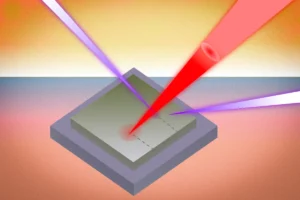
The experimental process begins by firing antimuons from the PSI accelerator into a thin layer of this superfluid helium. As the antimuons slow down within the liquid, they attract free electrons to form muonium atoms. Because of the quantum mechanical properties of the superfluid, the muonium atoms experience a positive chemical potential. This potential acts as a repulsive force, effectively ejecting the muonium atoms from the liquid.
As the atoms reach the surface, the chemical potential is converted into kinetic energy. This creates a focused, vertical beam of muonium atoms moving at uniform speeds—a phenomenon Zhang likens to an "atomic cannon." This controlled propagation is what makes a gravity experiment feasible for the first time in history.
The Interferometer: Measuring the Invisible
With the creation of a stable, cold muonium beam, the researchers are now transitioning to the measurement phase. They are constructing a specialized instrument known as an atom interferometer.
Atom interferometry relies on the wave-particle duality of matter. In this setup, the muonium beam will be passed through a series of physical gratings, which will cause the "matter waves" of the atoms to interfere with one another, creating a distinct pattern. If gravity acts on the muonium as it does on ordinary matter, Earth’s gravitational pull should cause the atoms to "fall" slightly as they travel through the vacuum of the instrument.
This fall will manifest as a tiny shift in the interference pattern. By measuring this displacement, the team can calculate the gravitational mass of the muonium with high precision. "We hope to be able to test the method for the first time with the atomic beam this year, and if all goes well, the actual gravity experiment should follow in two or three years’ time," says Soter.
Chronology of the Muon Gravity Initiative
The path toward this experiment has been paved by decades of advancements in particle physics and cryogenic engineering:
- Late 20th Century: Improvements in particle accelerators at PSI allow for the creation of the world’s most intense continuous muon beams.
- 2010s: Theoretical frameworks for testing the Equivalence Principle on exotic atoms gain traction within the physics community.
- 2021-2023: The ETH Zurich and PSI team develops and refines the superfluid helium technique, successfully demonstrating the production of a cold muonium beam.
- 2024 (Current): Pilot testing of the atom interferometer begins using the newly developed beam.
- 2026-2027 (Projected): The final gravity measurements are expected to be conducted, providing the first definitive data on second-generation gravitational interaction.
Broader Implications: A Fifth Force?
The implications of this experiment extend far beyond the validation of existing theories. If the team discovers that muonium does not fall at the same rate as ordinary matter, it would signal a revolution in our understanding of the universe.
"That would indeed be surprising, and, in addition to other theories, it could point to the existence of a fifth force," Soter notes. Currently, science recognizes four fundamental forces: gravity, electromagnetism, and the strong and weak nuclear forces. The discovery of a fifth force could provide answers to some of the greatest mysteries in cosmology, including the nature of dark matter and the observed imbalance between matter and antimatter in the early universe.
Furthermore, the high-quality muonium beam opens doors to other high-precision measurements. Laser spectroscopy of muonium could lead to a more accurate determination of the muon’s mass and other fundamental constants. This could help resolve the "muon g-2" puzzle—a persistent discrepancy between the measured magnetic moment of the muon and the predictions of the Standard Model that has puzzled physicists for years.
Scientific Community and Institutional Support
The project is supported by the National Centre of Competence in Research (NCCR) "Muoniverse," a consortium dedicated to exploring the frontiers of particle physics using muons. The collaboration between ETH Zurich, one of the world’s leading technical universities, and PSI, Switzerland’s largest research institute for natural and engineering sciences, provides the unique combination of theoretical expertise and experimental infrastructure required for such a high-stakes endeavor.
While the primary goal is a fundamental test of the Equivalence Principle, the spirit of the research is one of pure discovery. "I am completely open-minded," Soter concludes. "I simply want to measure, for the first time, whether the equivalence between gravitational and inertial mass also applies to the second generation of particles—this alone is quite an inspiring piece of work."
As the team prepares for its first trials this year, the global physics community remains watchful. Whether the experiment confirms Einstein’s century-old predictions or unveils a new force of nature, the results will undoubtedly reshape the landscape of modern physics and our understanding of the fabric of reality.