The journey of early childhood is profoundly shaped by the development of mobility, a cornerstone for honing physical coordination, fostering cognitive growth, and cultivating independence. However, for children facing certain health conditions, this fundamental aspect of development can be a significant challenge, often requiring specialized assistance and assistive devices. Enter MakeGood, a groundbreaking organization leveraging the power of 3D printing and a dedicated network of makers to democratize access to these crucial mobility aids, exemplified by the innovative Toddler Mobility Trainer (TMT) produced by General Pattern.
A Mission Rooted in Accessibility and Innovation
MakeGood, founded in 2021 in the vibrant city of New Orleans by Noam Platt, emerged from a pressing need identified when a local family sought assistance in designing a custom chair for their son with cerebral palsy. From its inception, 3D printing was integral to MakeGood’s philosophy. The technology offered a pathway to creating affordable, highly customizable devices, allowing for rapid design iteration and personalized solutions that could bypass the often-cumbersome and expensive traditional healthcare and durable medical equipment (DME) systems.
"Our mission is to design high-quality effective assistive technology that anyone can make for themselves," Platt stated. "Everything we design can be made by individuals, skipping the insurance companies, DME system, healthcare system, etc. It really is about radical self-reliance." This ethos has resonated deeply within the maker community, attracting over 1,100 participants—ranging from individual hobbyists to established manufacturing firms—who contribute their skills and resources to the MakeGood network. These vetted makers are instrumental in producing mobility devices and accessories for families, entirely free of charge.
General Pattern: A Commitment to Community Through Advanced Manufacturing

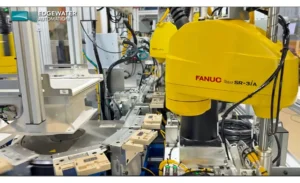
Among the ranks of these dedicated makers is General Pattern Company, a fourth-generation, family-owned business with deep roots in manufacturing excellence. Located in Blaine, Minnesota, General Pattern is a vertically integrated molder and moldmaker that has consistently embraced technological advancements, including additive manufacturing. Their experience with 3D printing spans applications from CMM fixturing to part prototyping and mold tooling, demonstrating a forward-thinking approach to production.
Andrew Fielder, a metrology engineer at General Pattern, discovered MakeGood while exploring potential 3D printing projects. Recognizing the powerful synergy between MakeGood’s mission and General Pattern’s long-standing commitment to community service, Fielder saw an opportunity to integrate their manufacturing capabilities with a cause that could make a tangible difference. He presented the idea of becoming a designated manufacturer to General Pattern’s CEO and third-generation owner, Denny Reiland.
"The reason I brought it to him was from what I’ve learned of Denny in the year I’ve worked here, is any excuse he has to give back to the community he’s all about," Fielder explained. "It took about a minute of conversation with him and he loved it." This immediate endorsement from leadership underscores the company’s deeply ingrained values of corporate social responsibility.
The Rigorous Path to Becoming a Vetted Maker
To join MakeGood’s esteemed network of "vetted makers," individuals and companies must undergo a stringent qualification process. This includes demonstrating proficiency with their 3D printing equipment through required test prints and submitting detailed photographic evidence. This meticulous screening ensures the quality and integrity of the finished products, as MakeGood aims to prevent issues such as ill-fitting parts or warped prints.
"We make sure each vetted maker has a tuned printer by required test prints, and then we also require several photos," Platt elaborated. "At this touchpoint we can screen for ill-fitting parts, warped prints and other errors. We find very, very few problems." This systematic approach guarantees that families receive reliable and effective assistive devices. Once approved, makers like Fielder are listed on MakeGood’s interactive map, enabling them to serve requests within a designated geographical radius, typically around 200 miles. Families initiate the process by submitting their needs through the MakeGood portal, which then connects them with available local makers.

The Toddler Mobility Trainer (TMT): A Game-Changer in Pediatric Mobility
While MakeGood supports the design and production of a variety of assistive devices, its primary focus lies in providing access to the Toddler Mobility Trainer (TMT). These devices, akin to miniature wheelchairs, are specifically engineered to empower children with conditions such as cerebral palsy, spina bifida, or other diverse abilities to navigate their environments with greater ease and autonomy.
The traditional pathways to acquiring such mobility aids are often fraught with delays and financial barriers. "Many insurance companies deny families’ mobility devices, or make them wait 5+ years between supplying them with devices," Platt observed. "The TMT is a low-cost effective solution that fills those gaps." This accessibility is crucial for young children, whose developmental needs are time-sensitive.
The TMT is more than just a mobility aid; it represents a significant step towards fostering independence. Unlike passive support systems like strollers or carriers, the TMT is designed for the child’s active engagement. This allows them to control their movement, thereby nurturing a sense of agency and self-reliance from an early age.
"At this age, having something a little more age-appropriate makes a big difference to the kids," commented Marcy Krosch, senior vice president of sales at General Pattern. The TMT is envisioned as a developmental stepping stone, preparing children for larger, more complex mobility devices as they grow. MakeGood reports that many children who use the TMT transition to walkers with increased confidence and physical preparedness, a testament to the device’s role in building foundational strength and independence.
Design Innovation and Technical Specifications

The TMT’s ingenious design is attributed to Schuyler Livingston of LINK PBC, who responded to an online call for a 3D printable version of an older, wood-based design. Livingston’s contribution was critical in adapting the concept for modern additive manufacturing, developing clever assembly methods for large components that could be produced on standard desktop 3D printers.
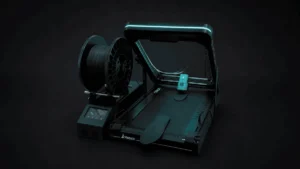
The design is optimized for children aged 1 to 8 years and is intended for production using filament 3D printers with a minimum build volume of 256 x 256 x 256 mm. While larger printers can produce components like wheels in a single build, smaller machines can print these parts in multiple sections, ensuring broad accessibility. The maker network predominantly utilizes Bambu Lab 3D printers, known for their reliability and consistent performance, which contributes to the repeatability of the printed parts across different makers.
"Part of the magic is that all of the printers work basically the same, ensuring repeatability," Platt noted. This standardization allows makers to concentrate on production quality rather than design complexities, while also enabling personalized touches. Families are encouraged to share their child’s favorite colors and interests, allowing makers like Fielder to incorporate these aesthetic customizations, making each TMT a unique reflection of the child it serves.
General Pattern’s Production Process: Precision and Material Innovation
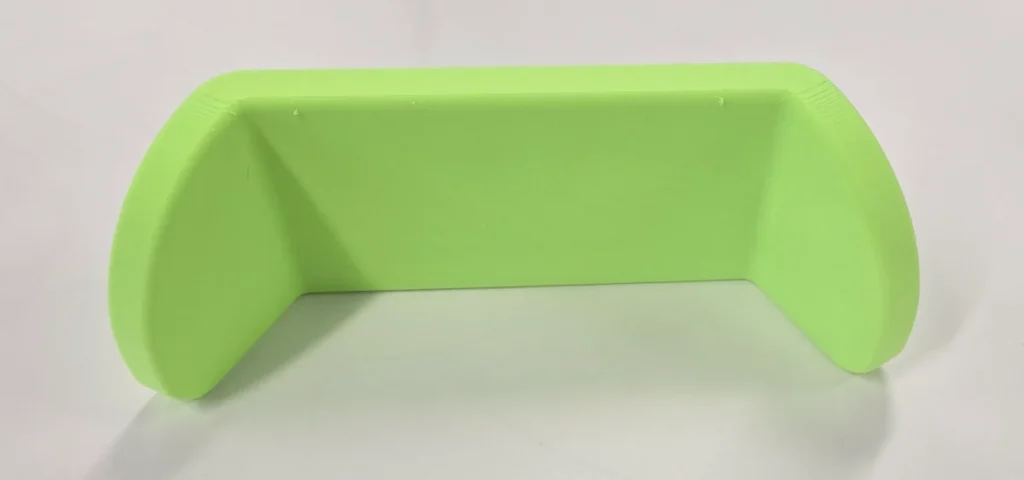
At General Pattern, the production of each TMT involves a meticulous process. The company currently operates five Bambu Lab 3D printers, supplemented by Fielder’s personal machine at home, enabling them to contribute significantly to the MakeGood network. The printing phase for a single TMT requires approximately 330 hours, spread across roughly 28 individual builds, to produce the more than 40 structural components.
The primary material used for the structural elements is PETG, chosen for its durability and ease of printing. For softer components, such as cushions, General Pattern utilizes either standard TPU or an innovative active-foaming TPU. This latter material offers the unique advantage of variable durometer—a measure of hardness—which can be adjusted by altering the print temperature. This adaptability is key to creating comfortable and supportive seating.

The introduction of the active-foaming TPU presented a learning curve. Fielder shared a candid account of an early challenge: "The material bonds super well to the build plate. Turns out, unfortunately too well. So I did ruin a build plate in the process." However, this initial hurdle was overcome with a simple solution—applying a layer of blue painter’s tape to the build plate—leading to successful and consistent results. This material innovation has proven so effective that General Pattern now employs it for prototyping foam parts for their commercial clients, which are ultimately destined for injection molding in mass production.
Assembly and Community Impact
Beyond the 3D printed components, each TMT requires minimal additional hardware: two bearings, two washers, and six bolts. James Meyer, a colleague from General Pattern’s metrology department, collaborates with Fielder on the assembly process. "With the two of us it probably takes around an hour," Fielder estimated. The design facilitates a straightforward assembly, with parts that interlock and secure each other, streamlining the final construction.
General Pattern has set a commendable goal of producing at least one mobility device per month for families within the MakeGood network. This consistent output underscores their dedication to making a substantial impact.
Fielder views this initiative as a powerful demonstration of additive manufacturing’s potential. "I think it’s a really good way for both manufacturers and hobbyists alike to be able to do something that’s not only a useful 3D print, but also something that shows the world some other uses of additive manufacturing," he remarked.
Krosch echoed this sentiment, expressing pride in her company’s involvement: "It makes me incredibly proud to be part of this company, and seeing our team committed to making a difference."

The broader implications of MakeGood’s model are profound. For the makers, it offers a unique opportunity to become direct community heroes. For the children and their families, the impact is transformative. "For the makers, this is a real opportunity to be a true hero to people in their communities," Platt emphasized. "We are hearing that kids are becoming much more independent, and with mobility comes brain development as well. Perhaps the most important thing is that the chairs are fun! The colors and style fit into the lives of kids, and their friends love them. So now the kids go from being the ‘other’ to being the coolest one on the playground. We have heard from parents and clinicians that this is a revolutionary device that will change pediatric mobility outcomes for generations."
In essence, MakeGood and its network of makers, exemplified by the dedicated efforts of General Pattern, are not merely producing devices; they are engineering independence, fostering joy, and fundamentally reshaping the future of pediatric mobility through accessible, innovative, and community-driven solutions. The ripple effect of this initiative promises to empower countless children, enabling them to explore their world with newfound freedom and confidence.