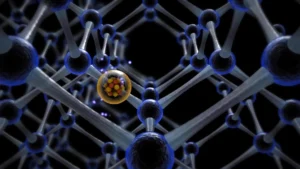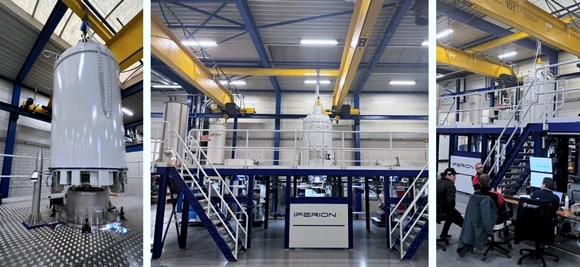
The global landscape of critical mineral processing is fraught with challenges, most notably the pervasive "Not in My Backyard" (NIMBY) sentiment, which significantly hinders the development of new facilities, particularly in democracies where elected officials are acutely aware of public opinion. This opposition often makes countries outside of China struggle to establish robust domestic processing capabilities. However, rather than deterring investment, these geopolitical realities have amplified interest in the few companies that are demonstrating viable pathways to scaling up critical mineral supply chains outside of Chinese dominance. Among these ambitious players is IperionX, a titanium specialist that has recently announced a significant technological advancement: the validation of its GenX continuous titanium production process. This breakthrough represents a continuous iteration of its proprietary HAMR (Hydrometallurgical And Metallurgical Recovery) technique, which had previously been proven effective for batch production.
The Significance of the GenX Process Validation
The validation of the GenX process is a pivotal moment for IperionX and for the broader push towards diversified and domestically controlled critical mineral supply chains. At its core, the GenX process amplifies the inherent advantages of the HAMR technique, most critically its dramatically reduced power consumption compared to the conventional Kroll method, which has long been the industry standard for titanium production.
The original batch HAMR process already offered substantial energy savings, requiring at least 25% less power than the Kroll process, and potentially over 50% less. The GenX continuous process takes this efficiency to an entirely new level, reducing power consumption by more than 75% compared to IperionX’s own batch HAMR method. This translates to an estimated overall power consumption reduction of up to 90% when compared to the energy-intensive Kroll process. Such a significant reduction in energy usage not only lowers operational costs but also contributes to a more sustainable and environmentally conscious approach to critical mineral processing.
Addressing Critical Shortages: A Boost from the US Military
The timing of this technological advancement is particularly opportune, given the escalating demand for titanium and the critical shortages plaguing vital sectors. Just weeks prior to the GenX announcement, IperionX secured an $11.5 million order for titanium fasteners from the U.S. Army. This order is part of a larger $99 million Small Business Innovation Research (SBIR) III contract, with the potential for the total value to more than double.
These fasteners are destined for applications where obsolescence-related shortages have become a significant concern. The U.S. Army has recently highlighted similar shortages affecting vehicle fasteners, underscoring the urgency of securing reliable domestic supply chains. Reports indicate that even Bradley tanks, a critical component of military operations, are experiencing challenges related to fastener availability. IperionX’s ability to address these immediate needs while simultaneously scaling up its production capacity demonstrates a proactive approach to fulfilling military procurement requirements.
A Timeline of Innovation and Growth
IperionX’s journey to the GenX validation has been marked by strategic development and significant backing. The company has consistently focused on developing and refining its HAMR technology.
- Early Stage Development: IperionX has been working on its HAMR technology for several years, aiming to disrupt the traditional Kroll process with a more efficient and sustainable method.
- Batch Process Validation: Prior to the GenX announcement, the company successfully validated its HAMR process for batch production, demonstrating its viability and potential for energy savings.
- Government Funding and Support: Recognizing the strategic importance of domestic critical mineral production, IperionX has received substantial government funding. This includes the recent $25 million in U.S. government funding to scale domestic titanium powder production, building upon previous investments.
- Military Orders: The $11.5 million order from the U.S. Army for titanium fasteners, part of the SBIR III contract, represents a significant step in commercializing their capabilities and addressing immediate defense needs.
- GenX Process Validation (Recent): The successful validation of the GenX continuous titanium production process marks the latest milestone, signaling a leap forward in production scalability and efficiency.
Strategic Implications for the Critical Minerals Sector
The implications of IperionX’s GenX process validation extend far beyond its immediate impact on titanium powder production. It represents a tangible step towards de-risking and diversifying critical mineral supply chains, particularly for Western nations.
1. Enhanced Domestic Production Capabilities: The ability to produce critical minerals like titanium domestically reduces reliance on foreign suppliers, bolstering national security and economic resilience. This is particularly crucial in an era of increasing geopolitical uncertainty and trade disputes.
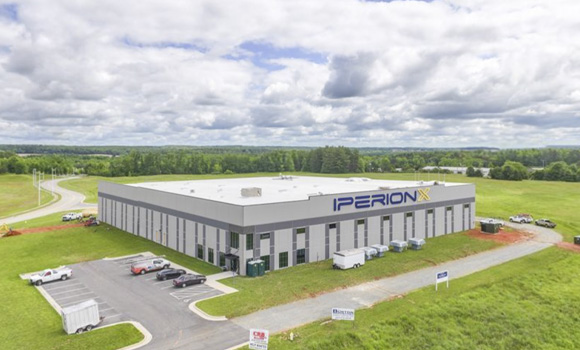
2. Cost Reduction and Accessibility: The projected reduction in unit costs, with IperionX targeting $30 per kilogram for titanium powder, is transformative. Currently, users of additive manufacturing titanium feedstock produced via the Kroll method often pay significantly more. This cost reduction can make titanium more accessible to a wider range of industries, fostering innovation and adoption.
3. Market Expansion Beyond Defense: While the defense sector is a critical initial market, the lower production costs and increased availability of titanium powder are poised to unlock new applications and attract users from other sectors. Industries such as automotive, medical devices, and consumer electronics, which have already begun to explore titanium’s potential, could see accelerated adoption.
4. Energy Sector Opportunities: The energy sector, in particular, represents a significant growth area for titanium utilization. Under the right economic conditions, the increased availability and reduced cost of titanium could see greater adoption in applications serving power grid operators and renewable energy infrastructure.
5. Attracting New Users and Fostering Innovation: The current market for processed titanium in the U.S. is heavily dominated by aerospace and defense, accounting for approximately 80% of consumption. However, with the projected cost reductions and increased domestic supply, there is a strong likelihood of attracting new users from industries that have previously found titanium cost-prohibitive. This could spur innovation in product design and manufacturing processes across a broader industrial base.
The Path to Commercialization and Future Outlook
IperionX is not resting on its laurels. The company has outlined a clear plan to capitalize on the GenX validation. By the fourth quarter of this year, IperionX intends to integrate the continuous furnace into a full titanium powder production line, while simultaneously optimizing the process for commercialization.
A key metric to monitor will be the confirmation of lower unit costs, which IperionX anticipates as a direct result of scaled GenX production. The company has set an ambitious production goal of 1,400 tons per year by next year. If these targets are met, IperionX would be exceptionally well-positioned to attract a broad customer base, moving beyond its initial focus on defense and into new industrial frontiers.
The potential for reshoring manufacturing processes, as exemplified by companies like Apple exploring 3D-printed components within the U.S., further underscores the strategic importance of domestic critical mineral supply chains. IperionX’s advancements in titanium production directly support these reshoring initiatives by providing a reliable and cost-effective domestic source of essential materials.
Conclusion: A New Era for Critical Minerals
The successful validation of IperionX’s GenX continuous titanium production process is more than just a technological achievement; it is a beacon of progress in the global effort to secure diversified and sustainable critical mineral supply chains. By overcoming significant NIMBY challenges and demonstrating a clear path to cost-effective, low-power production, IperionX is poised to play a pivotal role in reducing reliance on single-source suppliers and fostering innovation across a wide spectrum of industries. The company’s ability to meet its ambitious production and cost targets will be a critical determinant of its success and its impact on the broader geopolitical and economic landscape of critical minerals. As the world increasingly recognizes the strategic imperative of domestic resource security, advancements like those pioneered by IperionX offer a tangible glimpse into a more resilient and self-sufficient future.