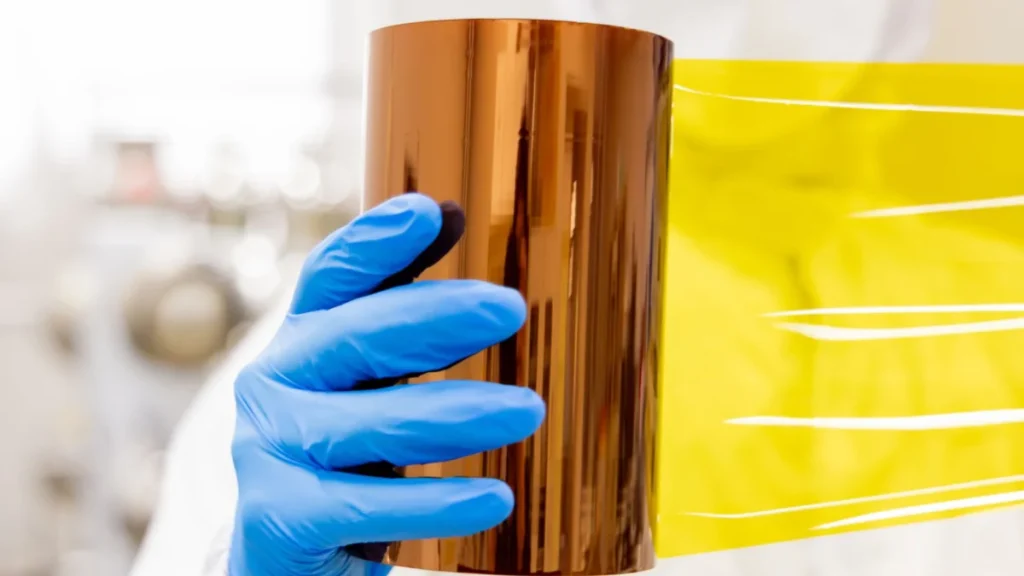
A groundbreaking advancement in materials science has shattered a long-standing paradigm, with researchers from North Carolina State University unveiling a novel non-porous, thin-film material that combines extreme stiffness with exceptionally low thermal conductivity. This innovation directly addresses a fundamental challenge in material design, where robust, structurally sound materials have historically been excellent conductors of heat, while effective thermal insulators tend to be pliable or porous. The development promises to unlock new possibilities across a spectrum of applications, from advanced electronics to aerospace engineering.
The Genesis of a Breakthrough
The newly engineered material exhibits a thermal conductivity of approximately 0.04 W m⁻¹ K⁻¹ at room temperature. To put this into perspective, it is five times more effective at blocking heat transfer than standard silicone, a widely recognized insulator. What makes this achievement truly remarkable is that it simultaneously boasts a stiffness that is up to 10,000 times greater than silicone. This unprecedented combination of properties fundamentally redefines what is possible in material design.
"Stiff materials that are good thermal insulators would have substantial utility in a variety of applications, from cookware to electronic devices to space travel," stated Dali Sun, a professor of physics at North Carolina State University and a co-corresponding author of the research. He elaborated on the inherent difficulty of this pursuit, explaining, "This is a significant challenge because, in general, stiff materials are good at conducting heat, and materials that are not stiff are good at insulating against heat. We’ve created a material that is very stiff and is extremely good at insulating against heat. Better than any material you would find in nature."
A Historical Conundrum: Stiffness Versus Insulation
For centuries, material scientists and engineers have grappled with the inverse relationship between a material’s structural rigidity and its ability to impede heat flow. This trade-off is deeply rooted in the atomic and molecular mechanisms of heat transfer. In most solids, heat is primarily conducted through two main channels: the movement of free electrons and the propagation of atomic vibrations, known as phonons.
Materials like metals, which are typically stiff and strong due to strong atomic bonds and crystalline structures, possess a high density of free electrons and highly ordered atomic lattices. These characteristics facilitate the rapid transfer of thermal energy, making them excellent heat conductors. This is why a metal pan heats up quickly on a stove. Conversely, materials designed for thermal insulation, such as rubber, foam, or fiberglass, are often characterized by their flexibility, porosity, or amorphous structures. These features create numerous interfaces and irregular pathways that scatter phonons and trap air (a poor conductor), effectively impeding heat transfer. This principle is evident in everyday items like oven mitts, which rely on soft, often porous, materials to protect against burns.
The challenge has always been to decouple these properties: to create a material strong enough to bear structural loads or withstand significant mechanical stress, while simultaneously preventing the efficient passage of heat. This has led to complex, multi-layered solutions in demanding applications, such as the ceramic tiles used on the Space Shuttle, which provided insulation but added significant weight and complexity.
The Engineering Marvel: A Molecular-Level Redesign
The North Carolina State University team’s work represents a profound shift in this paradigm. Their innovative approach involved meticulous engineering at the molecular level, specifically utilizing two-dimensional (2D) hybrid organic-inorganic perovskites. These materials are characterized by their layered crystalline structures, where alternating organic and inorganic components are precisely arranged. Perovskites themselves have garnered significant attention in recent years, particularly in the realm of solar cell technology, due to their highly tunable properties and efficiency.
The key to unlocking the dual properties of extreme stiffness and exceptional insulation lay in a subtle yet powerful molecular substitution. The researchers replaced standard carbon chains, typically found in organic components, with custom-tailored benzene rings. This seemingly minor alteration had a dramatic effect on the material’s thermal properties without compromising its structural integrity.
The benzene rings introduce a specific type of disorder or "rattling" within the crystal lattice that is highly effective at scattering phonons – the vibrational quanta responsible for heat transfer – without disrupting the strong, ordered bonds that confer stiffness. Imagine a neatly arranged array of dominoes (representing the stiff structure); the benzene rings act like small, strategically placed baffles that absorb or deflect the energy of a vibrating wave (a phonon) without toppling the entire array. This "trick" allows the material to trap heat vibrations far more effectively than its stiff structure would conventionally allow. The resulting material, identified as azobenzene ethyl ammonium lead iodide, is a non-porous thin film that remains rock-hard while exhibiting insulating capabilities previously associated only with soft, flexible, or porous materials.
Quantifying Unprecedented Performance
Rigorous testing of the newly developed azobenzene ethyl ammonium lead iodide thin film confirmed its groundbreaking thermal and mechanical properties. Its room-temperature thermal conductivity of roughly 0.04 W m⁻¹ K⁻¹ places it among the best insulators known. To contextualize this:
- Silicone: A common soft insulator, typically has a thermal conductivity around 0.2 W m⁻¹ K⁻¹. The new material is five times better.
- Air: At 0.024 W m⁻¹ K⁻¹, air is one of the best natural insulators, often trapped in foams or fibers. The new material approaches air’s insulating capability in a solid, non-porous form.
- Aerogels: Often hailed as the world’s lightest solids and best insulators, some aerogels can achieve thermal conductivities as low as 0.01-0.03 W m⁻¹ K⁻¹. However, aerogels are typically fragile, porous, and have very low mechanical strength. The new material offers comparable insulation with vastly superior stiffness.
- Common Structural Materials: Steel, for instance, has a thermal conductivity of around 50 W m⁻¹ K⁻¹, while concrete is about 1.5 W m⁻¹ K⁻¹. The new material’s insulating properties are orders of magnitude better than typical structural components.
The mechanical stiffness comparison is equally striking. As Jun Liu, an associate professor of mechanical and aerospace engineering at NC State and co-corresponding author, highlighted, "So, if we want to compare this material to silicone, the material we made is 700-10,000 times stiffer than silicone and five times better at insulating against heat." While the absolute stiffness (Young’s Modulus) of the new material would be in the range of several gigapascals (GPa) – stiffer than many plastics and composites, though not as stiff as steel (200 GPa) or ceramics (100-400 GPa) – it is the combination of this significant rigidity with such extreme insulating power that marks it as a truly unique material.
Immediate and Far-Reaching Applications
The implications of this breakthrough are profound and span numerous industries currently constrained by thermal management challenges.
-
Electronics and Computing: Modern microchips are constantly pushing the boundaries of performance, but their power is often throttled by overheating. The ability to integrate an ultra-thin, highly insulating, yet stiff coating directly onto microprocessors, memory chips, or other electronic components could revolutionize device design. It could enable higher clock speeds, denser packaging, longer battery life in mobile devices, and more robust performance in high-power computing and data centers. This could be a critical enabler for the continued advancement of Moore’s Law and the development of next-generation flexible electronics, where thermal stability is paramount.
-
Aerospace and Defense: Spacecraft and hypersonic vehicles face extreme thermal loads during atmospheric re-entry and operation in harsh environments. Current solutions, such as heavy ceramic heat shields, add significant mass and design complexity. A lightweight, printable, and highly insulating thin-film coating could drastically reduce the weight of thermal protection systems, leading to more fuel-efficient launches, increased payload capacity, and more durable components for re-entry vehicles, satellites, and future space habitats.
-
Energy Efficiency and Storage: In buildings, industrial processes, and energy storage systems, efficient thermal insulation is crucial for minimizing energy waste. A durable, stiff, and highly insulating coating could be applied to pipes, industrial ovens, building envelopes, and battery packs, leading to substantial energy savings and improved operational safety and performance. Its non-porous nature could also offer advantages in environments where moisture or chemical resistance is important.
-
Consumer Goods: The applications extend to everyday items, from high-performance cookware that retains heat precisely where needed, to more energy-efficient home appliances, and even specialized textiles or sporting goods requiring enhanced thermal regulation without added bulk or stiffness.
-
Manufacturing and Scalability: A significant advantage highlighted by co-corresponding author Jun Liu is the scalability of the fabrication process. The material is not confined to a complex laboratory setup but can be readily printed as a thin film over large surface areas. This ease of manufacturing suggests that it could be applied directly as a protective industrial coating, making it economically viable for widespread adoption across various sectors.
A Paradigm Shift in Material Science
Beyond the immediate practical applications, the research itself represents a fundamental advancement in material science. It demonstrates the immense power of molecular engineering to custom-build layered materials that combine properties previously considered mutually exclusive. The ability to precisely arrange organic and inorganic components, and to subtly modify molecular structures like substituting carbon chains with benzene rings, opens up entirely new avenues for designing materials with tailored functionalities.
This work serves as a compelling proof-of-concept, suggesting that similar molecular-level manipulations could be employed to engineer other counter-intuitive combinations of properties, such as materials that are simultaneously transparent and electrically conductive, or ultra-strong and bio-compatible. It signifies a move towards a predictive and design-driven approach to material discovery, where desired macroscopic properties can be achieved by deliberate manipulation of atomic and molecular architectures.
The North Carolina State University team’s discovery marks a pivotal moment in the quest for advanced materials. By overcoming a deeply entrenched trade-off, they have not only created a material with exceptional performance but have also illuminated a pathway for future innovations that could reshape industries and improve daily life in ways previously thought impossible. The coming years will undoubtedly see intensive efforts to further optimize this material and integrate it into commercial products, realizing its vast potential.