In a landmark achievement signaling a profound shift towards sustainable practices within the automotive industry, a collaborative effort led by German luxury sports car manufacturer Porsche, in partnership with the innovative recycling company cylib, has successfully produced battery cells utilizing 100% recycled cathode active material. This significant technological milestone, confirmed by Porsche, marks the first instance of a German company achieving this feat, exclusively using raw materials recovered from its own high-voltage batteries. The newly manufactured battery cells, created within this pioneering pilot project, are currently undergoing rigorous operational testing, with initial indications pointing towards the technical feasibility of the approach.
Pioneering a Closed-Loop System for Electric Vehicle Batteries
The success of this initiative is not merely an incremental improvement but a fundamental step towards realizing a truly circular economy for electric vehicle (EV) batteries. By demonstrating the ability to recover critical raw materials such as lithium, nickel, cobalt, and manganese from end-of-life batteries and reintroduce them into the production cycle for new cells, Porsche and cylib are setting a new standard for resource efficiency and environmental responsibility. Joachim Scharnagl, Member of the Executive Board for Procurement at Porsche, underscored the significance of this development, stating, "With battery cells made entirely from recycled raw materials such as lithium and cobalt, we have achieved an important technological milestone. This innovation is a key step in advancing both circular economy principles and raw material resilience, always with the ambition of optimizing progress, quality, and resource efficiency."
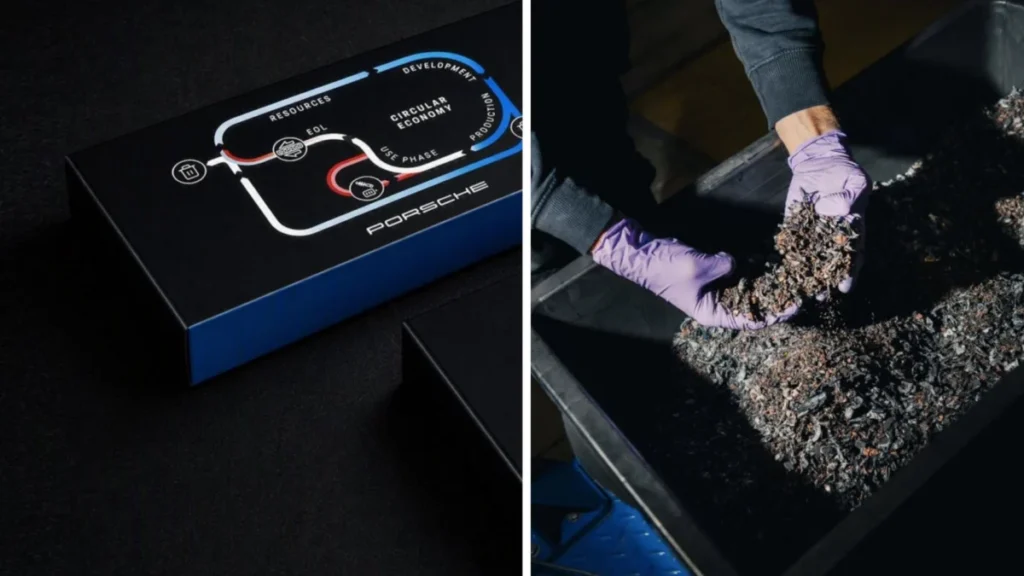
This achievement represents the latest phase in a high-voltage battery recycling pilot project initiated last year. The project’s overarching goal is to establish a robust closed-loop system where valuable raw materials from Porsche’s end-of-life batteries are processed into new materials and subsequently integrated into new battery cells, initially destined for Porsche test vehicles. The current phase is particularly critical as it involves the complete replacement of conventionally sourced primary raw materials with their recycled counterparts in the cathode active material – the crucial component determining a battery’s performance and energy density.
The Innovative Water-Based Recycling Process
At the heart of this breakthrough lies cylib’s innovative water-based recycling process. Unlike traditional pyrometallurgical methods, which often involve high-temperature smelting and can result in material degradation or loss, or some hydrometallurgical approaches that rely on harsh chemicals, cylib’s method offers a more environmentally benign and efficient alternative. Dr. Lilian Schwich, Co-CEO and Co-Founder of cylib, emphasized the efficacy of their technology: "cylib closes the battery recycling loop, from end-of-life batteries to recovered raw materials. The pilot project with Porsche demonstrates that our approach is feasible in practice: valuable raw materials from Porsche batteries at the end of their first life can potentially flow back into new high-performance batteries for Porsche vehicles."
This water-based process is designed to selectively extract and purify the constituent materials with high efficiency, minimizing energy consumption and waste generation. It represents a significant advancement over existing methods, promising higher recovery rates for crucial elements like lithium, which has historically been more challenging to recover effectively. The ability to precisely separate and purify these materials is paramount, as even minor impurities can significantly impact the performance and longevity of new battery cells. Porsche’s rigorous testing regime is specifically aimed at validating that these recycled materials meet the same stringent quality, value, and performance standards as virgin raw materials.
Timeline and Future Projections
The project’s timeline outlines an ambitious path towards full integration of recycled materials into series production:
- "Last year" (circa 2023): Launch of the high-voltage battery recycling pilot project, focusing on recovery and processing of materials.
- Current Phase (2024): Successful production of battery cells using 100% recycled cathode active material; extensive operational testing underway.
- May 2026: Planned implementation of the innovative water-based recycling process for end-of-life high-voltage batteries collected from Porsche Centers across Germany. This marks a critical step towards scaling up the collection and initial processing infrastructure.
- Second Half of 2026: Expectation of further comprehensive results from the ongoing operational tests, which will provide deeper insights into the long-term performance and durability of batteries made with recycled materials.
- 2028: Projected availability of recycled battery raw materials for Porsche and selected partner companies, earmarked for use in series-production battery cell manufacturing. This date signifies the potential transition from pilot project to commercial application.
The insights gleaned from the current pilot project are already being integrated into Porsche’s standard battery disposal procedures, ensuring that best practices for collection and initial handling are established well in advance of the full-scale recycling operation.
The Broader Context: Addressing Critical Mineral Challenges
This initiative by Porsche and cylib arrives at a critical juncture for the global automotive industry, which is rapidly transitioning towards electrification. The widespread adoption of EVs, while crucial for decarbonization efforts, presents significant challenges related to the sourcing and sustainability of raw materials.
- Escalating Demand for Critical Minerals: The production of EV batteries relies heavily on a handful of critical minerals, including lithium, cobalt, nickel, and manganese. Global demand for these materials is projected to skyrocket in the coming decades. For instance, the International Energy Agency (IEA) estimates that lithium demand could increase by over 40 times by 2040 under aggressive climate scenarios, with cobalt and nickel demand increasing by 20-25 times. This surge places immense pressure on mining operations and existing supply chains.
- Geopolitical Supply Chain Risks: The extraction and processing of these critical minerals are often concentrated in a few geographical regions, leading to supply chain vulnerabilities, price volatility, and geopolitical dependencies. For example, a significant portion of the world’s cobalt comes from the Democratic Republic of Congo, raising ethical concerns about labor practices, while lithium production is dominated by a few countries in South America and Australia. Diversifying sourcing through recycling offers a strategic advantage, reducing reliance on external, often unstable, markets.
- Environmental Footprint of Mining: The extraction of virgin raw materials for batteries carries a substantial environmental cost. Mining operations can be energy-intensive, consume vast amounts of water, contribute to land degradation, and generate significant waste. For instance, lithium extraction, particularly from brine, can be highly water-intensive, while nickel and cobalt mining can lead to habitat destruction and pollution. Recycling significantly mitigates these environmental impacts by reducing the need for new mining.
- The Nascent State of Battery Recycling: While battery recycling technologies exist, the industry is still relatively nascent compared to the scale of future demand. Many existing methods struggle with efficiency, particularly for lithium, and often involve energy-intensive processes. The push towards more efficient, environmentally friendly, and economically viable recycling methods is paramount.
Economic and Strategic Implications
The successful implementation of a robust battery recycling loop offers multiple strategic and economic advantages:
- Raw Material Resilience and Independence: By creating a domestic (or European) source of recycled materials, Porsche can reduce its exposure to global supply chain disruptions, price fluctuations, and geopolitical pressures. This enhances its long-term raw material security, a critical factor in maintaining competitive production costs and ensuring continuity of supply.
- Cost Reduction Potential: As recycling technologies mature and scale, the cost of recycled materials could become competitive with, or even lower than, virgin materials, especially as environmental regulations tighten and the societal cost of mining increases. This could contribute to making EVs more affordable in the long run.
- Sustainability and Brand Image: For a premium brand like Porsche, a strong commitment to sustainability is increasingly vital for consumer perception and regulatory compliance. Demonstrating a tangible closed-loop system for batteries enhances its environmental credentials and reinforces its leadership in sustainable luxury mobility.
- Circular Economy Leadership: This project positions Porsche and cylib as frontrunners in establishing a true circular economy for high-value components in the automotive sector, potentially inspiring other manufacturers to follow suit. This aligns with broader European Union directives, such as the new EU Battery Regulation, which mandates minimum recycled content targets for new batteries from 2031 onwards.
Quality Assurance and Performance Standards
A key focus for Porsche is ensuring that recycled raw materials meet its exacting standards for value, quality, and performance. The company’s reputation is built on engineering excellence and superior performance, and any component, regardless of its origin, must uphold these principles. Initial tests have provided positive indications regarding the technical feasibility, but the comprehensive operational testing underway is crucial for validating the long-term durability, safety, and performance characteristics of batteries incorporating these recycled materials. The results expected in the second half of 2026 will be instrumental in informing the decision for potential future application in series-production battery cells.
Looking Ahead: A Sustainable Future for Mobility
The partnership between Porsche and cylib signifies a pivotal moment in the evolution of sustainable mobility. By demonstrating that high-performance battery cells can be produced entirely from recycled materials, they are not only solving a looming raw material challenge but also charting a course for a more environmentally responsible future for the automotive industry. The vision of battery raw materials recycled in Europe flowing back into new high-voltage batteries for Porsche vehicles is no longer a distant aspiration but a tangible goal, with a clear timeline for implementation. This pioneering effort underscores the potential for innovation to transform industrial practices, reduce environmental impact, and build a more resilient and sustainable supply chain for the electric age.