The journey of a 3D-printed part from a printer bed to its final application is rarely a direct one. Additive Manufacturing (AM), while revolutionary in its ability to create complex geometries layer by layer, often leaves components with inherent surface imperfections that necessitate extensive postprocessing and surface finishing. These imperfections, including visible layer lines, residual powder, support material marks, and internal roughness, can significantly impact a part’s performance, durability, and aesthetic appeal. Recognizing this critical gap, the AM industry is continuously developing and refining a diverse array of techniques to bridge the divide between raw printed output and finished, functional components.
The selection of the appropriate postprocessing and surface finishing strategy is not a one-size-fits-all endeavor. It is a complex decision-making process that hinges on a multitude of factors. The base material used for printing—be it a metal alloy, polymer, or ceramic—dictates the compatibility and efficacy of various finishing methods. Furthermore, the intricate geometry of the part, particularly the presence of internal channels, lattice structures, or delicate features, presents unique challenges. The required surface roughness, often a critical parameter for applications ranging from fluid dynamics to biomechanical implants, plays a pivotal role in method selection. Ultimately, the intended end-use of the component—whether it’s for aerospace, medical, automotive, or consumer goods—sets the definitive performance and quality benchmarks that postprocessing must meet.

Currently, the AM landscape benefits from a suite of nine commonly employed postprocessing and surface finishing techniques, each offering distinct advantages and addressing specific challenges. These methods, ranging from abrasive techniques to advanced chemical and thermal processes, are collectively enabling the broader adoption of AM for high-performance applications.
Media Blasting: A Foundational Step for Surface Preparation
Media blasting, encompassing variations such as bead, sand, or soda blasting, stands as a foundational step in the postprocessing workflow for a vast majority of metal and polymer AM parts. This technique utilizes pressurized media to effectively strip away loose powder, a common residue from powder bed fusion processes, and to level minor surface imperfections. The outcome is a uniform, matte finish that prepares the part for subsequent treatments or for direct use in less demanding applications. The speed and cost-effectiveness of media blasting make it an attractive initial treatment.
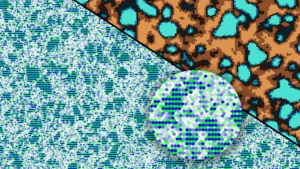
A noteworthy advancement in this domain comes from materials manufacturer Himed, which has pioneered a hydroxyapatite (HA) surface finishing process specifically for 3D-printed medical implants. Hydroxyapatite, a bioceramic compound naturally found in bone and teeth, serves a dual purpose: as an effective abrasive for surface preparation and, crucially, as a biocompatible coating that promotes osseointegration—the process by which a medical implant fuses with living bone tissue. This dual-action approach, as demonstrated by Himed, not only refines the surface of 3D-printed implants but also enhances their biological compatibility, a critical consideration for orthopedic and dental applications. The SEM (Scanning Electron Microscope) images provided by Himed clearly illustrate the transformative effect of their HA abrasive treatment on a 3D-printed Ti64 lattice structure. Before the treatment, the lattice exhibits loosely adherent material beads, an artifact of the printing process. Post-treatment, these beads are entirely removed, and the surface displays a uniform, textured topography, signifying a significant improvement in surface quality and readiness for potential biological interaction. This innovation underscores the growing trend of tailoring postprocessing techniques to the specific demands of high-value AM applications, particularly in the medical field where surface integrity and biocompatibility are paramount.

Abrasive Flow Machining (AFM): Precision Finishing for Internal Geometries
Abrasive Flow Machining (AFM) offers a sophisticated solution for achieving smooth finishes, particularly within intricate internal passages. This process involves pumping a viscous, abrasive-laden putty back and forth through the component’s internal channels under controlled pressure. The abrasive media effectively deburrs, polishes, and radiuses internal features, making it a highly sought-after method for applications like fuel nozzles, manifolds, and hydraulic blocks, where smooth internal flow paths are critical for efficiency and performance. The ability of AFM to access and finish surfaces that are otherwise inaccessible to conventional machining makes it an indispensable tool in the AM postprocessing arsenal.
Tumbling and Vibratory Finishing: Batch Processing for Efficiency
Tumbling and vibratory finishing techniques provide efficient solutions for batch processing of small to medium-sized parts. In these methods, components are placed in a vibratory bowl or a rotating barrel along with abrasive media, water, and a compound. The constant agitation over hours, or even days, works to break down sharp edges, smooth surfaces, and remove minor imperfections.
Manufacturers like Mass Finishing Inc. (MFI) are at the forefront of developing advanced solutions in this area. Their HZ-6 centrifugal barrel tumbler finishing machine exemplifies a modern approach to mass finishing for AM components. This machine boasts a compact footprint and a six-liter capacity, enabling rapid, high-polished finishes on additive components. MFI is particularly focused on centrifugal barrel tumbling as a superior alternative to traditional vibratory finishing, offering advantages in speed and reduced noise levels. The centrifugal barrel tumbling process operates on a principle similar to a Ferris wheel, where a 1:1 ratio of barrel rotation to turret rotation generates significantly higher forces compared to vibratory systems. This intensified action accelerates the finishing process, allowing for quicker turnaround times. The loading process involves filling one or all four chambers of the tumbler to an estimated 50-80% capacity with a combination of components, water, compound, and media, optimizing the mass finishing action for a wide range of AM parts. This focus on enhancing efficiency and effectiveness in batch processing highlights the industry’s drive to scale AM production by streamlining the postprocessing stages.

Manual Grinding, Sanding, and Polishing: The Enduring Human Touch
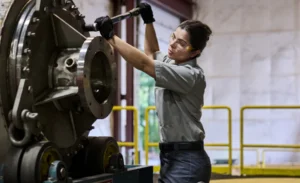
Despite the advent of advanced automated techniques, manual grinding, sanding, and polishing remain crucial processes in AM postprocessing. These hands-on methods are indispensable for addressing large structural parts, initial prototypes, and particularly for meticulously removing support witness marks—the indentations left behind by support structures during the printing process. In many low-volume metal AM workflows, manual finishing continues to represent a significant portion of the overall cost due to the labor-intensive nature of these operations. While efforts are underway to automate more of these tasks, the precision and adaptability of human intervention are still vital for achieving certain quality standards.
Chemical and Electrochemical Polishing: Dissolving Imperfections for Smoothness
Chemical and electrochemical polishing offer advanced methods for achieving exceptionally smooth surfaces, particularly beneficial for complex internal geometries. These processes involve submerging parts in specialized chemical solutions that selectively dissolve the microscopic peaks of the surface while leaving the valleys relatively untouched. This targeted dissolution results in a significantly smoother finish.
The advantage of these methods lies in their ability to treat both external and internal surfaces simultaneously, making them ideal for intricate structures such as lattice designs, conformal cooling channels found in tooling, and complex medical implants. Holdson, a provider of electrochemical solutions, has introduced its Electroform system, an acid-free electrochemical polishing solution. This innovation is particularly significant as it offers a sustainable and environmentally conscious alternative to traditional chemical polishing methods, which often rely on hazardous acids. The Electroform system’s recyclable, acid-free electrolytes not only mitigate environmental concerns but also enable repeatable, high-quality finishes across a diverse range of materials commonly used in AM, including various metals and alloys. This development signifies a shift towards greener and safer postprocessing practices within the industry, aligning with broader sustainability goals.

Laser Polishing: A Non-Contact, High-Precision Approach
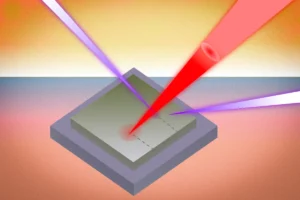
Laser polishing represents a cutting-edge, non-contact surface finishing technique. In this process, a defocused laser beam is used to remelt a thin superficial layer of the material. Surface tension then acts upon this molten layer, drawing it together and smoothing out microscopic asperities, or surface irregularities. The primary advantages of laser polishing are its lack of consumables, elimination of media that can become trapped in internal features, and its high degree of controllability. This method is particularly well-suited for small, high-value components, such as those used in dental and aerospace applications, where precision and surface quality are paramount and the cost of laser equipment is justified by the value of the end product.
CNC Machining: Integrating Additive and Subtractive for Ultimate Precision
While additive manufacturing builds parts layer by layer, Computer Numerical Control (CNC) machining represents a subtractive manufacturing process that carves material away to achieve precise dimensions and surface finishes. In the context of AM, CNC machining is often employed as a crucial postprocessing step for critical mating surfaces, bearing journals, sealing faces, and any features requiring extremely tight tolerances.
The synergy between additive and subtractive manufacturing is becoming increasingly evident with the rise of hybrid manufacturing machines. These advanced systems integrate directed energy deposition (DED) or laser powder bed fusion (LPBF)—common metal AM processes—with milling capabilities within a single setup. This integration allows for parts to be additively built to near-net shape and then precisely machined in the same operational cycle, significantly reducing lead times and eliminating the need for inter-process handling. Addman Advanced Manufacturing Solutions exemplifies this trend by combining its metal AM operations with precision CNC machining. Their process involves additively manufacturing compact metal parts using LPBF, followed by finishing using an array of in-house CNC machining options. This hybrid approach ensures that components achieve the highest levels of dimensional accuracy and surface quality required for demanding applications.

Vapor Smoothing: Enhancing Surface Finish with Solvent Vapor
Vapor smoothing is a process that utilizes solvent vapor to refine the surface finish of 3D-printed parts. Clean, printed components are placed within an airtight vessel containing a specific solvent. The vessel is then heated to a controlled temperature, generating a vapor that permeates the surface of the parts. Over a period of several hours, this vapor selectively melts and smooths the exterior surfaces, effectively reducing layer lines and improving overall smoothness. Automated vapor smoothing systems are becoming increasingly popular for their consistency and efficiency, though the process can also be performed in simpler sealed containers. This method is particularly effective for polymer parts, providing a significant aesthetic and functional improvement.
Coatings and Plating: Enhancing Properties and Aesthetics
Coatings and plating represent the final frontier in postprocessing, offering a means to enhance the functional properties and aesthetic appearance of AM parts after mechanical preparation. Techniques such as anodizing, physical vapor deposition (PVD), electroless nickel plating, and powder coating can be applied to improve wear resistance, corrosion resistance, electrical conductivity, or simply to provide a uniform, appealing cosmetic finish.
A compelling example of innovation in this area is the UV powder coating process developed collaboratively by Streamline 3D and powder coating supplier Keyland Polymer. This specialized UV powder coating is formulated to melt and flow at a lower temperature, approximately 220°F (104°C). This low-temperature curing is crucial for AM parts, many of which are sensitive to excessive heat. Following the melting and flowing stage, the coating is immediately cured by exposure to UV light, significantly reducing the overall heat exposure to the substrate. The entire process takes a mere eight minutes, delivering vibrant and consistent colors with a low scrap rate. Furthermore, its scalability makes it suitable for both low-volume and mass production of AM components. This advancement highlights how tailored coating solutions can significantly enhance the marketability and performance of 3D-printed products, opening up new aesthetic possibilities and functional improvements.

The Evolving Landscape of AM Postprocessing
The continuous evolution of postprocessing and surface finishing techniques is intrinsically linked to the maturation of the additive manufacturing industry. As AM technologies enable the creation of increasingly complex and functional parts, the demand for sophisticated and efficient postprocessing solutions intensifies. Industry publications and platforms, such as Additive Manufacturing Media, play a vital role in disseminating knowledge about these advancements. Their coverage, including resources like the "AM Radio" podcast episode on postprocessing and the "New to AM?" microsite’s "AM Workflow" section, provides crucial insights into the necessity and methodologies of postprocessing. These resources serve as invaluable guides for both newcomers and seasoned professionals navigating the intricate world of 3D printing, emphasizing that a robust postprocessing strategy is not an afterthought but an integral component of a successful AM workflow. The ongoing research and development in this sector are poised to further unlock the full potential of additive manufacturing, driving innovation across a wide spectrum of industries.