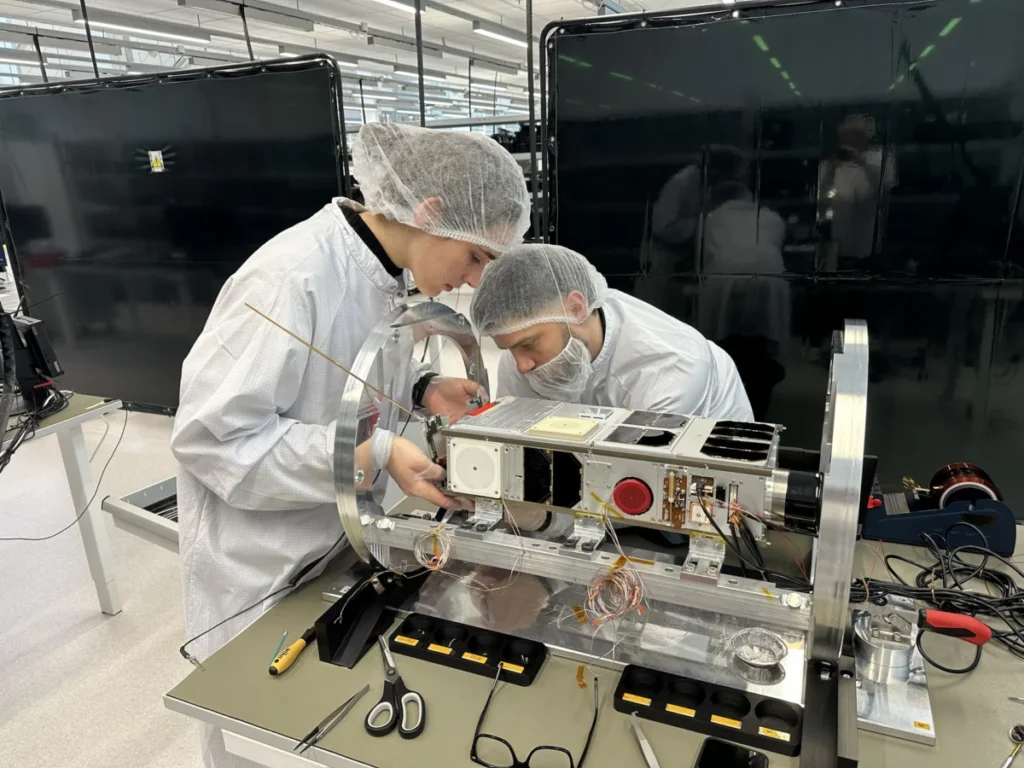
The GOMX-5 CubeSat mission, a collaborative effort supported by the European Space Agency (ESA), is on track for its launch in October 2026. This miniature satellite, developed by GomSpace, represents a significant step forward in in-orbit demonstration, aiming to validate critical technologies for enhanced maritime awareness and automated collision avoidance, while simultaneously advancing ESA’s ambitious Zero Debris agenda. Integrated into its deployer and undergoing final testing in a laboratory setting, the GOMX-5 mission embodies years of development and technological refinement, building upon the foundational principles of CubeSat design.
The Genesis of CubeSats and the GOMX Program
The concept of CubeSats, standardized, cube-shaped satellite units typically measuring 10x10x10 centimeters, emerged in the late 1990s as a means to democratize space access for universities and research institutions. Their small size, modularity, and relatively low cost have enabled a surge in small satellite development and deployment, fostering innovation in various fields of space science and technology. The European Space Agency has actively supported this evolution through programs like the General Support Technology Programme (GSTP), which provides a crucial platform for testing and validating cutting-edge space technologies in a real-world operational environment.
The GOMX program, initiated by ESA, serves as a testament to this commitment. It has facilitated the development and testing of multiple CubeSat missions, each building upon the successes and lessons learned from its predecessors. GOMX-1, launched in 2015, was one of the earliest GOMX missions to validate several new technologies. GOMX-4, comprising two satellites, was launched in 2018 and further pushed the boundaries of in-orbit demonstrations. GOMX-5, now poised for its 2026 launch, represents the latest iteration, incorporating advancements and addressing contemporary challenges in space operations.
GOMX-5: A Multifaceted Technological Showcase
At its core, GOMX-5 is designed to be a comprehensive in-orbit laboratory. The mission’s primary objectives revolve around validating a suite of technologies that have the potential to significantly impact both terrestrial and space-based operations.
Enhanced Maritime Awareness: One of the key technological demonstrations on board GOMX-5 is an advanced maritime awareness detection system. This system is expected to leverage novel sensor technologies and data processing techniques to improve the identification, tracking, and monitoring of vessels at sea. In an era where maritime security, environmental protection, and efficient shipping are paramount, enhanced awareness can provide invaluable data for coast guards, naval forces, environmental agencies, and shipping companies. This could include more accurate detection of illegal fishing, improved search and rescue capabilities, and better monitoring of maritime traffic to prevent collisions and optimize routes. The data gathered could feed into global maritime surveillance networks, providing a more comprehensive and real-time picture of activities on the world’s oceans.
Automated Collision Avoidance: Space is becoming increasingly crowded. The proliferation of satellites, both large and small, coupled with the growing amount of space debris, presents a significant challenge to the long-term sustainability of space activities. GOMX-5 will test an automated collision avoidance system, a critical technology for ensuring the safety of future space missions. This system aims to autonomously detect potential collision threats with other spacecraft or debris and execute maneuvers to avoid them. The success of such a system would be a major step towards mitigating the risk of catastrophic collisions in orbit, which could generate even more debris, creating a cascading effect known as the Kessler Syndrome. The validation of this technology on GOMX-5 could pave the way for more robust and reliable autonomous navigation systems for a wide range of future satellites.
Advancing Zero Debris Aspirations: ESA’s Zero Debris initiative is a bold and necessary undertaking to ensure the long-term viability of space exploration and utilization. The initiative aims to prevent the generation of new space debris and to actively remove existing debris from orbit. GOMX-5 will contribute to this vision by testing technologies that align with these goals. While the specific debris mitigation technologies being tested are not detailed in the initial announcement, it is logical to infer that they could include advanced deorbiting mechanisms, improved tracking capabilities for identifying potential debris, or technologies that reduce the likelihood of a satellite becoming debris at the end of its operational life. The successful demonstration of these technologies on GOMX-5 will provide crucial data and operational experience that will inform the development and implementation of ESA’s broader Zero Debris strategy.
The Role of GomSpace and ESA’s Support
GomSpace, a leading European company specializing in small satellite solutions, is the developer of the GOMX-5 CubeSat. Their expertise in designing, building, and integrating small satellite systems has been instrumental in bringing ambitious missions like GOMX-5 to fruition. The company’s track record in delivering reliable and innovative CubeSat solutions makes them an ideal partner for ESA’s in-orbit demonstration programs.
ESA’s General Support Technology Programme (GSTP) plays a vital role in fostering innovation within the European space sector. By providing funding, technical expertise, and access to testing facilities, GSTP enables companies like GomSpace to mature and validate their technologies, reducing the technical and financial risks associated with developing new space hardware. The program’s focus on demonstrating technologies in an operational space environment is crucial for building confidence and paving the way for their future commercial or institutional adoption.
The Journey to Launch: A Chronology of Development
While the precise timeline of GOMX-5’s development is not fully public, the process typically involves several key stages:
- Conceptualization and Design (Early 2020s): Following the success of previous GOMX missions, ESA and GomSpace would have identified key technological areas for future demonstration, leading to the initial design of GOMX-5.
- Technology Development and Prototyping (Mid-2020s): The individual technologies slated for demonstration would undergo rigorous development and testing on the ground. Prototypes of the CubeSat and its subsystems would be built and integrated.
- System Integration and Testing (2024-2026): The various components of the GOMX-5 CubeSat are integrated into a functional satellite. This is followed by extensive testing in laboratory environments to simulate the harsh conditions of space, including thermal vacuum testing, vibration testing, and electromagnetic compatibility testing. The satellite is also integrated into its deployer, the mechanism that will release it into orbit.
- Pre-Launch Preparations (Leading up to October 2026): Once testing is complete and the satellite is deemed flight-ready, it will be transported to the launch site. Final checks and preparations will be conducted before it is loaded onto the launch vehicle.
- Launch (October 2026): The GOMX-5 CubeSat will be deployed into its intended orbit.
- In-Orbit Demonstration (Post-Launch): Following successful deployment, the mission team will begin operating the satellite and collecting data from the onboard instruments, validating the performance of the new technologies.
Supporting Data and the Growing CubeSat Ecosystem
The global small satellite market, which includes CubeSats, is experiencing significant growth. Projections indicate a substantial increase in the number of small satellite launches in the coming years. For instance, various market research reports forecast the small satellite market to grow from tens of billions of dollars to well over a hundred billion dollars by the end of the decade. This growth is driven by declining launch costs, advancements in miniaturized technology, and the increasing demand for Earth observation, communication, and scientific data.
CubeSats, due to their cost-effectiveness, are at the forefront of this expansion. They enable a wider range of actors, including smaller nations, universities, and private companies, to participate in space activities. The GOMX program, by validating advanced technologies on these platforms, directly contributes to the maturity and reliability of the CubeSat ecosystem, making them increasingly viable for more demanding applications.
Official Statements and Future Implications
While specific quotes from ESA or GomSpace officials were not included in the provided snippet, the announcement of the GOMX-5 mission’s readiness for launch implies a high level of confidence in its technical readiness and potential impact. Based on the mission’s objectives, it is logical to infer that ESA officials would emphasize the mission’s contribution to European space capabilities, its role in promoting a sustainable space environment, and its potential to foster economic growth through the development of new space technologies.
Similarly, GomSpace would likely highlight the mission as a significant achievement, showcasing their ability to deliver complex technological solutions for critical space applications. The successful demonstration of their technologies on GOMX-5 would undoubtedly enhance their reputation and open doors for future collaborations and commercial ventures.
The implications of GOMX-5 are far-reaching:
- Safer Seas: Enhanced maritime awareness can lead to improved safety, security, and environmental protection of our oceans. This directly benefits coastal communities, maritime industries, and global efforts to combat illegal activities and pollution.
- Cleaner Orbits: The automated collision avoidance system and contributions to the Zero Debris initiative are crucial for safeguarding the space environment. As space becomes more congested, reliable collision avoidance is no longer a luxury but a necessity for the continued operation of satellites and the protection of vital space-based services.
- Technological Advancement: The validation of new technologies on GOMX-5 will not only benefit the specific applications it targets but can also spur further innovation across the entire space sector. These validated technologies can be incorporated into larger satellite missions, commercial constellations, and future space exploration endeavors.
- European Leadership: Missions like GOMX-5 reinforce Europe’s position as a leader in space technology development and sustainable space practices. By investing in and demonstrating cutting-edge solutions, ESA and its industry partners are shaping the future of space.
The GOMX-5 mission, with its October 2026 launch date, stands as a significant milestone in the ongoing evolution of space technology. Its success will be a testament to the power of collaboration, innovation, and a commitment to building a safer and more sustainable future, both on Earth and in orbit.