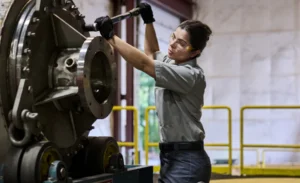
BIRMINGHAM, Mich. – Manufacturers striving to diversify their production workforce by attracting more women may need to look beyond traditional recruiting strategies and workplace culture initiatives, considering even fundamental aspects such as the clothing worn on the factory floor. This seemingly minor detail can subtly reflect an industry historically dominated by men, posing an often-unacknowledged hurdle for women considering careers in manufacturing.
The issue of industrial workwear, predominantly designed for male physiques, has long been a silent testament to the gender imbalance in manufacturing. While women now constitute approximately 28.6% of the U.S. manufacturing employment, according to data from the Bureau of Labor Statistics, industrial apparel has historically been conceived with male workers in mind, with women’s garments often being mere adaptations of existing men’s designs. This approach frequently results in ill-fitting, uncomfortable, and potentially unsafe attire for female employees, inadvertently signaling a lack of consideration for their specific needs.
The Evolving Landscape of Manufacturing Employment
The manufacturing sector, once overwhelmingly male, has seen a gradual but significant increase in female participation over the past few decades. In 1970, women made up only about 20% of the manufacturing workforce. This figure has steadily climbed, reflecting broader societal changes and targeted efforts by companies to promote diversity and inclusion. However, the path to true gender parity remains challenging.
A recent manufacturing workforce study highlighted a "discovery gap" among potential employees. The research revealed that only 23% of women surveyed intentionally chose a manufacturing career, a stark contrast to 35% of men. This disparity points to underlying barriers that dissuade women from entering the industry. Key obstacles identified by women included persistent gender stereotypes and biases, concerns about work-life balance, a general lack of awareness regarding the diverse range of manufacturing jobs available, and workplace culture. Workwear, though less frequently discussed, represents a tangible and pervasive part of that culture and environment.
UniFirst Leads the Charge with Purpose-Designed Workwear
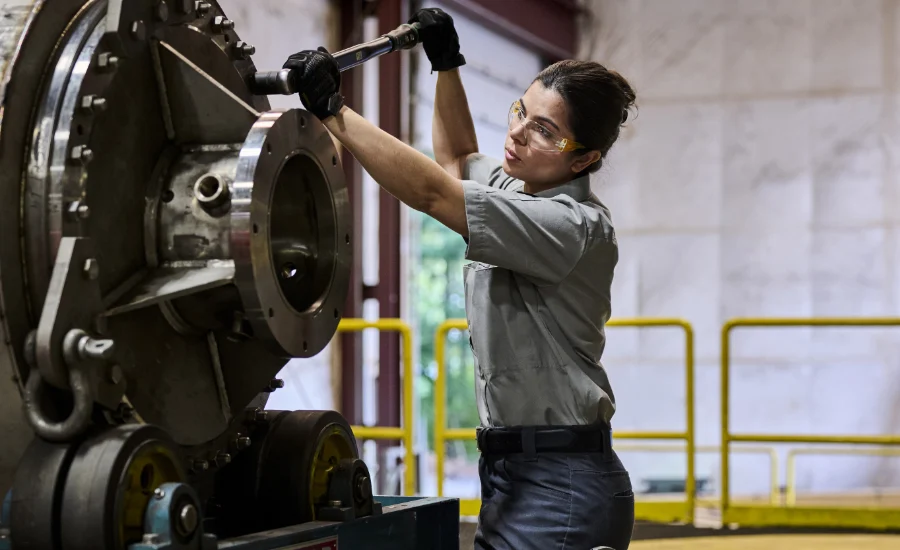
Recognizing this critical, yet often overlooked, aspect of workplace inclusion, UniFirst has emerged as a key supplier attempting to bridge this long-standing mismatch. The company recently unveiled a new workwear collection specifically engineered to address women’s fit and movement requirements. Unlike previous industry practices of modifying men’s designs, UniFirst states that its new women’s garments were developed from the ground up, with female anatomy and typical movements in industrial settings as the primary design considerations.
The collection features include waist shaping, contoured mid-rise waistbands, adjusted hem lengths, lay-flat pockets, and streamlined cargo storage. These details are not merely aesthetic; they are functional improvements aimed at enhancing comfort, safety, and efficiency for women on the factory floor. Leigh-Anne Zavalick, product manager at UniFirst, articulated the necessity of this shift: "Women have long been an essential part of the workforce, but traditional workwear hasn’t always been designed with their specific needs in mind." Her statement underscores the systemic nature of the problem and the intentionality required for its solution.
Historical Context: A Legacy of Male-Centric Design
For much of the 20th century, manufacturing plants were overwhelmingly populated by men. The uniforms, safety gear, and general work attire evolved to suit a male demographic. When women began entering the workforce in larger numbers, particularly during wartime efforts, the immediate solution was often to provide them with smaller versions of men’s clothing. This expediency, born of necessity, unfortunately became an entrenched practice.
Over time, this meant that women in manufacturing were often forced to wear ill-fitting garments that could be cumbersome, uncomfortable, and even hazardous. Loose fabric could snag on machinery, oversized shoulders could restrict movement, and pants not designed for a woman’s hip-to-waist ratio could cause discomfort and distraction throughout a shift. Beyond the practicalities, wearing clothing that clearly wasn’t made for them could also contribute to a sense of not belonging, subtly reinforcing the perception that manufacturing was still fundamentally a man’s world. This historical context illuminates why a dedicated design approach for women’s workwear is not just an upgrade, but a fundamental correction.

Ergonomics and Mobility: The "Always U" Collection
The initiative extends beyond gender-specific fit. UniFirst’s broader "Always U" collection integrates advanced features designed to accommodate the dynamic physical movements inherent in manufacturing and other industrial jobs. These innovations aim to provide greater mobility and flexibility, allowing workers to bend, reach, lift, and move freely and comfortably throughout their shifts. This focus on ergonomics is crucial for all industrial workers, regardless of gender, as it directly impacts productivity, reduces fatigue, and minimizes the risk of work-related injuries.
Modern manufacturing environments often involve repetitive tasks, intricate assembly, and the operation of complex machinery. Clothing that hinders natural movement can lead to inefficient workflows and increased strain on the body. By designing garments that move with the wearer, companies can contribute to a healthier, more productive workforce. The combination of gender-specific design and universal ergonomic improvements signals a holistic approach to employee well-being and operational efficiency.
Broader Implications for Talent Acquisition and Retention
The issue of appropriate workwear mirrors a broader challenge confronting manufacturers as they strive to expand their talent pools in an increasingly competitive labor market. The manufacturing sector is currently facing significant labor shortages, exacerbated by an aging workforce and a skills gap. Attracting diverse talent, including a greater proportion of women, is not merely a social objective but an economic imperative for sustained growth and innovation.
Dawn Fichter, owner of Tools 4 Hiring, a firm specializing in recruitment for the manufacturing sector, recently emphasized this point on the ASSEMBLY Audible podcast. She highlighted that women considering manufacturing careers are often influenced by whether they see other women already working on production floors and, crucially, whether employers present an environment in which they can envision themselves thriving. Ill-fitting, male-centric workwear can inadvertently send a message that the workplace is not fully prepared or welcoming to women, making it harder for potential female recruits to "see themselves" in that role.
The impact of such details extends beyond initial recruitment. A comfortable, safe, and inclusive work environment also plays a vital role in employee retention. When employees feel valued and accommodated, they are more likely to remain with a company. Providing purpose-designed workwear for women signals a company’s commitment to their comfort and safety, fostering a sense of belonging and respect that can significantly improve job satisfaction and reduce turnover.
Analysis of Impact: Safety, Productivity, and Inclusion
The implications of well-designed workwear are multi-faceted:
- Enhanced Safety: Properly fitting garments reduce the risk of accidents. Loose clothing can get caught in machinery, while restrictive clothing can impede emergency responses. Women’s bodies have different proportions, and clothing tailored to these differences significantly enhances safety in high-risk industrial environments.
- Increased Productivity and Comfort: When workers are comfortable, they can focus better on their tasks. Ill-fitting clothes can cause constant distraction, chafing, or restricted movement, leading to reduced efficiency and increased fatigue. Comfortable, functional workwear allows employees to perform at their best throughout their shift.
- Fostering Inclusion and Retention: By addressing a previously overlooked aspect of the workplace, companies demonstrate a tangible commitment to diversity and inclusion. This helps dismantle the perception of manufacturing as an exclusively male domain, making the industry more attractive to women and encouraging them to pursue and remain in these careers. It creates a more equitable and welcoming environment.
- Employer Branding and Attractiveness: Companies that invest in thoughtful, inclusive solutions like gender-specific workwear enhance their reputation as progressive and employee-centric organizations. This can become a significant differentiator in the competitive battle for talent, drawing in a broader and more diverse pool of skilled workers.
As manufacturers increasingly compete for a shrinking pool of skilled workers, adapting the workplace to accommodate a more diverse production workforce becomes paramount. This adaptation must extend beyond superficial hiring practices to encompass a holistic consideration of the employee experience. It involves flexible work schedules, fostering an inclusive and supportive workplace culture, and, as UniFirst’s initiative highlights, even the fundamental clothing employees are expected to wear.
The introduction of purpose-designed women’s workwear is more than just a product launch; it represents a significant cultural shift within the manufacturing industry. It acknowledges that true inclusion requires attention to detail, recognizing and addressing the specific needs of all employees. As more companies embrace this comprehensive approach, the manufacturing sector stands to become not only more diverse but also safer, more productive, and more innovative for the future.