Tokyo-based Toyota Motor Corp. is reportedly contemplating a monumental investment into modernizing its vast manufacturing network, an initiative that could entail the deployment of approximately 400,000 robots and an annual expenditure of about $6.4 billion, commencing in 2028. This ambitious projection, revealed by Reuters, underscores a significant strategic pivot for the world’s largest automaker, signaling a profound commitment to advanced automation across its global operations.
Scope and Scale of the Proposed Modernization
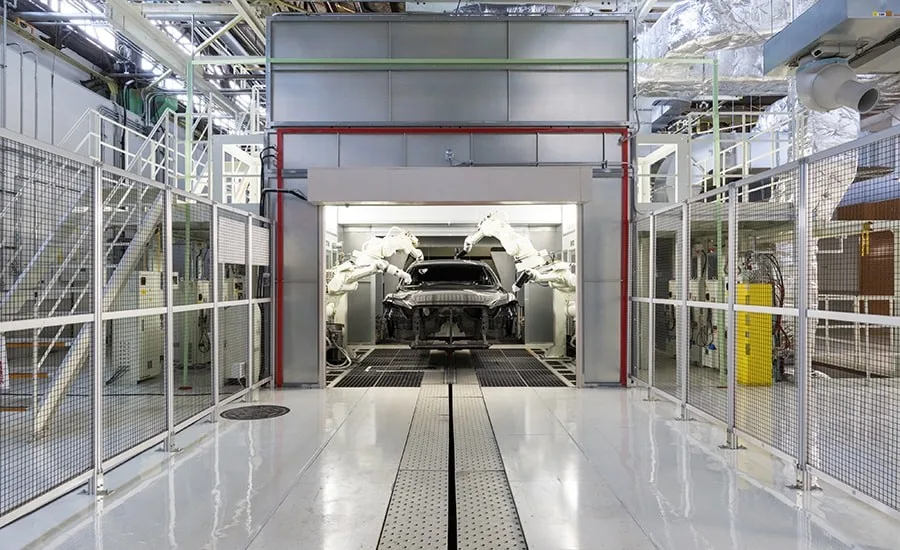
The estimated investment extends beyond Toyota’s direct manufacturing facilities, encompassing its extensive network of group companies and major suppliers. This holistic approach aims to integrate cutting-edge robotics throughout the entire production ecosystem, from raw material processing to final assembly. The proposed 400,000 robots would include a diverse mix of both replacements for existing, often older, equipment and entirely new installations designed to enhance capabilities and capacity. Crucially, the report indicates that the deployment would feature a blend of humanoid and non-humanoid robots, reflecting a comprehensive strategy to address various manufacturing tasks and challenges.
While the figures are substantial, Toyota has not yet formally committed to this investment, nor has it specified the duration of the potential spending beyond the initial 2028 start date. The automaker recently presented these estimates to investors earlier this month, indicating that the plan is still in its evaluative stages as the company weighs the extensive expansion of automation across its diverse manufacturing operations worldwide. The potential investment is envisioned to cover a broad spectrum of automation technologies, including traditional industrial robots for heavy lifting and repetitive tasks, sophisticated automated material handling systems to streamline logistics, and future applications that foster advanced collaboration between human workers and robots on the factory floor.
The Broader Context: Automotive Industry’s Automation Imperative
The automotive industry has historically been at the vanguard of industrial automation, dating back to Henry Ford’s revolutionary assembly lines and the introduction of the first industrial robot, Unimate, at General Motors in the early 1960s. Today, this drive towards automation is intensifying, propelled by a confluence of economic, demographic, and technological pressures. Automakers globally are increasingly turning to robotics and advanced automation to mitigate persistent labor shortages, revitalize aging factory infrastructure, and optimize production costs in an intensely competitive market.
Global manufacturing sectors, particularly in developed economies, are grappling with acute labor shortages, a demographic shift characterized by aging workforces, and a declining interest among younger generations in traditional factory roles. The International Federation of Robotics (IFR) consistently highlights the automotive industry as the largest adopter of industrial robots, underscoring its proactive stance in mitigating these labor market dynamics. Beyond personnel scarcity, the escalating costs of production, coupled with the imperative for flawless quality control in increasingly complex vehicles, push manufacturers towards automated solutions. Furthermore, the need to revitalize aging factory infrastructure, much of which dates back to the mid-20th century, presents an opportunity to integrate state-of-the-art robotic systems that offer greater precision, flexibility, and operational efficiency than their predecessors. This strategic reorientation is not merely about replacing human labor but about augmenting human capabilities, creating safer working environments, and enabling production lines to adapt rapidly to evolving market demands and technological advancements, such as the transition to electric vehicles and software-defined architectures.
Evolution of Robotics in Manufacturing
The landscape of industrial robotics has undergone a dramatic transformation over the past few decades. Early industrial robots were typically large, caged machines designed for dangerous or monotonous tasks like welding and painting. Their integration was often rigid, requiring significant retooling for new models. However, advancements in sensor technology, artificial intelligence, machine learning, and computational power have ushered in a new era of robotics.
Today, collaborative robots, or cobots, are becoming increasingly common. These smaller, more flexible robots are designed to work safely alongside humans, assisting with tasks that require precision, endurance, or repetitive motion, thereby improving ergonomics and productivity. The emergence of humanoid robots, once confined to science fiction, is now a tangible reality, with companies like Boston Dynamics developing agile, bipedal robots capable of performing complex manipulations and navigating unstructured environments. Toyota’s plan to integrate both humanoid and non-humanoid robots suggests a sophisticated, multi-faceted approach, leveraging the strengths of each type for specific applications. Non-humanoid robots, such as robotic arms, automated guided vehicles (AGVs), and autonomous mobile robots (AMRs), excel in specific, high-volume tasks and material transport. Humanoid robots, with their dexterity and ability to interact with human-designed tools and environments, could address tasks traditionally considered too complex or adaptable for conventional industrial robots, bridging the gap between fully automated and human-centric processes.
Toyota’s Strategic Vision and the Toyota Production System (TPS)

For a company synonymous with lean manufacturing and the revolutionary Toyota Production System (TPS), this proposed investment marks a significant evolution rather than a departure from its core principles. TPS, with its emphasis on "Jidoka" (automation with a human touch) and "Just-in-Time" production, has always sought to optimize efficiency, eliminate waste, and empower workers. The next generation of automation, particularly collaborative robotics and AI-driven systems, can be seen as an extension of Jidoka, allowing machines to perform more complex tasks and make smarter decisions, while still requiring human oversight and problem-solving.
Toyota’s long-standing commitment to continuous improvement (Kaizen) aligns perfectly with the iterative nature of integrating advanced robotics. The company has a history of pioneering automation, including developing its own specialized robots for various manufacturing processes. This new wave of investment is likely aimed at future-proofing its manufacturing capabilities against global economic fluctuations, geopolitical risks affecting supply chains, and the accelerating pace of technological change within the automotive industry, particularly the shift towards electric vehicles (EVs) and autonomous driving. The agility provided by advanced robotics can enable Toyota to rapidly reconfigure production lines, adapt to new product demands, and maintain its competitive edge in a rapidly transforming automotive landscape.
The Competitive Landscape and Industry Trends
Toyota’s contemplation of such a substantial robotics overhaul arrives amidst a global race among automakers to dominate the future of manufacturing. Its plans are mirrored by similar ambitious initiatives from competitors. Hyundai Motor Group, a significant player in the automotive and robotics sectors (owing to its acquisition of Boston Dynamics), has explicitly stated its intention to deploy humanoid robots at its manufacturing plant in Georgia, USA, beginning in 2028 – the same year Toyota’s annual investment is slated to begin. This parallel timeline highlights a critical industry convergence towards advanced robotics as a cornerstone of future production strategies.
Other major automotive players, including Volkswagen, General Motors, and Tesla, are also heavily investing in automation, albeit with varying approaches. Tesla, for instance, has been vocal about its pursuit of a "lights-out" factory, though achieving full automation without human intervention has proven challenging. The strategic decision by both Toyota and Hyundai to target 2028 for significant robot deployment suggests a shared understanding of market dynamics, technological readiness, and the urgent need to address evolving manufacturing challenges. This synchronized push could also spur further innovation in the robotics industry, leading to more sophisticated, cost-effective, and versatile robotic solutions for a broader range of industrial applications.
Potential Implications and Challenges
The implications of such a massive investment by Toyota are far-reaching. Economically, it could lead to significant improvements in productivity, reductions in long-term operational costs, and enhanced quality control, ultimately benefiting consumers through more reliable and potentially more affordable vehicles. However, the social implications, particularly concerning the workforce, warrant careful consideration. While automation can create new, higher-skilled jobs in robot programming, maintenance, and oversight, it also poses questions about potential job displacement for those performing repetitive manual tasks. Toyota, known for its strong corporate culture and commitment to its employees, would likely implement comprehensive re-skilling and training programs to transition its workforce into these new roles.
Technologically, this investment will push the boundaries of robotic capabilities, accelerating the development of more intelligent, adaptable, and collaborative machines. It could also lead to advancements in AI, sensor fusion, and material science, as robots become more integrated into complex manufacturing processes.
However, the path to such extensive automation is not without its challenges. The initial capital outlay of $6.4 billion annually is immense. The complexity of integrating 400,000 robots, especially a mix of humanoid and non-humanoid types, across a global network of factories and suppliers, presents significant logistical and technical hurdles. Cybersecurity will become an even greater concern as interconnected robotic systems become central to production. Furthermore, maintaining and updating such a vast robotic fleet will require a new level of technical expertise and infrastructure.
Analyst Perspectives and Long-Term Outlook
Industry analysts generally view such strategic investments in automation as essential for long-term competitiveness in the automotive sector. They project that while the upfront costs are high, the efficiency gains, quality improvements, and resilience against labor market fluctuations will yield substantial returns. Analysts also emphasize the importance of a phased implementation and rigorous testing to ensure seamless integration and avoid disruptions to production. The blend of robot types, particularly the inclusion of humanoids, is seen as a forward-thinking approach that acknowledges the varied demands of modern manufacturing and the potential for greater flexibility in tasks traditionally performed by humans.
As the automotive industry stands on the cusp of an era defined by electric vehicles, autonomous driving, and connected technologies, advanced manufacturing capabilities will be paramount. Toyota’s contemplation of this substantial robotics overhaul signals its intent not just to participate in this future but to lead it. The estimated $6.4 billion annual investment and the deployment of 400,000 robots beginning in 2028 represent a vision for a highly automated, efficient, and resilient global manufacturing enterprise, setting a new benchmark for industrial innovation and productivity in the 21st century.