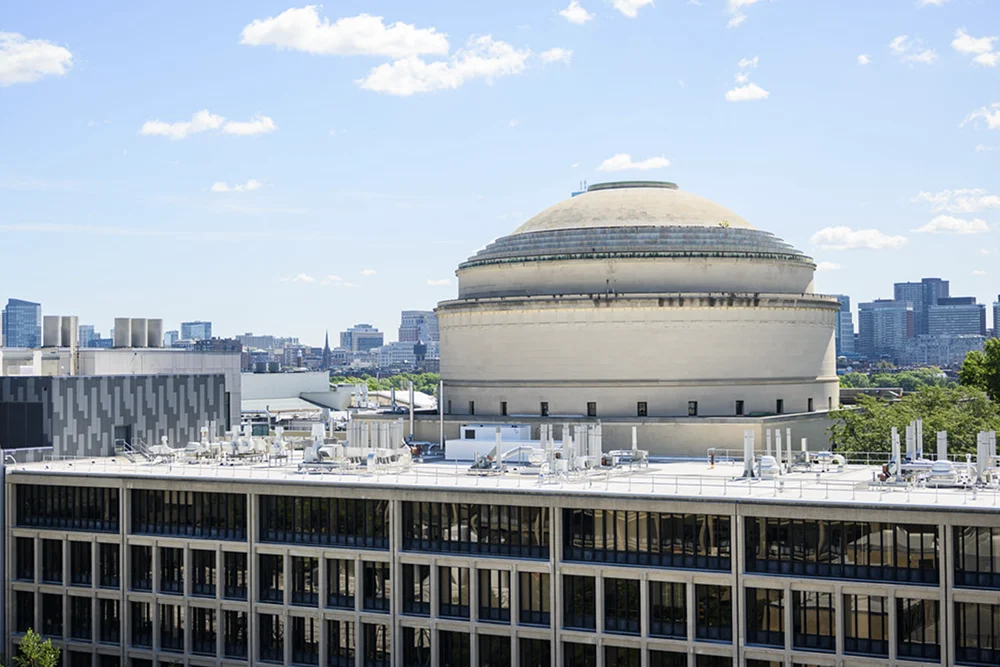
The National Science Foundation (NSF) has officially selected the Massachusetts Institute of Technology (MIT) to spearhead a new Materials Research Science and Engineering Center (MRSEC), a move that signals a significant investment in the future of medical diagnostics, sustainable industrial manufacturing, and semiconductor technology. This designation, announced by the NSF on July 30, 2024, is part of a broader $108 million federal initiative to accelerate materials science across the United States. MIT’s new center is expected to receive approximately $18 million in research funding over a six-year period, pending the finalization of a formal research agreement. This award consolidates a massive interdisciplinary effort, bringing together 16 distinct research groups from nine academic departments across four premier institutions, including a leading teaching hospital.
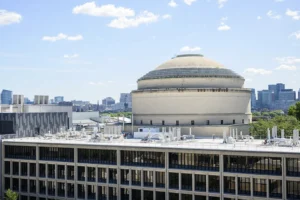
The MIT MRSEC will be under the leadership of Associate Professor Rafael Jaramillo from the Department of Materials Science and Engineering (DMSE), with Professor Caroline Ross, also of DMSE, serving as the associate director. Administratively, the center will be integrated into the MIT Materials Research Laboratory (MRL), a hub that has long served as a nexus for advanced materials innovation. The center’s primary objective is to bridge the gap between fundamental molecular science and practical engineering applications, specifically targeting sectors that are critical to both human health and the global transition to a more sustainable economy.
Strategic Research Thrusts: Medical Imaging and Sustainable Metallurgy
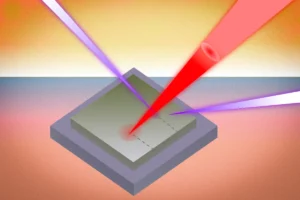
The research agenda for the new center is bifurcated into two primary "thrusts," each addressing a high-stakes challenge in modern science. The first thrust focuses on the re-engineering of materials for X-ray detection. Current medical imaging technologies, while revolutionary, often face limitations in terms of resolution and radiation dosage. The MIT-led team aims to engineer specialized scintillators—materials that convert high-energy X-rays into visible light—at the nanoscale. By manipulating these materials at the atomic level, researchers hope to create detectors that are significantly more sensitive and faster than current industry standards.
The implications of this research are vast. Higher sensitivity in X-ray detectors could lead to earlier and more accurate cancer diagnoses, as well as a reduction in the radiation exposure patients receive during routine scans. Beyond the clinical setting, these advancements are expected to enhance industrial non-destructive testing and improve security imaging at ports and airports. This effort will be spearheaded by optical materials experts Professor Marin Soljačić of the Department of Physics and Professor Juejun Hu of DMSE.
The second research thrust addresses the environmental and efficiency challenges of the metallurgical and semiconductor industries. This group will explore the properties of high-temperature sulfur-based molten materials. In recent decades, academic expertise in sulfur-based chemistry for metallurgy has waned in the United States, yet these materials are becoming increasingly vital for the production of critical metals like copper. As the global demand for copper surges—driven largely by the expansion of electric vehicle infrastructure and renewable energy grids—developing more efficient, lower-emission methods for metal extraction is a matter of national economic security.
Furthermore, this research will investigate how these molten materials can be used to create new thin-film semiconductor technologies. This could revolutionize the way microchips are manufactured, potentially leading to more energy-efficient production processes and the discovery of materials with superior electronic properties. Associate Professor Jaramillo noted that rebuilding this "intellectual center of gravity" at MIT is essential for maintaining a competitive edge in materials processing.
Infrastructure and Collaborative Ecosystem
A cornerstone of the new MRSEC is the establishment of a shared laboratory facility managed by MIT.nano. This laboratory will be equipped with specialized instrumentation for testing magnetic materials and observing material behavior under extreme conditions, such as ultra-high temperatures and corrosive environments. Unlike many private corporate labs, this facility will be accessible to both academic researchers and industry partners. This open-access model is a key component of the NSF’s strategy to expand the nationwide portfolio of research facilities, ensuring that the broader scientific community can benefit from federal investments.
The collaborative nature of the center is evidenced by the wide range of departments and institutions involved. From MIT, participating departments include Materials Science and Engineering; Chemistry; Chemical Engineering; Physics; and Earth, Atmospheric and Planetary Sciences (EAPS). This interdisciplinary mix ensures that problems are approached from multiple angles—from the fundamental physics of light-matter interaction to the geological realities of mineral extraction.
External collaborators include researchers from Yale University, the University of California at Santa Barbara, and the Department of Radiology at Massachusetts General Hospital and Harvard Medical School. This partnership with a major teaching hospital ensures that the materials developed in the lab have a direct pipeline to clinical validation and real-world medical application.
A Legacy of Materials Innovation
The selection of MIT for this award is a continuation of a legacy that spans over six decades. The Institute’s involvement in large-scale materials research began in the 1960s with laboratories supported by the U.S. Department of Defense. Over time, this evolved into a series of NSF-funded centers that have served as the bedrock for many of MIT’s current "centers of excellence," such as the MIT Microphotonics Center and the Microsystems Technology Laboratories.
The NSF’s MRSEC program is designed to foster "the mode of working" that Jaramillo describes as "very intentional team-building across disciplinary boundaries." This philosophy has historically led to disruptive breakthroughs that single-investigator grants rarely achieve. By providing stable, long-term funding, the NSF allows researchers to take on high-risk, high-reward projects that might take years to yield results.
The current $108 million investment by the NSF covers six such centers across the United States. Other centers in this cohort are tasked with exploring diverse topics, including artificial intelligence-driven experimental labs that can automate the discovery of new molecules, and hybrid quantum materials that combine the properties of light and matter for next-generation computing.
Public Outreach and the "DISASTER!" Initiative
Beyond the laboratory, the MIT MRSEC is committed to a robust public outreach and workforce development program. Associate Professor Jaramillo has identified a significant gap in materials science education, particularly at the community college level in the Northeast. While states like Michigan, with deep roots in the automotive and manufacturing sectors, have strong materials science programs, the Boston region lacks a similar pipeline for materials processing workers.
To address this, the center will launch an innovative educational program titled "DISASTER!" (stylized in all caps with an exclamation mark). This initiative seeks to use forensic materials science to engage the public and undergraduate students. By analyzing high-profile historical catastrophes, the program will illustrate how materials failure can have life-altering consequences and how scientific analysis prevents such tragedies from recurring.
Key case studies in the "DISASTER!" curriculum will include:
- The RMS Titanic: Forensic analysis of the rivets used in the ship’s hull revealed high concentrations of slag, which made the metal brittle in the freezing temperatures of the North Atlantic, contributing to the hull’s failure upon impact with the iceberg.
- The de Havilland Comet: As the world’s first commercial jetliner, the Comet suffered several catastrophic mid-air breakups. These incidents led to the discovery of metal fatigue caused by repeated pressurization cycles, a finding that fundamentally changed aerospace engineering.
By telling these stories, the MRSEC hopes to inspire a new generation of scientists and engineers. The team plans to present these findings and conduct live demonstrations at the MIT Future Fest, a public celebration of technology and innovation.
Economic and Policy Implications
The establishment of the MRSEC comes at a critical juncture for U.S. industrial policy. The federal government has increasingly prioritized "onshoring" critical supply chains, particularly for semiconductors and essential minerals. The center’s work on sulfur-based molten materials directly supports these goals by providing the fundamental science needed to modernize domestic metal production.
Copper, often referred to as "the metal of electrification," is indispensable for the green energy transition. However, traditional smelting and refining processes are energy-intensive and environmentally taxing. The research conducted at MIT could lead to "electro-winning" processes and other advanced techniques that reduce the carbon footprint of copper production.
Furthermore, the center’s focus on next-generation semiconductors aligns with the objectives of the CHIPS and Science Act. By exploring new thin-film technologies, the MRSEC will contribute to the development of microelectronics that are not only faster but also more resilient and easier to manufacture at scale.
Future Outlook
As the MIT MRSEC begins its six-year mandate, the long-term goal is to create a self-sustaining ecosystem for materials research. Associate Professor Jaramillo envisions the center as a "hub" that will eventually outlive its initial NSF funding. By building "muscle memory" for interdisciplinary collaboration, the center aims to lay the groundwork for the next 60 years of materials science at the Institute.
The successful proposal for this center was supported by MIT Research Administration Services and its Research Development team, which specializes in managing the complexities of large-scale, multi-institutional grants. This administrative support ensures that the scientific leads can focus on the technical challenges ahead.
The faculty members expected to participate in the center represent a "who’s who" of modern science, including Nobel laureate Moungi Bawendi of the Department of Chemistry and prominent figures in physics such as Riccardo Comin, Nuh Gedik, and Long Ju. With this concentration of intellectual talent and the backing of the National Science Foundation, the MIT MRSEC is poised to redefine the boundaries of what is possible in materials science, potentially leading to a safer, healthier, and more sustainable future.