In the crushing depths of the ocean floor, amidst the volcanic plumes of hydrothermal vents, a microscopic organism is performing a feat of chemistry that has long baffled and inspired the scientific community. Researchers at the Max Planck Institute for Marine Microbiology in Bremen have successfully isolated and analyzed a unique enzyme from the deep-sea archaeon Methanocaldococcus infernus, providing a transformative look at how life converts atmospheric nitrogen into a usable form under extreme heat. This discovery not only sheds light on the primordial origins of life on Earth but also opens new doors for sustainable biotechnology and the future of global agriculture.
Nitrogen is an essential building block of life, required for the synthesis of DNA, RNA, and proteins. While it constitutes roughly 78 percent of Earth’s atmosphere, atmospheric nitrogen (N2) is notoriously difficult for most organisms to access. The two nitrogen atoms are held together by a triple bond, one of the strongest chemical bonds in nature. To break this bond, life relies on a specialized group of microorganisms capable of nitrogen fixation—the process of converting N2 gas into ammonia (NH3). This biological process is the foundation of the global food web, yet the molecular mechanisms that allow certain enzymes to function in the most hostile environments on the planet have remained partially shrouded in mystery until now.
The Extremerophile Challenge: Life at the Boiling Point
The subject of the study, Methanocaldococcus infernus, is a hyperthermophilic archaeon first discovered in the vicinity of deep-sea hydrothermal vents. These environments, often referred to as "black smokers," are characterized by intense pressure and temperatures that can exceed the boiling point of water. M. infernus thrives in these conditions, utilizing the chemical energy from vent fluids to fuel its metabolism.
For Tristan Wagner, head of the Microbial Metabolism Research Group at the Max Planck Institute, the primary question was one of thermal limits. "How do they do it, in such heat? And how can the enzyme splitting the N2 triple bond work under these conditions?" Wagner noted during the presentation of the team’s findings. To answer this, the researchers had to "tame" the microbe in a laboratory setting, a task of immense technical difficulty. They successfully cultured the archaeon and induced it to fix nitrogen at temperatures exceeding 90 degrees Celsius, mimicking the extreme thermal gradients of its native habitat.
The Architecture of Nitrogenase: Biology’s Most Complex Tool
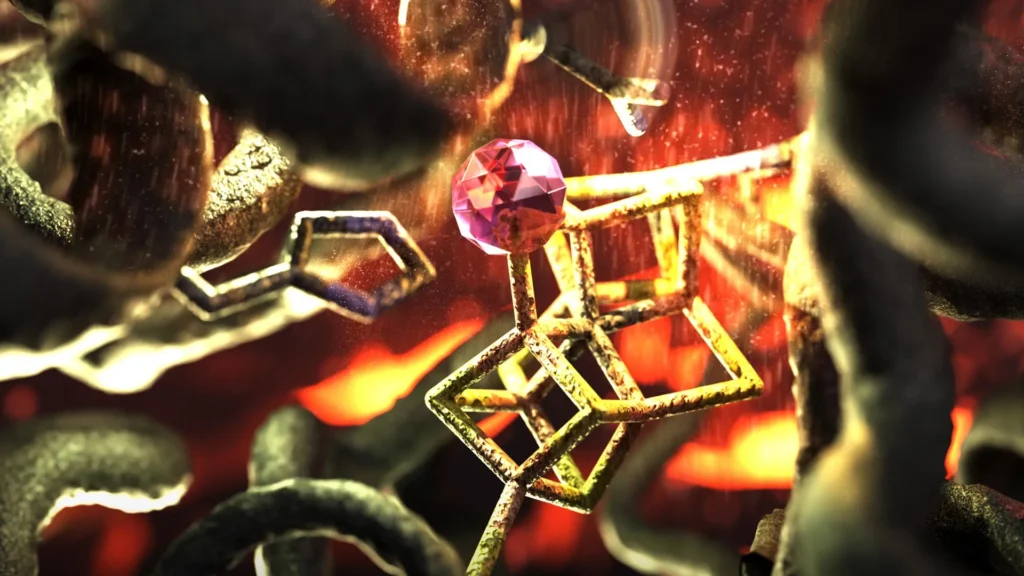
The engine behind this chemical conversion is nitrogenase, an enzyme that contains what is widely regarded as the most complex metallocofactor in the biological world. Metallocofactors are clusters of metal atoms and inorganic ligands that act as the "business end" of the enzyme, facilitating the transfer of electrons required to sever the nitrogen triple bond.
Historically, scientists have categorized nitrogenases into three distinct families based on their metal composition: molybdenum-dependent (the most common and efficient), vanadium-dependent, and iron-only versions. While the molybdenum-based system is the most extensively studied, the relationships between these three types and their evolutionary lineage have remained a subject of intense debate.
The nitrogenase isolated from M. infernus, however, appears to be a biological "missing link." According to the research team, this specific enzyme shares structural and functional traits with all three known versions. Wagner suggests that this version could represent a close relative to the "common nitrogenase ancestor," the ancient molecular system from which all modern nitrogenases evolved. By studying this primordial architecture, the team hoped to uncover the fundamental principles that govern the nitrogenase reaction across all species.
A Chronology of Discovery: From Deep-Sea Vents to the Synchrotron
The path to understanding M. infernus’s nitrogenase involved a multi-year effort that combined microbial physiology, biochemistry, and high-resolution structural biology. The chronology of the project highlights the rigorous demands of modern microbiological research.
- Cultivation and Taming: The initial phase required the team to create a pressurized, anaerobic environment in the lab that could sustain hyperthermophilic life. This "taming" process allowed the researchers to observe the organism’s nitrogen fixation in real-time at temperatures above 90°C.
- Enzyme Isolation: Once the microbe was successfully fixing nitrogen, the team had to extract the nitrogenase enzyme. This step was fraught with risk, as nitrogenase is hypersensitive to oxygen. Even a brief exposure to air can irreversibly damage the delicate metal clusters at the enzyme’s core. Every step of the purification had to be conducted in specialized anaerobic chambers.
- Stability Testing: Upon isolation, the team discovered the enzyme’s remarkable thermal resilience. While most proteins denature—much like an egg white hardening in boiling water—the M. infernus nitrogenase remained stable up to 90°C, with significant portions of the protein remaining intact even at 98°C.
- Structural Mapping at the ESRF: To see the enzyme’s atomic structure, the researchers transported their samples to the Institut de Biologie Structurale in Grenoble, France. Using the European Synchrotron Radiation Facility (ESRF)—a massive circular particle accelerator that generates X-rays 100 billion times brighter than a standard hospital X-ray—they mapped the enzyme at near-atomic resolution.
Near-Atomic Insights and the "Turnover" State
The structural analysis yielded a major surprise for the team. While they confirmed that the M. infernus nitrogenase utilized a molybdenum metallocofactor, the high-resolution imaging captured the enzyme in a "turnover" state—a specific intermediate stage of the chemical reaction that had never before been observed in a molybdenum-containing nitrogenase.
"We were stunned to look at a so far unobserved state in a molybdenum-containing nitrogenase," Wagner remarked. Previously, this specific molecular configuration had only been seen in the less common vanadium and iron-only versions of the enzyme. The presence of this state in the M. infernus enzyme suggests that all forms of nitrogenase, regardless of their metal core, likely follow a unified mechanical pathway to break the nitrogen bond.
This finding provides a "universal blueprint" for nitrogen fixation. It implies that the core chemistry of the reaction has remained largely unchanged for billions of years, even as different organisms adapted the enzyme to suit different environmental niches or metal availability.
Implications for Global Agriculture and the Haber-Bosch Process
The broader implications of this research extend far beyond the realm of deep-sea microbiology. Currently, the world’s population is fed largely through the Haber-Bosch process, an industrial method for producing ammonia fertilizer from atmospheric nitrogen. While revolutionary, the Haber-Bosch process is incredibly energy-intensive, requiring high pressures and temperatures (roughly 400-500°C) and consuming about 1 to 2 percent of the world’s total energy supply annually.
Furthermore, the industrial production of fertilizer is a major contributor to greenhouse gas emissions, and the over-application of synthetic fertilizers leads to catastrophic environmental consequences, such as eutrophication—where nutrient runoff causes massive "dead zones" in oceans and lakes.
By understanding how an enzyme like the M. infernus nitrogenase functions at high temperatures with such precision, scientists hope to develop new, "greener" catalysts for ammonia production. "And what if crops could one day obtain nitrogen directly from atmospheric N2?" Wagner speculated. If the genetic blueprints for these robust, heat-resistant nitrogenases could be adapted for use in agricultural crops or specialized bio-reactors, it could drastically reduce the world’s reliance on industrial fertilizers.
Biotechnology and the Carbon Cycle
The research also touches on the critical role these microorganisms play in Earth’s carbon cycle. M. infernus and its relatives are methanogens; they produce methane as a byproduct of their metabolism. In fact, microorganisms in the deep sea and similar environments are responsible for producing approximately half of the methane found in the atmosphere.
In a future focused on carbon neutrality, these organisms could be harnessed as biological factories. Using green hydrogen (produced from renewable energy) as an energy source, these "tamed" microbes could potentially convert waste gases into useful products like methane for fuel or ammonia for fertilizer, creating a circular chemical economy.
Conclusion: A Window into the Ancient Past
The study, led by Nevena Maslać and Tristan Wagner, represents a landmark achievement in the study of metalloenzymes. By pushing the boundaries of what is possible in the laboratory, the team has not only provided an updated molecular view of one of biology’s most essential reactions but has also linked the modern biosphere to its ancient, volcanic origins.
As the scientific community continues to grapple with the dual challenges of food security and climate change, the secrets held by a tiny, heat-loving microbe from the bottom of the ocean may provide the key to a more sustainable future. For now, the focus remains on the fundamental: understanding the elegant, complex, and incredibly resilient machinery that has allowed life to thrive in the face of Earth’s most extreme challenges for billions of years.