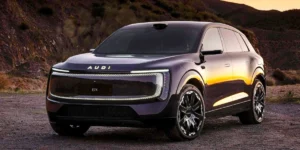
In today’s automotive landscape, the unveiling of a 700-horsepower luxury SUV with a price tag exceeding six figures elicits little more than a collective shrug. Such vehicles have become commonplace, with nearly every prestige manufacturer boasting their own iteration. Bentley offers the Bentayga, Lamborghini the Urus, Aston Martin the DBX, and Rolls-Royce the Cullinan. Even Ferrari, a marque synonymous with pure sports cars, has entered the fray with the Purosangue. This ubiquitous presence, however, belies a radical departure from automotive norms that was once considered almost heretical. Fifteen years prior to this saturation, a small Dutch company dared to imagine a future where the performance and allure of a supercar could be fused with the practicality of an SUV, a vision embodied by the extraordinary Spyker D12 Peking-to-Paris.
A Paradigm Shift in Automotive Ambition
The year 2006 marked a vastly different era for the automotive industry. The very concept of an "exotic super-SUV" was met with widespread skepticism, bordering on absurdity. Sports car manufacturers were expected to produce sleek, low-slung machines built for the track and winding roads. Luxury brands focused on opulent sedans and limousines designed for serene, chauffeur-driven journeys. SUVs, in the public consciousness, were primarily utilitarian vehicles – the workhorses of farmers traversing muddy fields or the family haulers for affluent households transporting children and pets. The notion that a consumer would contemplate spending the equivalent of a Ferrari on a tall, four-wheel-drive vehicle seemed as incongruous as fitting a crystal chandelier to a fighter jet. Yet, long before the established giants of the automotive world recognized the immense commercial potential in merging supercar panache with SUV versatility, a diminutive Dutch firm, Spyker, introduced a vehicle that was, in retrospect, remarkably prescient.
The Genesis of a Vision: Spyker’s Heritage and the D12 Concept
Spyker was not a nascent startup; its roots stretched back to the 19th century, with a lineage that included the manufacture of carriages, automobiles, and even aircraft. In 1999, entrepreneur Victor Muller resurrected the Spyker name with an ambitious plan: to create exclusive, hand-built supercars that would epitomize Dutch craftsmanship and draw heavily from aviation-inspired design. The resulting Spyker C8 model became renowned for its intricate aluminum components, exposed mechanicals, sumptuous quilted leather interiors, and a cockpit that evoked the feeling of piloting an aircraft.
It was within this context of aviation-inspired automotive artistry that Spyker identified an emerging opportunity. The company recognized the potential to synergize the prestige and exhilarating performance of an exotic car with the inherent practicality and utility of an SUV. The choice of name, "Peking-to-Paris," was a deliberate nod to the legendary 1907 endurance race that saw daring adventurers traverse vast distances between China and France. This nomenclature underscored Spyker’s deep appreciation for automotive history and its embrace of the spirit of adventure. Far from envisioning a conventional off-road vehicle, Spyker conceived the D12 as a high-performance grand tourer, a machine capable of undertaking transcontinental journeys with unparalleled comfort and style.
Design and Craftsmanship: An Uncompromising Aesthetic
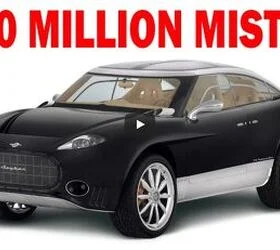
The Spyker D12 Peking-to-Paris was a statement piece, a deliberate departure from conventional automotive design. Its exterior featured Spyker’s signature aviation-inspired grille, a sweeping, aerodynamic bodywork that hinted at its performance capabilities, enormous alloy wheels, substantial side air intakes, and a roofline that was remarkably low for an SUV, further blurring the lines between sports car and utility vehicle. The dramatic rear-hinged "suicide" doors, a distinctive design element, swung open to reveal an interior that was a masterclass in opulent craftsmanship, reminiscent of a luxury yacht or a private jet.
Inside, the D12 was a sanctuary of bespoke luxury. Polished aluminum accents were seamlessly integrated with acres of hand-stitched quilted leather. Aircraft-style controls and Spyker’s iconic exposed gear shift mechanism were not merely functional elements but pieces of mechanical art, underscoring the brand’s commitment to exquisite craftsmanship and the theater of engineering. Every detail was meticulously considered, from the bespoke instrumentation to the ambient lighting, all designed to immerse occupants in an environment of unparalleled exclusivity and sophistication.
Performance Prowess: A Force to Be Reckoned With
Underpinning this extravagant exterior and luxurious interior was a formidable powertrain. Spyker intended to equip the D12 with a twin-turbocharged Volkswagen W12 engine. This powerplant, sharing a common lineage with the engine found in Bentley’s offerings, was projected to produce approximately 500 horsepower. In 2006, this level of output placed the D12 squarely in the realm of serious performance machines. For comparison, the Porsche Cayenne Turbo of the era offered 450 horsepower, the Ferrari F430 delivered 480 horsepower, and the Lamborghini Gallardo boasted around 520 horsepower. Despite an estimated curb weight of approximately 1,850 kilograms (around 4,078 pounds), Spyker claimed a blistering 0-to-60 mph acceleration time of roughly five seconds. This performance envelope, combined with the SUV’s advanced all-wheel-drive system, promised a driving experience that transcended conventional expectations for vehicles of its type.
The Formula for Success: Foresight in a Nascent Market
The true significance of the Spyker D12 Peking-to-Paris lay not just in its audacious design or impressive performance, but in its fundamental formula. It represented an exotic badge, dramatic styling, a potent engine, high performance, handcrafted luxury, and a high-riding SUV body. This amalgamation of attributes is, in essence, the blueprint for today’s ultra-luxury performance SUVs. Spyker, in 2006, identified a lucrative market niche years before most established luxury and exotic manufacturers recognized its potential. The vehicle’s debut at the Geneva Motor Show reportedly garnered over 100 expressions of interest and potential orders, suggesting that consumer demand for such a concept was, in fact, present.
The Roadblocks to Production: Financial Follies and Execution Failures
Despite the compelling concept and initial market interest, the Spyker D12 Peking-to-Paris ultimately became a poignant example of an ambitious automotive vision thwarted by financial constraints and execution challenges. Spyker’s resources were significantly diverted by an ill-fated attempt to acquire Saab Automobile from General Motors. This acquisition consumed substantial capital and management attention, detracting from the D12’s development. Furthermore, the D12’s powertrain plans underwent revisions, leading to escalating costs and shifting production targets. Development slowed, and by 2010, it became clear that the SUV would never reach mass production. Spyker subsequently faced a tumultuous period, marked by bankruptcies, corporate restructurings, and repeated attempts at revitalization, further cementing the D12’s status as a tantalizing but unfulfilled promise.
A Legacy of Vision, Denied by Circumstance
The ultimate legacy of the Spyker D12 Peking-to-Paris is one of being remarkably prescient about the automotive market but tragically unable to capitalize on its foresight. In 2006, the idea of investing in a high-performance luxury SUV with an exotic price tag seemed eccentric. Yet, the very formula that the D12 pioneered has since evolved into one of the most profitable segments in the luxury automotive business. Porsche, Bentley, Lamborghini, Rolls-Royce, and Ferrari have all successfully navigated the path that Spyker first illuminated. These titans of the industry have reaped substantial rewards from a market that Spyker identified and conceptualized, but which the Dutch company, due to its financial woes and operational challenges, was unable to bring to fruition. The D12 remains a compelling testament to the power of innovative thinking and a stark reminder of how financial realities can shape the trajectory of even the most groundbreaking automotive endeavors. Its story serves as a significant historical footnote, marking the moment an independent Dutch marque dared to dream of a future that the mainstream automotive world would eventually embrace.