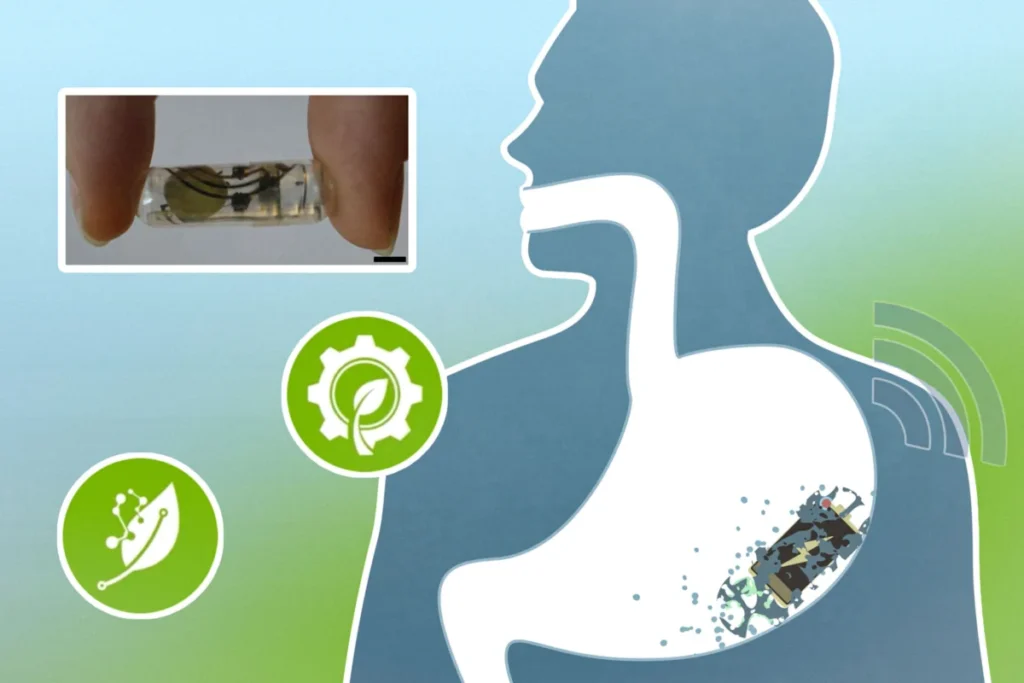
A groundbreaking innovation in medical technology has emerged from the Massachusetts Institute of Technology (MIT), Brigham and Women’s Hospital, and the Broad Institute of MIT and Harvard: the development of fully bioresorbable batteries. This advancement, detailed in a paper published today in Nature Chemical Engineering, addresses a critical challenge in the rapidly evolving field of ingestible electronics, paving the way for safer, more sustainable, and highly effective internal medical devices. These new batteries are designed to power sophisticated systems within the body, perform their function, and then harmlessly dissolve, eliminating the risks associated with conventional battery ingestion and reducing environmental impact.
The Quest for Safe Internal Power Sources
The modern medical landscape is increasingly relying on miniaturized, ingestible devices for a myriad of applications, ranging from monitoring vital signs and delivering targeted therapies to detecting critical health events. However, powering these devices safely and effectively within the human body has remained a significant hurdle. Traditional batteries, often containing materials like lithium or silver oxide, pose inherent safety risks if their protective coatings are compromised during their journey through the gastrointestinal (GI) tract. Such damage could lead to leakage of toxic substances, causing internal injury or other adverse reactions.
Giovanni Traverso, a professor of mechanical engineering at MIT, a gastroenterologist at Brigham and Women’s Hospital, and an associate member of the Broad Institute of MIT and Harvard, highlights this fundamental challenge. "For many of the systems we’re developing, we need power, and we power the system through different ways," Traverso explains. "Often, we use batteries, so the question here was: Could we develop a battery that was bioresorbable, and then apply that across a range of application areas?" This question served as the impetus for the multi-institutional research effort, with Traverso serving as the senior author of the pivotal paper and former MIT postdoc Mehmet Girayhan Say as the lead author.
Prior attempts to power ingestible devices have involved external wireless transmission, harvesting power from the GI tract itself, or employing miniature coin batteries. While each method has its merits, the safety concerns surrounding conventional batteries, particularly lithium-based variants, prompted a dedicated pursuit of a fully bioresorbable alternative. The vision was to create a self-contained power source that would negate the need for external power, thereby enhancing device autonomy, while simultaneously ensuring complete biological compatibility and eventual degradation.
Ingestible Innovation: A Decade of Advancements
The development of these bioresorbable batteries is not an isolated event but rather the culmination of a decade of pioneering work by Traverso and his collaborators in the field of ingestible electronics. Over the past ten years, his lab has been at the forefront of designing and testing a diverse array of ingestible capsules capable of transformative medical interventions.
- 2016: Early work saw the development of tiny ingestible sensors designed to monitor vital signs such as temperature within the body, offering a non-invasive way to track internal physiological parameters.
- 2018: The team introduced ingestible pills that could deliver a variety of drugs, controlled wirelessly via Bluetooth, showcasing the potential for highly targeted and remotely managed therapeutic delivery. This represented a significant step towards personalized medicine, allowing for precise drug release based on real-time needs.
- 2023: A significant development involved an ingestible capsule designed to stimulate hunger-regulating hormones. This device laid the groundwork for the therapeutic applications of the new bioresorbable battery.
- 2024: Further expanding their portfolio, the lab unveiled an implantable sensor with the potential to detect and reverse opioid overdoses, demonstrating the versatility and life-saving capabilities of advanced ingestible and implantable technologies.
- Early 2026: The SAFARI (Sensing and Feedback for Adherence to Regimens via Ingestible Technology) system was reported, utilizing passive RFID tags powered by harvested energy to improve medication adherence, setting the stage for the battery-powered RFID communication system.
This chronological progression highlights a consistent theme: addressing critical medical needs through ingenious engineering solutions. However, the persistent challenge across many of these devices has been the need for a safe, reliable, and eventually disappearing power source. The bioresorbable battery marks a pivotal breakthrough, integrating seamlessly into this ecosystem of advanced ingestible technologies.
The Science Behind Bioresorbability: Magnesium and Molybdenum Trioxide
To overcome the limitations of traditional batteries, the researchers focused on materials known to be safe for human consumption in small quantities and capable of serving as electrochemical components. Their meticulous selection led them to magnesium and molybdenum trioxide.
"Those materials are known to be relatively safe. That was the biggest driver, thinking about materials that can be tolerated by humans," Traverso emphasizes, underscoring the paramount importance of biocompatibility.
- Anode: Magnesium, a common dietary mineral essential for numerous bodily functions, was chosen for the battery’s anode. Its electrochemical properties make it suitable for energy storage, while its natural presence in the body ensures its safety profile.
- Cathode: Molybdenum trioxide served as the cathode. Molybdenum is also a trace mineral found in the body and is involved in various enzymatic reactions. Its use here further reinforces the bioresorbable nature of the battery.
- Electrolyte: The battery incorporates an ionic liquid gel electrolyte, a crucial component that facilitates the movement of ions between the anode and cathode, enabling the electrochemical reactions that generate power. This gel is also designed to be bioresorbable, ensuring the entire system degrades safely.
The researchers engineered two distinct form factors for the battery to cater to a range of potential applications: a disc 7.5 millimeters in diameter and a rectangular bar 24 millimeters long. This versatility allows for integration into different device designs, optimizing performance and fit for specific medical needs.
Performance and Dissolution: A Rigorous Testing Protocol
A critical aspect of the development involved rigorous testing to confirm both the functionality and the bioresorbability of the batteries under conditions mimicking the human GI tract. The researchers first subjected the batteries to a highly acidic solution designed to simulate gastric juice. The results were promising: the batteries maintained normal function for approximately three days, providing a sufficient operational window for many ingestible device applications. Following this initial period, their performance gradually declined, and within a few weeks, the entire system completely broke down and dissolved. This controlled degradation profile is crucial, ensuring the device delivers its intended function before safely disappearing.
Translating Power into Therapeutic Action: Ghrelin Stimulation
One of the most compelling demonstrations of the new battery’s capability involved its integration into a previously developed degradable device designed to deliver a small electrical current to the lining of the stomach. This device, first reported in 2023 by Traverso’s lab, was shown to stimulate endocrine cells in the stomach to produce ghrelin.
Ghrelin, often dubbed the "hunger hormone," plays a vital role in regulating appetite and energy balance. Stimulating its secretion holds significant therapeutic promise for conditions characterized by nausea or loss of appetite, such as cachexia. Cachexia is a debilitating syndrome marked by severe weight loss, muscle wasting, and fatigue, commonly observed in patients with advanced cancer, chronic heart failure, chronic obstructive pulmonary disease (COPD), and other chronic diseases. It affects millions worldwide, significantly impacting quality of life and prognosis. Current treatments for cachexia are often limited, making novel interventions like ghrelin stimulation highly desirable.
The initial version of this ghrelin-stimulating device relied on two silver oxide coin batteries, similar to those found in many FDA-approved ingestible devices. By replacing these with the new magnesium-molybdenum oxide bioresorbable batteries, the researchers achieved a near-complete bioresorbability for the device. With the exception of a minuscule printed circuit board, the entire system is designed to degrade within the body. Any non-absorbed components, such as the circuit board, are small enough to pass safely through the GI tract and be excreted.
In the latest study, the bioresorbable battery proved robust enough to generate continuous electrical stimulation for up to three days, providing ample time for therapeutic effect. Animal tests further validated its efficacy, demonstrating that just 20 minutes of stomach stimulation could boost ghrelin levels by approximately 50 percent. This significant increase underscores the potential for this technology to provide a new, non-pharmacological approach to managing appetite and combating cachexia.
Mehmet Girayhan Say aptly summarizes the significance: "What makes this work exciting is that we were able to show that a bioresorbable battery is not just a concept. It can actually power clinically relevant functions inside the gastrointestinal tract and then simply dissolve."
Empowering Communication: Enhanced Medication Adherence via RFID
Beyond direct therapeutic stimulation, the research team also demonstrated the bioresorbable battery’s capacity to power communication systems within the body, specifically an advanced Radio-Frequency Identification (RFID) device. This innovation aims to tackle the widespread and costly problem of medication non-adherence.
Medication non-adherence, where patients do not take their medications as prescribed, is a global health crisis contributing to preventable illness, increased hospitalizations, and substantial healthcare costs, estimated to be hundreds of billions of dollars annually in the United States alone. Traditional methods of monitoring adherence, such as pill counts or self-reporting, are often unreliable. Ingestible sensors offer a more objective and accurate solution.
The new RFID capsule, powered by the bioresorbable battery, is designed to transmit its location from within the GI tract using a bioresorbable RFID tag composed of molybdenum and cellulose. This represents a significant upgrade from earlier RFID systems developed by Traverso’s lab. The SAFARI system, reported in January, utilized passive RFID tags that harvested energy from external sources. While innovative, this approach inherently limited the communication range and continuity.
With the integration of the disc-shaped bioresorbable battery, the new RFID device showcased vastly improved performance in animal tests. It could transmit continuously from within the GI tract, and crucially, achieved a significantly longer communication range of up to 1.5 meters. This extended range allows for more flexible monitoring, potentially enabling patients to be tracked within their homes or other environments without needing to be in very close proximity to a receiver.
The researchers are now actively planning a clinical trial for the SAFARI system, with an anticipated start in about two years. This trial will be a critical step in translating this laboratory breakthrough into a tangible clinical tool, offering a discreet yet powerful means to improve patient outcomes by ensuring medication regimens are followed.
Broader Implications: Patient Safety, Environmental Impact, and Future Medicine
The development of bioresorbable batteries carries profound implications that extend far beyond the immediate applications.
- Enhanced Patient Safety: The primary and most direct benefit is the dramatic improvement in patient safety. By eliminating the risk of toxic leakage from conventional batteries, these bioresorbable power sources remove a significant concern for ingestible devices, particularly those intended for prolonged use or for vulnerable patient populations. This safety enhancement could accelerate the adoption and regulatory approval of a wider array of internal medical electronics.
- Reduced Environmental Footprint: The environmental implications are also substantial. Billions of batteries are produced and discarded globally each year, contributing to significant waste streams and potential environmental contamination. While ingestible devices use tiny batteries, the sheer volume of medical devices used globally means that bioresorbable components could significantly reduce the environmental burden. As Traverso points out, "The benefits are twofold: one, the ability to be bioresorbable, but also the potential to minimize environmental impact because the materials will be degraded in the environment as well." This aligns with a growing global push for sustainable medical practices and products.
- Expanding the Frontier of Personalized Medicine: This technology empowers the creation of more sophisticated, autonomous, and patient-centric internal medical devices. From smart pills that deliver drugs precisely when and where needed, to advanced diagnostic capsules that monitor complex physiological parameters, the bioresorbable battery provides a crucial building block. This paves the way for truly personalized medicine, where treatments can be dynamically adjusted based on real-time internal feedback, leading to more effective and less invasive healthcare.
- New Diagnostic and Therapeutic Avenues: The ability to safely power devices for sustained periods opens up new possibilities for both diagnosis and therapy. Imagine ingestible sensors that can continuously monitor early signs of disease, or therapeutic devices that can deliver localized treatment for days or weeks without intervention, all while dissolving harmlessly. This could revolutionize the management of chronic conditions and early disease detection.
Funding and the Road Ahead
This pioneering research was made possible through the generous support of several key organizations, including Novo Nordisk, the Karl van Tassel Career Development Professorship, MIT’s Department of Mechanical Engineering, the Brigham and Women’s Hospital Division of Gastroenterology, and the U.S. Advanced Research Projects Agency for Health (ARPA-H). Such diverse funding underscores the broad recognition of the project’s potential and its alignment with national health priorities.
The impending clinical trial for the SAFARI system represents the next critical phase in bringing this technology from the laboratory to patient care. Success in human trials could catalyze widespread adoption and further research into an even broader range of bioresorbable medical devices. As the field of ingestible electronics continues its rapid expansion, the development of safe, efficient, and bioresorbable power sources like these batteries will undoubtedly be a cornerstone of future innovations, promising a new era of internal medicine that prioritizes both patient well-being and environmental responsibility.