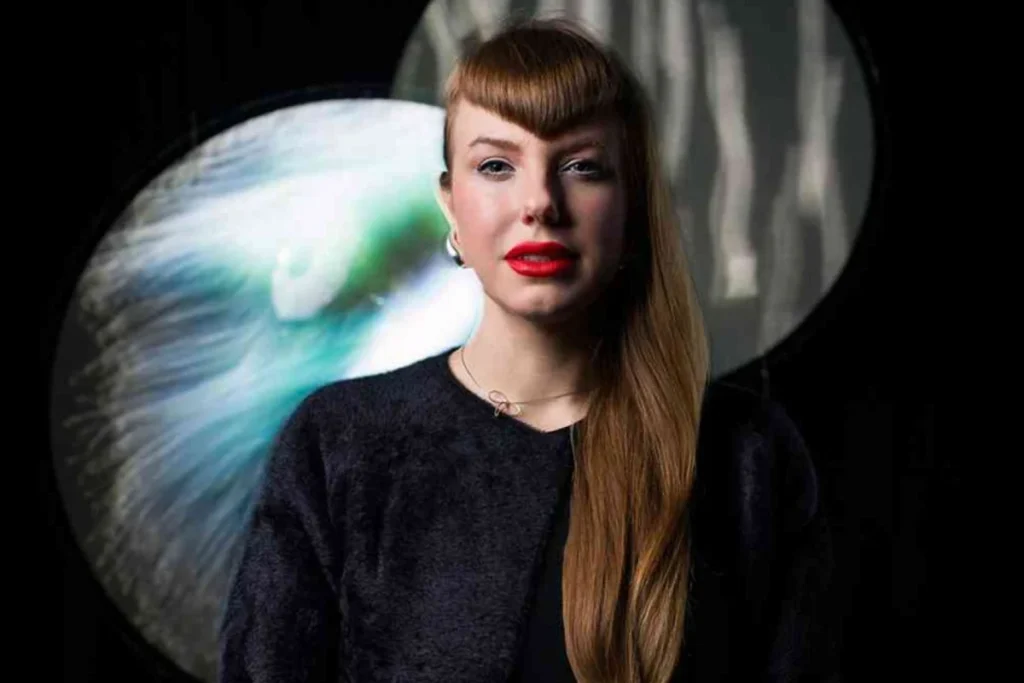
The MIT Kavli Institute for Astrophysics and Space Research (MKI) has officially announced the launch of a new pilot artist-in-residence program designed to bridge the gap between complex scientific inquiry and public understanding. This initiative seeks to foster a cross-disciplinary dialogue between the realms of astrophysics, engineering, and fine arts. For its inaugural residency, which will span the 2026-2027 academic year, MKI has selected the internationally recognized ultra-contemporary artist Amy Karle. Karle will collaborate directly with MIT researchers to explore the methodologies behind space instrumentation and astronomical discovery, eventually translating these scientific processes into a large-scale, immersive multimedia installation scheduled for public debut in 2028.
This program marks a significant evolution in MIT’s approach to science communication. By integrating an artist into the highly technical environment of the Kavli Institute, the university aims to challenge traditional modes of scientific thinking while creating new pathways for the public to engage with the mysteries of the cosmos. The residency is supported by the Kavli Foundation through its Kavli Innovation Fund, reflecting a broader institutional commitment to exploring the "human" side of data-driven discovery.
The Institutional Framework: MIT Kavli Institute’s Six Decades of Excellence
The MIT Kavli Institute for Astrophysics and Space Research stands as one of the world’s preeminent centers for space exploration and instrumentation. With a history spanning more than 60 years, the institute has been at the forefront of every major era of space science. MKI operates at the intersection of several key academic departments at the Massachusetts Institute of Technology, including Physics; Earth, Atmospheric and Planetary Sciences (EAPS); and Aeronautical and Astronautical Engineering.
MKI is perhaps best known for its role in developing the sophisticated hardware that allows humanity to peer into the furthest reaches of the universe. From X-ray detectors on the Chandra X-ray Observatory to the cameras on the Transiting Exoplanet Survey Satellite (TESS), the institute’s technical staff and faculty are responsible for the "eyes" of modern NASA missions. This environment of high-stakes engineering and theoretical physics provides a unique backdrop for an artistic residency. The program is not merely about illustrating science; it is about embedding an artist within the culture of discovery to see how scientific observation and human inference can be reimagined through a different lens.
Robert Simcoe, the MKI Director and Bruno B. Rossi Professor of Experimental Physics at MIT, emphasized that the collaboration is intended to be a two-way street. According to Simcoe, Karle’s presence will challenge scientists and engineers to reconsider their own perspectives on the universe, while the resulting artwork will be deeply rooted in the rigorous research and technical expertise of the MKI community.
Profile of the Artist: Amy Karle’s "Cells to Cosmos" Philosophy
Amy Karle is an artist, designer, and researcher whose career has been defined by an investigation into how technology reshapes the human experience. Her work often utilizes emerging technologies—including artificial intelligence, 3D bio-printing, and nanotechnology—to explore themes of evolution, biology, and the future of consciousness. By moving from the microscopic (cells) to the macroscopic (cosmos), Karle’s practice aligns with the multi-scale research conducted at MIT.
Karle’s accolades are extensive. She has been recognized as one of the BBC’s 100 Most Inspiring and Influential Women and has served as an artist diplomat for the U.S. Department of State. Her work has been displayed at some of the world’s most prestigious institutions, including the Centre Pompidou in Paris, the Mori Art Museum in Tokyo, and the Smithsonian Institution in Washington, D.C.
Karle’s selection for the MKI residency was based on a proposal that views astrophysical data not just as numbers or charts, but as a "co-creative experience." Her approach seeks to achieve an "embodied understanding" of cosmic phenomena—a way for people to feel the scale and significance of the universe rather than just observing it through a screen or a textbook. Her background in public observatories, where she first witnessed the public’s "awe and understanding" when viewing Saturn’s rings, continues to serve as the foundational inspiration for her work.
Chronology and Structure of the Residency
The pilot program is structured to ensure a deep integration of the artist into the academic and research life of MIT. The timeline is divided into several distinct phases:
Phase I: Exploratory Immersion (Fall 2026)
The residency begins with a one-month intensive period on the MIT campus. During this time, Karle will be embedded within the MKI laboratories and offices. She will attend specialized seminars, participate in graduate-level classes, and hold one-on-one meetings with researchers. This phase will culminate in a public presentation to the MKI community, where Karle will share her initial observations and conceptual directions.
Phase II: Conceptualization and Independent Development (2027)
Following the immersion period, the project will transition into a development phase. Karle will return to her studio in California to begin the physical and digital creation of the installation. However, she will remain in constant dialogue with MKI scientists, ensuring that the work remains tethered to the scientific realities of their research. This period involves a rigorous exchange where data and instrumentation designs are translated into artistic forms.
Phase III: The MASS MoCA Residency (March 2027)
A pivotal moment in the residency occurs in early 2027, when Karle and selected MIT scientific collaborators will move to the Massachusetts Museum of Contemporary Art (MASS MoCA) in North Adams, Massachusetts. They will participate in the "Studios at MASS MoCA" program, one of the premier residency programs in the world. This phase allows the team to test large-scale ideas in a museum environment and engage with a multidisciplinary cohort of 16 other international artists, further enriching the project’s intellectual diversity.
Phase IV: Public Debut and Exhibition (Early 2028)
The final immersive, multimedia installation is slated for public display in early 2028. MKI is currently seeking museum and festival partners to host the work. The goal is to create a touring installation that brings the wonder of MIT’s astrophysical research to global audiences.
The Role of MASS MoCA and Collaborative Synergy
The involvement of MASS MoCA adds a significant layer of artistic prestige and logistical support to the program. As one of the largest centers for contemporary visual and performing arts in the United States, MASS MoCA is uniquely equipped to handle the intersection of art and complex technology.
Susan Cross, the Director of Curatorial Affairs at MASS MoCA, noted that the museum is pleased to facilitate this meaningful exchange. The partnership between a world-class technical institute like MIT and a leading contemporary art museum like MASS MoCA represents a powerful model for "STEAM" (Science, Technology, Engineering, Art, and Mathematics) initiatives. By providing a space where Karle and MIT scientists can work alongside other artists, the program encourages a "collision of ideas" that is rarely possible within the confines of a traditional laboratory.
Scientific Significance: Translating Faint Signals into Knowledge
At the heart of the residency is the concept of "signals." In astrophysics, much of the work involves detecting incredibly faint signals—pulses of light from distant stars, gravitational waves from colliding black holes, or the chemical signatures of exoplanet atmospheres. These signals are often buried in noise and require sophisticated instrumentation and computational power to interpret.
Karle’s work will focus on this process of translation. How does a "faint signal" become "knowledge"? How does a human scientist exercise judgment when interpreting data from the edge of the observable universe? By exploring these questions, Karle aims to create art that makes the abstract nature of astrophysics tangible. This process of "knowing the universe" is, as Karle describes it, a way of "reshaping how we understand ourselves."
Funding and the Kavli Foundation’s Vision
The pilot residency is made possible through the Kavli Innovation Fund. The Kavli Foundation, established by philanthropist Fred Kavli, is dedicated to advancing science for the benefit of humanity, promoting public understanding of scientific research, and supporting scientists and their work.
The Foundation’s support for an artist-in-residence program signals a recognition that the "wonder of the universe" is a powerful tool for public engagement. In an era where scientific literacy is increasingly vital, finding new ways to connect the public emotionally and intellectually to scientific discovery is a priority for major research funders. The Kavli Innovation Fund specifically targets projects that "push boundaries" and "engage new audiences," making the Karle-MKI partnership a flagship example of their mission.
Broader Implications for the Future of Science and Art
The MKI artist-in-residence program arrives at a time when the boundaries between disciplines are becoming increasingly porous. Major scientific organizations, including CERN and NASA, have established similar programs, recognizing that artists can offer unique insights into the ethical, philosophical, and social implications of scientific work.
For MIT, this pilot program serves as a test case for how art can be integrated into a high-intensity research environment. If successful, it could pave the way for permanent residencies across other MIT departments. The project also addresses a critical need in science communication: moving beyond the "deficit model" (simply giving people more facts) and toward an "engagement model" (inviting people to experience the process of discovery).
As the 2026-27 residency approaches, the international community of both scientists and artists will be watching closely. The collaboration between Amy Karle and the MIT Kavli Institute promises to produce not just a piece of art, but a new framework for understanding the human place within the vast, data-driven expanse of the cosmos. Through this partnership, the faint signals of distant galaxies may finally find a voice that resonates on a deeply human level.