Industrial Light & Magic (ILM), the visual effects powerhouse founded by George Lucas in 1975, has built its reputation on creating worlds that do not exist. From the sprawling deserts of Tatooine to the bioluminescent jungles of Pandora, the studio has defined the visual language of modern cinema for nearly half a century. However, some of ILM’s most immersive and meticulously detailed environments are currently hidden from public view, located within the corridors of its own headquarters. These spaces, known as the Rebel Hideout and Calypso, represent a unique intersection of cinematic history, employee passion, and high-level engineering.
Far from being mere decorated breakrooms, these secret lounges are functional museums constructed from authentic, screen-used props and powered by custom-coded automation systems. They serve as a testament to the "Maker" culture that persists at ILM, even as the industry has transitioned from physical models to digital pixels.
The Genesis of the Rebel Hideout: A Decades-Long Vision
The concept of an immersive Star Wars-themed lounge within ILM was not a corporate directive but a grassroots movement led by long-time employees. Staff R&D engineer Mike Jutan and Head of Computer Graphics Michael DiComo had advocated for a dedicated thematic space for over twenty years. The opportunity finally materialized during a global pandemic, as office remodeling plans provided a window for the project to move forward under the guise of standard facility upgrades.

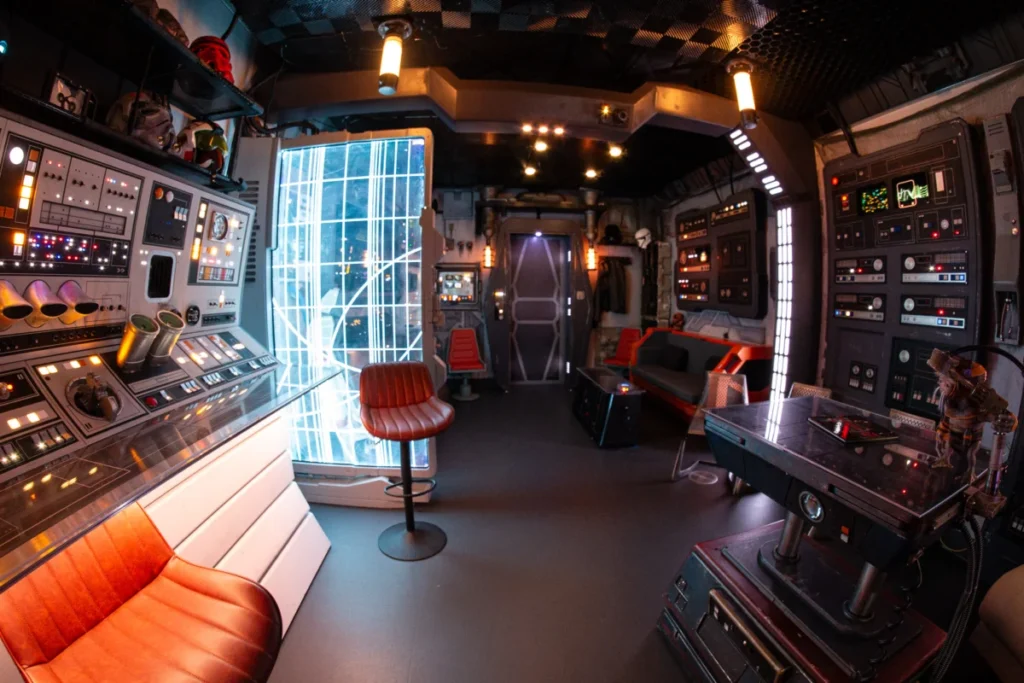
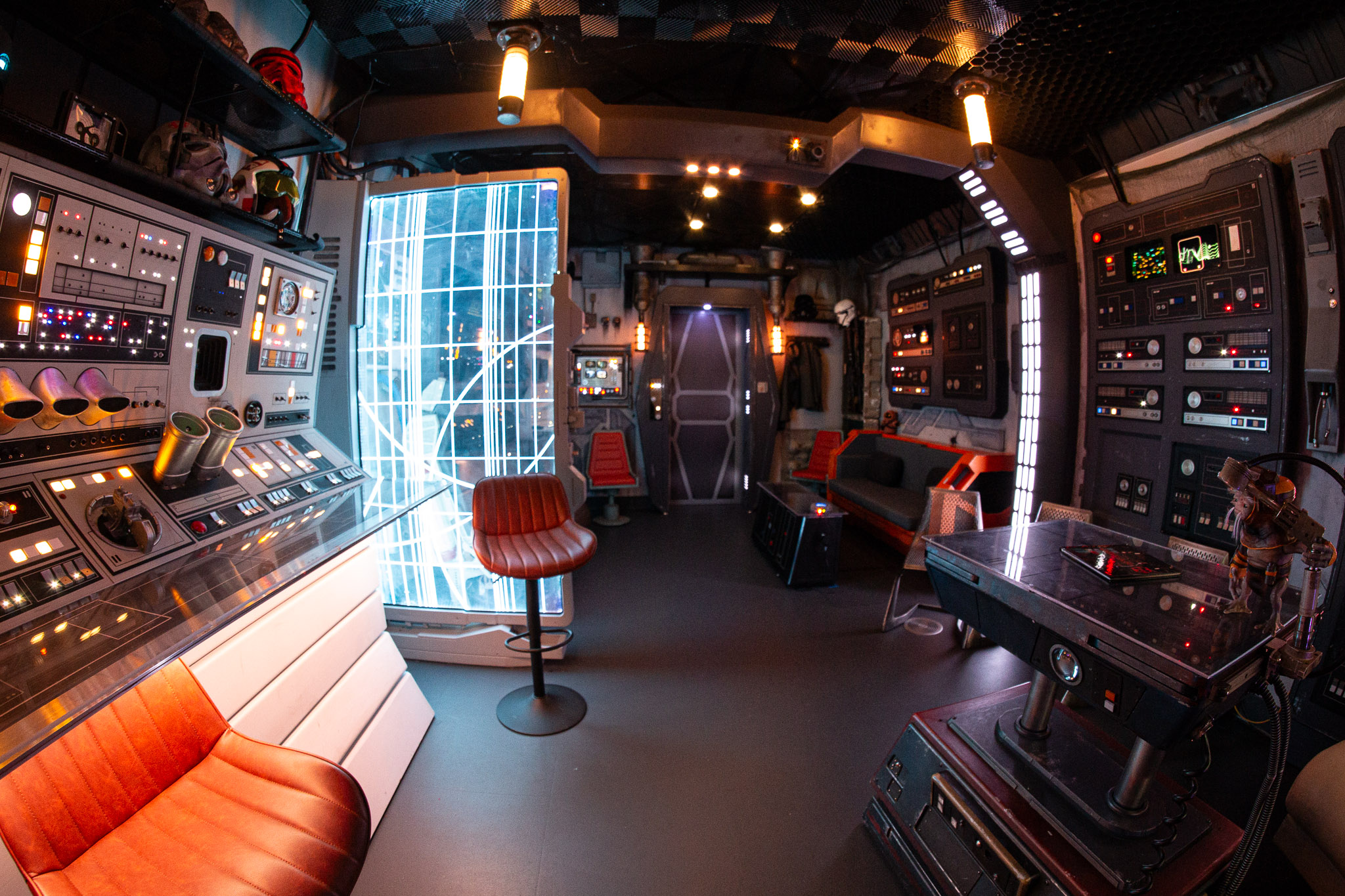
Constructed behind a floor-to-ceiling recruitment poster featuring Darth Vader, the Rebel Hideout is designed to look like a clandestine base established behind Imperial lines. The transition from the corporate hallway into the Hideout is intended to be a jarring shift in reality. Upon entering, visitors are greeted by a classic Star Wars title crawl that establishes the narrative context of the room, accompanied by ambient engine hums sourced directly from the Lucasfilm production sound library.
The project required a multidisciplinary team to move from concept to reality. Systems engineer Trent Bateman and Tim Dobbert spearheaded the electronics and software integration, while Paul DeBaun and Greg St. Germain engineered the localized soundscape. This was not a project handled by a dedicated construction firm; it was a labor of love by engineers, artists, and technicians who spent their days working on blockbuster films and their nights soldering circuit boards and weathering walls.

Chronology of Construction and Prop Acquisition
The development of the Rebel Hideout followed a strict timeline that aligned with the conclusion of several major Star Wars productions. The ability to populate the room with authentic artifacts was made possible by a rare invitation from the Lucasfilm archives.
- Late 2020 – Early 2021: The project is integrated into the broader ILM office remodel. To maintain the "secret" nature of the room, its specialized features—including a dedicated sink and complex wiring—were often questioned by those reviewing the blueprints.
- Mid-2021: Lucasfilm archives offered the team access to surplus set pieces from Rogue One: A Star Wars Story, Andor, Solo: A Star Wars Story, and Star Wars: Episode IX – The Rise of Skywalker.
- 2022 – 2023: The "Kitbashing" phase. The team received a massive PDF catalog of props, ranging from computer terminals to vending machines. They spent months measuring dimensions and creating virtual layouts to ensure the pieces would fit within the physical constraints of the room.
- Late 2023: Physical construction intensified. Former workplace services specialist Kyle Johnson provided access to on-campus workshops, allowing the team to use industrial tools for fabrication and painting.
- May 4, 2024: The Rebel Hideout officially opened with a celebration coinciding with "Star Wars Day."
Technical Specifications and Engineering Marvels
The Rebel Hideout is a marvel of "invisible" technology. While the room appears to be a low-tech military outpost, it is managed by a sophisticated digital backbone. A Mac Mini running QLab software serves as the central "brain," controlling an array of custom-designed printed circuit boards (PCBs) hidden within the props.

To manage the cost and complexity of the project, the ILM Electronics Club designed a modular PCB system. These boards support daughter boards and communicate via Open Sound Control (OSC), allowing for complex interactivity. For instance, many of the switches and sliders on the authentic film props were originally static; the ILM team reverse-engineered these components, replacing dead LEDs and installing functional sensors.
One of the room’s centerpieces is a coffee table that was originally Babu Frik’s workbench in The Rise of Skywalker. During the retrofitting process, the team discovered the prop was built upon a motorized wheelchair base. Principal graphics engineer Lutz Latta located the original German manual for the base and integrated radio controls. Initially, the table moved at a dangerous speed; after recalibration, it now functions as a remote-controlled drink delivery system.

Other interactive elements include:
- The Navigational Console: A screen-used piece from Solo that can be toggled to function as a music synthesizer.
- The Entryway: Equipped with proximity sensors that trigger an "intruder detector" alert if unauthorized movement is detected.
- Mechanical Handles: Large chrome levers from Solo that use accelerometers for precise angle detection, intended for a future escape-room-style game.
Calypso: The Pirate Legend Reborn
While the Rebel Hideout celebrates the futuristic, the Calypso lounge pays homage to the golden age of piracy and ILM’s work on the Pirates of the Caribbean franchise. Located near the Hideout and marked by a hand-carved cephalopod sign, Calypso is designed to resemble a captain’s quarters within a shipwreck.

The history of Calypso is a odyssey of its own. It was originally designed in 2012 by Steven Knipping at Pacific Data Images (PDI/DreamWorks). When PDI closed, the room was moved to Visceral Games (a division of EA), and eventually into storage after Visceral’s dissolution. When Knipping joined ILM, the success of the Rebel Hideout provided the impetus to resurrect Calypso within the ILM headquarters.
Calypso features a high concentration of screen-used artifacts from Pirates of the Caribbean films 1 through 4. These include:

- Model Ship Yardarms: Massive components from miniature ships used for wide-angle maritime shots.
- Gunport Lids: Authentic covers that once shielded cannons on film sets.
- Davy Jones Bust: A highly detailed reference bust used by lighting artists during production to calibrate visual effects.
- The Skeleton: A barnacle-encrusted prop that, while pirate-themed, actually originated from the production of Indiana Jones and the Dial of Destiny.
Cultural and Professional Implications
The existence of these rooms highlights a critical aspect of workplace culture at top-tier creative firms. In an industry where artists often spend 10 to 12 hours a day staring at computer monitors, the physical act of "making"—sawing wood, soldering wires, and painting textures—provides a necessary psychological outlet.
Industry analysts suggest that such projects contribute significantly to employee retention and morale. By allowing staff to interact with the history of their craft, ILM fosters a sense of stewardship over the franchises they help build. These rooms are not just lounges; they are "creative incubators" where the environment itself inspires the next generation of visual storytelling.

Furthermore, the Rebel Hideout and Calypso serve as a bridge between the practical effects era of the 1970s and the digital era of the 2020s. They embody the philosophy that the best visual effects are grounded in physical reality.
The Future: Expansion and Immersive Gaming
Neither room is considered "finished" by its creators. The team continues to add "Easter eggs"—hidden features that can only be activated by specific sequences of button presses. Plans for Calypso include the installation of a day/night lighting cycle, projection mapping for the Davy Jones bust, and a 3D spatial audio system featuring waves and wildlife sounds from the original Pirates of the Caribbean theme park ride.

The Rebel Hideout is also evolving into a venue for an elaborate escape-room game. The infrastructure for this game is already largely in place, utilizing the networked props to create puzzles that require teamwork and knowledge of the Star Wars universe to solve.
As Industrial Light & Magic moves toward its 50th anniversary, these hidden worlds serve as a reminder that the magic of cinema is not just something produced for global audiences—it is a living, breathing part of the daily lives of the people who create it. While the public may never see the Rebel Hideout or Calypso in person, their influence is felt in the passion and precision ILM brings to every frame of film it touches.