BLACKSBURG, VA — The pursuit of a truly effective adhesive tape has long been a paradox: a material unequivocally sticky when needed, yet effortlessly disappearing when its utility expires. This scientific ideal, crucial for advancing sustainable practices across myriad industries, is now closer to reality thanks to groundbreaking research from Virginia Tech. Chemists John Matson, Ph.D., Josh Worch, Ph.D., and their dedicated teams are leading a paradigm shift in material science, developing pressure-sensitive adhesives (PSAs) that not only boast superior adhesion but can also be fully broken down into their original, reusable components. This innovation directly addresses a persistent environmental challenge: the pervasive contamination of recycling streams by conventional adhesive residues.
The Unseen Environmental Cost of Conventional Adhesives
For decades, pressure-sensitive adhesives have been indispensable across packaging, manufacturing, and consumer goods sectors. From sealing cardboard boxes to affixing product labels, their convenience is undeniable. However, this ubiquitous utility comes with a significant environmental drawback. The sticky residues left behind when conventional tapes are removed render countless tons of materials, particularly cardboard and other paper products, unrecyclable. This contamination is a major impediment to achieving truly circular economies, where materials are perpetually reused and recycled rather than discarded.
Globally, the packaging industry alone generates billions of tons of waste annually, a substantial portion of which relies on adhesive applications. According to market research, the global adhesives and sealants market was valued at over $60 billion in 2022 and is projected to grow significantly, underscoring the scale of the problem. When adhesive residues contaminate paper and cardboard recycling streams, they gum up machinery, reduce the quality of recycled pulp, and can ultimately lead to entire batches of otherwise recyclable materials being diverted to landfills or incinerators. This "classic friction," as Assistant Professor of Chemistry Josh Worch describes it, highlights the inherent conflict between a material’s functional lifespan and its end-of-life impact. "We want this to be useful while we’re using it, but as soon as we’re done using it, it should go away," Worch articulated, emphasizing the core philosophy guiding their research: "We’re designing for end of life in every new material that we make."
The economic ramifications are substantial. Recycling facilities incur significant costs in trying to process contaminated materials, often needing to employ additional steps for cleaning or resorting to landfilling the affected batches. This inefficiency drives up operational costs and reduces the economic viability of recycling, hindering efforts to transition towards a more sustainable global infrastructure. Environmentally, the accumulation of non-recyclable adhesive-laden waste contributes to landfill expansion, greenhouse gas emissions from decomposition, and the depletion of virgin resources for new material production.
A New Era of Adhesive Design: Degradation from the Outset
The Virginia Tech teams are tackling this challenge by integrating degradability directly into the foundational design of PSAs. This approach moves beyond simply finding ways to remove adhesives post-use; instead, it engineers materials that are inherently programmed to disassemble when their purpose is served, without compromising on performance during their active lifespan. This foresight in design is critical for creating truly sustainable materials that fit seamlessly into a circular economy model.
The research has unfolded across two distinct yet complementary fronts, each yielding remarkable results in developing high-performance, degradable adhesives.
The Mono-Material Revolution: Lipoic Acid-Based Adhesives
One significant breakthrough emerged from the Worch lab, where a recent study published in Advanced Functional Materials detailed the creation of a tape with an adhesive and plastic backing layer that can be recycled together. This innovation, spearheaded by Worch and graduate researcher Regina Ham, represents a "mono-material" design, where both layers are chemically similar despite performing different functions. This chemical congruity is vital for simplified recycling processes, as it eliminates the need for complex separation techniques often required for multi-material products.
The key to this adhesive’s remarkable properties lies in lipoic acid, a naturally occurring sulfur-based compound found in common foods like broccoli and spinach. Ham utilized this compound to create exceptionally large, inherently tacky polymers. Through meticulous adjustments to the concentration of lipoic acid, she discovered the optimal balance between tackiness—the ability to stick—and cohesiveness—the internal strength that prevents the adhesive from splitting or leaving residue. The resulting adhesive compound demonstrated exceptional performance, surpassing the adhesion strength of heavy-duty commercial duct tape.
Beyond its impressive stickiness, the true innovation of this lipoic acid-based adhesive lies in its degradability. A mild chemical reaction, easily initiated, takes only a few hours to break down both the adhesive and its backing layer into their original chemical components. Crucially, these components can then be reconstructed into new adhesive tapes, offering an almost infinite cycle of reuse. This closed-loop system holds immense promise for industries seeking to minimize waste and maximize resource efficiency, offering a tangible pathway toward a circular economy for adhesives.
Bottlebrush Polymers: Unprecedented Strength and Rapid Degradation
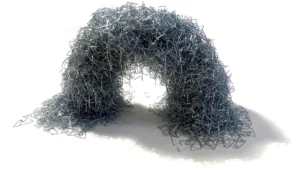
Concurrently, in the Matson lab, another groundbreaking degradable adhesive was being developed, this one boasting even greater strength. The work, recently published in Angewandte Chemie, focuses on a different polymer architecture known as bottlebrush polymers. These polymers derive their name from their microscopic structure: a central backbone from which numerous side chains protrude, resembling a brush used for cleaning bottles.
Former graduate student Clark Vu and current graduate student Isaac Addo were instrumental in this research. They engineered a novel variation of the bottlebrush polymer by stringing together molecules of a viscous oil and a gas. The outcome was a transparent, moldable polymer with a unique, putty-like texture. Recognizing its potential, Addo brought this novel polymer to Regina Ham in Worch’s lab for testing. Ham, with her expertise in adhesive characterization, transformed the polymer into tape and meticulously measured the force required to peel it from a surface.
The results were astonishing. "When she got back to us with the results, we couldn’t believe what we were hearing," Addo recounted. The new bottlebrush polymer adhesive exhibited adhesion strength four times greater than that of commercial adhesives used in standard duct tape. This level of performance is unprecedented for a degradable material, challenging the long-held assumption that sustainability must come at the expense of functionality.
Adding to its remarkable attributes, this bottlebrush polymer adhesive degrades rapidly. A simple douse with mildly alkaline water initiates its breakdown, with the process completing within minutes. This swift degradation mechanism makes it exceptionally appealing for applications where quick, clean removal is paramount, such as temporary industrial fixings, medical applications, or protective films that need to be removed without leaving any trace.
Scientific Principles and the Path to a Circular Economy
The success of both these research thrusts hinges on sophisticated polymer chemistry that allows for reversible bonding and controlled degradation. Unlike conventional polymers, which are typically designed for extreme stability, these new materials incorporate specific chemical linkages that can be selectively cleaved under mild conditions. This precision engineering enables the adhesives to maintain robust performance during use while ensuring their complete deconstruction at the end of their life cycle.
These innovations are not merely incremental improvements; they represent a fundamental shift in how materials are conceived and utilized. By prioritizing "design for end-of-life," the Virginia Tech teams are setting a new standard for sustainable materials development. The ability to recover original components for re-synthesis not only reduces waste but also minimizes the energy and resource consumption associated with manufacturing new materials from scratch. This aligns perfectly with the principles of a circular economy, which aims to keep products and materials in use, regenerating natural systems, and designing out waste and pollution.
Broader Implications and Future Outlook
The development of these high-performance, degradable adhesives carries profound implications across multiple sectors and for the global environmental landscape.
Environmental Benefits: A Cleaner Planet
The most immediate and significant impact is environmental. By eliminating adhesive contamination in recycling streams, these new PSAs could dramatically increase the efficiency and output of recycling facilities, leading to higher recovery rates for paper, cardboard, and plastics. This would divert vast quantities of waste from landfills, reducing soil and water pollution, and mitigating greenhouse gas emissions associated with waste decomposition. Furthermore, the ability to repeatedly recycle the adhesive components themselves would lessen the reliance on virgin raw materials, conserving natural resources and reducing the energy footprint of manufacturing. Environmental advocacy groups would undoubtedly laud such advancements as critical steps towards a zero-waste future.
Economic Advantages: Driving Efficiency and Innovation
Economically, these innovations offer substantial benefits. Recycling operations could see reduced processing costs due improved material purity and less machinery downtime caused by adhesive residue. Manufacturers adopting these new adhesives could benefit from enhanced brand reputation linked to sustainability, potentially attracting environmentally conscious consumers and fulfilling corporate social responsibility goals. The potential for a closed-loop system for adhesive production also opens doors for new business models focused on material recovery and re-manufacturing, fostering innovation and creating new green jobs. The adhesive market, currently dominated by conventional products, could experience a significant transformation as demand for sustainable alternatives grows.
Industry Applications: From Packaging to Medical Devices
The versatility and superior performance of these degradable adhesives make them suitable for a wide array of applications:
- Packaging: Revolutionizing cardboard box sealing, product labeling, and tamper-evident seals, ensuring that billions of tons of packaging materials can be truly recycled.
- Consumer Goods: Enabling easily removable labels on produce, temporary fixings for home repairs, and improved recyclability for product packaging.
- Automotive: Facilitating temporary assembly during manufacturing, securing protective films on new vehicles, and streamlining end-of-life vehicle dismantling for component recovery.
- Electronics: Allowing for cleaner disassembly of electronic devices for component recycling and repair, as well as temporary adhesion for protective screens or internal components during assembly.
- Medical: Offering hypoallergenic, strong, yet easily removable bandages, medical tapes, and disposable device components that can be safely and completely degraded post-use, reducing biohazard waste.
- Construction: Providing high-strength temporary holds for materials, masking tapes that leave no residue, and improved recyclability of building components.
The superior adhesion strength demonstrated by both the lipoic acid and bottlebrush polymer adhesives means that industries would not have to compromise on performance to achieve sustainability goals. This dual benefit is a powerful driver for adoption.
The Road Ahead: Scaling and Commercialization
While the laboratory results are exceptionally promising, the journey from discovery to widespread commercialization involves several critical steps. Researchers will focus on scaling up production of these novel polymers, optimizing manufacturing processes for cost-effectiveness, and conducting extensive testing under various real-world conditions—including different temperatures, humidities, and mechanical stresses. Regulatory approvals and standardization will also be crucial for market entry.
Industry leaders, keenly aware of growing consumer and regulatory pressure for sustainable products, are likely monitoring these developments closely. The successful commercialization of these degradable adhesives could position Virginia Tech as a leader in sustainable materials science, attracting further investment and collaboration.
In conclusion, the work emanating from the Matson and Worch labs at Virginia Tech marks a pivotal moment in the evolution of material science. By designing powerful adhesives that are inherently degradable and recyclable, these chemists are not merely solving a technical problem; they are laying foundational groundwork for a more sustainable future. Their innovations offer a tangible solution to the pervasive issue of adhesive contamination, paving the way for cleaner recycling streams, reduced waste, and a more circular global economy where utility and environmental responsibility are no longer mutually exclusive. The era of truly smart adhesives—sticky when you need them, gone when you don’t—has finally arrived.