A transformative step in New York City’s pursuit of a cleaner, more resilient energy future has been realized with the inauguration of a new NineDot battery energy storage system (BESS) in Hunts Point, the Bronx. This state-of-the-art facility is poised to deliver nearly 20 megawatts (MW) of power, capable of serving approximately 20,000 homes during critical peak grid hours, significantly bolstering the region’s energy infrastructure and addressing long-standing environmental inequities.
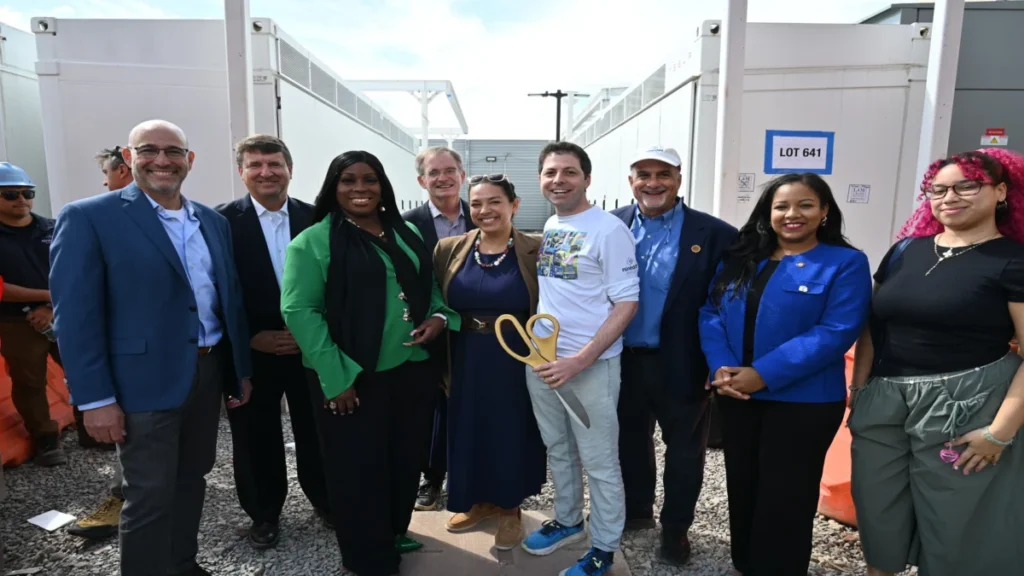
The official ribbon-cutting ceremony, a testament to collaborative efforts, recently brought together key stakeholders including elected officials, policymakers, and dedicated community organizations. Among those present was Bronx Borough President Vanessa Gibson, who underscored the profound significance of the new storage system. Gibson articulated that the project directly confronts the historical environmental injustice and chronic disinvestment that Hunts Point and the broader Bronx community have endured for decades. This initiative represents not merely a technological upgrade but a vital step towards environmental equity and improved public health outcomes for a community disproportionately burdened by pollution.
Adam Cohen, NineDot’s chief technology officer and co-founder, echoed these sentiments, expressing honor in bringing the battery storage site to Hunts Point. Cohen highlighted the area’s historical plight, having been "overburdened by high-emitting fossil fuels." He emphasized that the battery storage facility signifies a crucial "inflection point" in efforts to enhance both the local environment and the reliability of the grid, aligning with broader city and state clean energy mandates. The system is anticipated to be fully operational and prepared to mitigate the impact of next summer’s anticipated heat waves, offering a robust solution to peak demand challenges.
Hunts Point: A Community on the Front Lines of Environmental Justice
The strategic placement of NineDot’s new battery storage system in Hunts Point is deeply rooted in the area’s complex environmental history. For decades, this South Bronx neighborhood has been at the epicenter of significant pollution pressures, earning it the designation of an environmental justice community. The confluence of major transportation arteries, industrial operations, and a high concentration of low-income residents has created a challenging public health landscape.
According to NineDot, the daily traverse of over 10,000 diesel trucks through Hunts Point contributes substantially to air pollution, primarily from vehicle emissions. Compounding this issue are two high-emissions "peaker" power plants operating in the nearby Port Morris area. These older, less efficient plants are typically fired up only during periods of high electricity demand, emitting disproportionately high levels of nitrogen oxides (NOx), sulfur dioxide (SO2), particulate matter (PM2.5), and volatile organic compounds (VOCs) into the local atmosphere. Such pollutants are known to exacerbate respiratory illnesses and cardiovascular diseases.
The human cost of this environmental burden is starkly reflected in public health statistics. Data cited in the release indicates that in 2023, the Hunts Point–Mott Haven area recorded asthma-related emergency room visits at rates two to three times the citywide average. This alarming statistic underscores the urgent need for interventions that directly target fine particulate air pollution, a primary contributor to respiratory distress. By replacing the reliance on gas-fired peaker plants, energy storage solutions like NineDot’s directly address the root causes of this localized public health crisis, offering a pathway to cleaner air and healthier lives for residents.
The Role of Battery Storage in Modernizing New York’s Electric Grid
The transition to a cleaner, more resilient future for New York City is heavily dependent on reducing its reliance on fossil-fuel peaker plants. These facilities, while historically necessary to meet surges in electricity demand, represent an antiquated and environmentally damaging approach to grid management. The NineDot battery storage site’s genesis, replacing the former home of a fuel oil trucking company, symbolizes this pivot away from fossil fuels towards sustainable alternatives.
Battery energy storage systems (BESS) are critical components of a modernized electric grid. They function by storing electricity when demand is low and generation is abundant (e.g., from renewable sources like solar or wind), and then discharging that stored energy back into the grid during periods of high demand. This mechanism offers several crucial benefits:
- Grid Stabilization: BESS can rapidly respond to fluctuations in supply and demand, stabilizing the grid and preventing outages.
- Peak Shaving: By supplying power during peak hours, BESS reduces the need to activate inefficient and polluting peaker plants, thereby cutting emissions and potentially lowering wholesale electricity costs.
- Renewable Energy Integration: They enable greater integration of intermittent renewable energy sources by storing excess generation and releasing it when needed, thus enhancing grid flexibility.
- Enhanced Resilience: In the face of extreme weather events, which are becoming more frequent and intense due to climate change, BESS provides a localized source of power, making the grid more resilient to disruptions.
NineDot explicitly stated that battery storage would also be instrumental in providing grid resiliency as Hunts Point moves towards the electrification of its vital produce and fish markets, as well as its extensive truck fleet. This electrification effort, aimed at further reducing localized emissions, will require robust and reliable power infrastructure that BESS can readily supply.
David Sandbank, Senior Vice President at the New York State Energy Research and Development Authority (NYSERDA), affirmed the broader strategic importance of the project. Sandbank remarked that "Battery energy storage is an important tool for modernizing New York’s electric grid and making it more resilient to extreme weather and high-stress conditions." He further emphasized that the Hunts Point project serves as a compelling demonstration of how the synergy between "the right policies, partners, and programs can deliver benefits for communities throughout New York City and beyond," highlighting a scalable model for future clean energy deployments.
New York State’s Ambitious Clean Energy Landscape
The NineDot project in Hunts Point is not an isolated initiative but fits squarely within New York State’s ambitious climate and clean energy framework. The state’s Climate Leadership and Community Protection Act (CLCPA), enacted in 2019, is one of the most aggressive climate laws in the United States. It mandates a 70% renewable energy supply by 2030, a 100% zero-emission electricity grid by 2040, and an 85% reduction in greenhouse gas emissions from 1990 levels by 2050. To achieve these targets, significant investments in renewable generation, transmission infrastructure, and, critically, energy storage are required.
NYSERDA plays a pivotal role in implementing the CLCPA, offering programs and incentives to accelerate the deployment of clean energy technologies. The state has set a target of deploying 6 GW of energy storage by 2030, recognizing its essential function in grid modernization and renewable energy integration. Projects like NineDot’s are direct contributors to meeting this statewide goal, demonstrating tangible progress in a densely populated urban environment where energy demands are highest.
The CLCPA also places a strong emphasis on environmental justice, mandating that at least 35% (with a goal of 40%) of the benefits from clean energy investments flow to disadvantaged communities. Hunts Point, as a recognized environmental justice community, directly benefits from this mandate, illustrating how state-level policy can drive targeted investments that address historical inequities.
NineDot Energy’s Expanding Footprint and Future Vision
NineDot Energy has rapidly emerged as a significant player in New York City’s clean energy landscape, with a clear strategy to deploy distributed battery storage solutions. The company’s track record demonstrates the immediate value of these systems, particularly during periods of high demand.
NineDot’s existing battery systems have already been deployed during periods of extreme electricity demand, demonstrating their critical role. Company reports highlight their performance during a significant heatwave event, citing data from July 1-4, 2026, where nine NineDot battery projects exported nearly 34 megawatts during peak hours, providing substantial support to Con Edison’s local power network and the statewide power transmission system. This impressive output is equivalent to removing the electricity demand of roughly 50,000 window air conditioners from the grid or powering approximately 34,000 households for four hours each day during peak demand. While the specific date of the heatwave is noted for 2026, the company’s established track record points to existing infrastructure already contributing to grid stability.
Currently, NineDot operates 11 projects across six locations in Staten Island and the Bronx, totaling 39 MW of operational battery storage capacity. This established foundation positions the company for aggressive expansion. NineDot has more than 60 additional projects in various stages of development and boasts a substantial pipeline exceeding 1 gigawatt (GW) of potential capacity. The company has articulated a clear strategic objective: to have 400 MW of battery storage in operation, under construction, or in development by the end of 2026. This ambitious goal underscores the rapid scaling necessary to meet New York City’s and New York State’s clean energy targets. The private sector investment and innovative approaches demonstrated by companies like NineDot are indispensable in translating broad policy goals into tangible infrastructure.
Broader Implications and the Path Forward
The NineDot Hunts Point project carries multifaceted implications that extend beyond immediate energy provision.
-
Public Health Improvement: The most direct and immediate benefit for the Hunts Point community is the anticipated improvement in air quality. By reducing the reliance on polluting peaker plants, the project is expected to lower emissions of harmful particulates and gases, directly contributing to a decrease in respiratory illnesses like asthma. This represents a tangible step towards rectifying environmental injustices.
-
Economic Development: The construction and operation of such facilities create jobs, from skilled labor during the building phase to technical roles for ongoing maintenance and monitoring. Furthermore, a more resilient and cleaner energy supply can foster economic growth in the community, attracting new businesses and supporting existing ones, particularly those focused on electrification initiatives.
-
Enhanced Grid Resiliency and Security: With increasing threats from climate change-induced extreme weather, a distributed network of battery storage systems makes the grid less vulnerable to widespread outages. This localized resilience is crucial for urban centers like New York City, ensuring continuous power supply to critical services and homes.
-
A Model for Urban Energy Transition: The successful deployment of a significant BESS in a densely populated urban environment, particularly on a remediated site previously associated with fossil fuels, serves as a powerful model for other cities grappling with similar challenges. It demonstrates that strategic land use, technological innovation, and strong community engagement can transform urban landscapes into hubs of clean energy.
-
Catalyst for Electrification: The project’s support for the electrification of Hunts Point’s produce and fish markets, as well as its truck fleet, highlights its role as an enabler of broader decarbonization efforts. As more sectors transition from fossil fuels to electricity, reliable and clean power sources become even more critical.
While the path to a fully decarbonized grid is complex, involving significant regulatory, financial, and logistical challenges, projects like the Hunts Point battery storage system offer concrete evidence of progress. Continued policy support, technological advancements, and sustained investment will be essential to scale these solutions across New York City and beyond. The NineDot facility in Hunts Point stands as a beacon of this transition, embodying the convergence of environmental justice, technological innovation, and strategic urban planning to forge a healthier, more sustainable future.