The field of analytical chemistry and molecular diagnostics is facing a transformative shift as engineers at the University of Toronto have unveiled a sophisticated new class of dye-sensitized nanoparticles. These microscopic structures are engineered to detect chemical substances at concentrations previously thought to be near the limit of detection, while simultaneously possessing the rare ability to distinguish between molecules that are virtually identical in their atomic composition. By leveraging the principles of photon upconversion and advanced structural engineering, the research team has developed a tool that could redefine quality control in pharmaceutical manufacturing and environmental protection.
The research, recently published in the Journal of the American Chemical Society, details how these nanoparticles serve as highly sensitive optical probes. When these particles encounter and attach to a specific target chemical, they generate a distinct, high-intensity light signal. This process is not merely a reflection of light but a sophisticated energy conversion known as "upconversion," where the particles absorb low-energy photons and emit them as higher-energy photons. This capability allows for an unprecedented level of clarity in detection, effectively silencing the "background noise" that often plagues sensitive chemical analysis.
The Science of Upconversion and the "Stargazing" Effect
To understand the significance of this breakthrough, one must first look at the limitations of traditional organic fluorophores. For decades, fluorophores have been the standard in fluorescent labeling. However, these molecules operate on a principle where the excitation energy must be higher than the emission energy. In practical terms, this means they convert high-energy light (such as ultraviolet or blue light) into lower-energy light (such as red or green).
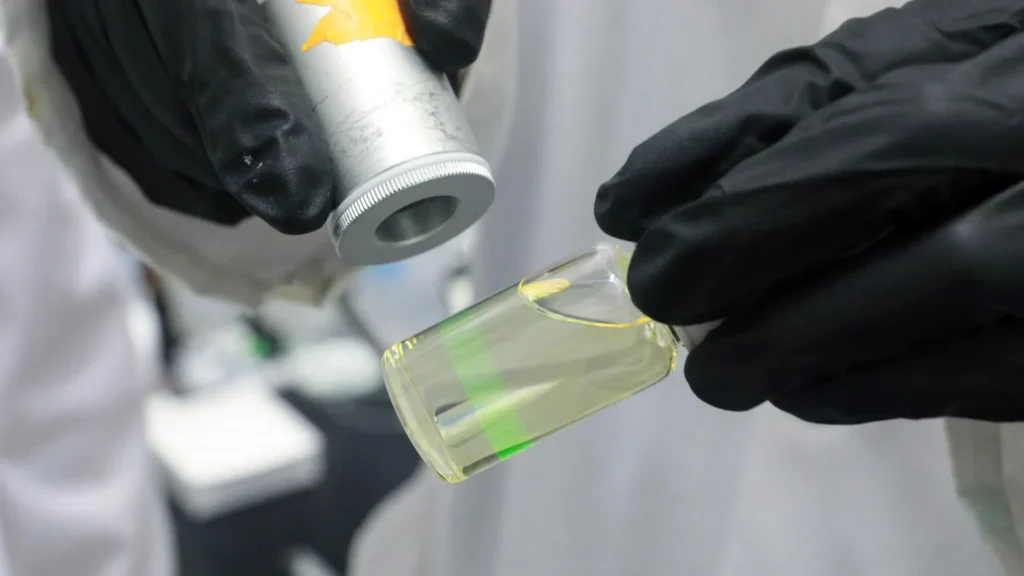
Professor Kai Huang, the senior author of the study and a leading researcher at the University of Toronto, explains that the new nanoparticles reverse this paradigm. By utilizing upconversion, the particles can be excited by near-infrared light—a low-energy, low-cost laser source—and emit a bright green, high-energy signal.
The primary advantage of this "upward" conversion is the elimination of autofluorescence. In most biological or environmental samples, the sample itself will glow slightly when hit with high-energy light, creating a "haze" that obscures the target signal. Professor Huang compares this to the astronomical challenge of seeing stars during the day. Just as the sun’s overwhelming brightness makes it impossible to see distant stars until nightfall, traditional fluorescence often struggles against the background glow of the medium. By using low-energy infrared light that does not excite the rest of the sample, the engineers have effectively "turned off the sun," allowing the "stars"—the nanoparticles—to shine with absolute clarity against a pitch-black background.
Engineering a One-Way Energy Tunnel
The internal architecture of these nanoparticles is the result of years of iterative design and complex physics. The particles rely on specific ions from the lanthanide family—specifically ytterbium and erbium—to facilitate the energy transfer. Lanthanides are known for their unique electronic configurations, which allow them to store and move energy in ways that most other elements cannot.
In previous iterations of upconversion technology, researchers typically used a host matrix composed of sodium, yttrium, and fluorine. The ions were distributed somewhat randomly throughout this structure. The University of Toronto team, however, identified a significant bottleneck in this design known as "back-energy transfer."
Jiaze Wu, a PhD student in Huang’s lab and the lead author of the paper, noted that when ytterbium ions are packed too densely in a standard structure, they begin to re-absorb the energy that the erbium ions are trying to emit. This creates a loop where light is bounced back and forth internally rather than being released as a detectable signal.
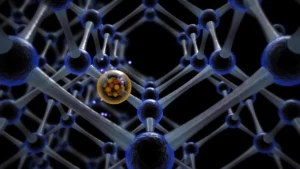
To solve this, the team redesigned the particle from the ground up. They replaced the traditional matrix with a combination of lithium, lutetium, and fluorine. More importantly, they moved away from flat, hexagonal shapes to a three-dimensional, diamond-like structure featuring a core-shell-shell arrangement.
By creating a gradient where the concentration of ytterbium increases toward the center of the particle, the researchers created what they describe as a "one-directional energy tunnel." The energy captured by the organic dyes on the surface flows inward toward the erbium-rich core, but the structural design prevents that energy from flowing back out in an unproductive manner. This ensures that nearly every photon captured by the particle is converted and emitted as useful signal light.
Computational Modeling and Quantitative Superiority
The development of this core-shell-shell structure was not a product of simple trial and error. The research team relied heavily on high-level computational physics to predict how atoms would behave at the subatomic level. Weixiang Ben, an undergraduate student who led the computational aspect of the project, utilized Monte Carlo simulations and density functional theory to model the energy interactions.
These simulations allowed the team to test dozens of theoretical formulations before ever stepping into the wet lab. This "digital twin" approach to nanotechnology ensured that the manufactured particles were already optimized for maximum brightness.
The results of this rigorous engineering are quantifiable and significant. According to the data provided by the lab, these new dye-sensitized nanoparticles are approximately 150 times brighter than standard upconversion nanoparticles that lack dye sensitization. Even when compared to the most highly optimized "conventional" upconversion structures previously recorded in scientific literature, the Toronto design remains 50 times brighter under identical excitation conditions.
Addressing the Isomer Challenge in Pharmaceuticals
One of the most promising applications for this technology lies in the pharmaceutical industry, specifically in the detection of structural isomers. Isomers are molecules that share the exact same chemical formula—the same number of carbons, hydrogens, and oxygens—but differ in their spatial arrangement.
In medicine, the shape of a molecule is often as important as its composition. A famous historical example is thalidomide; one version of the molecule treated morning sickness, while its structural isomer caused severe birth defects. While modern regulations are much stricter, the challenge of "impurities" in the form of unwanted isomers remains a multi-billion-dollar headache for drug manufacturers.
Currently, detecting these subtle differences requires massive, expensive equipment such as High-Performance Liquid Chromatography (HPLC) or Nuclear Magnetic Resonance (NMR) spectroscopy. These tests are time-consuming and require significant sample volumes.
The University of Toronto’s nanoparticles offer a potential alternative. Because they can be "tuned" to bind only to a specific molecular shape, they can act as a litmus test for purity. If a batch of drugs contains even a 10% contamination of the wrong isomer, these nanoparticles can flag the issue instantly using nothing more than a low-cost laser and a handheld detector. This level of sensitivity allows for real-time monitoring of drug synthesis, potentially lowering costs and increasing the safety of pharmaceutical products.
Environmental Monitoring and Future Outlook
Beyond the laboratory and the factory floor, the researchers see a clear path for these nanoparticles in environmental science. The ability to detect trace amounts of pollutants in groundwater is a growing priority as global concerns over "forever chemicals" (PFAS) and heavy metal contamination rise.
In vast bodies of water, pollutants are often diluted to the point where they are difficult to detect without collecting and concentrating large volumes of liquid. The high brightness of the Toronto nanoparticles means that even if only a few particles find their targets in a sample, the resulting green light is strong enough to be seen by sensitive optical sensors. This could lead to the development of portable, field-ready sensors that provide instant feedback on water quality in remote areas.
However, the path from a laboratory breakthrough to a commercial product is rarely short. Professor Huang acknowledges that while the proof-of-concept is undeniable, the "long roadmap" to commercialization involves scaling up production. Manufacturing these complex, layered diamond-shaped particles at a metric-ton scale while maintaining the precision of the core-shell-shell gradient is the next major engineering hurdle.
Despite these challenges, the team is already working on manufacturing solutions. The modular nature of the design—where the "icing" (the dye) can be changed to target different molecules while the "cookie" (the nanoparticle) remains the same—suggests a versatile platform that could be adapted for a wide range of industries.
The University of Toronto’s work represents a significant milestone in the convergence of nanotechnology, computational physics, and analytical chemistry. By successfully manipulating energy flow at the atomic scale, they have provided a tool that not only sees what was previously invisible but does so with a clarity that could set a new standard for molecular detection in the years to come.