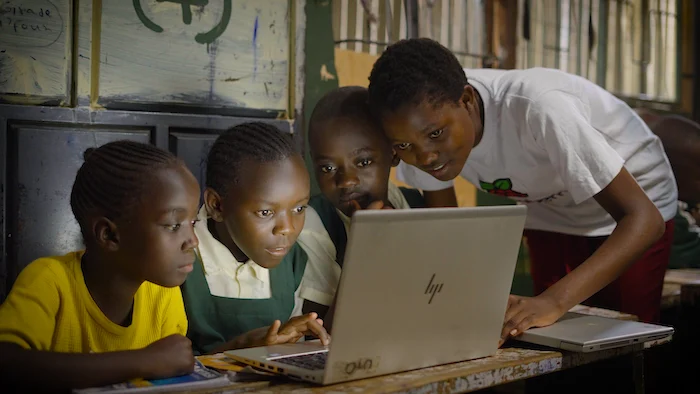
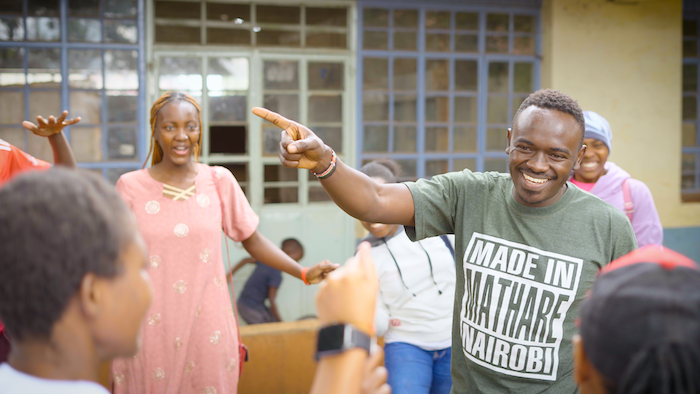
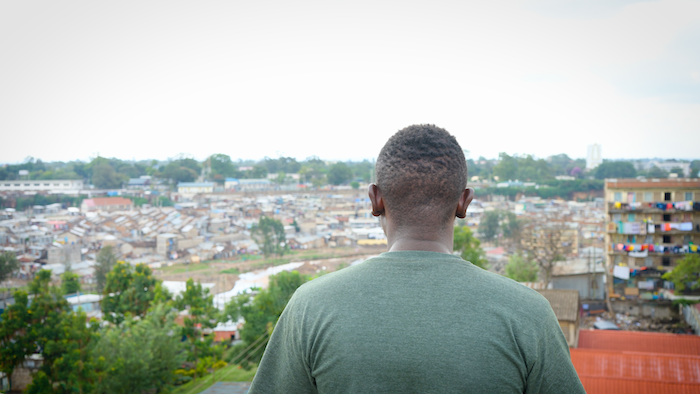
In the heart of Mathare, one of Nairobi’s oldest and largest informal settlements, a quiet revolution is taking place, driven not by traditional industry, but by the lines of code appearing on glowing computer screens. Oasis Mathare, a community-based organization founded by local visionary Douglas Mwangi, has become a focal point for digital literacy, demonstrating that technology can serve as a powerful equalizer in regions where formal education systems often fail to reach their full potential. Through a strategic partnership with the Raspberry Pi Foundation’s Code Club network, the initiative is providing young people with the technical skills and psychological confidence necessary to navigate a rapidly digitizing global economy.
The Context of the Digital Divide in Mathare
To understand the impact of Oasis Mathare, one must first consider the socio-economic landscape of the Mathare Valley. Home to an estimated 500,000 people living in high-density, informal housing, the area faces significant challenges, including limited access to clean water, sanitation, and formal employment. According to various NGO reports, a substantial percentage of youth in Mathare do not complete secondary education due to financial constraints or the need to contribute to household incomes.
In this environment, the "digital divide" is not merely a lack of internet access; it is a lack of the specialized skills required to participate in Kenya’s burgeoning tech sector, often referred to as the "Silicon Savannah." While Nairobi has become a global hub for mobile money and software development, the residents of informal settlements are frequently left behind. Douglas Mwangi founded Oasis Mathare to bridge this gap, operating on the principle that while talent is distributed equally, opportunity is not.
The Genesis of Oasis Mathare: A Chronology of Empowerment
The story of Oasis Mathare began with Douglas’s own realization that the traditional path to success—formal higher education—was not the only route to a sustainable livelihood. Growing up in Mathare, Douglas witnessed the limitations of the local education system. His own entry into the professional world did not come from a university degree, but from an internet café.
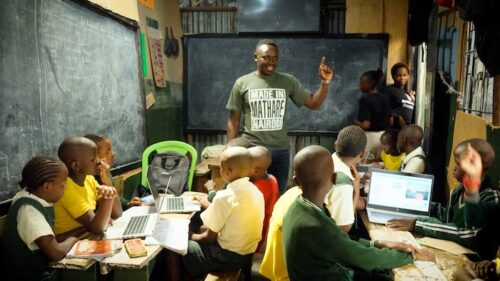
In the early 2000s, Douglas spent his time in local cyber cafés, teaching himself the basics of graphic design and digital literacy through trial and error. This self-taught proficiency led to his first job, proving to him that technical skills could transcend the lack of a formal certificate. This personal success became the blueprint for Oasis Mathare. He recognized that if he could teach himself, he could create a structured environment to teach others, providing them with a shortcut to economic stability.
Last year, the Raspberry Pi Foundation highlighted Douglas’s initial efforts to establish a coding center. Since then, the organization has expanded its reach, integrating more deeply with local schools and refining its curriculum to meet international standards. The latest developments focus on the "Code Club" model, which emphasizes project-based learning and peer-to-peer mentorship.
Implementing the Code Club Model
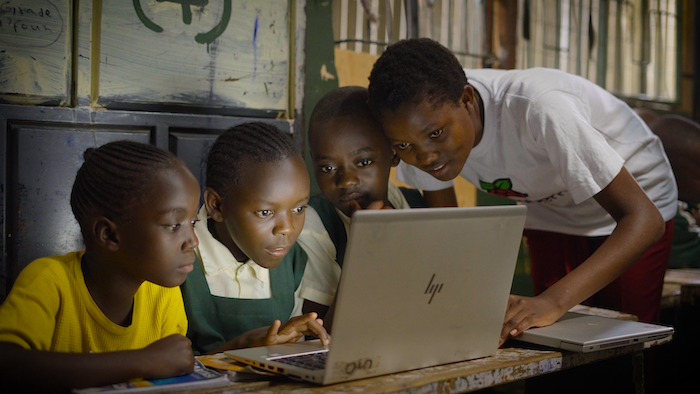
The transition from a general computer lab to a structured Code Club was a pivotal moment for Oasis Mathare. Initially, the organization developed its own internal curricula, but Douglas noted that there were "missing pieces" in the educational flow. By adopting the Raspberry Pi Foundation’s learning pathways, Oasis Mathare was able to provide a more cohesive and scalable educational experience.
These pathways are designed to be intuitive, allowing students to progress from basic block-based coding (such as Scratch) to more complex text-based languages like Python and HTML/CSS. This structured approach is critical in a community where students may have irregular attendance due to external life pressures. The modular nature of the Code Club resources ensures that a student can pick up where they left off, maintaining their momentum.
The physical infrastructure of these clubs is often modest, consisting of repurposed spaces and donated hardware, but the intellectual output is significant. Students are not just learning to type; they are learning computational thinking—the ability to break down complex problems into smaller, manageable parts. This skill is transferable to almost any profession, from entrepreneurship to urban planning.
The Pipeline from Learners to Leaders
One of the most significant outcomes of the Oasis Mathare initiative is the emergence of a self-sustaining mentorship ecosystem. As students gain proficiency, they are encouraged to return to the club as volunteer mentors. This "learner-to-leader" pipeline addresses two critical needs: the need for relatable role models and the need for sustainable staffing in community projects.
Faith, a student who eventually became a mentor, reflects a common misconception among youth in underserved areas: the belief that coding is reserved for "genius" children or those from wealthy backgrounds. "My thought was like coding is only for genius kids and the smart ones," Faith stated. "But I will encourage a young learner to actually partake in this. Coding is not hard. It’s actually fun."
This shift in perception is a core goal of the program. When children see their peers—individuals who share their background and daily challenges—mastering technology, the psychological barrier to entry vanishes. Another mentor, Keziah, joined the program to avoid the "negative impacts" of idleness in the community. For Keziah, volunteering is a strategic move for career growth, providing her with leadership experience while she helps the next generation.
Hope, another facilitator within the program, highlights the emotional and professional rewards of this work. "The moment the kids realized they belong to a Code Club is when I see their face light up when their projects run," Hope remarked. This sense of achievement is mutual; as the students succeed, the mentors gain a sense of purpose and professional efficacy that strengthens their own career prospects.
Supporting Data and Economic Implications
The work being done in Mathare aligns with broader economic trends in Africa. A report by the International Finance Corporation (IFC) estimates that by 2030, over 230 million jobs in Africa will require digital skills. This represents a massive opportunity for the continent’s youth, provided they have the necessary training.
Furthermore, the "gig economy" and remote work trends have made it possible for developers in Nairobi to work for companies in London, New York, or Tokyo. By providing coding skills to youth in Mathare, Oasis Mathare is effectively giving them access to a global labor market. This can lead to a significant influx of capital into the community, as successful graduates of the program begin to earn salaries that are many times the local average.
The impact of digital literacy also extends to gender equality. Douglas has emphasized that technology "knows no gender." In many traditional settings, girls may be discouraged from pursuing technical fields. However, the inclusive environment of the Code Clubs at Oasis Mathare ensures that girls are given equal seating at the computer, helping to narrow the gender gap in the STEM (Science, Technology, Engineering, and Mathematics) fields within Kenya.
Analysis of Broader Social Impact
Beyond the economic benefits, the Oasis Mathare model fosters a sense of agency. In informal settlements, residents often feel that their lives are dictated by external circumstances—poverty, lack of infrastructure, and systemic neglect. Learning to code provides a rare experience of absolute control; in the world of programming, if you write the code correctly, the computer follows the command. This builds a "growth mindset," the belief that one’s abilities can be developed through dedication and hard work.
The success of the program also highlights the importance of localized solutions. While international aid is often focused on high-level infrastructure, Oasis Mathare demonstrates that small-scale, community-led interventions can have a more immediate and profound impact on individual lives. The partnership with the Raspberry Pi Foundation serves as a model for how global organizations can support local leaders without overstepping or imposing culturally irrelevant frameworks.
Future Outlook and Scalability
As Oasis Mathare continues to grow, the focus is shifting toward sustainability and broader integration. The organization’s goal is to ensure that every child in Mathare, regardless of their formal schooling status, has the opportunity to become digitally literate. This involves expanding partnerships with local schools and potentially establishing more satellite centers.
Douglas’s message to the global community and to youth in similar situations is one of radical hope. He maintains that with a positive mind and access to the right resources, the "boundaries" of an underserved community can be broken. "For any young person… who feels that their future is limited, I would like to tell you that it is really possible," Douglas said.
The story of Oasis Mathare is a testament to the fact that the next great technological innovation could come from anywhere—including a small center in the middle of a Nairobi slum. As the digital economy continues to expand, the work of Douglas and his team of mentors provides a vital blueprint for ensuring that this growth is inclusive, equitable, and transformative for those who need it most. For those inspired by this mission, the path forward is clear: supporting local initiatives that provide the tools, the guidance, and the belief that a different future is possible through the power of code.