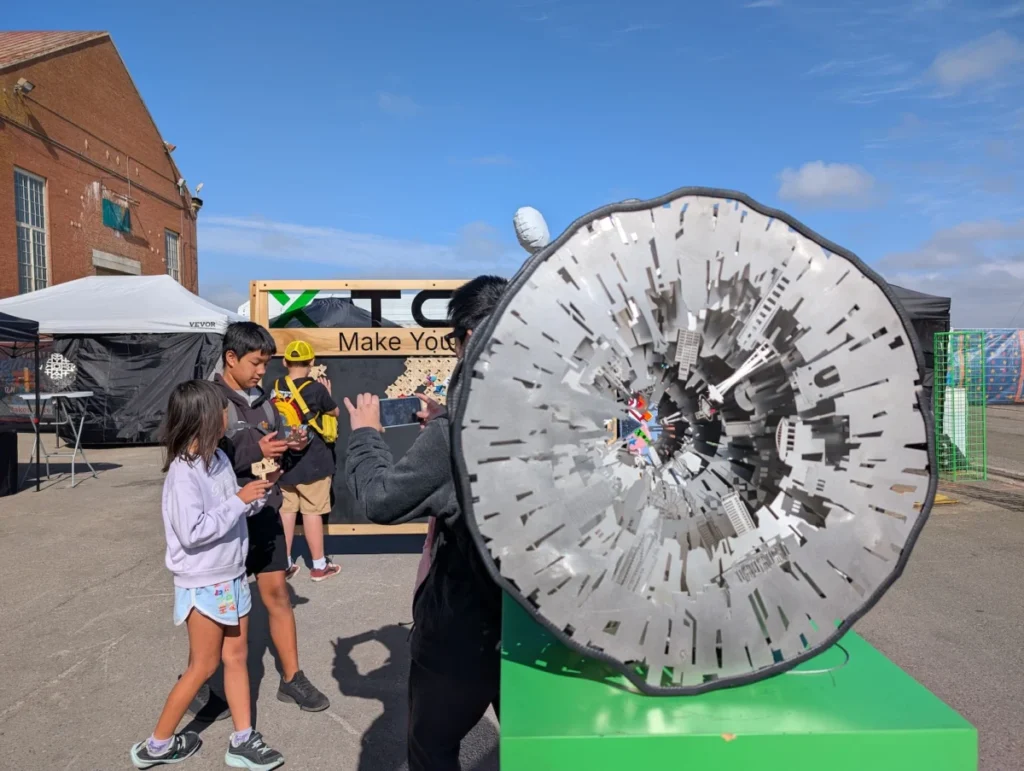
The Maker Faire Bay Area returned this week to celebrate a landmark occasion, marking two decades of a movement that has fundamentally altered the landscape of grassroots engineering, design, and technology education. As the flagship event of the global maker movement, the 2026 edition serves as both a retrospective of twenty years of innovation and a showcase for the next generation of industrial and creative tools. This year’s event is characterized by a significant integration of artificial intelligence into traditional fabrication, a renewed focus on STEM (Science, Technology, Engineering, and Mathematics) education, and the debut of sophisticated hardware aimed at bridging the gap between hobbyist projects and professional-grade engineering.

Since its inception in 2006, Maker Faire has evolved from a niche gathering of DIY enthusiasts into a global phenomenon that has inspired thousands of satellite events across more than 40 countries. The 2026 Bay Area event highlights the critical role of corporate and community partnerships in sustaining this ecosystem. Sponsors this year have shifted away from traditional trade-show marketing, instead focusing on interactive, hands-on installations that allow attendees to engage directly with emerging technologies such as Edge AI, desktop laser welding, and open-source real-time operating systems (RTOS).
The Evolution of Open-Source Hardware: Arduino’s Dual-Brain Era
Arduino, a cornerstone of the maker movement for two decades, utilized the 2026 Faire to showcase its latest advancements in microcontroller technology. The organization, which began as a project at the Interaction Design Institute Ivrea in Italy, has remained a leader in making electronics accessible to non-engineers. This year, the focus shifted toward high-performance computing with the introduction of the Arduino UNO Q and the Arduino VENTUNO Q.
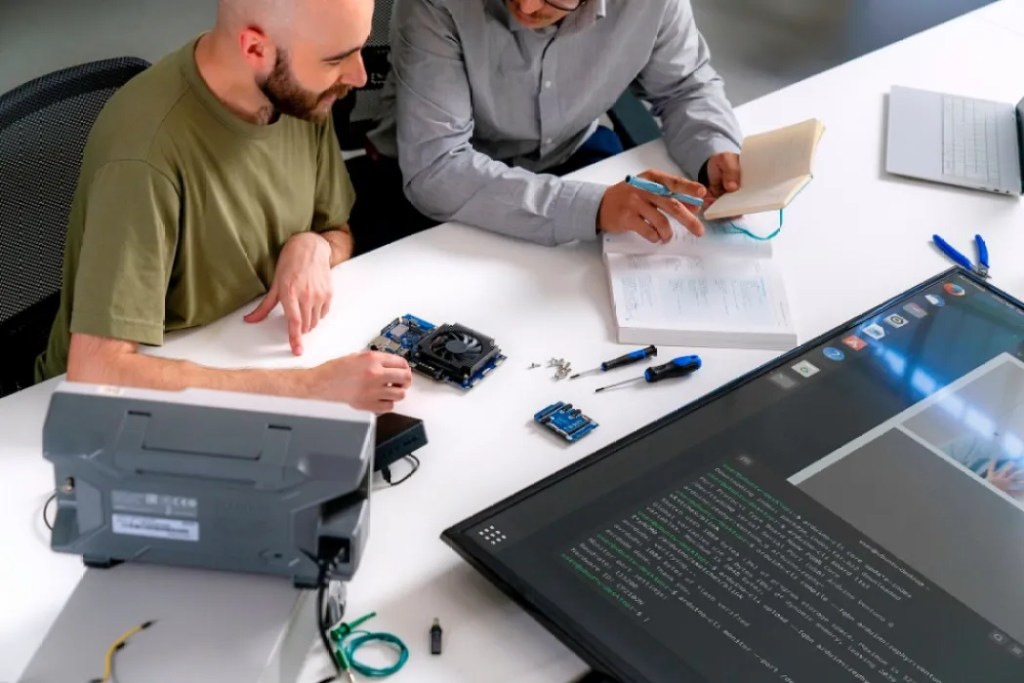
These "dual-brain" boards represent a significant leap in capability, designed to handle complex tasks such as Edge AI and real-time data processing without sacrificing the ease of use that defined the original 8-bit AVR boards. Massimo Banzi, co-founder of Arduino, delivered a keynote address reflecting on a year of development with the UNO Q. Banzi’s presentation provided a transparent analysis of the platform’s strengths and limitations, showcasing a variety of projects ranging from open-source musical instruments to sophisticated home automation systems. The move toward dual-core architectures reflects a broader trend in the industry where makers are increasingly requiring local processing power for machine learning applications, reducing reliance on cloud-based services.
Milestones in Fabrication: xTool and the Democratization of Precision
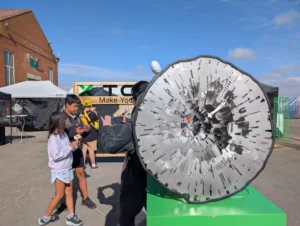
Marking its own sixth anniversary alongside the Faire’s twentieth, xTool has established itself as a dominant force in the desktop fabrication market. The company’s presence at the 2026 event centered on the "Milestones in the Making" installation, a community-driven project that invited visitors to contribute to a large-scale tessellated mosaic. Using xTool’s latest laser cutting and engraving hardware, attendees created personalized tiles representing their own creative journeys.

This interactive exhibit highlights the rapid democratization of laser technology. In the early years of Maker Faire, CO2 lasers were expensive, industrial machines requiring specialized ventilation and significant capital. By 2026, diode and fiber laser technology have become sufficiently compact and affordable for home workshops. Beyond hardware, xTool emphasized the human element of making. Maker-educator John Burns presented a case study on "raising a maker," detailing a seven-year journey of teaching design thinking and resilience to his son, Micah. This focus on the "maker mindset"—defined by iterative failure and problem-solving—remains a core theme of the event’s educational programming.
Artificial Intelligence as a Maker Tool: The OpenAI Integration
Perhaps the most significant shift at the 2026 Faire is the nuanced integration of Artificial Intelligence. Rather than viewing AI as a threat to traditional craftsmanship, the maker community has largely adopted it as a sophisticated "co-pilot" for complex design tasks. OpenAI, represented by employees and East Bay Makers Club founders John Boiles and Joe Taylor, demonstrated how Large Language Models (LLMs) are being used to streamline the most technical aspects of the making process.

The demonstrations focused on practical applications of AI agents in mechanical CAD (Computer-Aided Design), PCB (Printed Circuit Board) layout, and software debugging. By automating the "dreaded" parts of a project—such as reverse engineering legacy code or optimizing circuit traces—AI allows makers to focus on high-level conceptualization and physical assembly. This trend, often referred to as "vibe coding" in the software world, is now manifesting in hardware, where natural language prompts can generate functional schematics or 3D models, significantly lowering the barrier to entry for complex engineering projects.
Modular Tooling and STEM Engagement: HOTO and CrunchLabs
The 2026 event also saw the rise of modularity in consumer tools and educational kits. HOTO, a company known for modernizing hand tools, introduced its SNAPBLOQ series. This compact, modular desktop tool system is designed specifically for electronics enthusiasts and precision makers. The system’s modularity allows users to customize their workbench setup, reflecting a broader industrial shift toward personalized, space-efficient manufacturing environments.

In the realm of education, CrunchLabs—the STEM-focused venture led by former NASA engineer and YouTuber Mark Rober—showcased its expanded lineup of "Build Boxes" and "Hack Packs." The introduction of the "Creative Kit" at the Faire aimed to engage younger audiences through gamified engineering challenges. By providing children with professional-grade concepts packaged in accessible, high-energy projects, companies like CrunchLabs are addressing the global demand for a more robust pipeline of engineering talent.
Professional-Grade Development: Microchip and the Zephyr RTOS
Microchip Technology Inc. brought a focus on the bridge between hobbyist experimentation and industrial application. A key highlight was the presentation by Bob Martin, known in the community as the "Wizard of Make," and Ross Satchell. Their session detailed the rapid evolution of engineering education over the past twelve months, specifically highlighting the rise of the Zephyr RTOS.

Zephyr, an open-source real-time operating system hosted by the Linux Foundation, has become a preferred choice for embedded development due to its scalability and security features. Microchip’s introduction of the PyKit Explorer—a new development platform based on CircuitPython—further illustrates the trend of using high-level languages for low-level hardware control. This platform is intended for both classrooms and makerspaces, providing a library of educational content that allows users to move from basic blinking LEDs to complex, networked IoT devices using the same hardware.
Chronology and Context: Two Decades of the Maker Movement
To understand the significance of the 2026 Maker Faire Bay Area, one must look at the timeline of the movement’s growth:

- 2006: The first Maker Faire is held in San Mateo, California, attracting 20,000 attendees. It introduces the world to the "Maker" identity, distinct from "DIY" or "Hobbyist."
- 2010-2015: The movement sees explosive growth. The White House hosts its first Maker Faire in 2014, and 3D printing moves from industrial prototyping to the consumer desktop.
- 2020-2022: The COVID-19 pandemic forces the movement online. Makers globally pivot to producing Personal Protective Equipment (PPE), demonstrating the power of distributed manufacturing.
- 2023-2025: Physical Faires return with a focus on sustainability and advanced electronics. The "AI Revolution" begins to seep into hardware design.
- 2026: The 20th anniversary marks a mature ecosystem where the tools of production (lasers, CNC, AI, 3D printing) are more accessible and powerful than ever before.
Fact-Based Analysis: The Impact of the Maker Economy
The proliferation of tools and platforms seen at Maker Faire Bay Area 2026 is a reflection of a robust "Maker Economy." According to market research data, the global DIY and specialized tool market has seen a compound annual growth rate (CAGR) of over 4% in the last decade, driven largely by advancements in digital fabrication.
The impact of this movement extends beyond mere hobbyism. Many startups that began as Maker Faire exhibits have transitioned into multi-million dollar companies, particularly in the fields of robotics, 3D printing, and educational technology. Furthermore, the "maker mindset" has been integrated into corporate R&D departments, where rapid prototyping and iterative design—hallmarks of the maker movement—are now standard practice for accelerating product development cycles.

Broader Implications and Future Outlook
The 2026 Maker Faire Bay Area serves as a testament to the enduring appeal of physical creation in an increasingly digital world. The presence of industry giants like Microchip and OpenAI alongside grassroots creators suggests a symbiotic relationship: corporations provide the high-level infrastructure and tools, while the maker community provides the innovative use cases and the cultural drive for technological literacy.
As the Faire concludes, the implications for the future of work and education are clear. The distinction between "amateur" and "professional" continues to blur as desktop tools gain industrial capabilities and AI simplifies complex engineering workflows. The primary takeaway from this year’s event is that the next twenty years of the maker movement will likely be defined by "intelligent making"—a fusion of human creativity, precision hardware, and artificial intelligence that empowers individuals to solve global challenges from their own workbenches. Through the support of anchor partners and a dedicated global community, Maker Faire remains the premier venue for witnessing this transformation in real-time.